
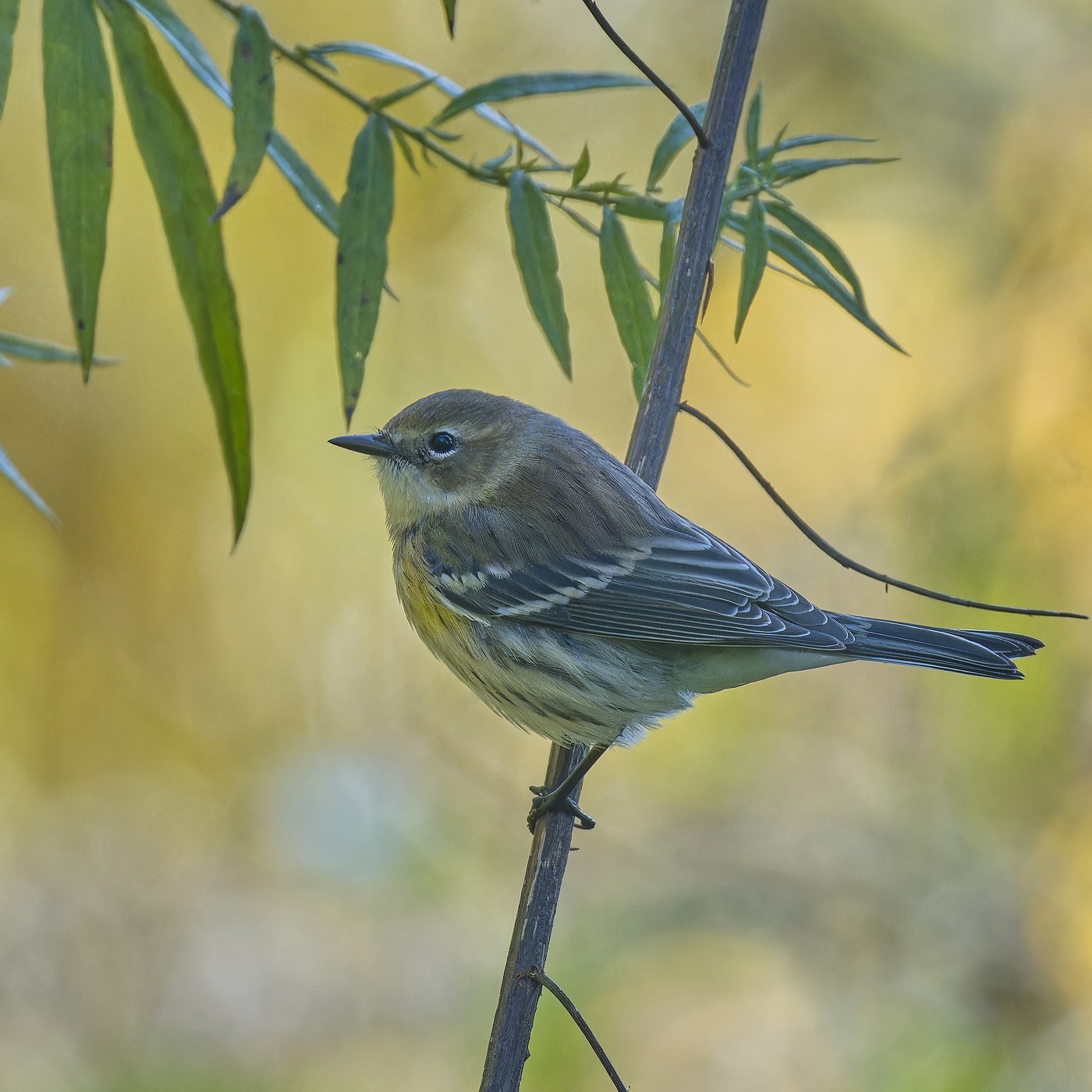
Yellow-rumped Warbler
Setophaga coronata
An abundant, adaptable warbler nicknamed 'butter-butt' for its bright yellow rump, able to survive winter farther north than most warblers by eating berries.
- Size
- 12-15 cm (5-6 in) long, 19-24 cm wingspan
- Habitat
- coniferous and mixed forests for breeding; a wide range of woodlands, scrub, and coastal habitats in migration and winter
- Type
- songbird
Spotted a bird like this?
Identify any bird from a photo, free.
Overview
The Yellow-rumped Warbler is one of the most abundant and adaptable warblers in North America, easily recognized in any plumage by its bright yellow rump patch, which gives rise to its popular nickname, 'butter-butt.' Breeding males are strikingly patterned in blue-gray, black, and white, with yellow patches on the crown, sides, and rump, while females and non-breeding birds are duller brown-gray with the yellow rump remaining a reliable identification clue.
Two well-known forms exist: the eastern 'Myrtle' Warbler, with a white throat, and the western 'Audubon's' Warbler, with a yellow throat; these were once considered separate species and some authorities still debate their taxonomic status. This warbler's unique ability to digest the waxy coating of bayberries and wax myrtle berries allows it to winter much farther north than most other warblers, which rely almost entirely on insects.
How to identify it
Key Field Marks
- Bright yellow rump patch, visible in all plumages and especially obvious in flight
- Yellow patches on the crown and sides of the breast in breeding plumage
- White throat ('Myrtle' form) or yellow throat ('Audubon's' form)
- Streaked gray-brown back and flanks with white wingbars
- Dull brownish-gray winter plumage retaining the diagnostic yellow rump
Similar Species
Magnolia Warbler also shows yellow on the rump but has a bold yellow underside with black streaking and a distinctive tail pattern, quite different from Yellow-rumped's mostly gray-brown body. Cape May Warbler has a yellow rump as well but shows a chestnut cheek patch (breeding male) and heavy breast streaking without the Yellow-rumped's white wingbars pattern. The combination of yellow rump plus yellow side patches is unique to the Yellow-rumped Warbler.
Habitat & range
Habitat
Yellow-rumped Warblers breed in coniferous and mixed forests, especially spruce-fir and pine woodlands. Outside the breeding season, they use an exceptionally broad range of habitats, including deciduous woods, scrub, coastal dunes, and suburban gardens.
Range
This species breeds across Canada, Alaska, the northeastern United States, and mountainous parts of the West. It winters across the southern and coastal United States, Mexico, and Central America, forming large flocks.
Migration
Yellow-rumped Warblers are among the earliest warblers to arrive in spring and latest to depart in fall, owing largely to their unusual dietary flexibility, which lets them subsist on berries when insects are scarce.
Behavior & voice
Behavior
Highly social outside the breeding season, Yellow-rumped Warblers form large, active flocks that forage together in trees, shrubs, and even on the ground, often mixing with other species.
Voice
The song is a loose, warbling trill that rises or falls slightly in pitch. The call is a distinctive sharp, flat 'check' or 'chek,' often heard from flocks in flight.
Feeding
In the breeding season it gleans and sallies for insects, but in winter it switches heavily to fruit, particularly the waxy berries of wax myrtle and bayberry, which it can digest thanks to specialized bile salts, a rare trait among warblers.
Nesting & Breeding
The female builds a cup nest of twigs and grass, usually placed on a horizontal conifer branch well away from the trunk. She lays 4-5 eggs, and the species often raises two broods per season.
Frequently asked questions
Why is the Yellow-rumped Warbler called a 'butter-butt'?
It's a birder's nickname referring to its bright yellow rump patch, which is visible in every plumage, including drab winter birds, and is the easiest way to identify the species.
What is the difference between the 'Myrtle' and 'Audubon's' Yellow-rumped Warblers?
'Myrtle' Warbler, found across most of the range, has a white throat, while 'Audubon's' Warbler, found mainly in the West, has a yellow throat; both share the yellow rump and are usually treated as forms of one species.
Why can Yellow-rumped Warblers winter farther north than other warblers?
They can digest the waxy coating on bayberries and wax myrtle berries, a food source unavailable to most insect-dependent warblers, allowing them to survive cold months when insects are scarce.
What does a Yellow-rumped Warbler eat?
It eats insects during the breeding season and switches largely to berries, especially bayberry and wax myrtle, in winter.
Where do Yellow-rumped Warblers nest?
They build cup nests on horizontal branches in coniferous or mixed forests across Canada, Alaska, and mountainous parts of the western United States.
Yellow-rumped Warbler guides
In-depth guides for identifying, finding, and understanding Yellow-rumped Warbler.
Other birds you may enjoy
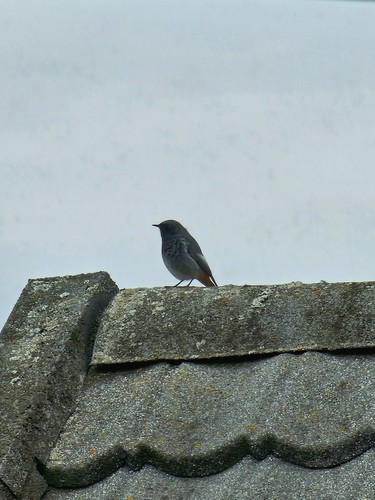
Black Redstart
13-14.5 cm (5.1-5.7 in) long, 23-26 cm wingspan
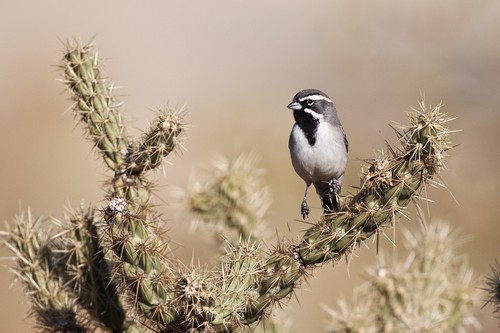
Black-throated Sparrow
12-14 cm (4.7-5.5 in) long, about 19-20 cm (7.5-8 in) wingspan
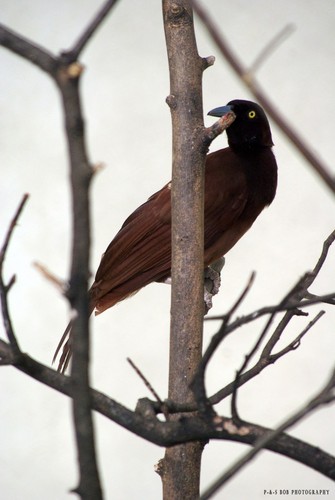
Greater Bird-of-paradise
Body about 43 cm; males with additional flank plumes up to 50 cm and long tail wires
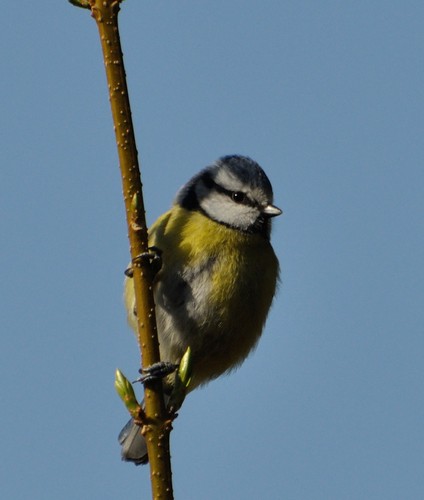
Blue Tit
11-12 cm (4.3-4.7 in) long, 17-20 cm wingspan
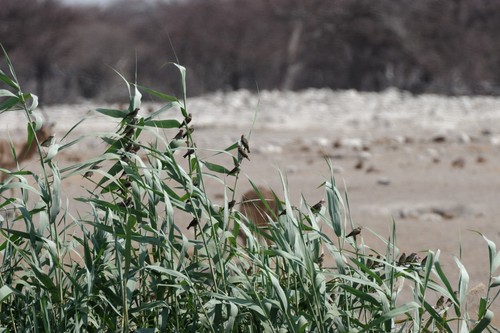
Red-billed Quelea
11.5–13 cm long, wingspan about 20–22 cm
White-plumed Antbird
13-14 cm (5-5.5 in) long
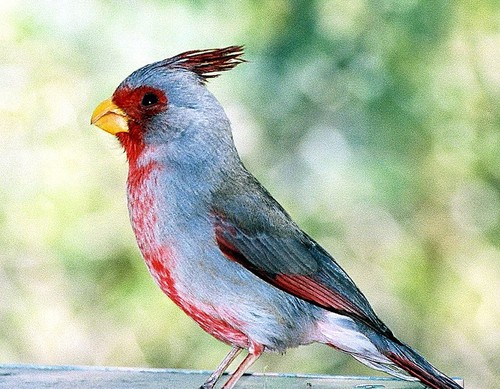
Pyrrhuloxia
19-22 cm (7.5-8.7 in) long, 30 cm wingspan
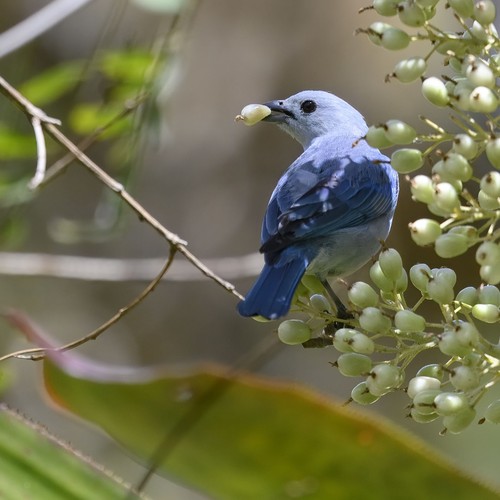
Blue-gray Tanager
16-18 cm (6-7 in) long
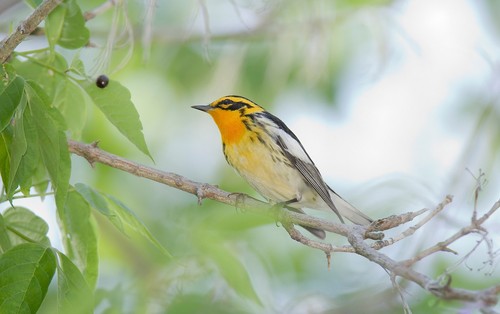
Blackburnian Warbler
11-13 cm (4.3-5.1 in) long, 20-22 cm wingspan
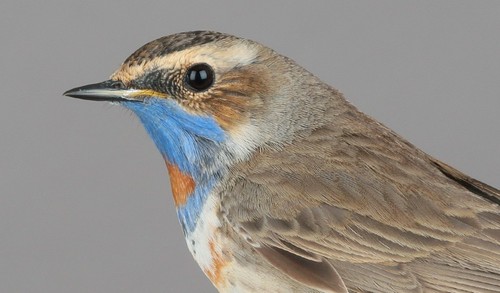
Bluethroat
13-14 cm (5.1-5.5 in) long, 20-22 cm wingspan
Eurasian Nuthatch
12-14.5 cm (4.7-5.7 in) long, 22.5-27 cm wingspan
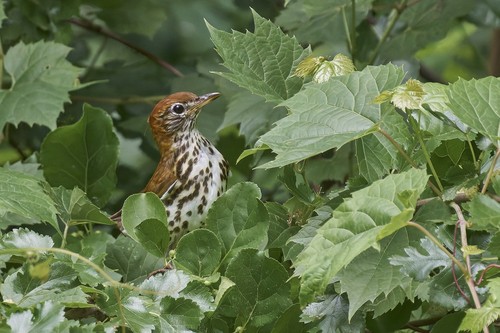
Wood Thrush
19-21 cm (7.5-8.3 in) long, about 33 cm (13 in) wingspan