
White-plumed Antbird
Pithys albifrons
A striking chestnut Amazonian antbird with a shock of white plumes on its face, famous as a dominant attendant at army ant swarms.
- Size
- 13-14 cm (5-5.5 in) long
- Habitat
- understory of humid lowland Amazonian and Guianan forest, at army ant swarms
- Type
- songbird
Spotted a bird like this?
Identify any bird from a photo, free.
Overview
The White-plumed Antbird is one of the most distinctive and charismatic understory birds of the Amazon basin and Guiana Shield. Its warm chestnut-rufous plumage is offset by a spray of stiff white plumes projecting from the forehead and lores, and by bare, sky-blue skin around the eye — a combination unmistakable in the field. Both sexes look alike.
This species is an obligate army ant follower and one of the most dominant, conspicuous species at swarms, often perched low and close to the ant front, chattering constantly.
How to identify it
Key field marks
- Rich chestnut body overall.
- Distinctive white plume tuft projecting forward from the forehead.
- Bare cobalt-blue skin around the eye.
- No wingbars; sexes similar.
Similar species
No other antbird combines chestnut plumage with white facial plumes and blue orbital skin, making this species essentially unmistakable within its Amazonian and Guianan range. Bicolored Antbird and other ant-followers lack both the white plumes and the blue facial skin.
Habitat & range
White-plumed Antbirds occur in the understory of humid lowland terra firme and várzea forest across the Amazon basin (Venezuela, the Guianas, northern and central Brazil, eastern Ecuador, Colombia, and Peru), generally below about 800-1,000 m. They are sedentary residents that do not migrate, though individuals move locally to track productive army ant swarms within their home range.
Behavior & voice
Voice
A persistent, sharp, chattering series of notes given almost continuously while attending a swarm, useful for locating birds even in dense understory.
Feeding
An obligate ant-following specialist, it perches low over active Eciton army ant swarms, sallying down to snatch fleeing insects, spiders, and small vertebrates disturbed by the ants, and is typically one of the most numerous and dominant species present.
Nesting and breeding
Pairs build a low open-cup nest in the forest understory. Both parents share incubation and provisioning duties, though nesting activity must be balanced against the unpredictable movements of the ant swarms the birds depend on for feeding.
Frequently asked questions
What are the white plumes for?
The forward-projecting white facial plumes are a distinctive display feature; their exact signaling function is not fully understood but they make the species easy to identify.
Is the White-plumed Antbird an obligate ant-follower?
Yes, it depends heavily on army ant swarms, feeding on arthropods and small animals flushed by the ants rather than the ants themselves.
Where does the White-plumed Antbird live?
In lowland rainforest understory across the Amazon basin and the Guiana Shield.
How do you tell males and females apart?
The sexes look alike, both showing chestnut plumage, white facial plumes, and blue bare skin around the eye.
White-plumed Antbird guides
In-depth guides for identifying, finding, and understanding White-plumed Antbird.
Other birds you may enjoy
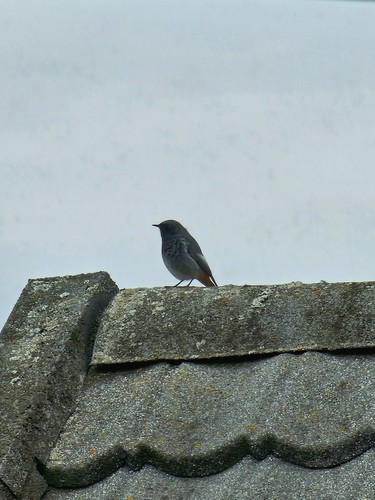
Black Redstart
13-14.5 cm (5.1-5.7 in) long, 23-26 cm wingspan
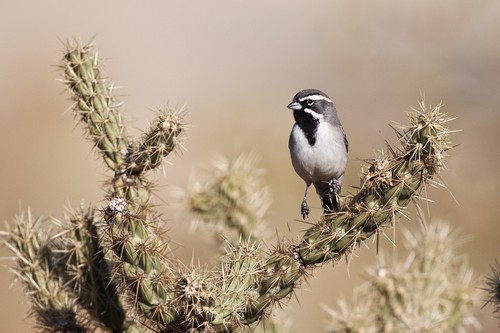
Black-throated Sparrow
12-14 cm (4.7-5.5 in) long, about 19-20 cm (7.5-8 in) wingspan
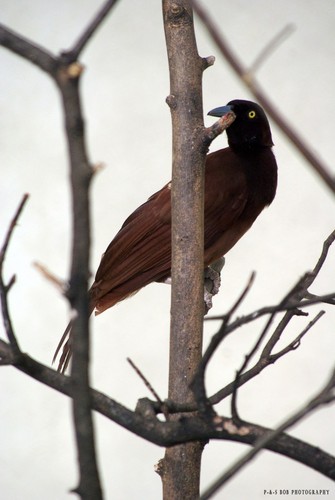
Greater Bird-of-paradise
Body about 43 cm; males with additional flank plumes up to 50 cm and long tail wires
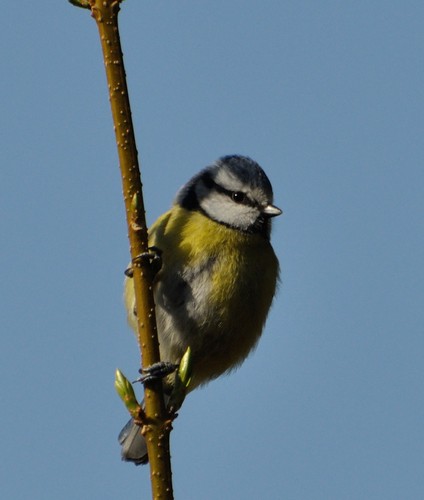
Blue Tit
11-12 cm (4.3-4.7 in) long, 17-20 cm wingspan

Red-billed Quelea
11.5–13 cm long, wingspan about 20–22 cm
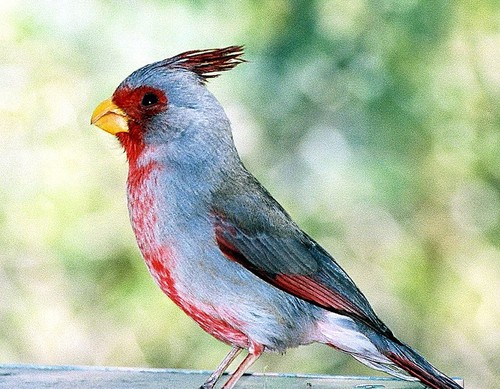
Pyrrhuloxia
19-22 cm (7.5-8.7 in) long, 30 cm wingspan
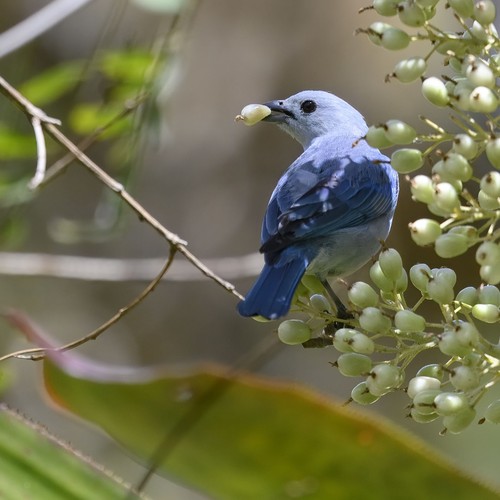
Blue-gray Tanager
16-18 cm (6-7 in) long
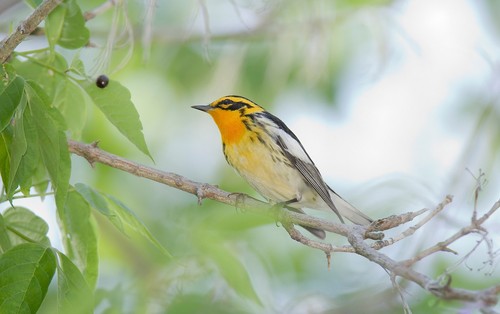
Blackburnian Warbler
11-13 cm (4.3-5.1 in) long, 20-22 cm wingspan
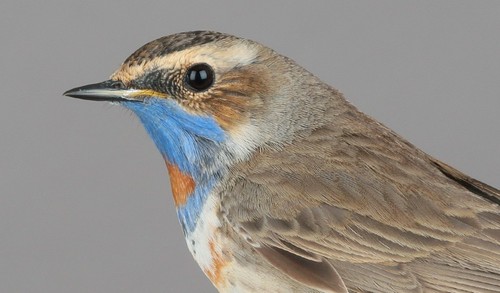
Bluethroat
13-14 cm (5.1-5.5 in) long, 20-22 cm wingspan
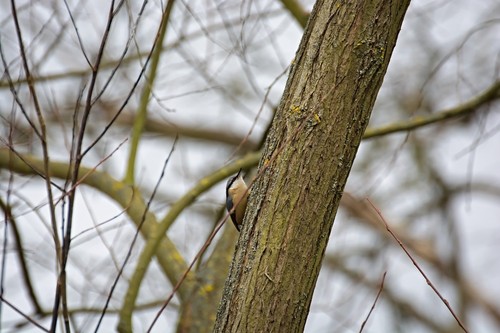
Eurasian Nuthatch
12-14.5 cm (4.7-5.7 in) long, 22.5-27 cm wingspan
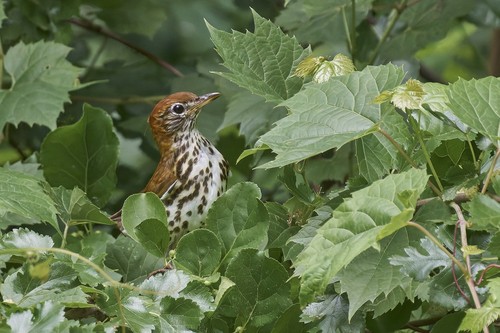
Wood Thrush
19-21 cm (7.5-8.3 in) long, about 33 cm (13 in) wingspan
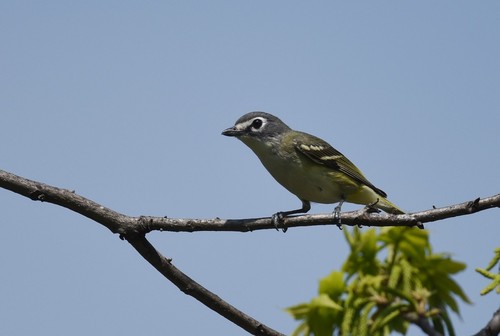
Blue-headed Vireo
12-14 cm (5-5.5 in) long, 21-25 cm wingspan