
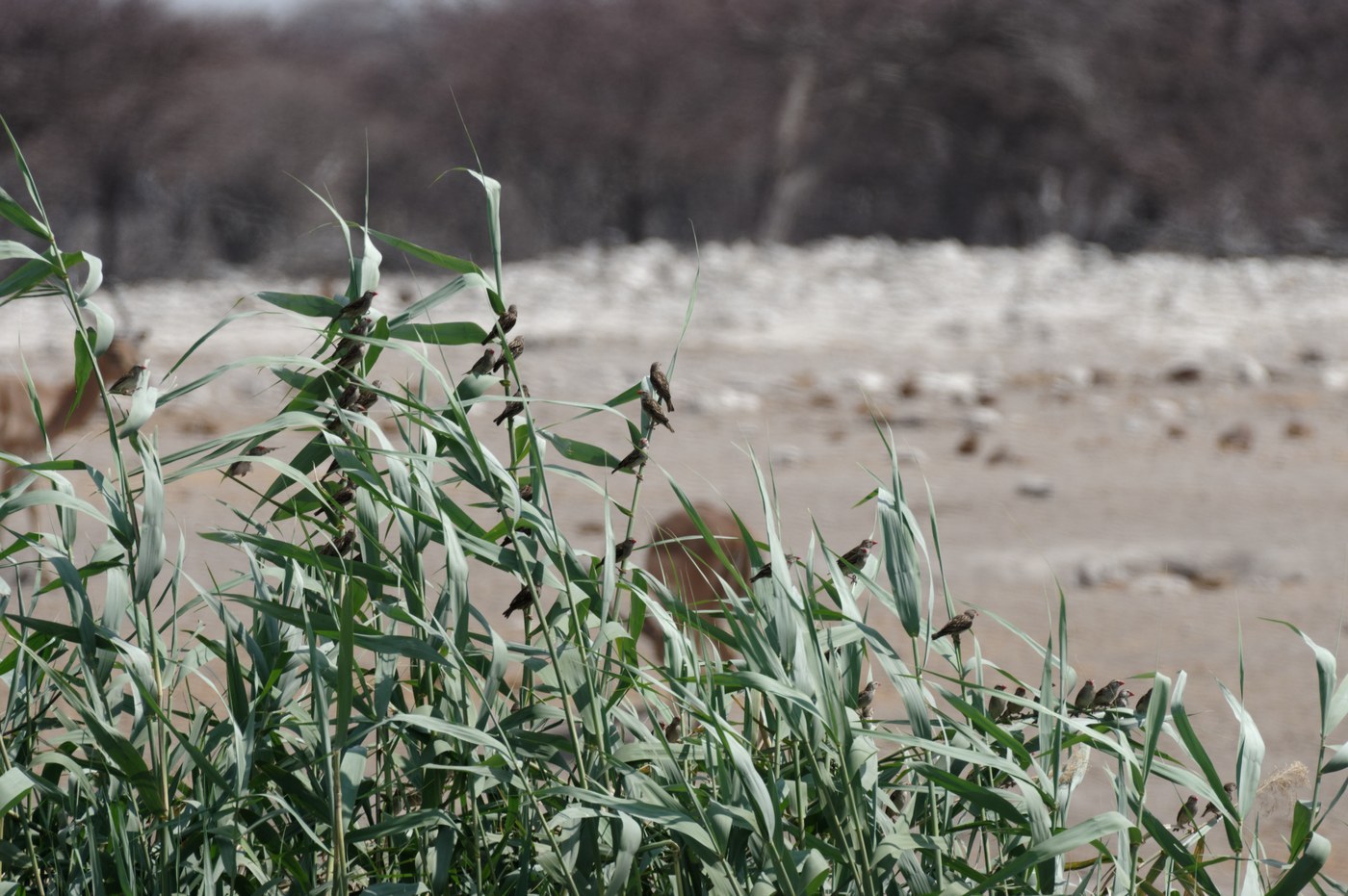
Red-billed Quelea
Quelea quelea
A small, sparrow-like African weaver famous for forming the largest flocks of any wild bird species, sometimes numbering in the millions.
- Size
- 11.5–13 cm long, wingspan about 20–22 cm
- Habitat
- Semi-arid savanna, grassland, and farmland near water across sub-Saharan Africa
- Type
- songbird
Spotted a bird like this?
Identify any bird from a photo, free.
Overview
The Red-billed Quelea is a small, gregarious weaverbird, widely regarded as the most numerous wild bird species on Earth by total population.
Appearance
- Breeding male: pinkish-red bill, buffy-brown streaked body, and a variable facial pattern that can show either a black mask or a white face, sometimes with a pinkish or yellow wash on the crown and throat
- Breeding female and non-breeding birds: duller streaky brown, sparrow-like plumage with a paler, often reddish or dusky bill
- Compact, short-tailed build typical of small weavers
Plumage variation in breeding males, particularly the black versus pale face pattern, occurs even within the same population.
How to identify it
Key field marks
- Small size and sparrow-like shape with a stout conical bill
- Breeding male's reddish bill and variable black or pale facial mask
- Enormous, densely packed flocks are themselves a strong identification clue
Similar species
- Female and non-breeding Red-billed Queleas closely resemble female weavers and some sparrows; bill shape and color, along with flocking behavior, help separate them.
- Bishops (Euplectes species) in breeding plumage show more extensive red or orange coloring and different flight and display behavior.
- The sheer scale of Quelea flocks, often described as moving like a cloud or smoke, is distinctive and rarely matched by other African seed-eating birds.
Habitat & range
Range
Found across much of sub-Saharan Africa, from Senegal east to Ethiopia and Somalia, and south through East and southern Africa to South Africa.
Habitat
Semi-arid savanna, grassland, and cultivated land, generally near water and areas with abundant grass seed.
Movements
Highly nomadic, following rainfall patterns and seed availability, with flocks moving unpredictably across large areas of the continent.
Behavior & voice
Behavior
Extremely gregarious at all times of year, forming some of the largest flocks of any bird species, with roosting and breeding aggregations that can include millions of individuals.
Voice
A constant chattering, buzzing twitter produced by large flocks, along with sharp chirping contact calls.
Feeding
Feeds mainly on grass seeds, foraging in dense flocks that move together across grassland and farmland.
Nesting
Breeds colonially and opportunistically in response to rain, with colonies sometimes covering many hectares of thornbush or reeds; nests are small, woven grass structures, and breeding can proceed rapidly, timed to coincide with seeding grasses.
Frequently asked questions
Is the Red-billed Quelea really the most numerous wild bird in the world?
Yes, by total population it is generally considered the most abundant wild bird species, with an estimated total population in the billions across sub-Saharan Africa.
How can you identify a Red-billed Quelea?
Look for a small, sparrow-like bird with a reddish bill; breeding males show a variable black or pale facial mask, while females and non-breeders are streaky brown.
Why do Red-billed Queleas form such huge flocks?
Their nomadic lifestyle follows unpredictable rainfall and grass-seed availability, and flocking in vast numbers offers protection from predators while exploiting locally abundant food.
Where do Red-billed Queleas breed?
They breed colonially in semi-arid savanna and grassland across sub-Saharan Africa, with colonies forming rapidly wherever rain triggers grass seeding.
Red-billed Quelea guides
In-depth guides for identifying, finding, and understanding Red-billed Quelea.

Other birds you may enjoy

Black Redstart
13-14.5 cm (5.1-5.7 in) long, 23-26 cm wingspan

Black-throated Sparrow
12-14 cm (4.7-5.5 in) long, about 19-20 cm (7.5-8 in) wingspan

Greater Bird-of-paradise
Body about 43 cm; males with additional flank plumes up to 50 cm and long tail wires

Blue Tit
11-12 cm (4.3-4.7 in) long, 17-20 cm wingspan
White-plumed Antbird
13-14 cm (5-5.5 in) long

Pyrrhuloxia
19-22 cm (7.5-8.7 in) long, 30 cm wingspan

Blue-gray Tanager
16-18 cm (6-7 in) long

Blackburnian Warbler
11-13 cm (4.3-5.1 in) long, 20-22 cm wingspan

Bluethroat
13-14 cm (5.1-5.5 in) long, 20-22 cm wingspan

Eurasian Nuthatch
12-14.5 cm (4.7-5.7 in) long, 22.5-27 cm wingspan

Wood Thrush
19-21 cm (7.5-8.3 in) long, about 33 cm (13 in) wingspan
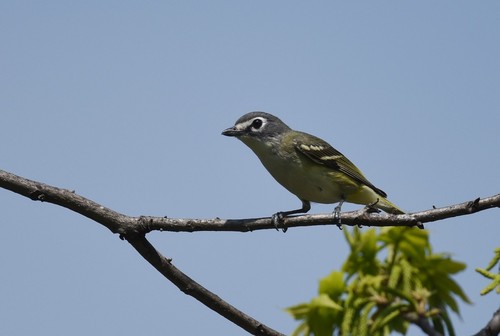
Blue-headed Vireo
12-14 cm (5-5.5 in) long, 21-25 cm wingspan