
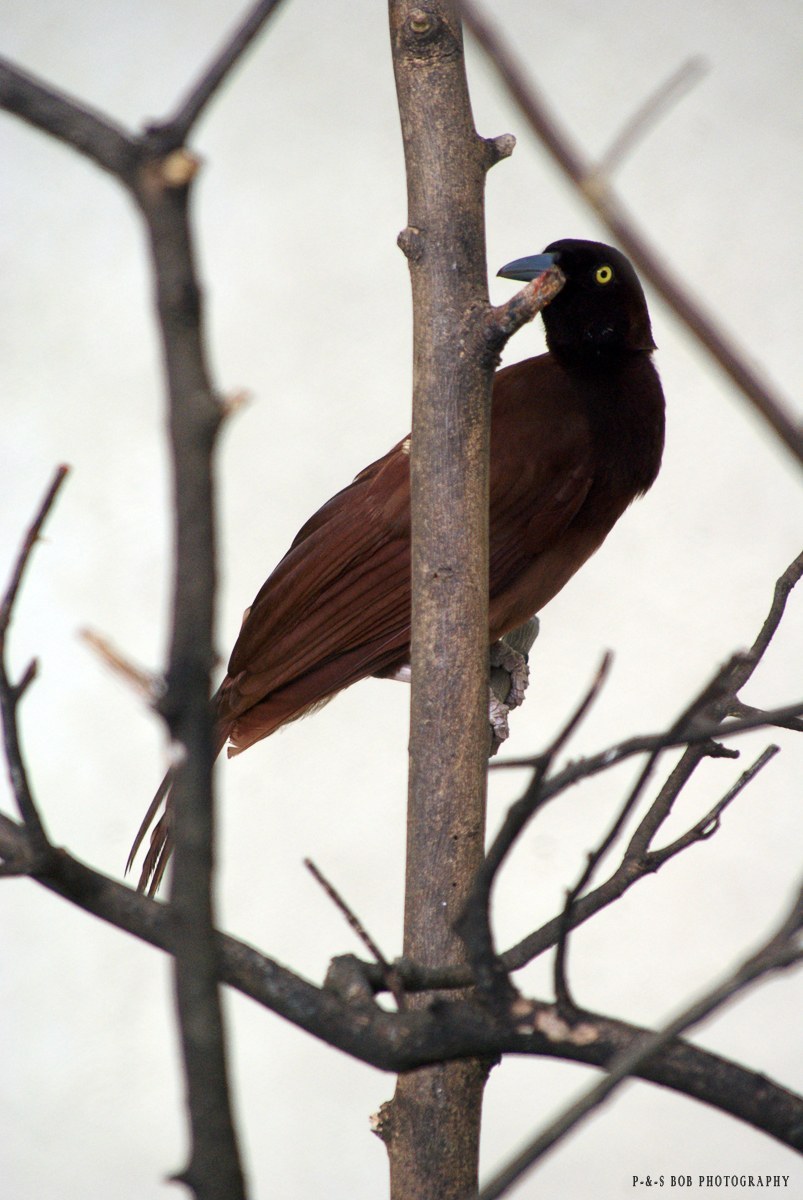
Greater Bird-of-paradise
Paradisaea apoda
A spectacular New Guinea bird-of-paradise famed for the male's cascading golden-yellow flank plumes, displayed in dramatic communal courtship dances high in the rainforest canopy.
- Size
- Body about 43 cm; males with additional flank plumes up to 50 cm and long tail wires
- Habitat
- Lowland and hill rainforest of New Guinea and the Aru Islands
- Type
- songbird
Spotted a bird like this?
Identify any bird from a photo, free.
Overview
The Greater Bird-of-paradise is the type species of the genus Paradisaea and one of the most celebrated birds-of-paradise, native to lowland rainforest of southern New Guinea and the Aru Islands. Early trade skins prepared without feet or wings gave rise to the historic belief that the birds never landed, inspiring the species name "apoda," meaning footless.
Males are maroon-brown across the body with a bright yellow crown and nape, an iridescent dark green throat, and a pale bill. Their most famous feature is the extravagant plume of elongated, golden-yellow to white flank feathers that erupt from beneath the wings and are raised in a shimmering cascade during courtship display, accompanied by two long, dark, wire-like central tail feathers. Females are considerably plainer, with maroon-brown body plumage and no ornamental plumes.
How to identify it
Key field marks
- Male: yellow crown/nape, dark iridescent green throat, maroon body, cascading yellow flank plumes
- Two long, thin, dark tail wires trailing behind displaying males
- Female: plain maroon-brown body without plumes or tail wires
Similar species
- Raggiana Bird-of-paradise: very similar but with reddish-orange (not yellow-to-white) flank plumes; ranges do not overlap (Raggiana occurs further east in New Guinea).
- Lesser Bird-of-paradise: smaller overall with shorter, more orange-tinged flank plumes and a different, more northerly/western range.
Habitat & range
Habitat
Greater Birds-of-paradise inhabit lowland and hill rainforest, favoring tall forest with emergent trees used as display and roosting sites.
Range
Native to southern New Guinea (Indonesia and Papua New Guinea) and the Aru Islands; it was also introduced to Little Tobago Island in the Caribbean in the early 20th century, though that population is believed to no longer survive.
Migration
The species is non-migratory and sedentary, remaining within forest home ranges year-round.
Behavior & voice
Behavior
Males gather at traditional display sites, or leks, in the forest canopy, where multiple males compete for female attention through elaborate group displays.
Voice
Calls include loud, far-carrying, repeated "wonk" or "wow" notes given by displaying males, along with harsher chattering calls.
Feeding
The diet consists mainly of fruit, supplemented with arthropods such as insects and spiders gleaned from foliage and branches.
Nesting and breeding
Greater Birds-of-paradise are polygynous lek breeders; males contribute no parental care beyond mating. Females build a cup-shaped nest alone, typically laying one or two eggs, and handle all incubation and chick-rearing without male assistance.
Frequently asked questions
Why is it called the Greater Bird-of-paradise?
It is named for its large size relative to other closely related Paradisaea species and was the first bird-of-paradise scientifically described, becoming the group's type species.
Why does the species name mean 'footless'?
Early trade skins brought to Europe had their feet and wings removed during preparation, leading to the mistaken belief that the birds spent their entire lives in flight and never landed.
What do male Greater Birds-of-paradise do to attract females?
Males gather at communal lek sites in tall trees and raise their cascading yellow flank plumes over their backs while calling and dancing to attract visiting females.
Where is the Greater Bird-of-paradise found?
It is native to southern New Guinea and the nearby Aru Islands.
What does the Greater Bird-of-paradise eat?
It feeds primarily on fruit, supplemented with insects and other arthropods.
Greater Bird-of-paradise guides
In-depth guides for identifying, finding, and understanding Greater Bird-of-paradise.
Other birds you may enjoy
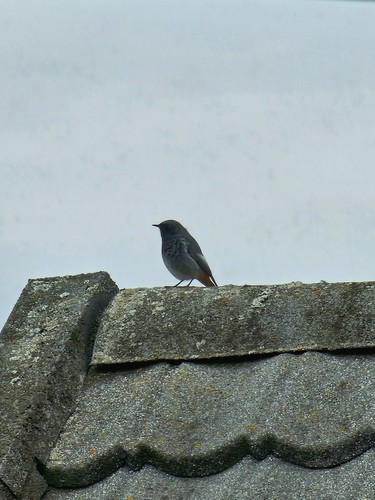
Black Redstart
13-14.5 cm (5.1-5.7 in) long, 23-26 cm wingspan
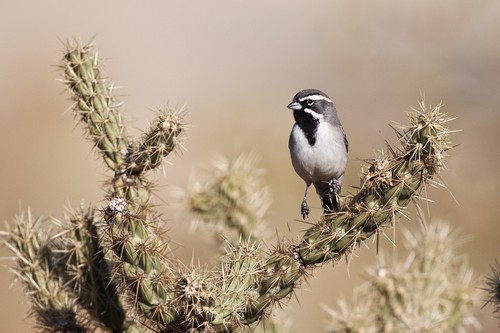
Black-throated Sparrow
12-14 cm (4.7-5.5 in) long, about 19-20 cm (7.5-8 in) wingspan
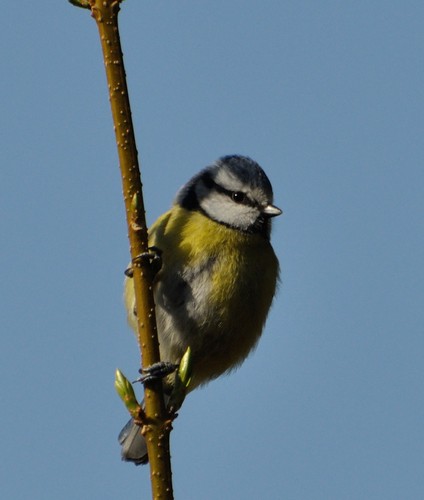
Blue Tit
11-12 cm (4.3-4.7 in) long, 17-20 cm wingspan
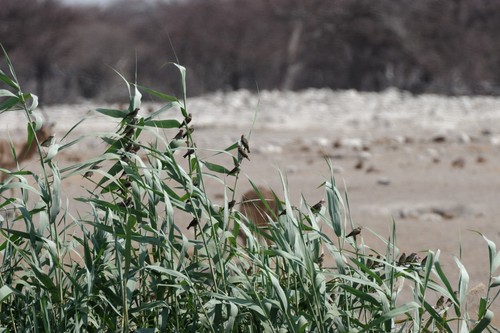
Red-billed Quelea
11.5–13 cm long, wingspan about 20–22 cm
White-plumed Antbird
13-14 cm (5-5.5 in) long
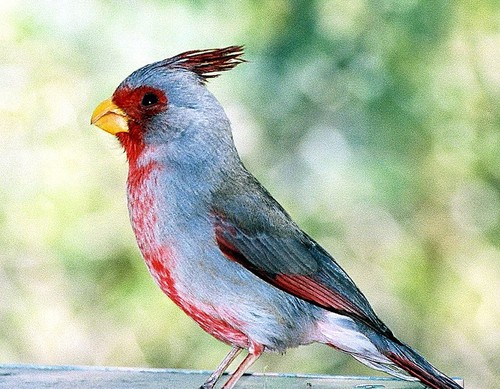
Pyrrhuloxia
19-22 cm (7.5-8.7 in) long, 30 cm wingspan
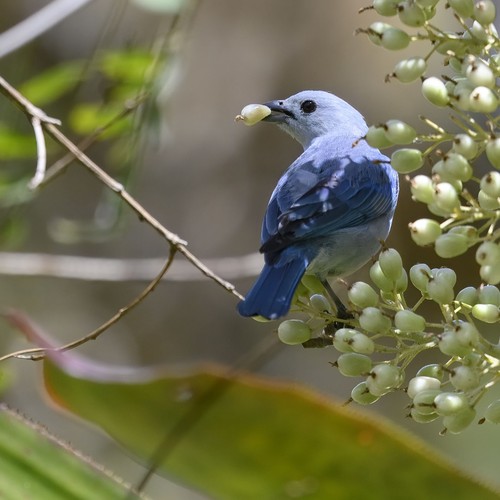
Blue-gray Tanager
16-18 cm (6-7 in) long
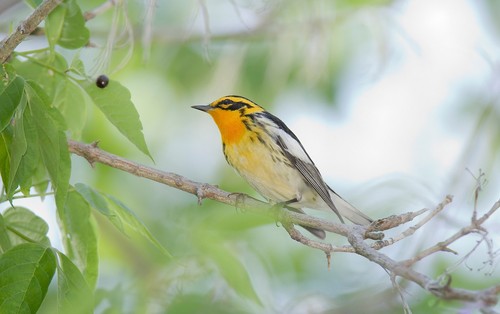
Blackburnian Warbler
11-13 cm (4.3-5.1 in) long, 20-22 cm wingspan
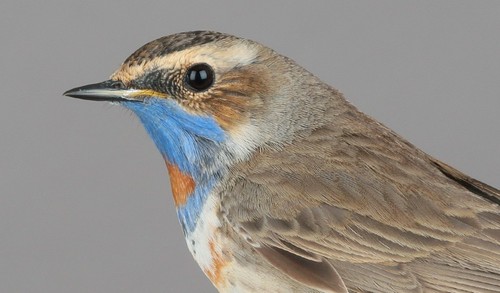
Bluethroat
13-14 cm (5.1-5.5 in) long, 20-22 cm wingspan
Eurasian Nuthatch
12-14.5 cm (4.7-5.7 in) long, 22.5-27 cm wingspan
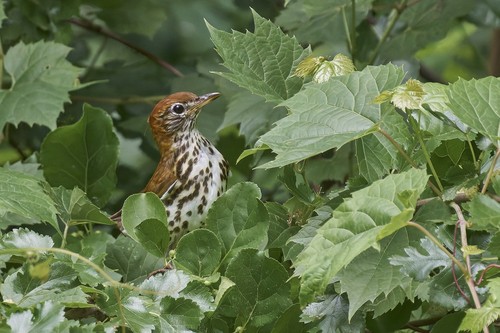
Wood Thrush
19-21 cm (7.5-8.3 in) long, about 33 cm (13 in) wingspan
Blue-headed Vireo
12-14 cm (5-5.5 in) long, 21-25 cm wingspan