
Greater Bird-of-paradise Identification Guide
A spectacular New Guinea rainforest bird whose displaying males show cascading yellow-and-white flank plumes, a yellow crown, and an emerald throat.
Read the full Greater Bird-of-paradise encyclopedia entry →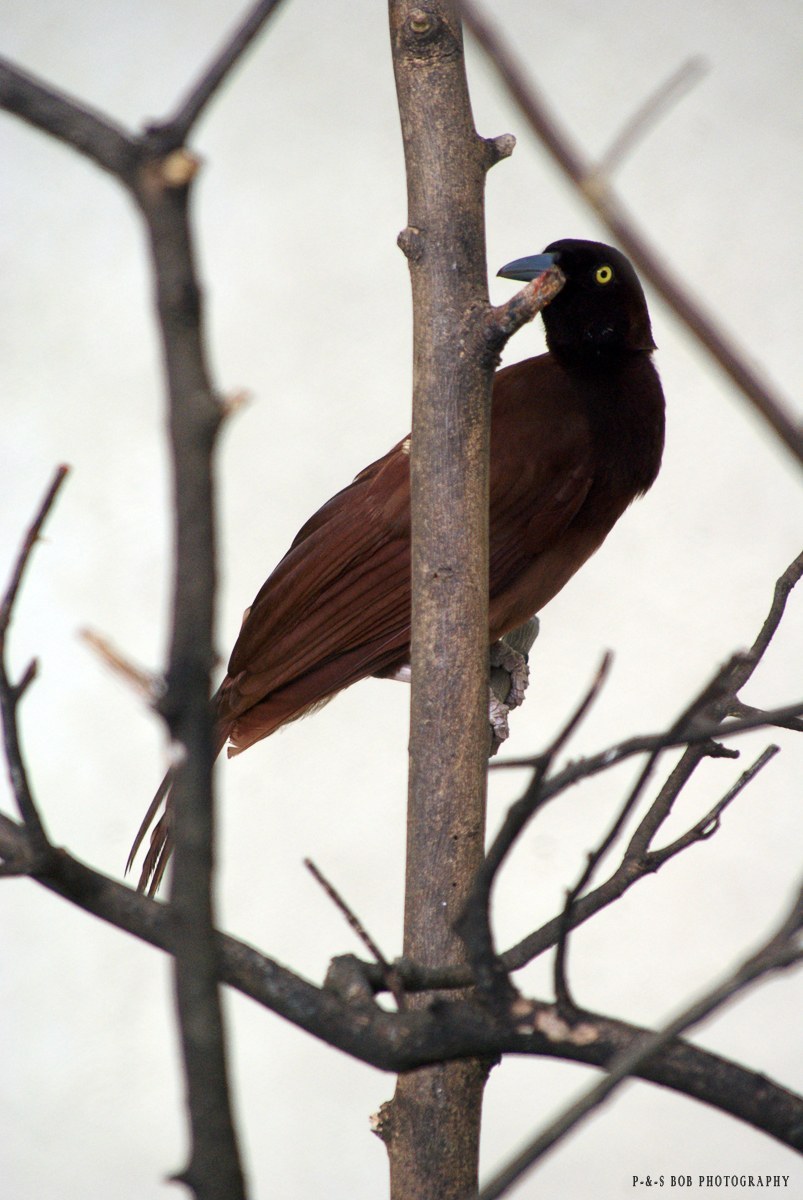
Key Field Marks
- Size & shape: A crow-sized bird of paradise with a relatively short tail but dramatically elongated, wispy flank plumes in adult males.
- Male plumage: Maroon-brown body, bright yellow crown and nape, an iridescent emerald-green throat patch, and dark brownish breast; long yellow-and-white plumes erupt from the flanks and are raised in a fountain-like display over the back, accompanied by two thin, dark tail wires.
- Female/immature plumage: Much plainer chestnut-brown overall with no ornamental plumes, making them far less conspicuous.
- Behavior: Males gather at traditional display trees (leks) to perform synchronized wing-shaking, plume-raising courtship displays, often calling loudly to attract females and rivals.
Separating It From Similar Species
- Raggiana Bird-of-paradise: Very similar in structure but shows orange-to-red (rather than yellow-white) flank plumes; occupies southeastern New Guinea, mostly not overlapping with greater bird-of-paradise's range.
- Lesser Bird-of-paradise: Smaller overall, with paler yellow flank plumes and a more restricted, mostly non-overlapping range in northern New Guinea.
- Count Raggi's and other Paradisaea relatives: Best separated primarily by range and precise plume color, since general shape and behavior are similar across the genus.
- Range is the most reliable first clue, since several very similar Paradisaea species largely replace one another geographically.
Where and When to See One
- Range: Southern New Guinea and the Aru Islands (Indonesia).
- Habitat: Lowland and hill tropical rainforest, favoring tall trees for both foraging and lek display sites.
- Season: Present year-round; display activity at leks is most intense and vocal in the early morning during the local breeding season.
Voice Cues
- Loud, far-carrying, repeated "wonk" or "wonk-wonk" calls given by displaying males, audible well before the bird is seen.
- Group display calls at a lek can build into a raucous chorus, useful for locating an active display tree from a distance.
Frequently asked questions
How do you identify a male greater bird-of-paradise?
Look for a maroon-brown body, yellow crown and nape, an emerald-green throat, and long cascading yellow-white flank plumes with dark tail wires — most obvious during display.
What does a female greater bird-of-paradise look like?
Females are plain chestnut-brown all over with no ornamental plumes, making them easy to overlook compared to displaying males.
How is the greater bird-of-paradise different from the Raggiana bird-of-paradise?
They are similar in shape, but Raggiana shows orange-to-red flank plumes rather than yellow-white, and the two species occupy largely separate parts of New Guinea.
Where can you see greater birds-of-paradise displaying?
At traditional lek trees in lowland and hill rainforest across southern New Guinea and the Aru Islands, typically in the early morning.
What sound does a greater bird-of-paradise make?
A loud, repeated "wonk" call given by displaying males, which carries far through the forest canopy.