
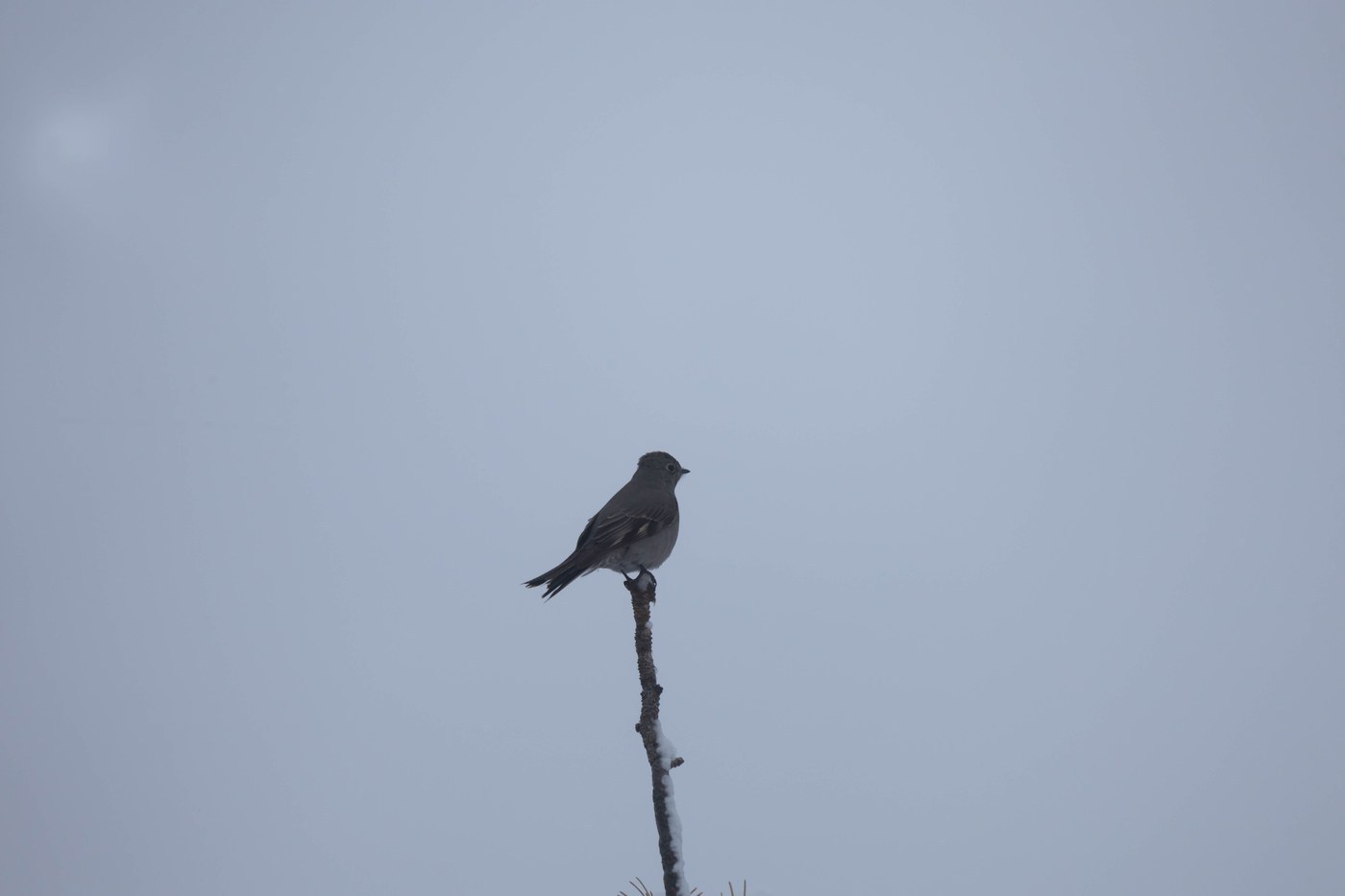
Townsend's Solitaire
Myadestes townsendi
A slim, gray, upright thrush relative famous for defending juniper berry territories in winter and singing a long, warbling song.
- Size
- 20-23 cm (8-9 in) long, slim with a long tail
- Habitat
- coniferous mountain forests for breeding; juniper woodlands in winter
- Type
- songbird
Spotted a bird like this?
Identify any bird from a photo, free.
Overview
Townsend's Solitaire is a subtly elegant thrush relative of the western mountains, plain gray overall but with a graceful, slender build, a long tail, and a bold white eyering that give it a distinctive silhouette even at a distance. It often perches upright and motionless on an exposed branch or fence post, behaving more like a flycatcher than a typical thrush.
In winter the species becomes closely tied to juniper trees, aggressively defending individual trees loaded with berries as a food source through the cold months, a behavior that makes it one of the more territorial berry-eating birds in North America.
How to identify it
Key field marks
- Overall plain gray plumage
- Bold white eyering
- Buffy patch in the wing, visible in flight
- White outer tail feathers
- Slim build, long tail, upright posture
Similar species
Northern Mockingbird is superficially similar in gray coloration but has a shorter tail, bold white wing patches visible in flight that differ in shape, and a very different, more animated foraging style. Townsend's Solitaire's slimmer shape, longer tail, and quiet, still perching habits help distinguish it.
Habitat & range
Habitat
During the breeding season, Townsend's Solitaires favor open coniferous forest on mountain slopes, often near rocky outcrops or cliffs. In winter they shift to lower elevations, especially areas with abundant juniper trees.
Range
The species breeds throughout much of the mountainous western United States and western Canada, from the Rockies to the Pacific ranges, and winters at lower elevations across much of the same broad region, sometimes wandering farther east.
Migration
Townsend's Solitaires make elevational migrations rather than long-distance latitudinal ones, moving from high mountain breeding grounds down to lower-elevation juniper woodlands for winter, where they may hold individual feeding territories.
Behavior & voice
Behavior
During the breeding season, solitaires forage by flycatching and gleaning insects from the ground and vegetation. In winter, they switch heavily to juniper berries and other fruit, and individuals often aggressively defend a single berry-laden tree against other birds for the entire winter.
Voice
The song is a long, complex, warbling series of notes, delivered from a high perch and sometimes continuing for extended periods; the call is a distinctive, clear, bell-like single note.
Nesting
Nests are placed on the ground or in a sheltered niche such as a rocky bank, cliff crevice, or amid tree roots, often on steep slopes. Females lay 3-4 pale blue-gray eggs marked with dark spots.
Frequently asked questions
Why does Townsend's Solitaire defend a tree in winter?
It relies heavily on juniper berries for winter food and will aggressively defend an individual berry-laden juniper tree as a food source against other birds through the cold months.
How do you identify a Townsend's Solitaire?
Look for an overall plain gray bird with a bold white eyering, a buffy wing patch visible in flight, white outer tail feathers, and an upright, still posture on exposed perches.
Where does Townsend's Solitaire live?
It breeds in coniferous forest on mountain slopes across the western US and Canada, and moves to lower-elevation juniper woodlands in winter.
What does a Townsend's Solitaire eat?
It eats mostly insects during the breeding season and shifts largely to berries, especially juniper berries, during winter.
Townsend's Solitaire guides
In-depth guides for identifying, finding, and understanding Townsend's Solitaire.
Other birds you may enjoy
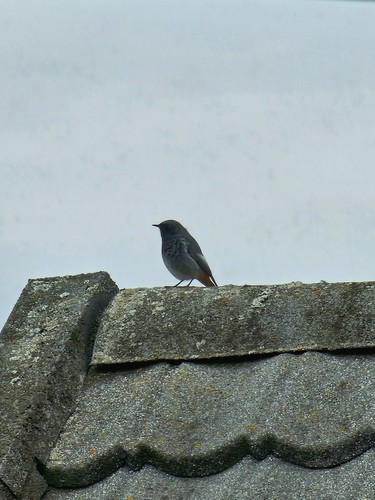
Black Redstart
13-14.5 cm (5.1-5.7 in) long, 23-26 cm wingspan
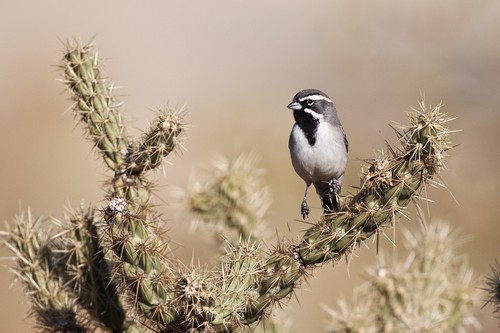
Black-throated Sparrow
12-14 cm (4.7-5.5 in) long, about 19-20 cm (7.5-8 in) wingspan
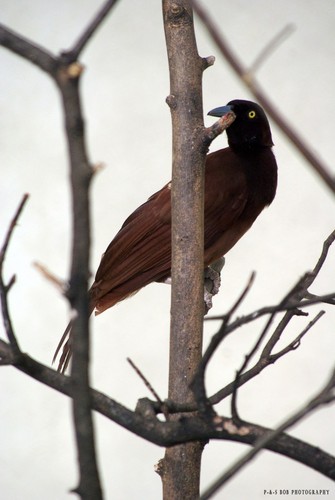
Greater Bird-of-paradise
Body about 43 cm; males with additional flank plumes up to 50 cm and long tail wires
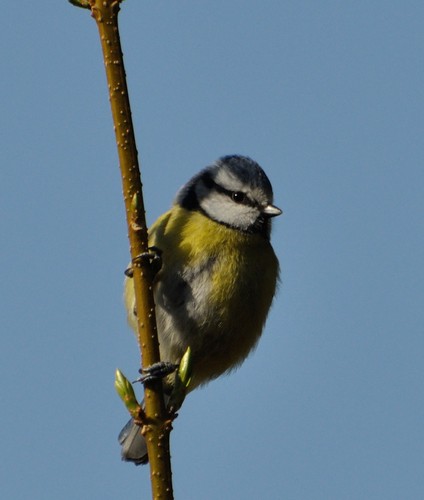
Blue Tit
11-12 cm (4.3-4.7 in) long, 17-20 cm wingspan
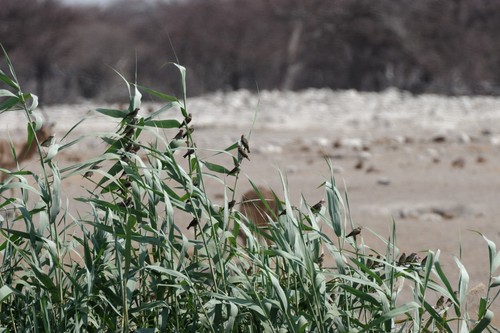
Red-billed Quelea
11.5–13 cm long, wingspan about 20–22 cm
White-plumed Antbird
13-14 cm (5-5.5 in) long
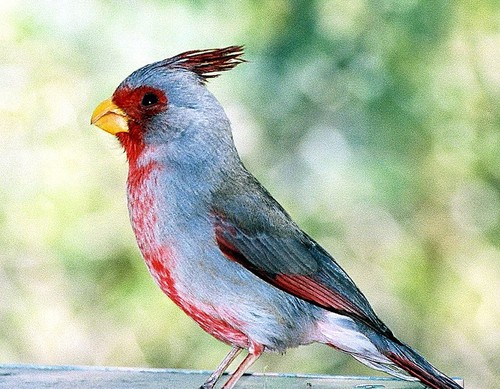
Pyrrhuloxia
19-22 cm (7.5-8.7 in) long, 30 cm wingspan
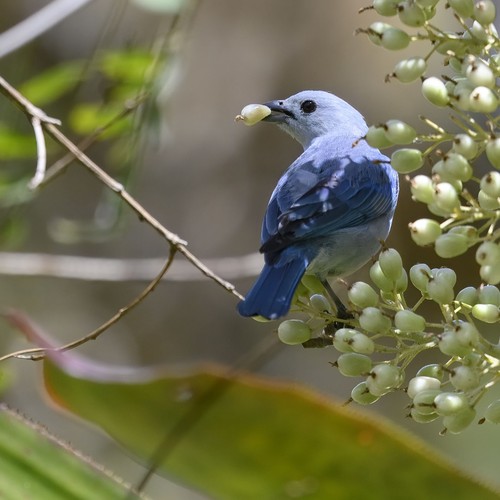
Blue-gray Tanager
16-18 cm (6-7 in) long
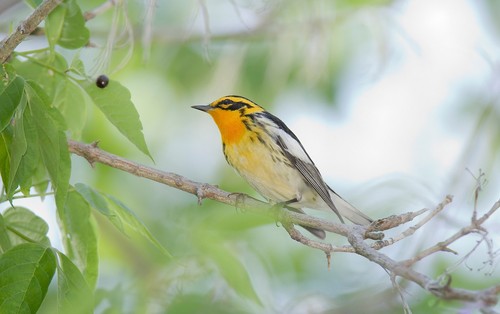
Blackburnian Warbler
11-13 cm (4.3-5.1 in) long, 20-22 cm wingspan
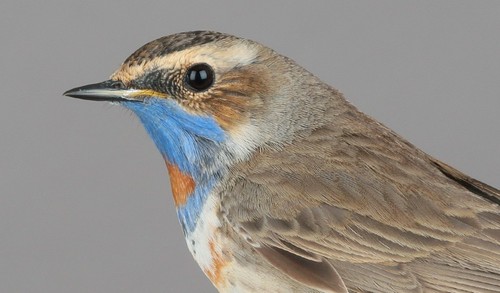
Bluethroat
13-14 cm (5.1-5.5 in) long, 20-22 cm wingspan
Eurasian Nuthatch
12-14.5 cm (4.7-5.7 in) long, 22.5-27 cm wingspan
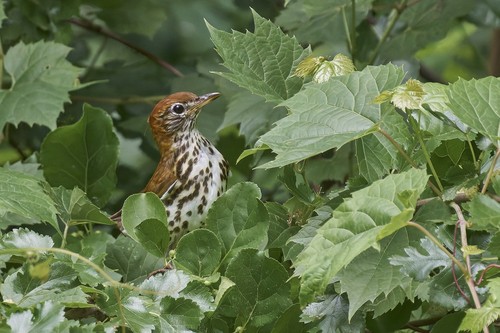
Wood Thrush
19-21 cm (7.5-8.3 in) long, about 33 cm (13 in) wingspan