
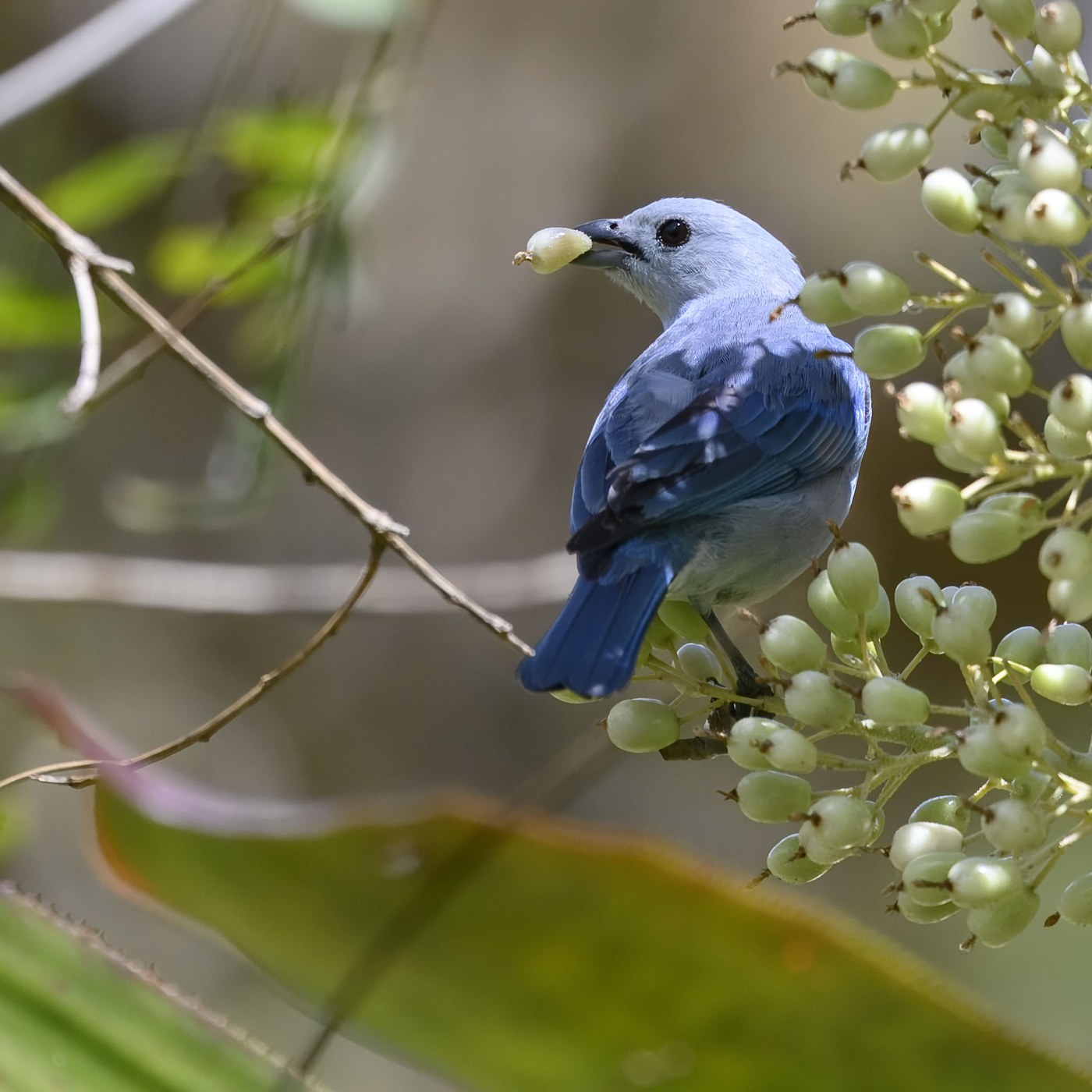
Blue-gray Tanager
Thraupis episcopus
A common and familiar tropical tanager with soft powder-blue and gray plumage and brighter blue shoulder patches, often seen in gardens and parks.
- Size
- 16-18 cm (6-7 in) long
- Habitat
- gardens, forest edge, parks, and open woodland
- Type
- songbird
Spotted a bird like this?
Identify any bird from a photo, free.
Overview
The Blue-gray Tanager is a gentle, softly colored songbird, its body washed overall in pale bluish-gray that deepens to a brighter, more vivid blue on the shoulder patch and edges of the wings and tail. The subtle, powdery quality of its coloring, combined with an unassuming, confiding manner, has made it one of the most familiar and beloved garden birds across a huge swath of the American tropics.
Often seen in pairs that stay bonded year-round, it is a common and conspicuous presence wherever fruiting trees, feeders, or flowering shrubs are found, readily adapting to parks, gardens, and disturbed habitats alongside people, and frequently seen alongside its close relative, the Palm Tanager.
How to identify it
Key field marks
- Overall soft, pale bluish-gray plumage
- Brighter blue patch on the shoulder (lesser wing coverts)
- Blue edging to the flight feathers and tail
- Stout, tanager-shaped bill
Similar species
- Palm Tanager is closely related and often seen alongside it, but is duller olive-gray to grayish-brown overall, lacking the Blue-gray Tanager's more vivid blue tones and contrasting shoulder patch.
- Glaucous Tanager, found in a more limited range, is paler and grayer overall with less contrast, and does not show the same bright blue shoulder patch.
Habitat & range
Habitat
Inhabits gardens, parks, forest edge, second growth, and open woodland, readily adapting to human-altered landscapes.
Range
Widespread from Mexico through Central America and across much of northern and central South America.
Migration
Non-migratory and sedentary, remaining within a fixed home range year-round.
Behavior & voice
Behavior
Usually seen in pairs that remain together throughout the year, foraging actively in trees and shrubs; often visits garden fruit feeders and readily tolerates human presence.
Voice
A thin, squeaky, wheezing song of simple repeated notes, along with sharp chirping call notes.
Feeding
Feeds on fruit, nectar, and insects, gleaned from foliage or taken from flowering and fruiting trees and shrubs.
Nesting
Builds a cup nest of grass, rootlets, and plant fibers in a tree or shrub, sometimes in a sheltered spot near buildings; lays 2-3 eggs, incubated by the female.
Frequently asked questions
How do you identify a Blue-gray Tanager?
Look for a bird with soft, pale bluish-gray overall plumage and a brighter blue patch on the shoulder, often seen in pairs in gardens and parks.
How is the Blue-gray Tanager different from the Palm Tanager?
The Blue-gray Tanager is more vividly blue-toned with a contrasting bright blue shoulder patch, while the Palm Tanager is duller olive-gray to grayish-brown overall.
What does a Blue-gray Tanager eat?
Fruit, nectar, and insects, foraged from trees and shrubs and often taken at garden fruit feeders.
Where does the Blue-gray Tanager live?
In gardens, parks, and forest edge from Mexico through Central America and much of northern and central South America.
Blue-gray Tanager guides
In-depth guides for identifying, finding, and understanding Blue-gray Tanager.

Other birds you may enjoy

Black Redstart
13-14.5 cm (5.1-5.7 in) long, 23-26 cm wingspan

Black-throated Sparrow
12-14 cm (4.7-5.5 in) long, about 19-20 cm (7.5-8 in) wingspan

Greater Bird-of-paradise
Body about 43 cm; males with additional flank plumes up to 50 cm and long tail wires

Blue Tit
11-12 cm (4.3-4.7 in) long, 17-20 cm wingspan

Red-billed Quelea
11.5–13 cm long, wingspan about 20–22 cm
White-plumed Antbird
13-14 cm (5-5.5 in) long

Pyrrhuloxia
19-22 cm (7.5-8.7 in) long, 30 cm wingspan

Blackburnian Warbler
11-13 cm (4.3-5.1 in) long, 20-22 cm wingspan

Bluethroat
13-14 cm (5.1-5.5 in) long, 20-22 cm wingspan

Eurasian Nuthatch
12-14.5 cm (4.7-5.7 in) long, 22.5-27 cm wingspan

Wood Thrush
19-21 cm (7.5-8.3 in) long, about 33 cm (13 in) wingspan
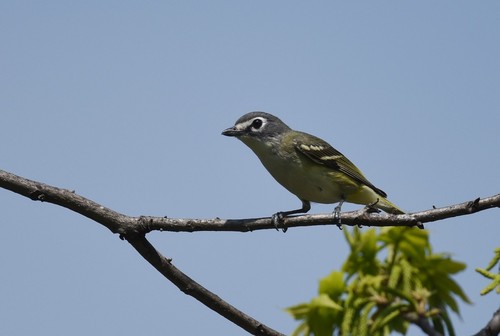
Blue-headed Vireo
12-14 cm (5-5.5 in) long, 21-25 cm wingspan