
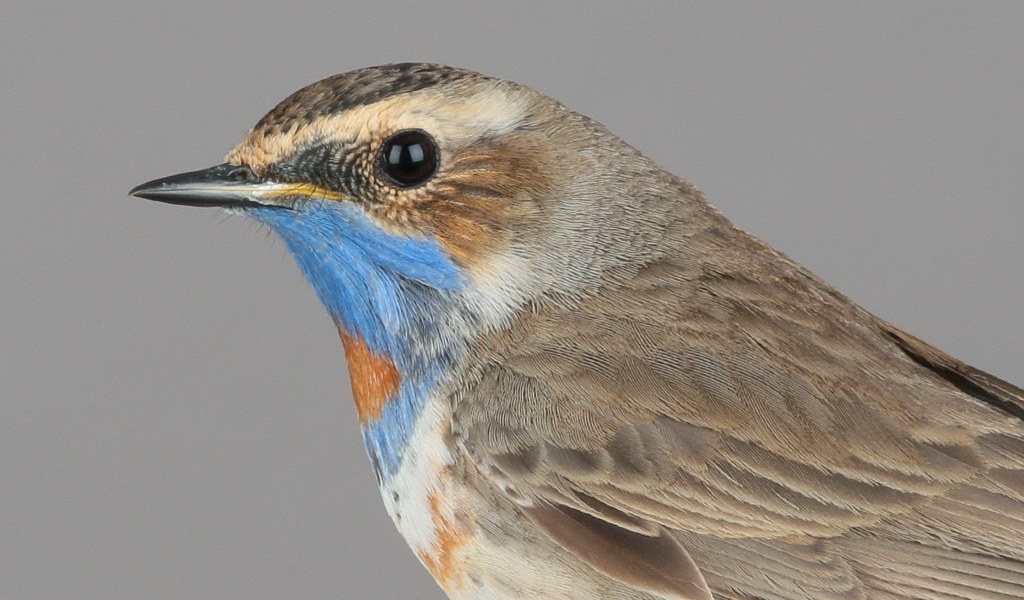
Bluethroat
Luscinia svecica
A dazzling relative of the robin, the breeding male showing a brilliant blue throat patch with a central spot, and rufous flashes at the base of the tail.
- Size
- 13-14 cm (5.1-5.5 in) long, 20-22 cm wingspan
- Habitat
- scrub and wetland edges in the breeding season; reedbeds and dense low vegetation on migration and in winter
- Type
- songbird
Spotted a bird like this?
Identify any bird from a photo, free.
Overview
The Bluethroat is a small, secretive chat renowned for the brilliant blue throat patch of the breeding male, one of the most striking plumage features of any European songbird, though the species otherwise tends to remain hidden in dense low cover.
Appearance
Breeding males show a vivid blue bib across the throat and upper breast, bordered below by narrow black, white, and chestnut bands, with a central spot in the blue patch that is either white or chestnut-red depending on the subspecies. Both sexes show conspicuous rufous-orange patches at the base of the tail, visible especially in flight. Females and immatures lack the blue bib, instead showing a pale throat bordered by dark streaking.
How to identify it
Key Field Marks
- Male: brilliant blue throat/bib bordered by black, white, and chestnut bands, with a central white or red spot
- Rufous-orange patches at the base of the tail, in both sexes
- Female/immature: pale throat with a dark necklace of streaking, lacking blue
- Robin-like shape and stance, often with a slightly cocked tail
Similar Species
European Robin has an orange breast but entirely lacks the blue throat coloring and the rufous tail-base patches of the Bluethroat. Female/immature Bluethroats can be confused with other small brown chats, but the combination of a dark necklace-like breast band and rufous tail patches helps confirm identification.
Habitat & range
Habitat
Bluethroats breed in damp scrub, willow thickets, and low vegetation at wetland edges, including subarctic tundra scrub and montane willow scrub further south in the range. On migration and in winter, they favor dense low cover such as reedbeds, scrubby wetland margins, and thick vegetation.
Range and Migration
The species breeds across a broad swath of northern and central Europe and Asia, including scattered montane and Arctic populations, with the white-spotted subspecies breeding mainly in northern Europe and the red-spotted subspecies further east and in the Arctic. Most populations are long-distance migrants, wintering in southern Europe, Africa, and southern Asia.
Behavior & voice
Behavior
Bluethroats are often shy and skulking, keeping low in dense vegetation and foraging on the ground for insects, though singing males may perch more openly, sometimes performing a fluttering display flight to show off the blue throat.
Voice
The song is loud, varied, and richly musical, often incorporating mimicry of other species, and features a distinctive introductory metallic "ting-ting-ting" before breaking into a fuller warbling performance, somewhat reminiscent of its close relative the Nightingale. The call is a soft "tack" or a whistled "hweet."
Nesting and Breeding
The nest is built on or very near the ground, well hidden in dense low scrub or vegetation, a cup of grass and moss. The female lays 5-7 eggs and incubates them for about 13-14 days.
Frequently asked questions
What does a male Bluethroat look like?
It has a brilliant blue throat and upper breast patch bordered by black, white, and chestnut bands, with a central spot that is white or chestnut-red depending on the subspecies.
How can you identify a female or non-breeding Bluethroat?
Look for a pale throat bordered by a necklace of dark streaking, combined with rufous-orange patches at the base of the tail, visible especially in flight.
Is the Bluethroat related to the Nightingale?
Yes, it belongs to the same genus as the Common Nightingale and shares a similarly rich, varied song, often including mimicry of other birds.
Where does the Bluethroat breed?
In damp scrub and wetland-edge vegetation across a wide range spanning northern and central Europe, Arctic tundra, and parts of Asia, depending on the subspecies.
Bluethroat guides
In-depth guides for identifying, finding, and understanding Bluethroat.

Other birds you may enjoy

Black Redstart
13-14.5 cm (5.1-5.7 in) long, 23-26 cm wingspan

Black-throated Sparrow
12-14 cm (4.7-5.5 in) long, about 19-20 cm (7.5-8 in) wingspan

Greater Bird-of-paradise
Body about 43 cm; males with additional flank plumes up to 50 cm and long tail wires

Blue Tit
11-12 cm (4.3-4.7 in) long, 17-20 cm wingspan

Red-billed Quelea
11.5–13 cm long, wingspan about 20–22 cm
White-plumed Antbird
13-14 cm (5-5.5 in) long

Pyrrhuloxia
19-22 cm (7.5-8.7 in) long, 30 cm wingspan

Blue-gray Tanager
16-18 cm (6-7 in) long

Blackburnian Warbler
11-13 cm (4.3-5.1 in) long, 20-22 cm wingspan

Eurasian Nuthatch
12-14.5 cm (4.7-5.7 in) long, 22.5-27 cm wingspan

Wood Thrush
19-21 cm (7.5-8.3 in) long, about 33 cm (13 in) wingspan
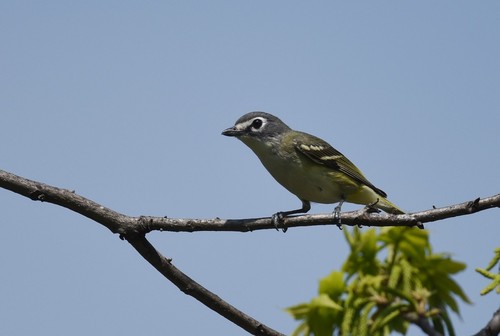
Blue-headed Vireo
12-14 cm (5-5.5 in) long, 21-25 cm wingspan