
Red-billed Quelea Identification Guide
The Red-billed Quelea is a tiny, sparrow-like African weaver famous for forming the largest flocks of any wild bird on Earth.
Read the full Red-billed Quelea encyclopedia entry →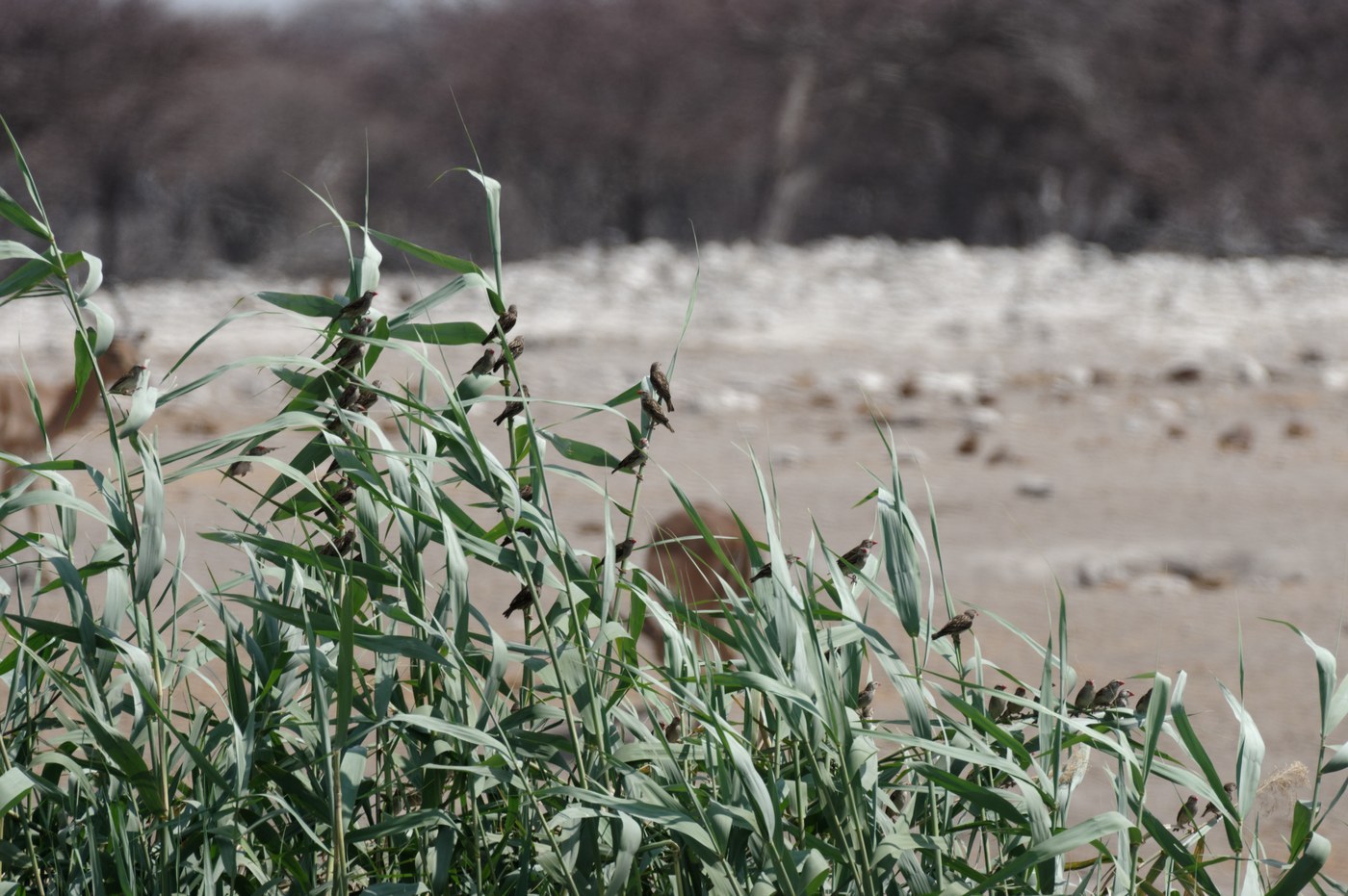
Key Field Marks
- Size & shape: Very small (11–13 cm), stocky, sparrow-shaped weaver with a short tail and thick conical bill built for cracking grass seeds.
- Bill: Stout, cone-shaped; bright red to coral-red or orange-red in breeding males, duller pinkish-horn in females and non-breeding birds.
- Plumage: Highly variable by sex and season. Breeding males show a black or white face mask bordered by a pinkish-buff to rosy wash on the head, neck, and breast, with streaky brown upperparts. Females and non-breeding males are dull sandy-brown and heavily streaked above, buffy-white below, and lack the facial mask — looking much like a nondescript weaver or bunting.
- Legs: Pinkish, short, adapted for perching on grass stems.
- Behavior: The defining mark is behavior, not plumage — quelea move in immense, tightly coordinated flocks that can number in the millions, wheeling and swirling like smoke over grasslands and grain fields.
Separating It From Similar Species
- Female/non-breeding quelea vs. other weavers: Told from female bishops and widowbirds by smaller size, stockier conical bill, and flocking behavior. Bishops in non-breeding plumage are similar but usually slightly larger with a proportionately longer, more pointed bill.
- From queleas' own sexes: Breeding males are unmistakable within a quelea flock due to the red bill and facial mask pattern (black-faced vs. white-faced morphs occur regionally); females lack any mask and show streakier, sparrow-like plumage.
- From true sparrows: Quelea have a shorter, deeper, more strongly hooked-culmen bill than House or Grey-headed Sparrows, and travel in vastly larger, denser flocks.
Where & When To See It
Widespread across sub-Saharan Africa in dry savanna, grassland, and agricultural areas, especially near seeding grasses and grain crops. Highly nomadic, tracking rainfall and seed availability, so flocks can appear suddenly in huge numbers and vanish just as quickly. Breeding is opportunistic and colonial, timed to follow rains and grass seed set, with colonies sometimes covering many hectares of thorn scrub.
Voice & Song Cues
A constant low, buzzy chattering and twittering emanates from feeding or roosting flocks — individually unremarkable but collectively a distinctive, insect-like roar audible from a distance. Contact notes are short, dry "chizz" or "tsik" chirps repeated rapidly by thousands of birds at once.
Frequently asked questions
How can I tell a Red-billed Quelea from a common sparrow?
Look at the bill shape — quelea have a shorter, deeper, strongly conical bill — and behavior; quelea travel in flocks vastly larger and denser than any sparrow flock, often numbering in the tens of thousands or more.
Why do male and female Red-billed Queleas look so different?
Like many weavers, quelea show strong seasonal and sexual plumage variation. Breeding males develop a red bill and a black or white facial mask with rosy wash, while females and non-breeding males stay streaky brown and buff year-round.
What habitat is best for finding Red-billed Quelea?
Open savanna, grassland, and cultivated grain fields across sub-Saharan Africa, particularly where grasses are seeding or near watering points that huge flocks use for drinking and bathing.
Are Red-billed Quelea flocks really the largest bird flocks in the world?
Yes — total continental population estimates run into the billions, and single flocks or roosting aggregations can number in the millions, making them the most numerous wild bird species by population.