
Yellow-billed Stork
Mycteria ibis
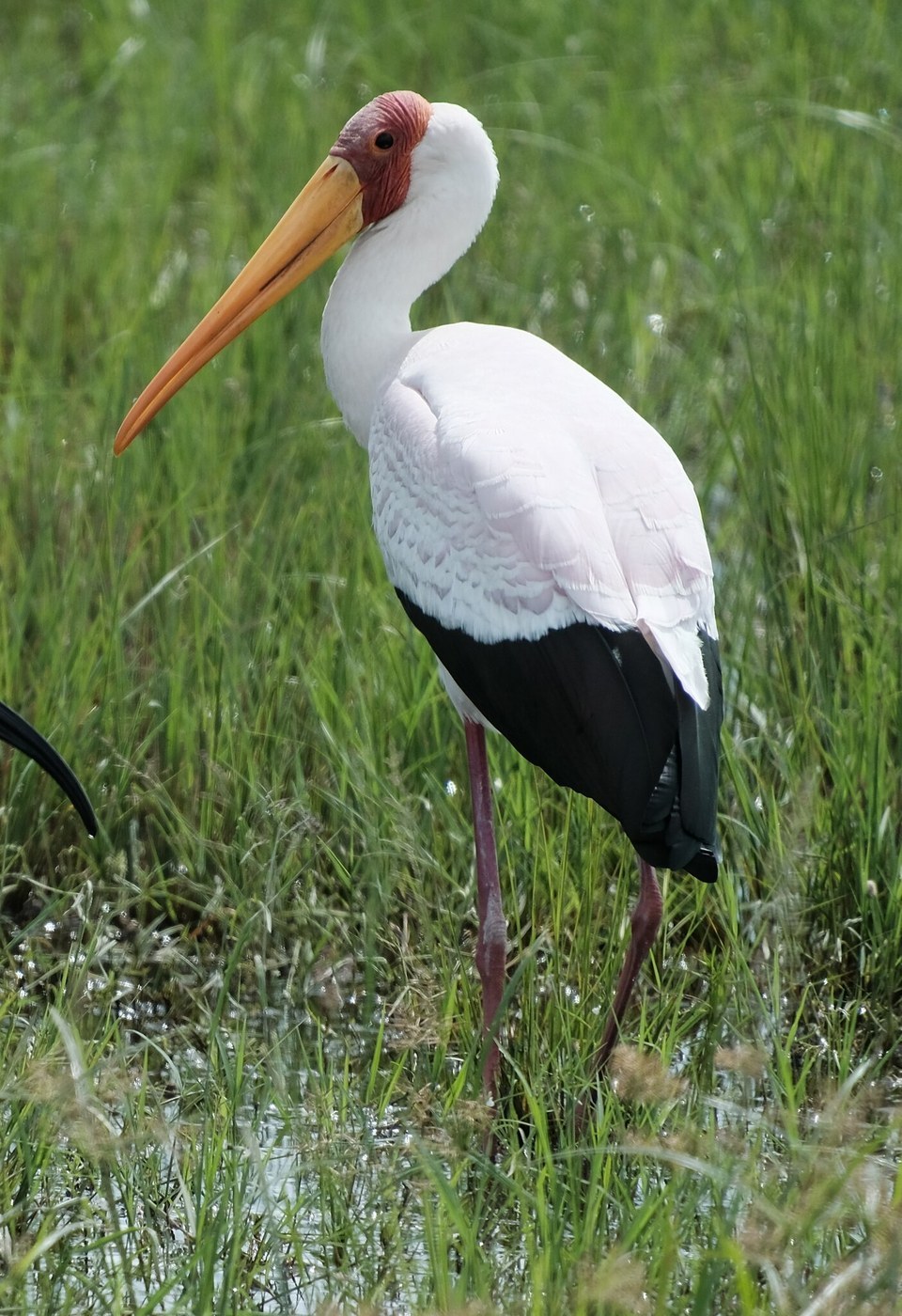
A striking African wading bird with mostly white and pale pink plumage, black flight feathers, and a long, curved yellow bill.
- Size
- 90-100 cm (35-39 in) long, 150-165 cm wingspan
- Habitat
- shallow lakes, rivers, marshes, and flooded grasslands
- Type
- wading-bird
Spotted a bird like this?
Identify any bird from a photo, free.
Overview
The Yellow-billed Stork is a medium-large stork native to sub-Saharan Africa and Madagascar, easily recognized by its bright yellow, downcurved bill and patch of bare red facial skin. The body plumage is predominantly white, often with a delicate pink flush across the wing coverts, contrasting with glossy black flight feathers and tail.
Breeding adults develop a brighter pink wash on the wings and deeper red facial skin, making them one of the more colorful African storks. Juveniles are duller, with greyish-brown plumage and a paler bill.
How to identify it
Key field marks
- White body plumage often washed with pink, especially on the wing coverts
- Black flight feathers and tail
- Long, downcurved, bright yellow bill
- Bare red skin around the face
- Pink legs
Similar species
The Painted Stork of Asia is similar in shape but has pink tertial plumes and black barring across the breast, and does not overlap in range. The African Spoonbill has a flattened, spoon-shaped bill rather than a downcurved one. The Marabou Stork is much larger with a bald head and heavy grey bill rather than a slender yellow one.
Habitat & range
Yellow-billed Storks inhabit shallow freshwater habitats including lakes, rivers, marshes, and seasonally flooded grasslands throughout sub-Saharan Africa, with an isolated population in Madagascar. They favor areas with fluctuating water levels that concentrate fish into shrinking pools.
The species is largely resident but locally nomadic, moving in response to rainfall and water availability, and can form large foraging aggregations at productive wetlands, particularly during the dry season when fish become concentrated.
Behavior & voice
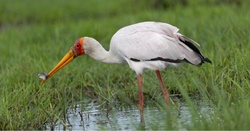
This stork feeds using tactile grope-feeding similar to the closely related Wood Stork: it wades through shallow water with its bill partly submerged and snaps it shut instantly upon contact with prey, an adaptation that allows successful hunting even in murky water. It often forages in loose flocks, sometimes stirring up prey by shuffling its feet.
Yellow-billed Storks are mostly silent, relying on bill-clattering and visual displays for communication at breeding colonies. They nest colonially, often in mixed colonies with herons, egrets, and ibises, building stick nests in trees near or over water. Both parents share incubation of the 2-4 eggs and feeding of the chicks.
Frequently asked questions
What color is a Yellow-billed Stork's bill?
It is bright yellow and distinctly downcurved, one of the bird's most distinctive features.
How does the Yellow-billed Stork catch fish?
It uses tactile grope-feeding, sweeping its partly open bill through shallow water and snapping it shut by reflex the instant it touches prey.
Where is the Yellow-billed Stork found?
It occurs widely across sub-Saharan Africa in freshwater wetlands, with an additional population in Madagascar.
Is the Yellow-billed Stork the same as the Wood Stork?
No, they are closely related but distinct species; the Wood Stork is found in the Americas and has a bald grey-black head, while the Yellow-billed Stork has a feathered head with a yellow bill and lives in Africa and Madagascar.
Yellow-billed Stork guides
In-depth guides for identifying, finding, and understanding Yellow-billed Stork.
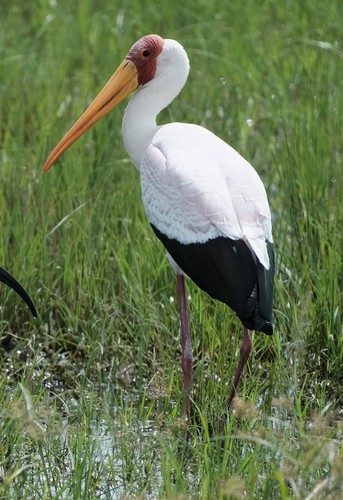
Yellow-billed Stork identified by the community
Real birds identified with Bird Identifier.
Other birds you may enjoy
Demoiselle Crane
85-100 cm (33-39 in) long, 155-180 cm wingspan
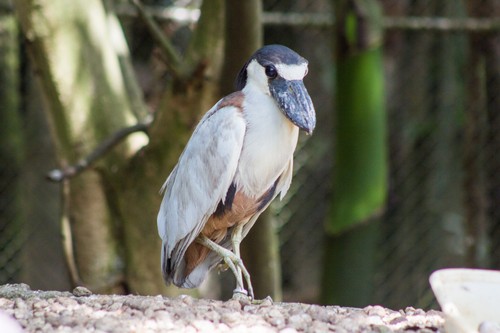
Boat-billed Heron
41-56 cm (16-22 in) long
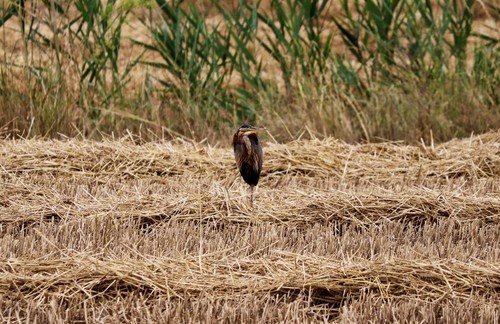
Purple Heron
78-90 cm (31-35 in) long, 120-152 cm wingspan
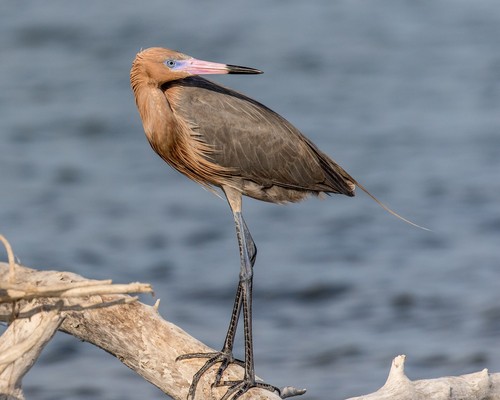
Reddish Egret
68-82 cm (27-32 in) long, 116-125 cm wingspan
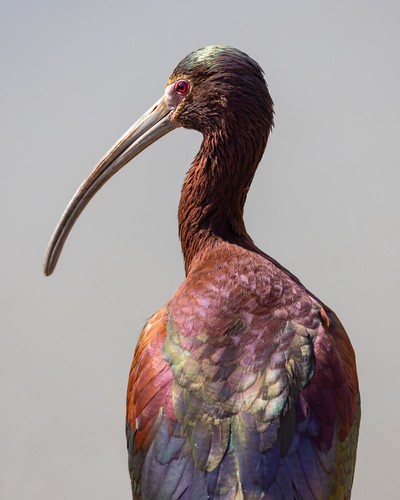
White-faced Ibis
46-56 cm (18-22 in) long, 88-93 cm wingspan
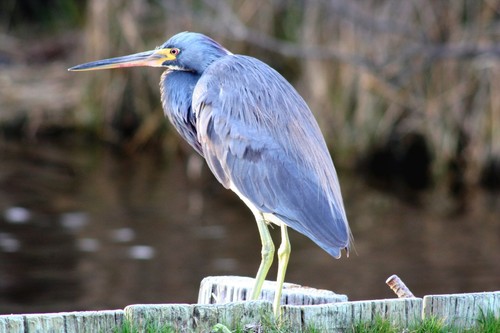
Tricolored Heron
61-76 cm (24-30 in) long, about 96 cm wingspan
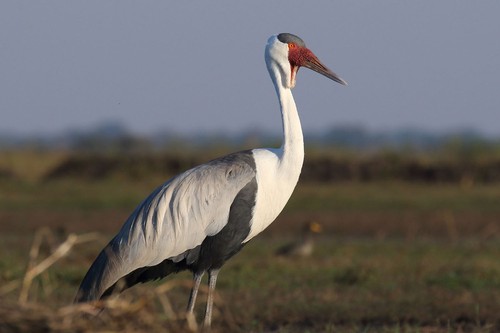
Wattled Crane
120-175 cm (47-69 in) tall, one of the tallest cranes, wingspan up to about 230 cm (7.5 ft)
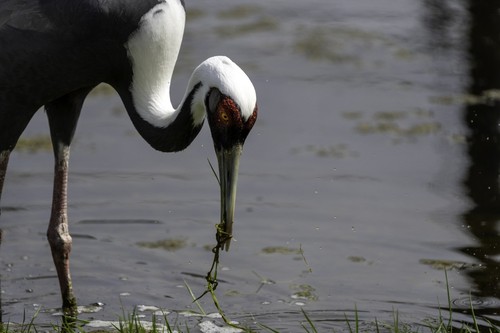
White-naped Crane
112-125 cm (44-49 in) long, 195-210 cm wingspan
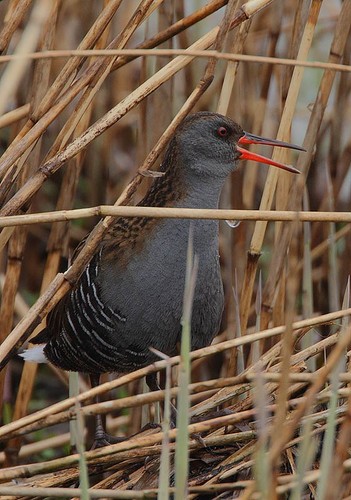
Water Rail
23-28 cm (9-11 in) long, wingspan 38-45 cm
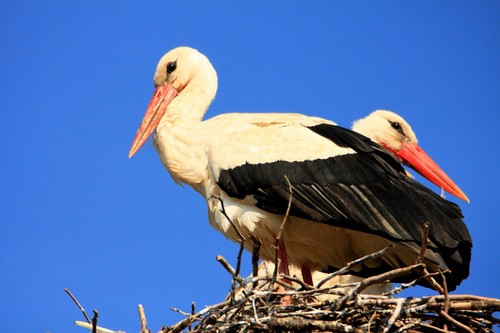
White Stork
100-125 cm (39-49 in) long, 155-215 cm wingspan
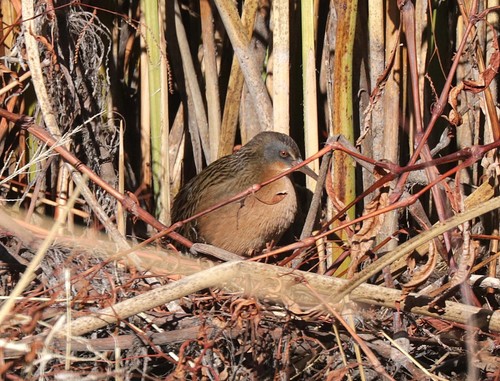
Virginia Rail
20-27 cm (8-11 in) long, wingspan 32-38 cm
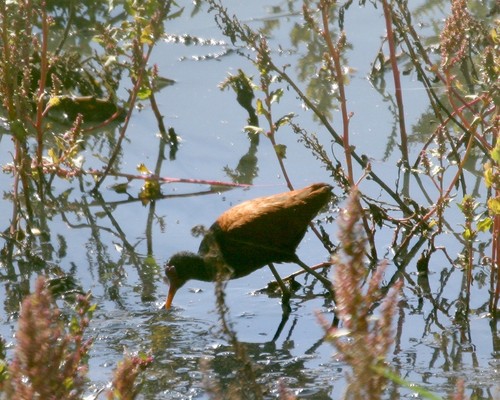
Wattled Jacana
17-23 cm (7-9 in) long