Yellow-billed Stork Identification Guide
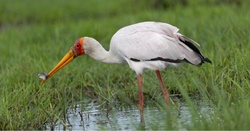
A large African wetland stork with white-to-pink plumage, black flight feathers, and a bright yellow, slightly downcurved bill used to feed by touch.
Read the full Yellow-billed Stork encyclopedia entry →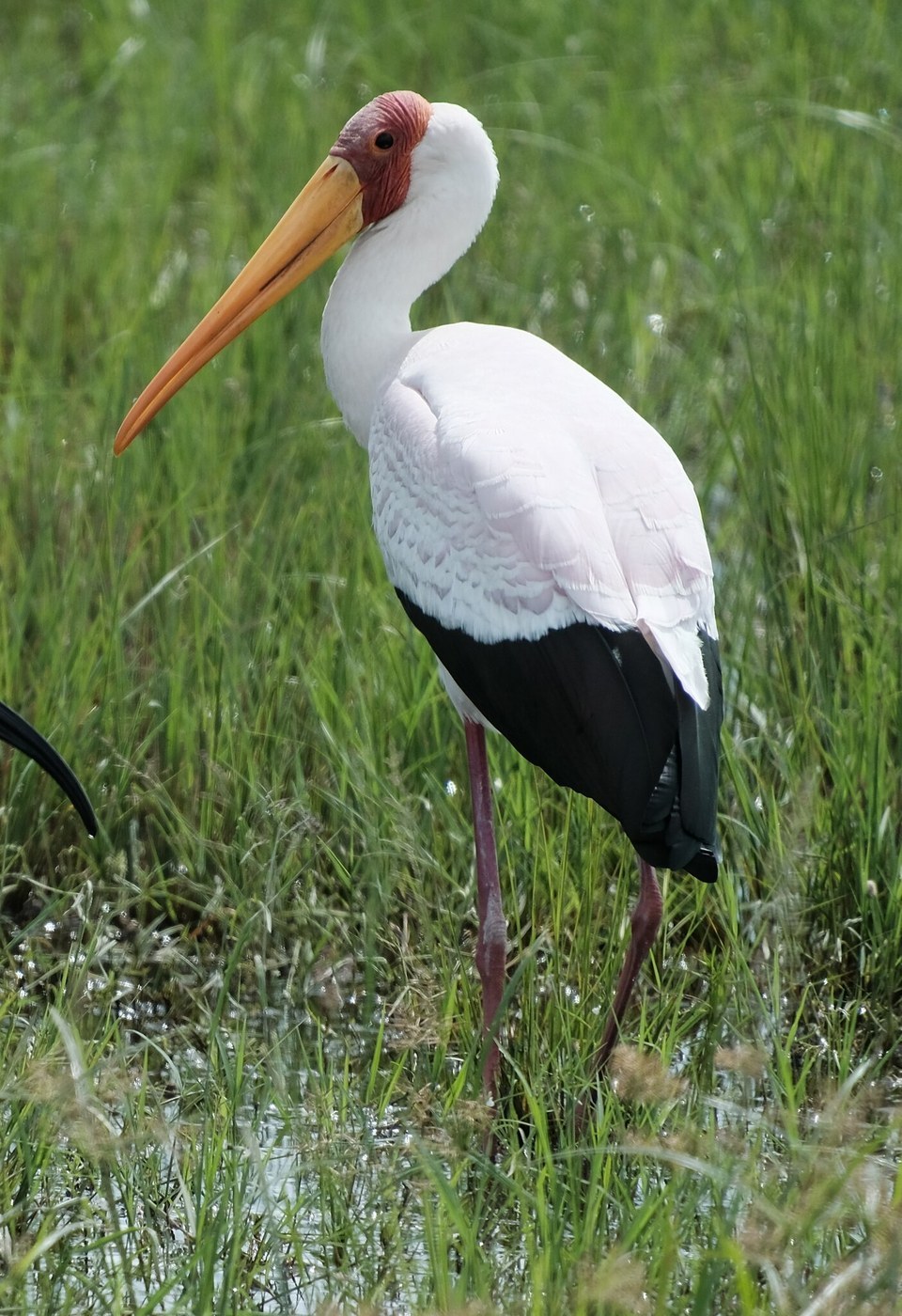
Key Field Marks
- Size & shape: A large wading stork with long legs, a long neck, and a heavy, slightly downcurved bill, standing roughly a meter tall.
- Plumage: Predominantly white body plumage, often washed with soft pink on the back and wing coverts in breeding adults, contrasting sharply with glossy black flight feathers and a black tail.
- Bill & face: Bright yellow, slightly downcurved bill and bare, reddish-to-orange facial skin, most vivid in breeding condition; non-breeding and immature birds show a duller, more orange-yellow bill and grayer facial skin.
- Legs: Pink legs (can appear reddish or duller depending on condition and mineral staining from mud).
- Behavior: Feeds using a distinctive tactile method — wading in shallow water while sweeping its partly open bill side to side through the water to detect and snap up fish by touch rather than sight, one of the fastest reflex strikes known among birds.
Separating It From Similar Species
- African Spoonbill: Also white with a bare red face and pink-red legs, but has a flattened, spoon-shaped bill rather than a stork's heavy downcurved bill, and a slighter build overall.
- Painted Stork: Very similar in general appearance and feeding behavior but occurs only in Asia, so there is no range overlap with Yellow-billed Stork in Africa.
- Immature/non-breeding Yellow-billed Storks can look duller and grayer overall, with a less vividly colored bill and face than breeding adults, but the overall shape and behavior remain consistent.
Habitat, Range & Season
- Widespread across sub-Saharan Africa and Madagascar, found in shallow wetlands, lakes, rivers, floodplains, and seasonally flooded pans.
- Often forms large single- or mixed-species colonies with other storks, herons, and ibises when breeding.
- Largely resident but shows local and seasonal movements tracking water levels and prey availability, particularly in regions with strong wet/dry seasonality.
Voice
- Mostly silent away from the breeding colony; at the nest it communicates mainly through bill-clattering displays rather than vocal calls, typical of storks in general.
Frequently asked questions
How does the Yellow-billed Stork catch fish?
It wades in shallow water and sweeps its partly open bill side to side, snapping shut by touch the instant it contacts a fish — one of the fastest reflexive strikes recorded in birds.
How do I tell Yellow-billed Stork from African Spoonbill?
Yellow-billed Stork has a heavy, slightly downcurved bill typical of storks, while African Spoonbill has a flat, spoon-shaped bill; both can show a reddish face and pink legs.
Is the Yellow-billed Stork found outside Africa?
No, it is restricted to sub-Saharan Africa and Madagascar; the similar-looking Painted Stork fills an equivalent role in Asia.
What color is the Yellow-billed Stork's plumage?
Mostly white, often tinged pink on the back and wing coverts in breeding adults, with contrasting black flight feathers and tail.
Yellow-billed Stork identified by the community
Recent Yellow-billed Stork sightings identified with Bird Identifier.