
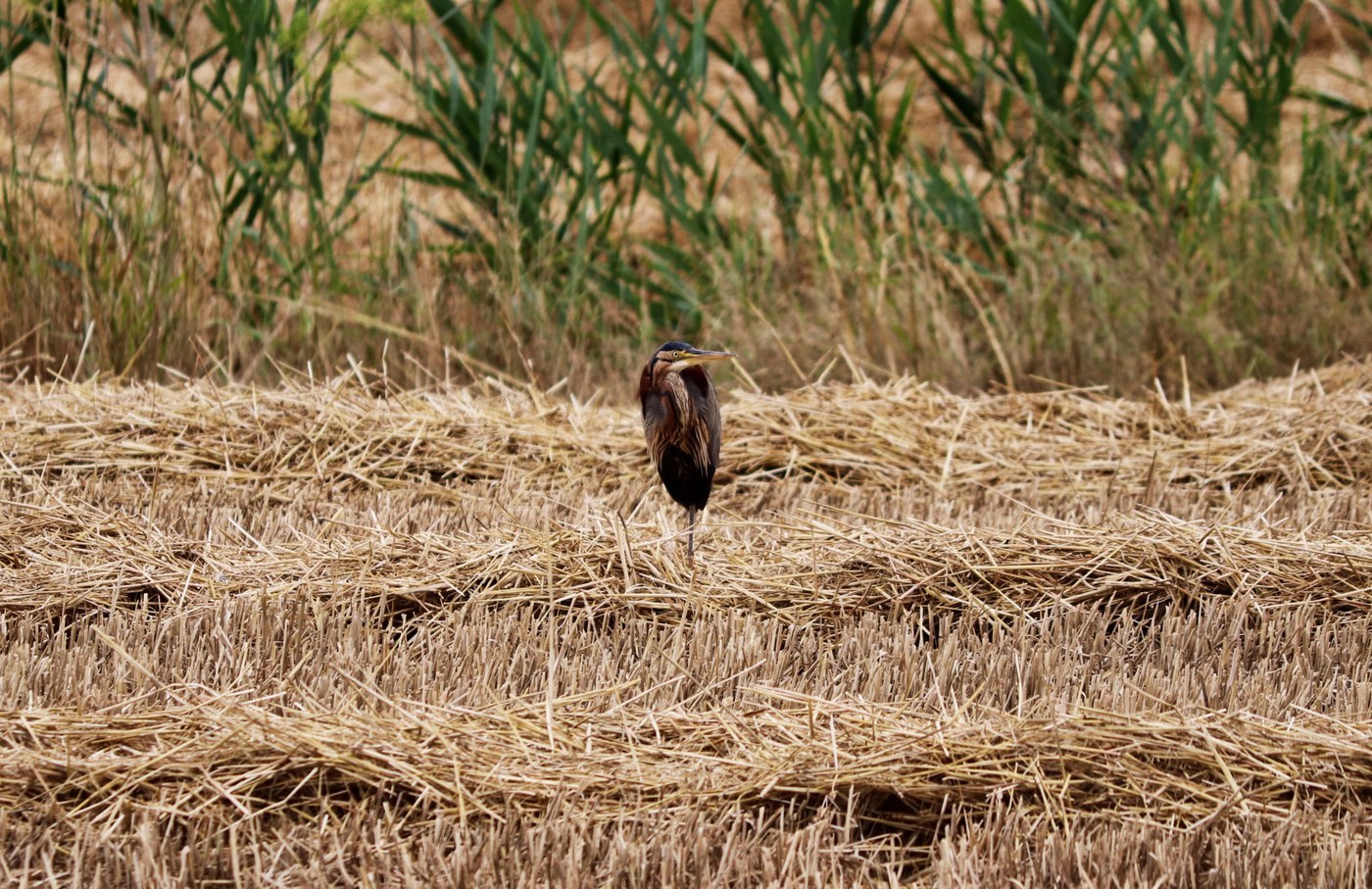
Purple Heron
Ardea purpurea
A slender, reddish-necked relative of the Grey Heron that hides among reedbeds across Africa, Europe, and Asia.
- Size
- 78-90 cm (31-35 in) long, 120-152 cm wingspan
- Habitat
- dense reedbeds, marshes, and swamps across Africa, Europe, and Asia
- Type
- wading-bird
Spotted a bird like this?
Identify any bird from a photo, free.
Overview
The Purple Heron is a large, slim heron closely related to the Grey Heron but noticeably more colorful and secretive. Its long, sinuous neck is a rich rufous-chestnut, marked with black streaking, and it carries a dark cap with a thin black crest. The upperparts are a mix of grey, chestnut, and maroon, giving the bird an overall warm, purplish cast in good light, while the underparts show dark chestnut and black streaking down the flanks.
Purple Herons are built for life in dense vegetation: their toes are notably long, helping them balance on reed stems and floating vegetation, and their neck is thinner and more kinked than a Grey Heron's, an adaptation that lets them slip through tight reed cover. They are widespread across the wetlands of Africa, southern Europe, and Asia, and northern populations undertake long migrations to sub-Saharan Africa for the winter.
How to identify it
Key field marks
- Rich chestnut-rufous neck with dark streaking, contrasting with grey-brown upperparts
- Dark cap with thin black crest plumes
- Slimmer, more snake-like neck than Grey Heron, often held in a tighter kink
- Long, dagger-like yellowish bill
- Long toes and legs adapted for walking on reeds and floating vegetation
Similar species
The Grey Heron is the most likely confusion species: it is larger, bulkier, and pale grey overall with a white head and neck rather than chestnut. In flight, Purple Herons look darker and more slender-necked, with their feet often trailing further behind the tail. Juvenile Purple Herons are duller brown but still show the same slim build and long toes that separate them from young Grey Herons.
Habitat & range
Habitat
Purple Herons favor extensive reedbeds, papyrus swamps, and densely vegetated marshes with standing water, rather than the open riverbanks and lakeshores preferred by Grey Herons. They are far more skulking, spending much of the day hidden within cover.
Range and migration
The species breeds across sub-Saharan Africa, the Nile Delta, southern and eastern Europe, the Middle East, and much of southern and eastern Asia. European and temperate Asian breeders are strongly migratory, wintering in tropical Africa and South Asia, while African populations are largely resident.
Behavior & voice
Behavior
Purple Herons are solitary and wary, standing motionless in reed cover or stalking slowly at the water's edge before striking prey with a rapid thrust of the bill. They are less often seen in the open than Grey Herons and typically flush at a distance, flying low over the reeds with slow wingbeats.
Voice
A harsh, croaking "fraaank" call, deeper and harsher than the Grey Heron's, given mainly in flight or when disturbed.
Feeding
They hunt fish, frogs, and large insects by standing and waiting or slowly stalking through shallow water and reed margins.
Nesting and breeding
Purple Herons nest colonially in reedbeds, building platform nests of reed stems low over water rather than in trees like many other herons. Clutches typically number 3-5 eggs, incubated by both parents.
Frequently asked questions
How do you tell a Purple Heron from a Grey Heron?
Purple Herons have a chestnut neck and darker, more slender build, while Grey Herons are larger with a pale grey body and white head and neck.
Where do Purple Herons live?
They inhabit reedbeds and dense marshes across Africa, southern Europe, and Asia, with northern populations migrating to Africa for winter.
What does a Purple Heron eat?
Mainly fish, amphibians, and large aquatic insects caught with a quick strike of its bill.
Are Purple Herons rare?
No, they are widespread and classified as Least Concern, though local populations can be sensitive to wetland drainage.
Purple Heron guides
In-depth guides for identifying, finding, and understanding Purple Heron.
Other birds you may enjoy
Demoiselle Crane
85-100 cm (33-39 in) long, 155-180 cm wingspan
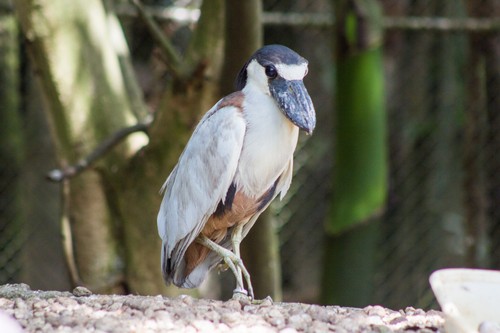
Boat-billed Heron
41-56 cm (16-22 in) long
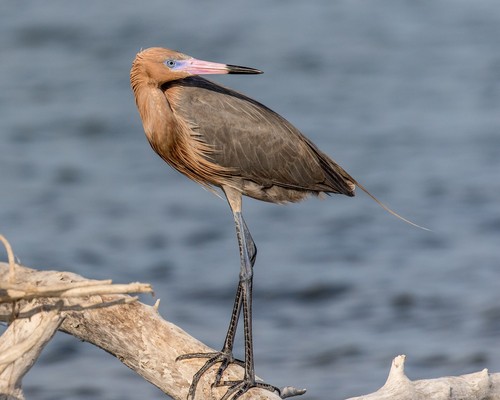
Reddish Egret
68-82 cm (27-32 in) long, 116-125 cm wingspan
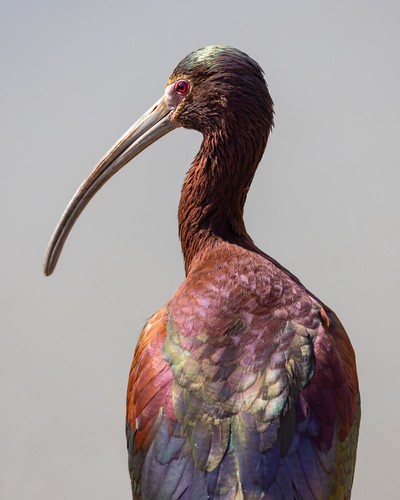
White-faced Ibis
46-56 cm (18-22 in) long, 88-93 cm wingspan
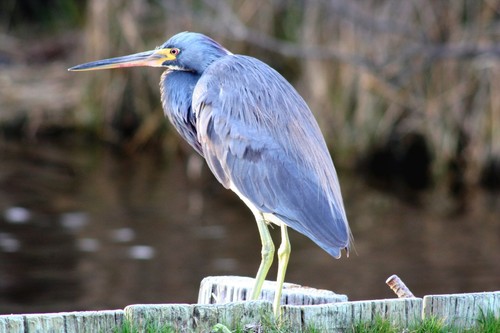
Tricolored Heron
61-76 cm (24-30 in) long, about 96 cm wingspan
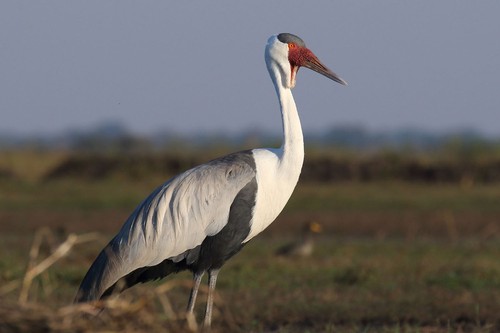
Wattled Crane
120-175 cm (47-69 in) tall, one of the tallest cranes, wingspan up to about 230 cm (7.5 ft)
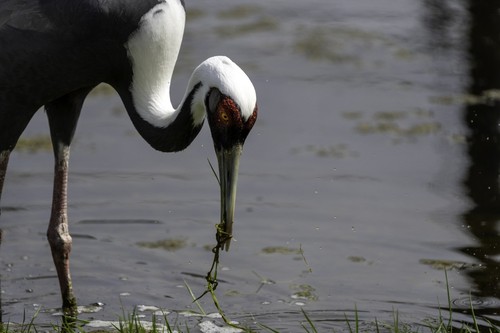
White-naped Crane
112-125 cm (44-49 in) long, 195-210 cm wingspan
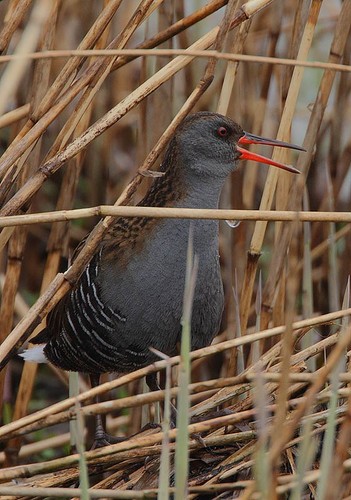
Water Rail
23-28 cm (9-11 in) long, wingspan 38-45 cm
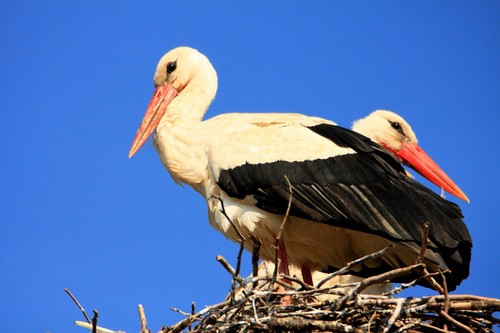
White Stork
100-125 cm (39-49 in) long, 155-215 cm wingspan
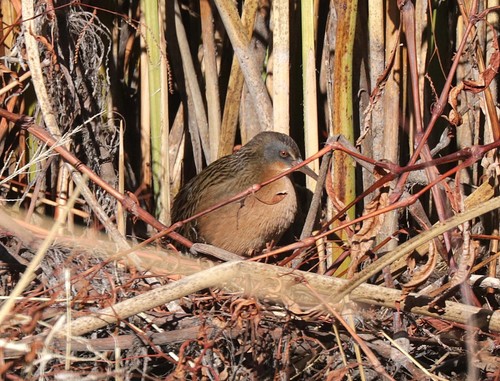
Virginia Rail
20-27 cm (8-11 in) long, wingspan 32-38 cm
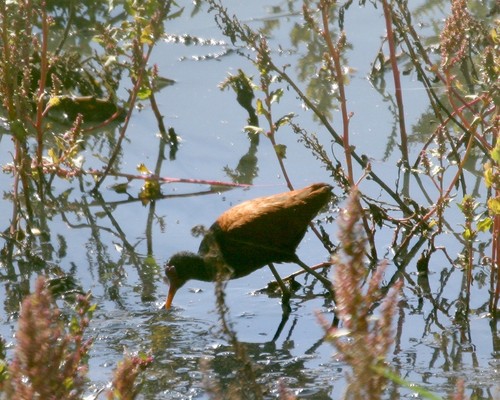
Wattled Jacana
17-23 cm (7-9 in) long
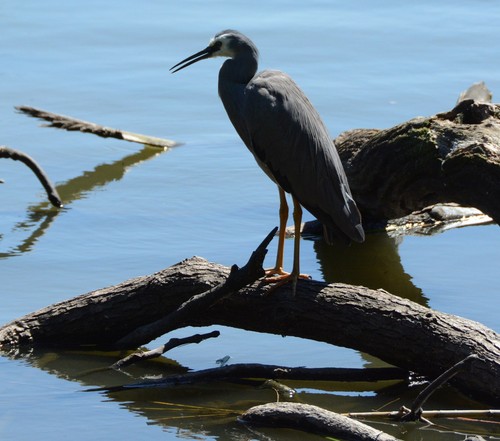
White-faced Heron
60-70 cm (24-28 in) long, 106 cm wingspan