
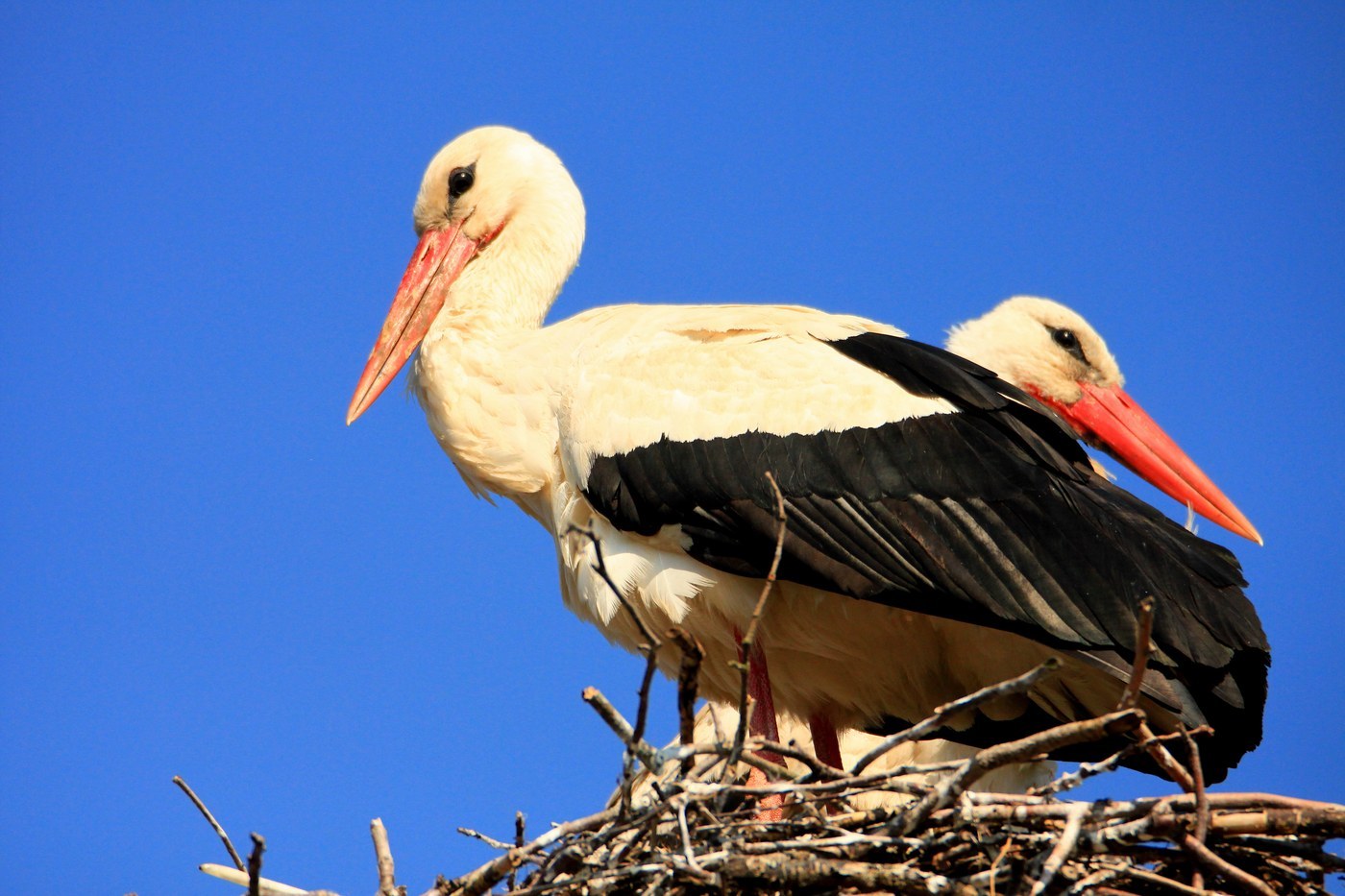
White Stork
Ciconia ciconia
The iconic white-and-black European stork with a long red bill and legs, famous for nesting on rooftops and chimneys and for its folklore association with delivering babies.
- Size
- 100-125 cm (39-49 in) long, 155-215 cm wingspan
- Habitat
- farmland, grassland, marshes, and wetlands near villages and towns
- Type
- wading-bird
Spotted a bird like this?
Identify any bird from a photo, free.
Overview
The White Stork is a large, elegant bird with pure white plumage, contrasting black flight feathers, and a long, straight red bill and red legs. It is one of the most culturally significant birds in Europe, deeply woven into folklore, most famously the legend that storks deliver newborn babies.
White Storks are long-distance migrants that breed across much of Europe, North Africa, and western Asia and winter in sub-Saharan Africa or the Indian subcontinent. Their habit of building enormous stick nests on rooftops, chimneys, utility poles, and purpose-built platforms has made them a familiar and welcomed sight in many European towns and villages.
How to identify it
Key field marks
- Large, all-white body with black flight feathers visible on the trailing edge of the wing
- Long, straight, bright red bill
- Long red legs, often visible trailing behind in flight
- Flies with neck fully extended, unlike herons
Similar species
The Black Stork has a mostly black body with only a white belly and is far more secretive, favoring forested wetlands. The Oriental Stork looks similar to the White Stork but has a black (not red) bill and red skin around the eye. Great White Pelican is bulkier with a huge bill and pouch and flies with the neck retracted.
Habitat & range
White Storks favor open habitats such as farmland, wet meadows, pastures, and marshes where they can forage for prey stirred up by grazing animals or agricultural activity. They are strongly associated with human settlements, frequently nesting on buildings, chimneys, and electricity pylons in towns and villages.
The species breeds from Iberia and Central Europe eastward through Eastern Europe, Turkey, and Central Asia. Most European populations are long-distance migrants, wintering in sub-Saharan Africa, while some western populations (notably in Iberia) have become increasingly resident, aided by warmer winters and food available at landfill sites.
Behavior & voice
White Storks are largely silent, communicating primarily through loud, rhythmic bill-clattering displays performed with the head thrown back, especially during courtship and nest defense. They forage by walking slowly through grassland or shallow water, seizing insects, frogs, small rodents, and other prey with a quick jab of the bill.
They nest in large stick platforms, often reused and added to over many years, sometimes reaching over a meter across and weighing hundreds of kilograms. Pairs are often monogamous for a breeding season and may reunite at the same nest site in successive years. Both parents incubate the typical clutch of 3-5 eggs and share feeding duties. Migration is undertaken in large soaring flocks that avoid long sea crossings, funneling through narrow straits such as Gibraltar and the Bosphorus.
Frequently asked questions
Why do White Storks nest on rooftops?
Rooftops, chimneys, and utility poles offer tall, stable, predator-free platforms near open foraging habitat, and many communities actively encourage nesting with purpose-built platforms.
Where do White Storks migrate?
Most European breeders migrate to sub-Saharan Africa for the winter, traveling in large soaring flocks along narrow land routes such as the Strait of Gibraltar or the Bosphorus to avoid long sea crossings.
Why is the White Stork associated with delivering babies?
This is an old European folk legend, likely tied to the stork's habit of returning to the same nest each spring around the time many babies were traditionally born, and its image as a gentle, family-oriented bird.
What sound does a White Stork make?
Adults rarely vocalize; instead they communicate with loud bill-clattering displays produced by rapidly snapping the mandibles together.
Is the White Stork endangered?
No, it is listed as Least Concern, with populations recovering in many parts of Europe thanks to conservation programs and reintroduction efforts.
White Stork guides
In-depth guides for identifying, finding, and understanding White Stork.
Other birds you may enjoy
Demoiselle Crane
85-100 cm (33-39 in) long, 155-180 cm wingspan
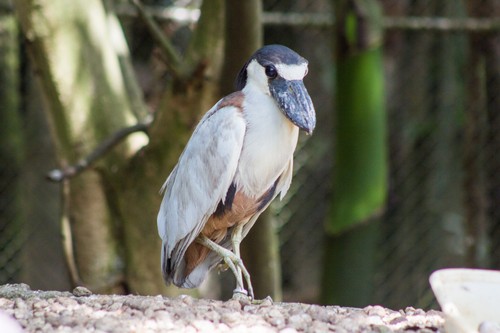
Boat-billed Heron
41-56 cm (16-22 in) long
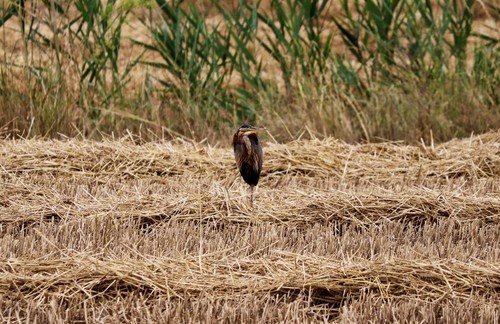
Purple Heron
78-90 cm (31-35 in) long, 120-152 cm wingspan
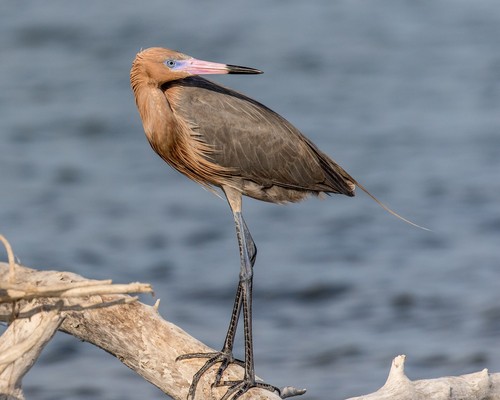
Reddish Egret
68-82 cm (27-32 in) long, 116-125 cm wingspan
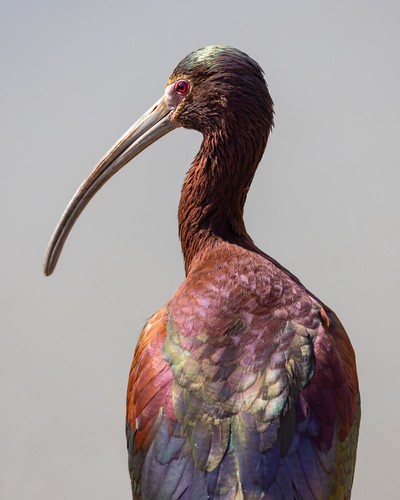
White-faced Ibis
46-56 cm (18-22 in) long, 88-93 cm wingspan
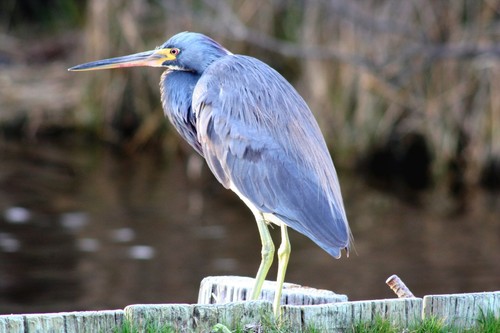
Tricolored Heron
61-76 cm (24-30 in) long, about 96 cm wingspan
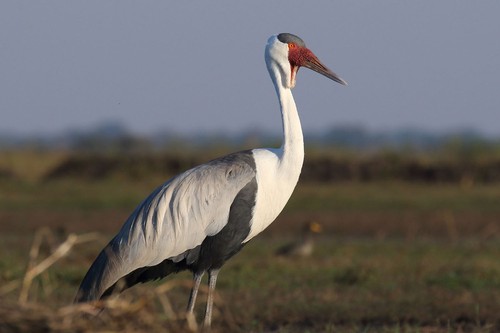
Wattled Crane
120-175 cm (47-69 in) tall, one of the tallest cranes, wingspan up to about 230 cm (7.5 ft)

White-naped Crane
112-125 cm (44-49 in) long, 195-210 cm wingspan
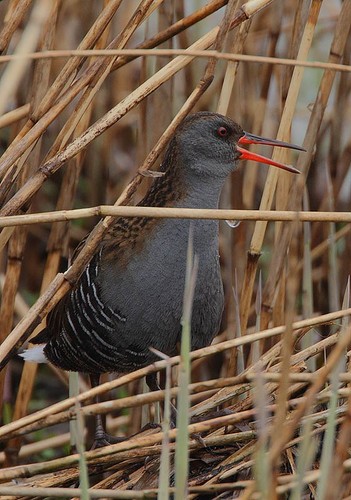
Water Rail
23-28 cm (9-11 in) long, wingspan 38-45 cm

Virginia Rail
20-27 cm (8-11 in) long, wingspan 32-38 cm

Wattled Jacana
17-23 cm (7-9 in) long

White-faced Heron
60-70 cm (24-28 in) long, 106 cm wingspan