
Purple Heron Identification Guide
A slender, rusty-necked heron of reedbeds and marshes across Africa, Asia, and southern Europe, told from the Grey Heron by its darker, more sinuous build and chestnut coloring.
Read the full Purple Heron encyclopedia entry →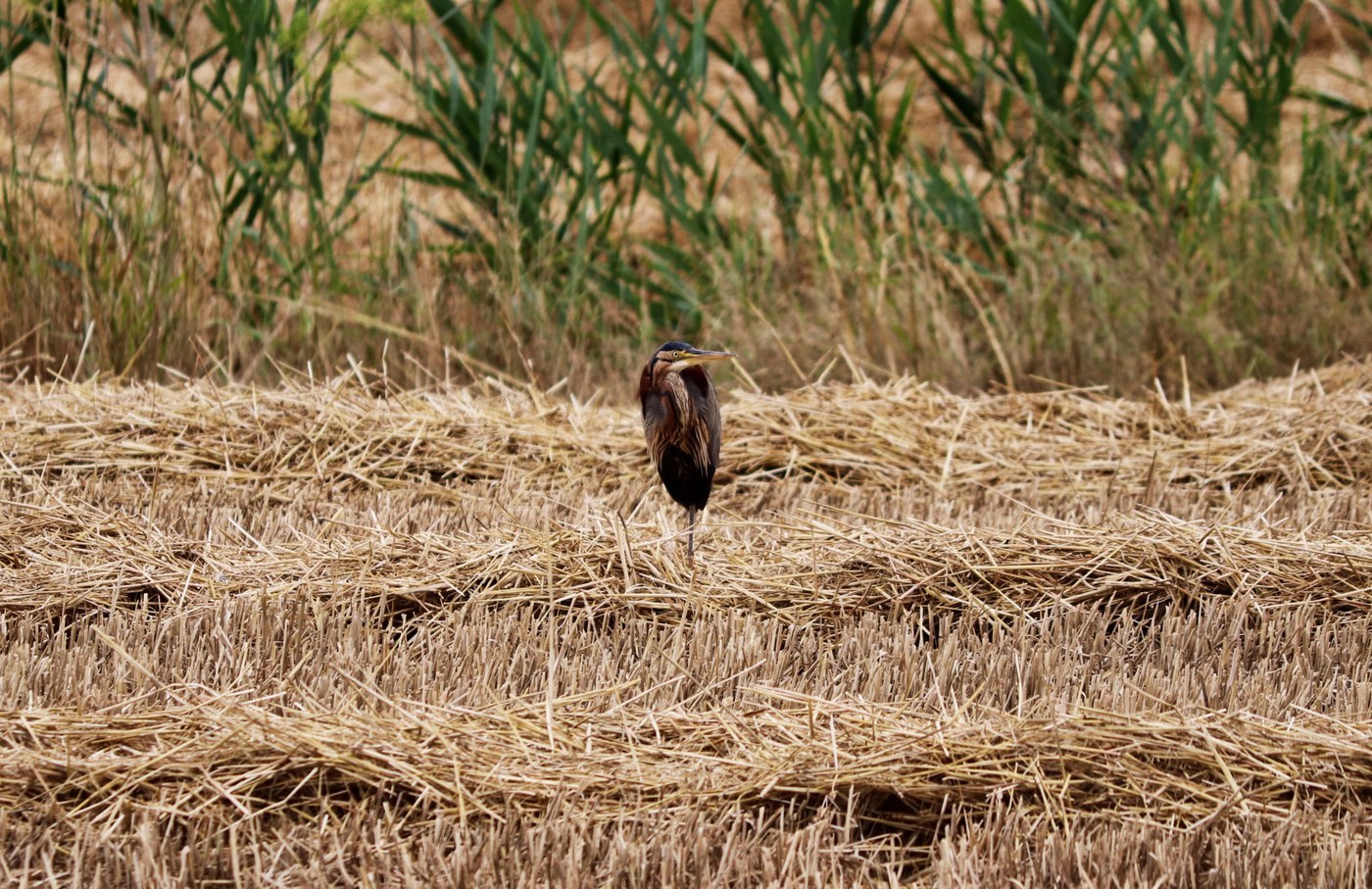
Key Field Marks
- Size & shape: A large heron (78–90 cm / 31–35 in) but noticeably slimmer, longer-necked, and more snake-like than the Grey Heron, with a distinctly kinked neck often held in an S-curve.
- Plumage: Overall dark, with rufous-chestnut neck striped black and white down the foreneck, slaty-purple back and wing coverts, and a chestnut belly. Juveniles are much browner and more rufous overall, lacking the crisp adult contrast.
- Head & bill: Long, thin, dagger-like yellowish bill (brighter and more orange in breeding adults); black crown stripe extends into wispy black plumes on the nape.
- Legs: Long, yellowish-brown to dull yellow legs and long toes adapted for walking on floating vegetation.
- Behavior: More secretive and reed-dependent than Grey Heron; often stands hunched deep in reedbeds rather than in the open, and when disturbed flies with a slower, more labored wingbeat, neck retracted in flight.
Separating from Similar Species
- Grey Heron: Bulkier, paler gray overall, with a whitish head/neck and no rufous tones; Grey Heron is more likely seen in the open on lakeshores, whereas Purple Heron favors dense reeds and rarely perches in trees.
- Juvenile vs. juvenile Grey Heron: Young Purple Herons are warm brown/rufous rather than gray-brown, and show the same slim neck and long toes.
- Goliath Heron (where ranges overlap in Africa): Goliath Heron is far larger and heavier-billed; Purple Heron is noticeably smaller and slimmer.
Where & When to See It
- Habitat: Dense freshwater marshes, reedbeds, rice paddies, and swamp margins; far more tied to tall emergent vegetation than open-water herons.
- Range: Breeds across much of sub-Saharan Africa, the Nile Delta, southern and central Europe, the Middle East, and South and East Asia; northern populations are migratory, wintering in Africa and South Asia.
- Season: In temperate Europe and Asia, present April–September as a summer breeder; resident year-round in tropical Africa and South/Southeast Asia.
Voice & Behavior Cues
- Gives a harsh, croaking "fraaank" call, deeper and more guttural than the Grey Heron's, typically given in flight or when flushed from cover.
- Often forages alone, standing motionless or stalking slowly at the reed edge, and can climb into reeds using its long toes rather than always wading.
Frequently asked questions
How do I tell a Purple Heron from a Grey Heron?
Purple Heron is smaller, slimmer, and darker overall with a rusty-chestnut neck and slate-purple body, versus the Grey Heron's pale gray, whitish-headed, bulkier look. Purple Herons also favor dense reedbeds rather than open shorelines.
What habitat is best for finding a Purple Heron?
Look in extensive reedbeds, marshes, and rice paddies with tall emergent vegetation; it rarely uses open lake edges or perches conspicuously the way Grey Herons do.
Do Purple Herons migrate?
European and temperate Asian breeding populations migrate south to Africa and South Asia for winter, while African and tropical Asian populations are largely resident.
What does a Purple Heron sound like?
It gives a deep, harsh croaking 'fraaank' call, usually heard when the bird is flushed or in flight, lower-pitched than the similar call of a Grey Heron.