
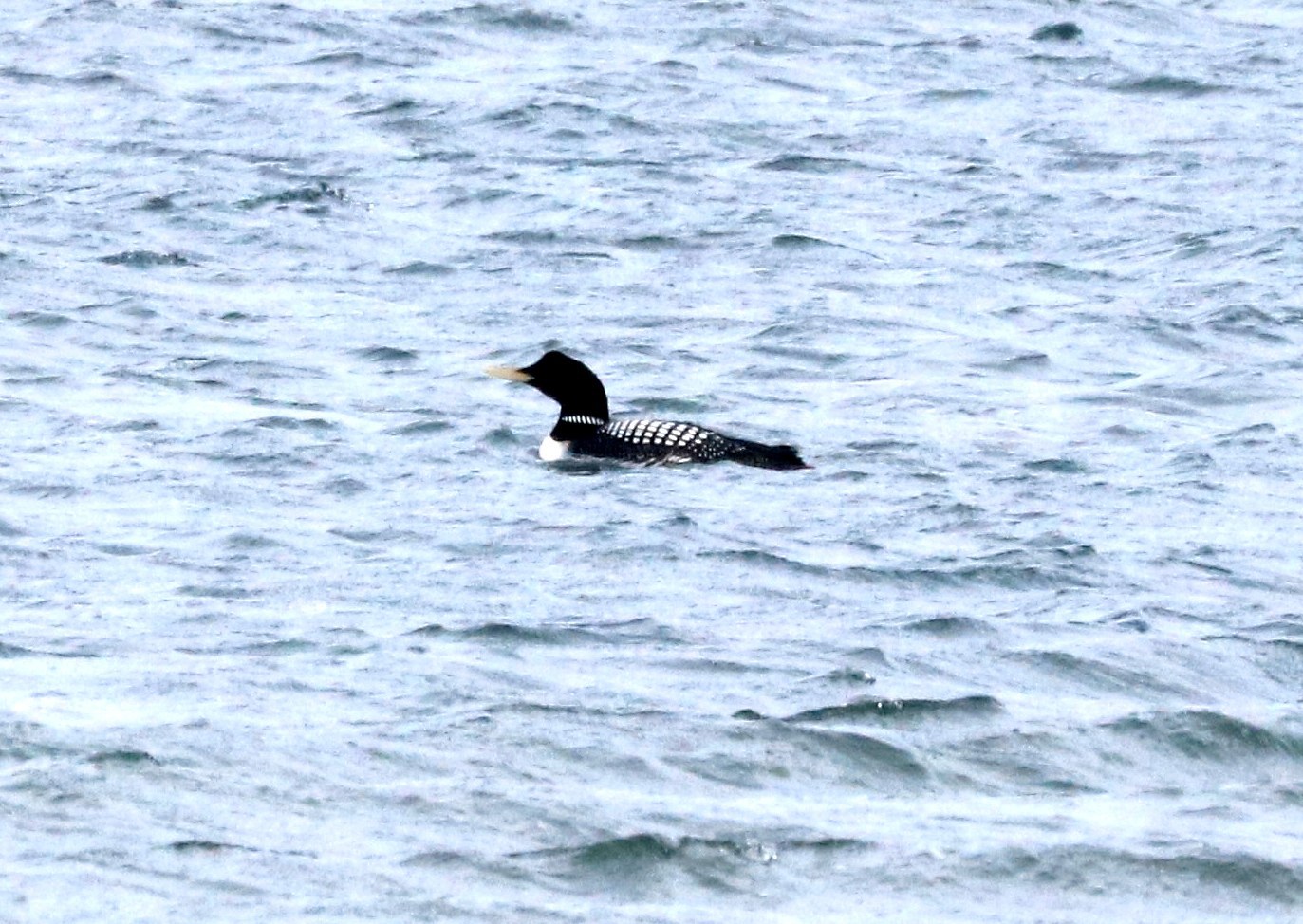
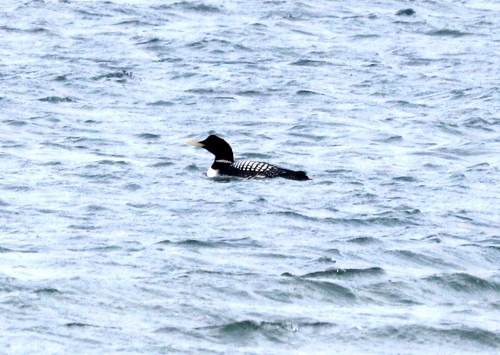
Yellow-billed Loon
Gavia adamsii
The largest and rarest loon species, identified by its massive, pale, slightly upturned yellowish bill.
- Size
- 76-97 cm (30-38 in) long, 135-152 cm wingspan
- Habitat
- remote arctic tundra lakes for breeding, coastal seas in winter
- Type
- seabird
Spotted a bird like this?
Identify any bird from a photo, free.
Overview
The Yellow-billed Loon is the largest and most massively built of the world's five loon species, closely resembling the Common Loon but distinguished by its notably pale, ivory-yellow bill, which appears slightly upturned along the lower edge. Breeding adults show the same striking black head and checkerboard back pattern typical of large loons, but the pale bill stands out strongly against the dark head even at a distance.
It breeds in very low densities across remote Arctic tundra, making it one of the least commonly encountered loon species and a prized sighting for birders.
How to identify it
Key field marks
- Large, heavy-bodied loon with a thick neck
- Pale ivory-yellow bill, held at a slight upward angle, that appears massive and bright even from a distance
- Breeding: glossy black head, white-striped neck collar, checkered black-and-white back
- Non-breeding: retains the pale bill, a key clue distinguishing it from winter Common Loons
Similar species
- Common Loon is very similar in shape and pattern but has a darker, grey-black bill.
- Size and overall bulk are similar to the Common Loon, so bill color is the most reliable distinguishing feature.
Habitat & range
Habitat
Breeds on large, remote tundra lakes in the high Arctic; winters on ice-free coastal marine waters.
Range
Breeds across the Arctic coasts of Alaska, northern Canada, and Siberia; winters along the North Pacific coast and parts of northern Europe.
Migration
Migrates from remote Arctic breeding lakes to coastal wintering areas, generally in smaller numbers and lower densities than other loon species.
Behavior & voice
Behavior
Typically found alone or in widely scattered pairs on large tundra lakes, being less social than some other loon species during the breeding season.
Voice
Gives haunting wails and yodels similar to the Common Loon, though generally heard less often due to its remote breeding range.
Feeding
Dives to catch fish and aquatic invertebrates in both freshwater and marine habitats.
Nesting
Builds a simple mound nest at the edge of large tundra lakes; typically lays 2 olive-brown eggs.
Frequently asked questions
How do you identify a Yellow-billed Loon?
Look for a large loon with a pale, ivory-yellow bill held at a slight upward angle, distinguishing it from the similar but darker-billed Common Loon.
Is the Yellow-billed Loon rare?
It is the rarest of the loon species, breeding at very low densities across remote Arctic tundra, and is classified as Near Threatened.
Where does the Yellow-billed Loon breed?
It breeds on large tundra lakes across the Arctic coasts of Alaska, northern Canada, and Siberia.
What is the main difference between Yellow-billed and Common Loons?
The Yellow-billed Loon has a pale ivory-yellow bill, while the Common Loon's bill is dark grey to black.
Yellow-billed Loon guides
In-depth guides for identifying, finding, and understanding Yellow-billed Loon.
Other birds you may enjoy
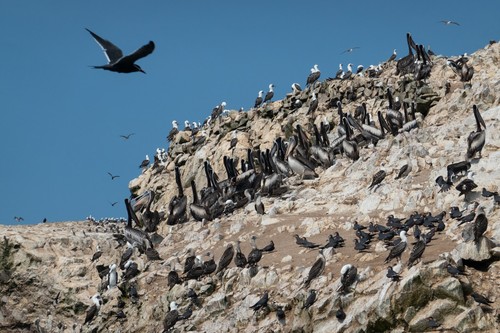
Peruvian Pelican
137-152 cm (54-60 in) long, up to 228 cm wingspan
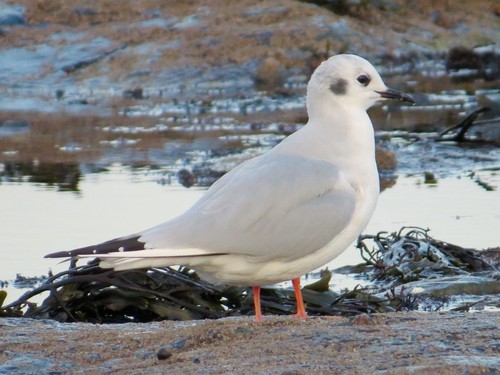
Bonaparte's Gull
28-33 cm (11-13 in) long, 76-84 cm wingspan
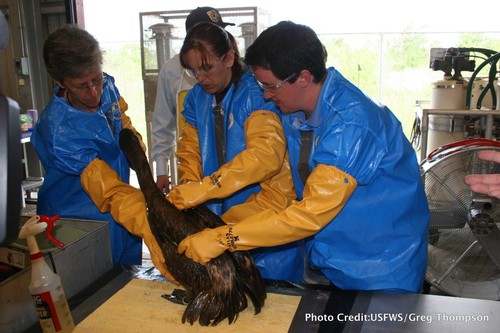
Brown Pelican
106-137 cm (42-54 in) long, 200-230 cm wingspan
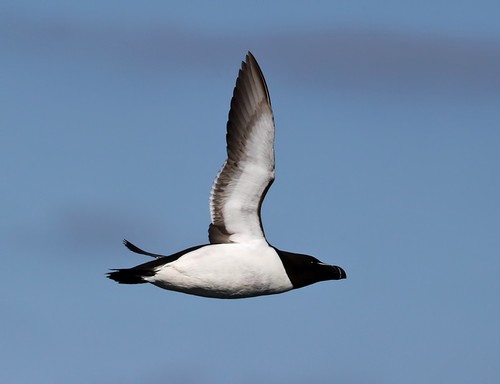
Razorbill
37-39 cm (15-15.5 in) long, 63-68 cm wingspan
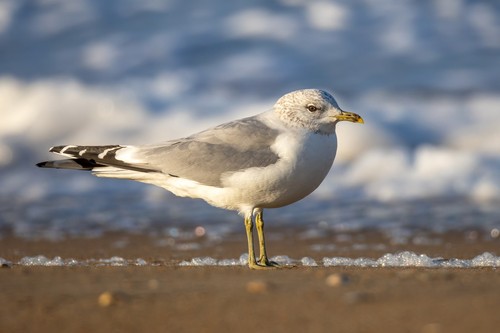
Common Gull
40-46 cm (16-18 in) long, 110-130 cm wingspan
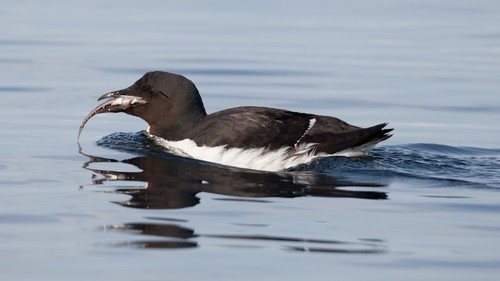
Thick-billed Murre
40-48 cm (16-19 in) long, 65-75 cm wingspan
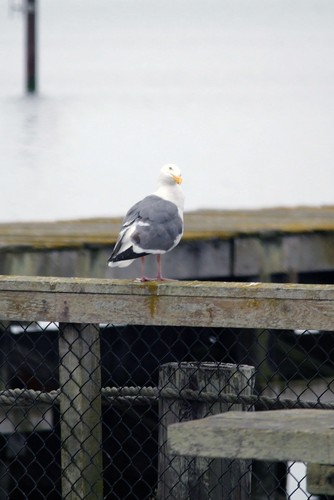
Western Gull
55-68 cm (22-27 in) long, 130-144 cm wingspan
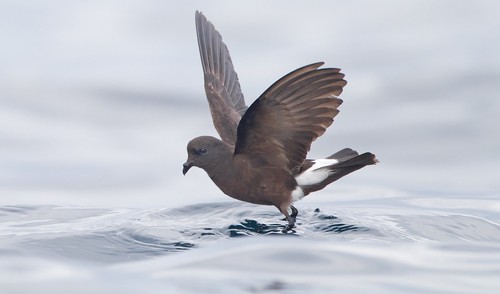
Wilson's Storm-Petrel
15-19 cm (6-7.5 in) long, wingspan 38-42 cm (15-16.5 in)
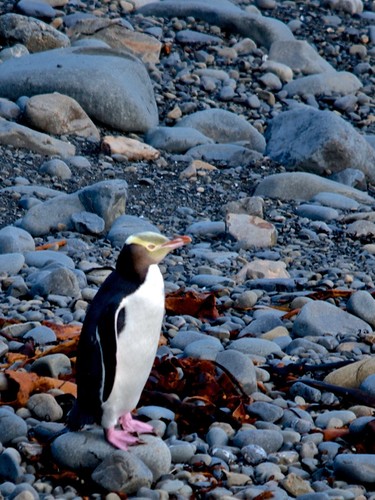
Yellow-eyed Penguin
62-79 cm (24-31 in) tall, 3-8.5 kg (6.6-18.7 lb)
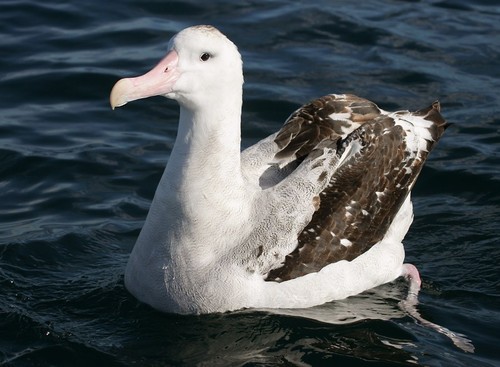
Wandering Albatross
107-135 cm (42-53 in) long, wingspan up to 3.5 m (11.5 ft)

Tufted Puffin
35-41 cm (14-16 in) long, about 63-70 cm wingspan
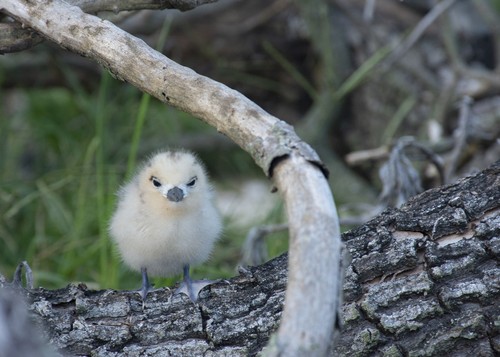
White Tern
28-33 cm (11-13 in) long, 70-87 cm wingspan