
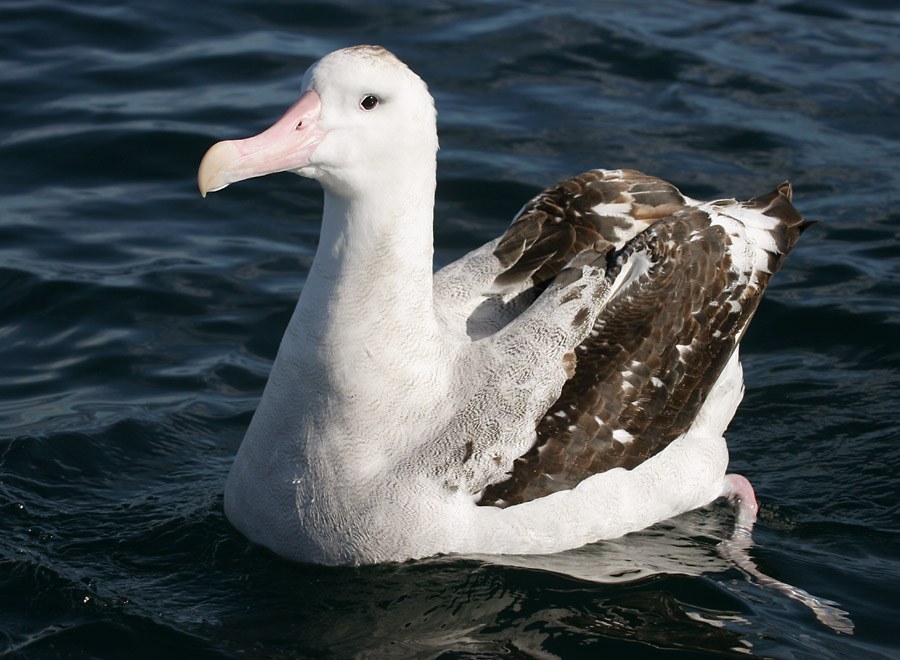
Wandering Albatross
Diomedea exulans
The largest flying seabird in the world, with a wingspan reaching up to 3.5 meters, capable of gliding for thousands of miles over the Southern Ocean with barely a wingbeat.
- Size
- 107-135 cm (42-53 in) long, wingspan up to 3.5 m (11.5 ft)
- Habitat
- open Southern Ocean, breeding on remote subantarctic islands
- Type
- seabird
Spotted a bird like this?
Identify any bird from a photo, free.
Overview
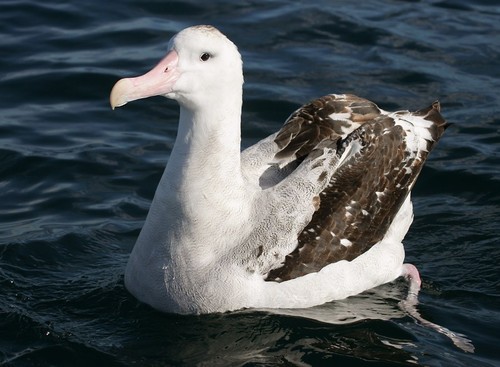
The Wandering Albatross holds the record for the largest wingspan of any living bird, with some individuals stretching to an extraordinary 3.5 meters (11.5 ft) tip to tip. Adults are predominantly white, with black flight feathers along the trailing edge and tips of the wings, and a large, hooked pale pink bill.
Plumage varies considerably with age: young birds fledge in mostly chocolate-brown plumage and become progressively whiter with each successive molt over many years, so that only the oldest adults achieve the near-pure white body and black-edged wings typical of the species at its most striking.
True to its name, the Wandering Albatross ranges enormously far from its breeding islands, using dynamic soaring to glide effortlessly over Southern Ocean waves for days or weeks at a time, covering thousands of kilometers on a single foraging trip.
How to identify it
Key field marks
- Enormous wingspan, the largest of any living bird
- Mostly white body with black wingtips and trailing edges (in older adults)
- Large, pale pink, hooked bill
- Pink legs and feet
Similar species
- Royal Albatross is very similar in size and plumage but has a black cutting edge along the upper mandible visible at close range, and differs subtly in molt pattern of the upperwing.
- Younger Wandering Albatrosses in brown plumage can resemble immature Royal Albatrosses; both require careful observation of bill and wing pattern to separate reliably.
Habitat & range
Wandering Albatrosses breed on remote subantarctic islands scattered across the Southern Ocean, including South Georgia, the Prince Edward Islands, the Crozet and Kerguelen Islands, and Macquarie Island. Nests are built on open, windswept tussock grassland slopes.
Outside of breeding, and during the long intervals between visits to the nest, adults range circumpolar across the Southern Ocean, sometimes circling the globe on extended foraging journeys that can cover tens of thousands of kilometers.
Behavior & voice
Voice
At colonies, Wandering Albatrosses perform elaborate courtship displays accompanied by loud braying, bill-clacking, and sky-pointing postures, while otherwise remaining largely silent at sea.
Feeding
They feed mainly on squid, fish, and crustaceans, taken from or near the sea surface, and also scavenge carrion including dead marine mammals, sometimes following fishing vessels.
Nesting and breeding
Pairs form long-term bonds and breed only every second year due to the exceptionally long chick-rearing period, which can last close to a year. A single egg is laid on a raised mound nest, and both parents share incubation and feeding duties over many months.
Frequently asked questions
How big is a Wandering Albatross wingspan?
It can reach up to about 3.5 meters (11.5 ft), the largest wingspan of any living bird species.
Where does the Wandering Albatross live?
It breeds on remote subantarctic islands like South Georgia and Kerguelen, and ranges across the open Southern Ocean the rest of the time.
Why do young Wandering Albatrosses look different from adults?
Fledglings are mostly dark brown, and plumage becomes progressively whiter with each molt over many years, so full adult whiteness takes a long time to develop.
How do Wandering Albatrosses fly such long distances?
They use a technique called dynamic soaring, exploiting wind gradients over ocean waves to glide for very long distances with minimal flapping.
How often do Wandering Albatrosses breed?
Because chick-rearing takes nearly a year, successful pairs typically breed only once every two years.
Wandering Albatross guides
In-depth guides for identifying, finding, and understanding Wandering Albatross.
Other birds you may enjoy
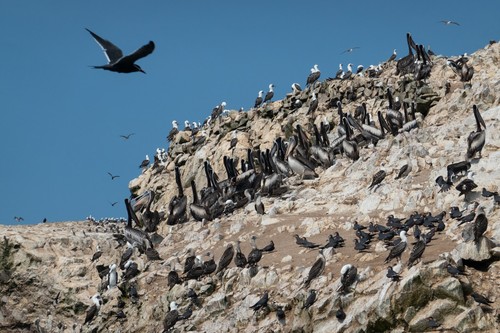
Peruvian Pelican
137-152 cm (54-60 in) long, up to 228 cm wingspan
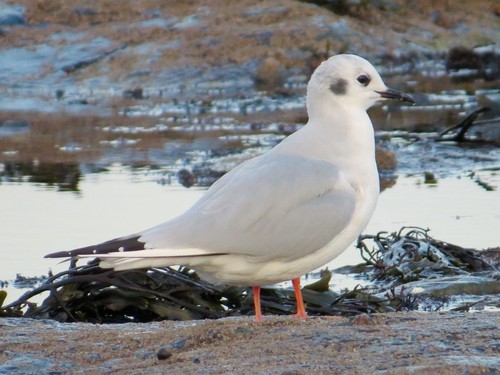
Bonaparte's Gull
28-33 cm (11-13 in) long, 76-84 cm wingspan
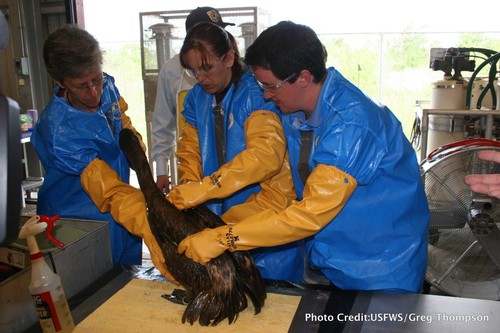
Brown Pelican
106-137 cm (42-54 in) long, 200-230 cm wingspan
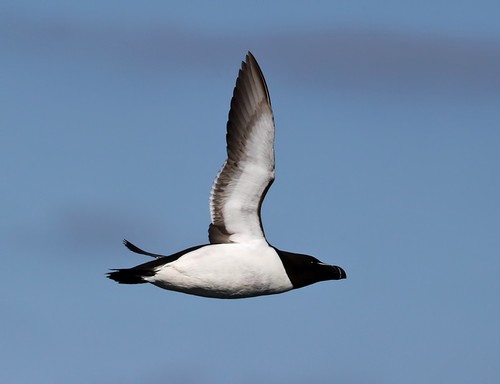
Razorbill
37-39 cm (15-15.5 in) long, 63-68 cm wingspan
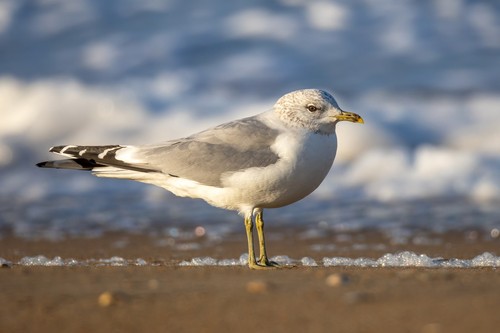
Common Gull
40-46 cm (16-18 in) long, 110-130 cm wingspan
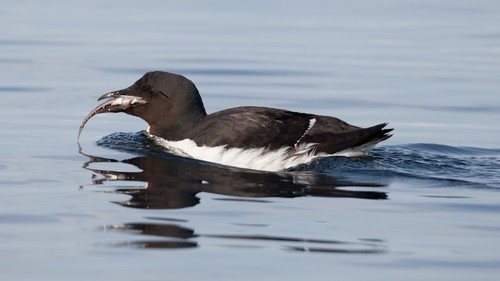
Thick-billed Murre
40-48 cm (16-19 in) long, 65-75 cm wingspan
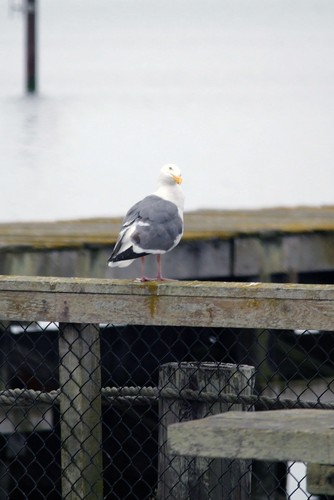
Western Gull
55-68 cm (22-27 in) long, 130-144 cm wingspan
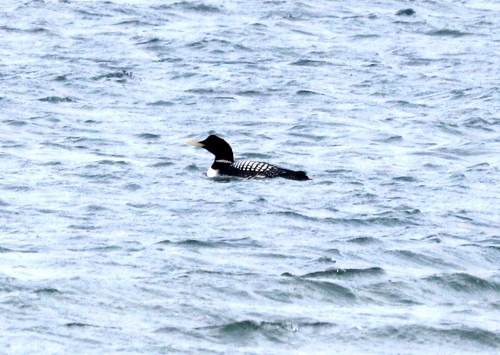
Yellow-billed Loon
76-97 cm (30-38 in) long, 135-152 cm wingspan
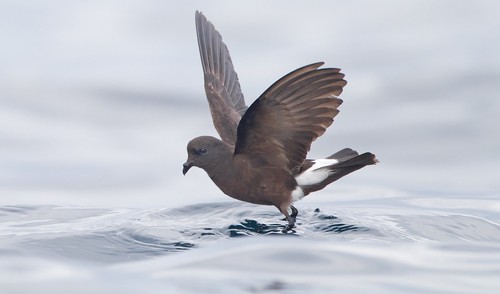
Wilson's Storm-Petrel
15-19 cm (6-7.5 in) long, wingspan 38-42 cm (15-16.5 in)
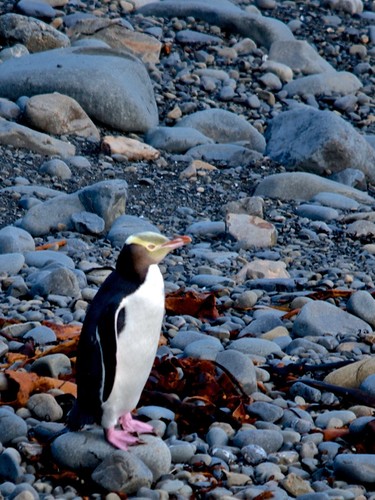
Yellow-eyed Penguin
62-79 cm (24-31 in) tall, 3-8.5 kg (6.6-18.7 lb)
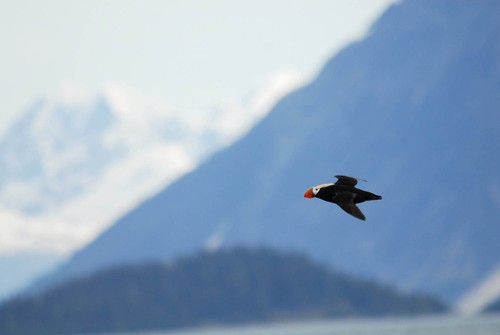
Tufted Puffin
35-41 cm (14-16 in) long, about 63-70 cm wingspan
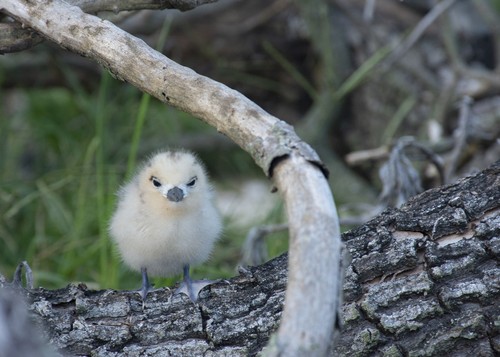
White Tern
28-33 cm (11-13 in) long, 70-87 cm wingspan