
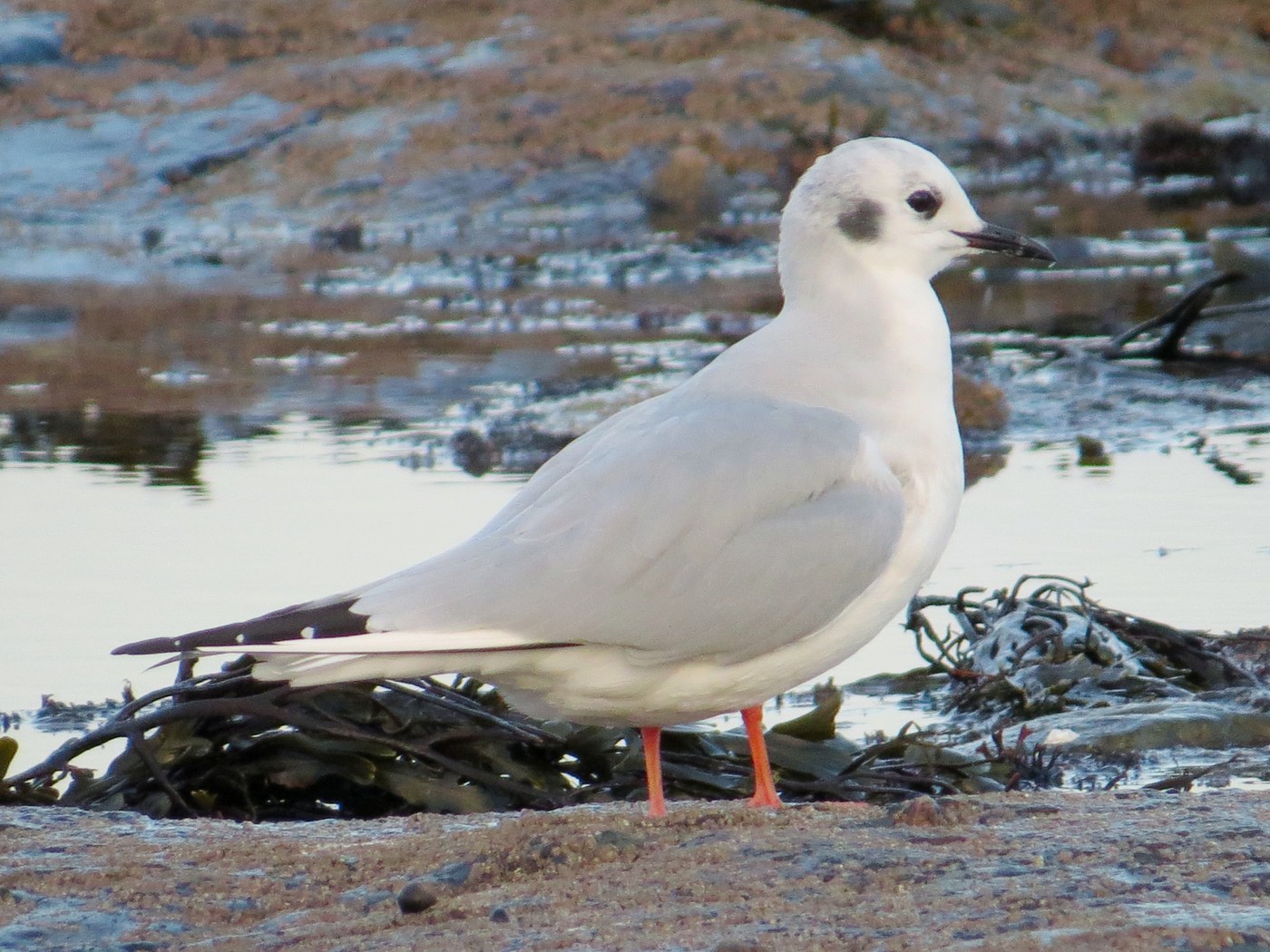
Bonaparte's Gull
Chroicocephalus philadelphia
A small, tern-like gull with a delicate black bill that is unusual among gulls for nesting in trees in the boreal forest.
- Size
- 28-33 cm (11-13 in) long, 76-84 cm wingspan
- Habitat
- boreal forest lakes and muskeg for breeding; coastal bays, estuaries, and lakes in winter
- Type
- seabird
Spotted a bird like this?
Identify any bird from a photo, free.
Overview
Bonaparte's Gull is one of the smallest and most graceful gulls in North America, with a light, buoyant, almost tern-like flight. In breeding plumage it has a neat black hood, pale gray back and wings, white underparts, and a slender black bill, quite different from the heavier red or yellow bills of most other gulls.
One of its most striking features in flight is the white wedge on the leading edge of the outer primaries, which flashes conspicuously as the bird wheels and dips over water. Legs are orange-red, another distinctive feature among small gulls. In non-breeding plumage the black hood is replaced by a white head with a small, neat black spot behind the eye.
Unusually for a gull, Bonaparte's Gull nests in coniferous trees near water rather than on the ground or in dense colonies, a habit shared by very few other gull species worldwide.
How to identify it
Key field marks
- Small size and light, tern-like flight
- Thin black bill (breeding and non-breeding)
- Black hood in breeding plumage; small black ear spot in winter
- White wedge on the leading edge of the outer wing, conspicuous in flight
- Orange-red legs
Similar species
- Little Gull: even smaller, with a dark underwing and rounder wings, lacking the white leading-edge wedge.
- Black-headed Gull: larger, with a red bill and legs and a browner hood when breeding.
- Laughing and Franklin's Gulls: notably larger and stockier, with red or dark bills and different wingtip patterns.
Habitat & range
Habitat
Breeding habitat is boreal forest with scattered spruce or larch near shallow lakes, ponds, and muskeg bogs. In migration and winter, Bonaparte's Gulls favor coastal bays, harbors, estuaries, and large inland lakes and rivers.
Range and migration
It breeds across the boreal forest of Alaska and Canada and winters along both the Atlantic and Pacific coasts of North America, south to Mexico, as well as on the Great Lakes and other large inland waters during migration.
Behavior & voice
Behavior
Bonaparte's Gulls are agile fliers, often feeding in loose flocks by picking prey directly from the water's surface or making short plunge-dives, sometimes associating with feeding whales, fish schools, or terns.
Voice
Calls include a soft, nasal, tern-like "cheer" or rasping note, quieter than the calls of larger gulls.
Feeding
Diet consists mainly of small fish and aquatic invertebrates, along with flying insects caught on the wing during the breeding season.
Nesting and breeding
Unusually among gulls, Bonaparte's Gull builds a stick nest in a conifer tree, typically a few meters above the ground near water, rather than nesting on open ground. Clutches usually contain two to four eggs, incubated by both parents.
Frequently asked questions
What makes Bonaparte's Gull unusual among gulls?
It is one of the very few gull species that nests in trees, building its nest in conifers near boreal lakes rather than on the ground.
How do you identify a Bonaparte's Gull?
Look for a small, tern-like gull with a thin black bill, orange-red legs, and a bold white wedge on the leading edge of the wing in flight.
Is Bonaparte's Gull named after Napoleon?
No, it is named after Charles Lucien Bonaparte, a French naturalist and nephew of Napoleon who was an important early ornithologist.
Where can you see Bonaparte's Gulls in winter?
They gather in coastal bays, harbors, and large lakes across much of North America, sometimes in large flocks.
What does Bonaparte's Gull eat?
Small fish, aquatic invertebrates, and flying insects, often caught by picking food from the water's surface in flight.
Bonaparte's Gull guides
In-depth guides for identifying, finding, and understanding Bonaparte's Gull.
Other birds you may enjoy
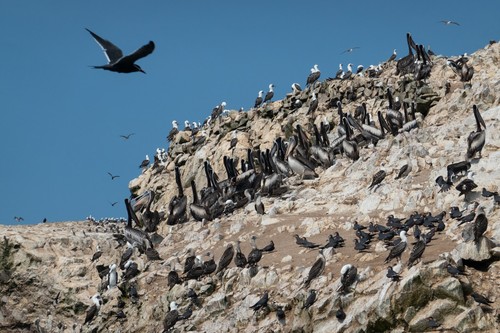
Peruvian Pelican
137-152 cm (54-60 in) long, up to 228 cm wingspan
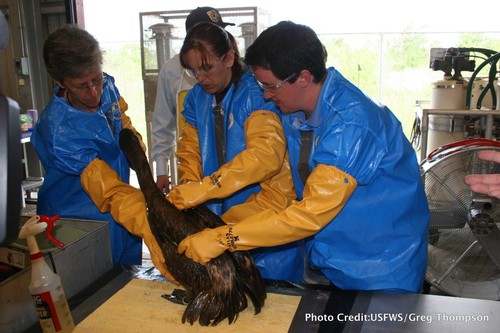
Brown Pelican
106-137 cm (42-54 in) long, 200-230 cm wingspan
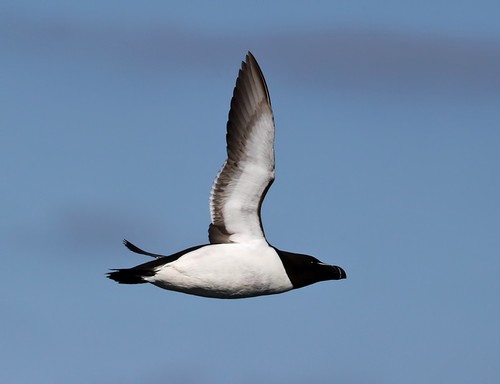
Razorbill
37-39 cm (15-15.5 in) long, 63-68 cm wingspan
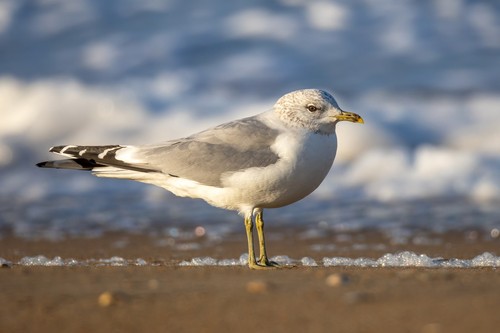
Common Gull
40-46 cm (16-18 in) long, 110-130 cm wingspan
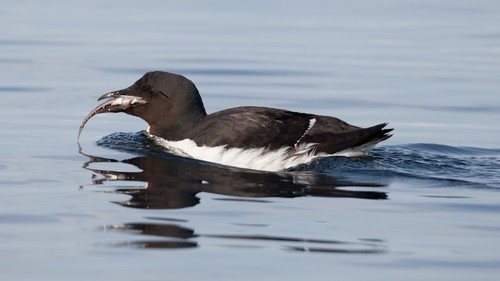
Thick-billed Murre
40-48 cm (16-19 in) long, 65-75 cm wingspan
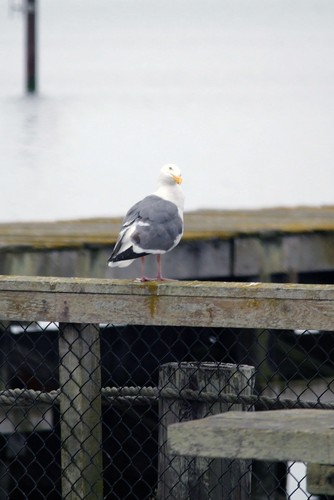
Western Gull
55-68 cm (22-27 in) long, 130-144 cm wingspan
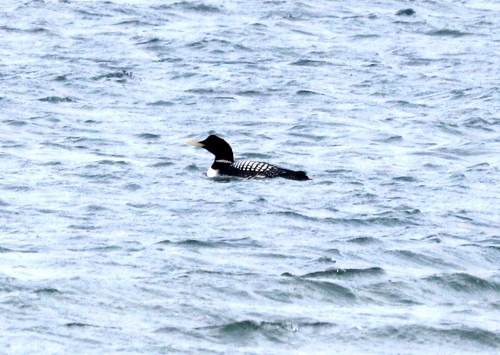
Yellow-billed Loon
76-97 cm (30-38 in) long, 135-152 cm wingspan
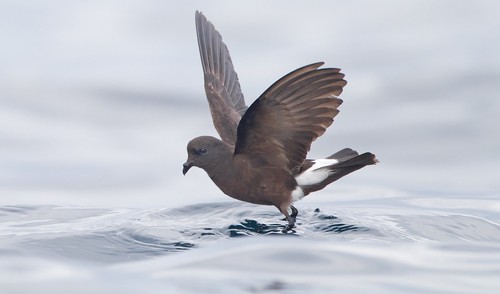
Wilson's Storm-Petrel
15-19 cm (6-7.5 in) long, wingspan 38-42 cm (15-16.5 in)
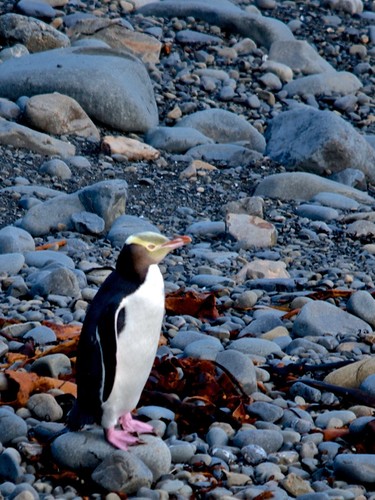
Yellow-eyed Penguin
62-79 cm (24-31 in) tall, 3-8.5 kg (6.6-18.7 lb)
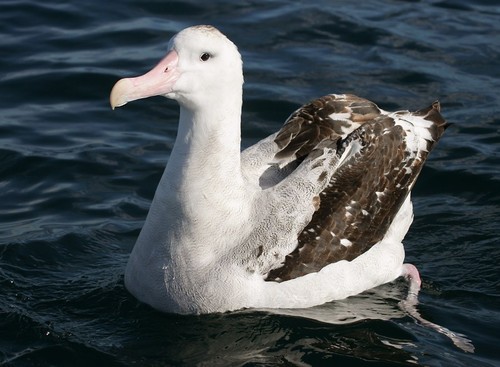
Wandering Albatross
107-135 cm (42-53 in) long, wingspan up to 3.5 m (11.5 ft)
Tufted Puffin
35-41 cm (14-16 in) long, about 63-70 cm wingspan
White Tern
28-33 cm (11-13 in) long, 70-87 cm wingspan