
Wilson's Storm-Petrel
Oceanites oceanicus
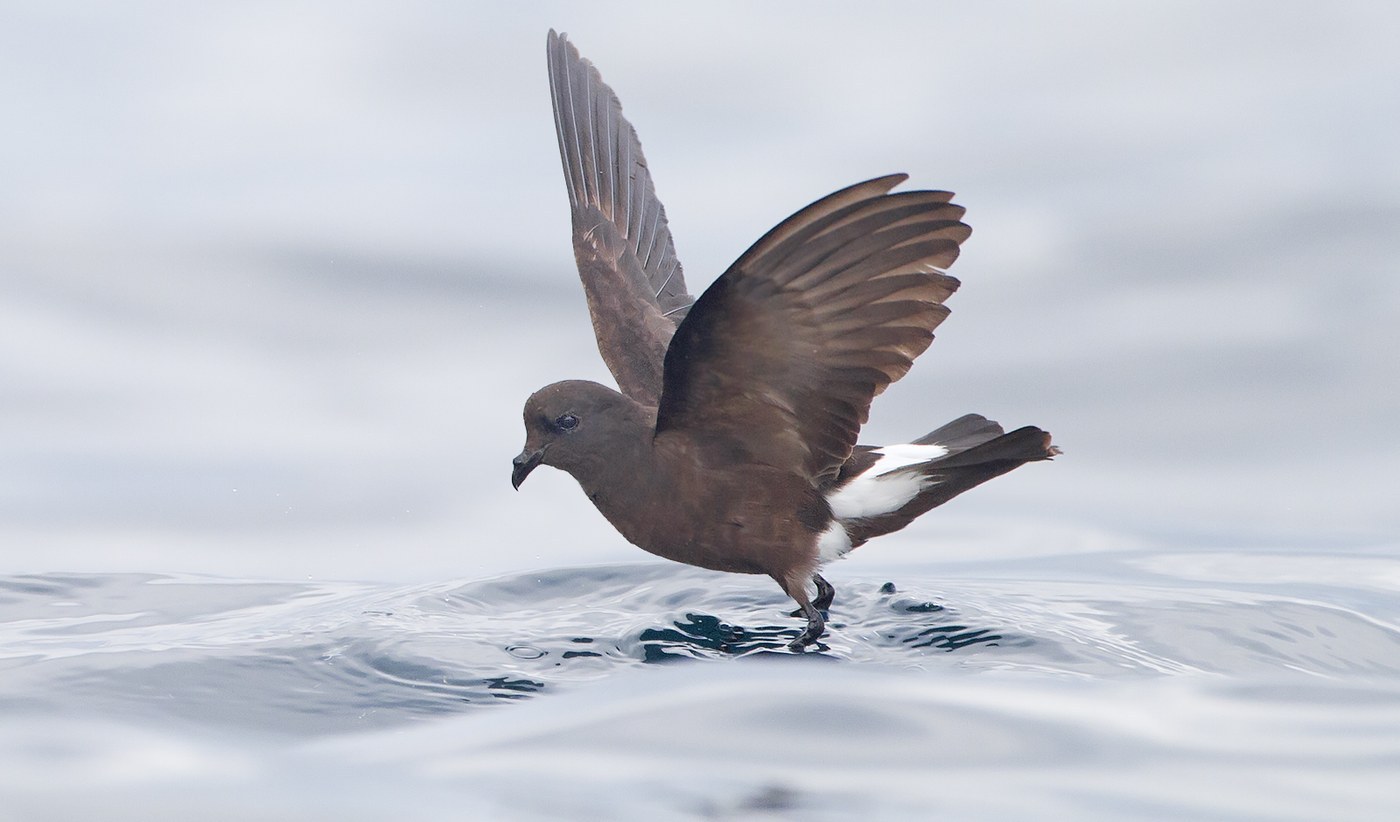
A tiny, swallow-sized seabird, sooty-black with a white rump band, famous for pattering its feet across the water's surface as it feeds, and considered one of the most abundant birds on Earth.
- Size
- 15-19 cm (6-7.5 in) long, wingspan 38-42 cm (15-16.5 in)
- Habitat
- open ocean worldwide, breeding on Antarctic and subantarctic coasts and islands
- Type
- seabird
Spotted a bird like this?
Identify any bird from a photo, free.
Overview
Wilson's Storm-Petrel is a diminutive seabird, barely larger than a swallow, with sooty-black plumage set off by a bright white band across the rump. Despite its tiny size, it is thought to be one of the most numerous bird species on the planet, with a global population estimated in the tens of millions.
This species breeds on Antarctica and subantarctic islands and then undertakes an impressive migration into the Northern Hemisphere, where it can be seen far out at sea across much of the Atlantic, Pacific, and Indian Oceans outside the Southern Hemisphere summer.
Wilson's Storm-Petrel has a distinctive feeding technique, hovering low over the water and pattering its long, yellow-webbed feet across the surface as if walking on water, while picking tiny prey items from the surface film with its bill.
How to identify it
Key field marks
- Very small size, roughly swallow-sized
- Sooty-black plumage with a bold white band across the rump
- Yellow webbing visible on the feet, often seen when pattering on the water
- Square-ish tail, unlike the forked tail of some other storm-petrels
Similar species
- Leach's Storm-Petrel has a forked tail and a more erratic, bounding flight, versus the more direct, fluttering flight of Wilson's Storm-Petrel.
- European Storm-Petrel is even smaller with a white underwing bar and lacks the trailing-leg pattering behavior as prominently displayed by Wilson's.
Habitat & range
Wilson's Storm-Petrel breeds on Antarctica, the Antarctic Peninsula, and numerous subantarctic islands, nesting in rock crevices and burrows. It is one of the most widely distributed seabirds in the world, foraging across all major oceans.
Outside the Southern Hemisphere breeding season, the species migrates extensively into the Northern Hemisphere, occurring regularly far offshore in the North Atlantic and other ocean basins during the boreal summer.
Behavior & voice
Voice
Wilson's Storm-Petrels are largely silent at sea, but give soft chattering and purring calls at night around nesting crevices during the breeding season.
Feeding
They feed on planktonic crustaceans, small fish, and squid, characteristically hovering just above the surface with wings raised and pattering their feet across the water while picking food items from the surface film.
Nesting and breeding
Pairs nest in rock crevices, burrows, or under boulders on Antarctic and subantarctic ground, visiting the colony only at night to avoid predators. A single egg is laid, and both parents share incubation duties over an extended period.
Frequently asked questions
Why does Wilson's Storm-Petrel appear to walk on water?
While feeding, it hovers low over the surface and patters its webbed feet against the water, a technique that helps it pick tiny prey from the surface film.
How big is Wilson's Storm-Petrel?
It is very small, only about 15-19 cm (6-7.5 in) long, roughly the size of a swallow.
Where does Wilson's Storm-Petrel breed?
It breeds on Antarctica, the Antarctic Peninsula, and various subantarctic islands, nesting in rock crevices and burrows.
Is Wilson's Storm-Petrel a common bird?
Yes, it is considered one of the most abundant bird species in the world, with a global population estimated in the tens of millions.
What does Wilson's Storm-Petrel eat?
It eats planktonic crustaceans, small fish, and squid picked from the ocean surface.
Wilson's Storm-Petrel guides
In-depth guides for identifying, finding, and understanding Wilson's Storm-Petrel.
Other birds you may enjoy
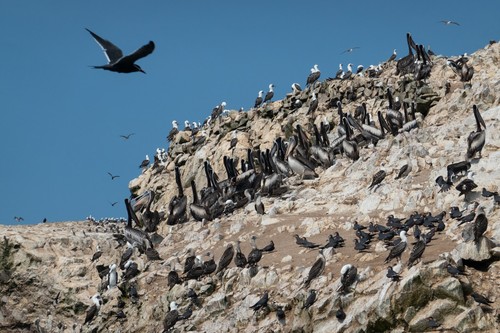
Peruvian Pelican
137-152 cm (54-60 in) long, up to 228 cm wingspan
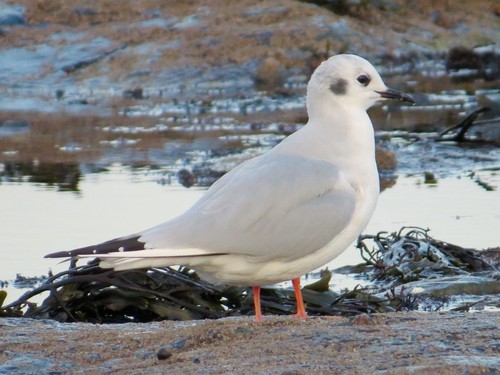
Bonaparte's Gull
28-33 cm (11-13 in) long, 76-84 cm wingspan
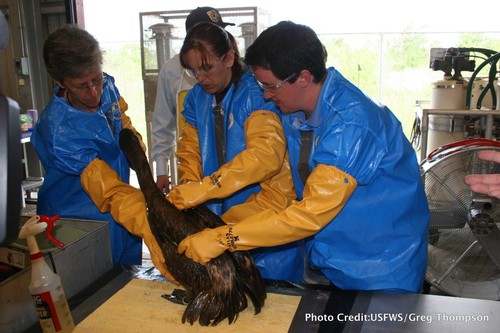
Brown Pelican
106-137 cm (42-54 in) long, 200-230 cm wingspan
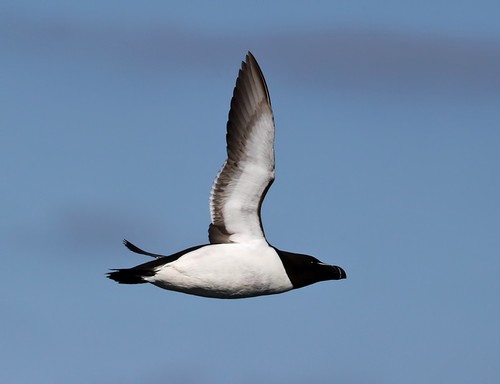
Razorbill
37-39 cm (15-15.5 in) long, 63-68 cm wingspan
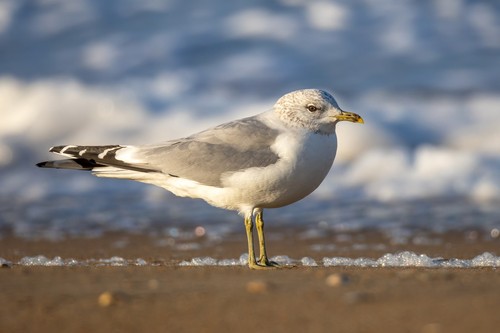
Common Gull
40-46 cm (16-18 in) long, 110-130 cm wingspan
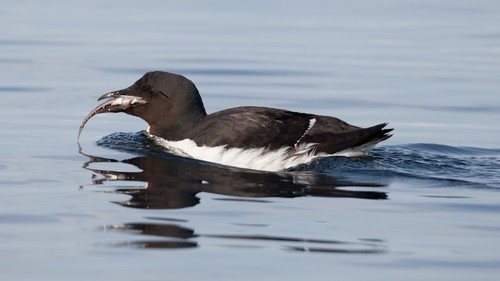
Thick-billed Murre
40-48 cm (16-19 in) long, 65-75 cm wingspan
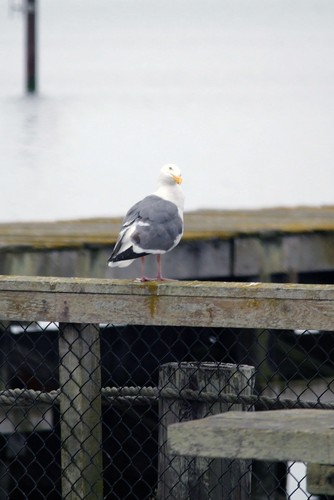
Western Gull
55-68 cm (22-27 in) long, 130-144 cm wingspan
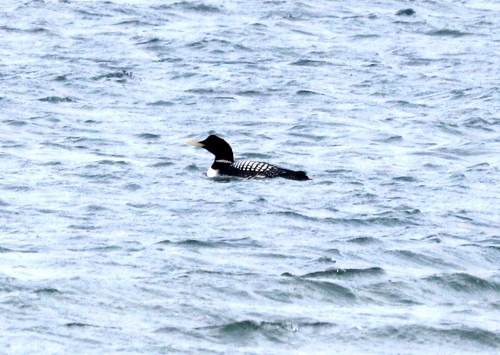
Yellow-billed Loon
76-97 cm (30-38 in) long, 135-152 cm wingspan
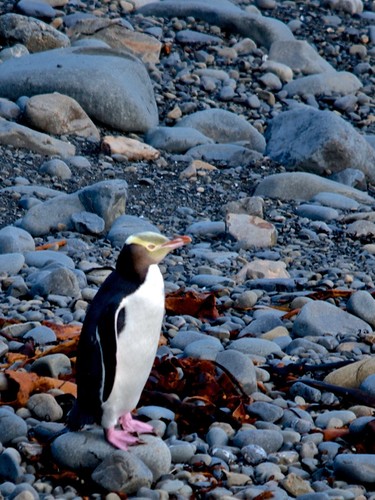
Yellow-eyed Penguin
62-79 cm (24-31 in) tall, 3-8.5 kg (6.6-18.7 lb)
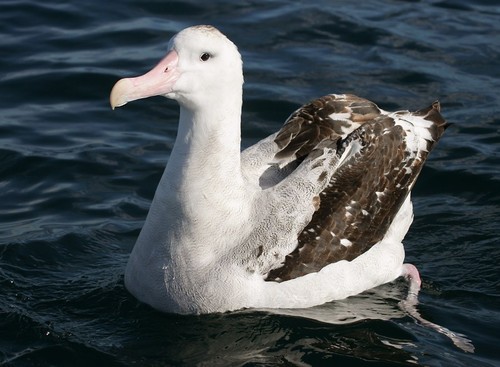
Wandering Albatross
107-135 cm (42-53 in) long, wingspan up to 3.5 m (11.5 ft)
Tufted Puffin
35-41 cm (14-16 in) long, about 63-70 cm wingspan
White Tern
28-33 cm (11-13 in) long, 70-87 cm wingspan