
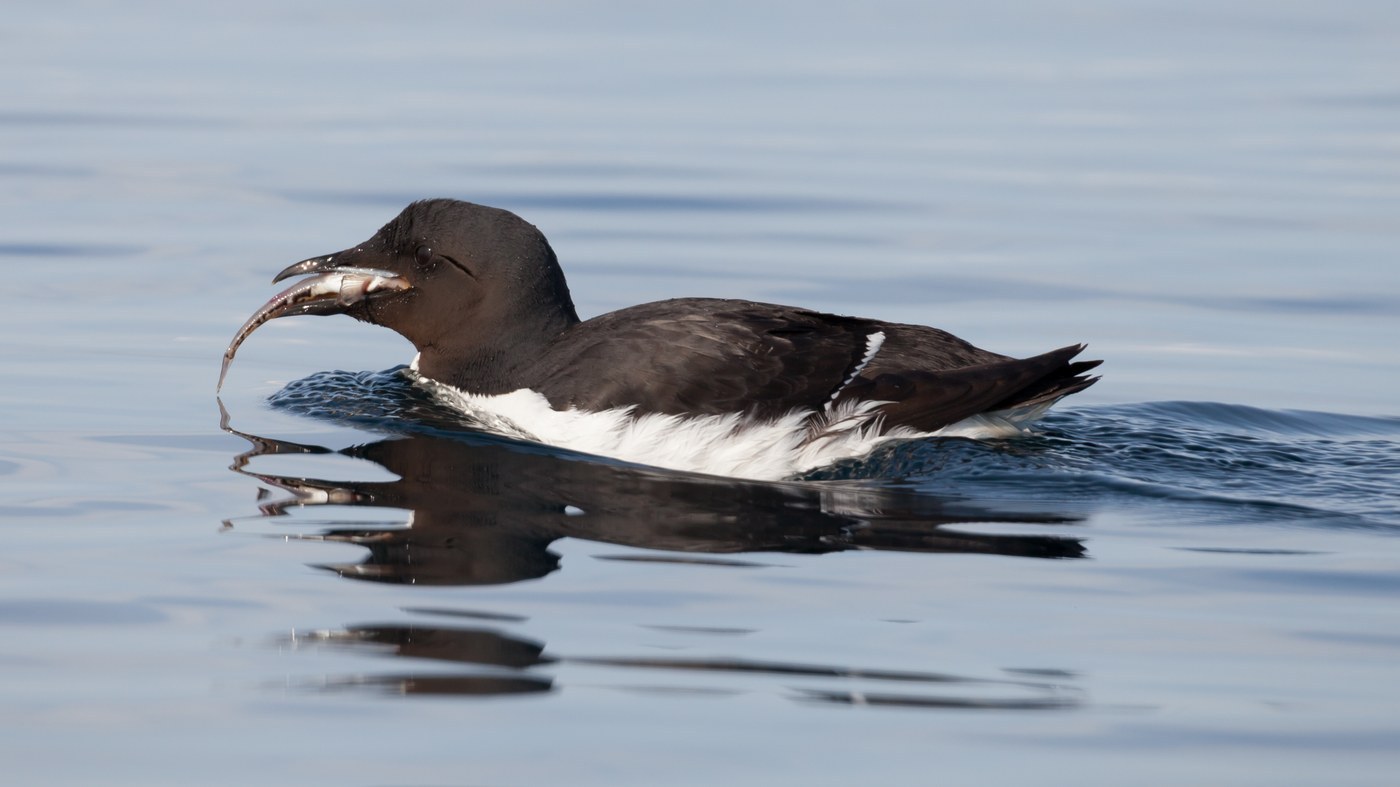
Thick-billed Murre
Uria lomvia
A stocky Arctic auk similar to the Common Murre but with a shorter, thicker bill marked by a pale gape stripe.
- Size
- 40-48 cm (16-19 in) long, 65-75 cm wingspan
- Habitat
- Arctic and subarctic coastal cliffs, open ocean and pack ice edges
- Type
- seabird
Spotted a bird like this?
Identify any bird from a photo, free.
Overview
The Thick-billed Murre, also known as Brunnich's Guillemot, is a stocky, cold-hardy auk adapted to the high Arctic, breeding farther north than its close relative the Common Murre. Plumage is glossy black to dark brown above and white below, similar in overall pattern to the Common Murre, but the bill is noticeably shorter, deeper, and thicker, with a thin pale line running along the base of the upper mandible (the gape stripe) that is diagnostic at close range.
As one of the most numerous seabirds of the Arctic, Thick-billed Murres form vast breeding colonies on sheer cliff faces, often alongside kittiwakes and other seabirds, and are superbly adapted for deep diving in cold northern waters.
How to identify it
Key field marks
- Short, thick, deep-based black bill
- Pale stripe along the gape (base of the bill)
- Sharper, straighter border between the dark throat/breast and white belly than in Common Murre
- Dark brown-black upperparts, white underparts
Similar species
- Common Murre has a longer, thinner, more pointed bill without a pale gape stripe, and a less sharply defined breast border.
- Razorbill has a deep, laterally flattened bill crossed by a white line, differing from the murre's more slender bill shape.
- In winter plumage, both murre species show white on the face, and bill shape remains the most reliable distinguishing feature.
Habitat & range
Thick-billed Murres breed on steep sea cliffs across the high Arctic and subarctic, including Greenland, Arctic Canada, Svalbard, Novaya Zemlya, and the Bering Sea region, generally nesting farther north than Common Murres. Outside the breeding season, birds move south to ice-free waters, often following the edge of pack ice, and can be found well offshore in the North Atlantic and North Pacific during winter.
The species is highly adapted to cold northern seas, foraging in areas where sea ice and productive upwellings concentrate prey close to breeding colonies.
Behavior & voice
Behavior
Excellent divers, Thick-billed Murres can descend to depths of over 100 meters, propelling themselves with their wings to pursue fish and invertebrates in cold Arctic waters.
Voice
Colonies produce a constant low growling and croaking chorus, generally deeper and harsher than the calls of Common Murres.
Feeding
Diet includes small Arctic fish such as polar cod and capelin, along with crustaceans and squid, caught during deep dives.
Nesting and breeding
A single pointed egg is laid on bare cliff ledges without nest material, an adaptation that reduces the risk of the egg rolling off; as in the Common Murre, chicks leap from the cliff to the sea before fledging, accompanied by an adult male, to complete their development on the water.
Frequently asked questions
How do you tell a Thick-billed Murre from a Common Murre?
Look for the Thick-billed Murre's shorter, deeper bill with a pale line along the gape, and its sharper, straighter border between the dark throat and white belly.
Where does the Thick-billed Murre live?
It breeds on Arctic and subarctic sea cliffs, including Greenland, Arctic Canada, Svalbard, and the Bering Sea, wintering farther south in ice-free waters.
Why is it also called Brunnich's Guillemot?
That is the traditional British/European name for the species, honoring Danish naturalist Morten Thrane Brunnich.
How deep can Thick-billed Murres dive?
They are capable of diving to depths exceeding 100 meters in search of fish and invertebrates.
What does a Thick-billed Murre eat?
Small Arctic fish like polar cod and capelin, plus crustaceans and squid, caught underwater during dives.
Thick-billed Murre guides
In-depth guides for identifying, finding, and understanding Thick-billed Murre.
Other birds you may enjoy
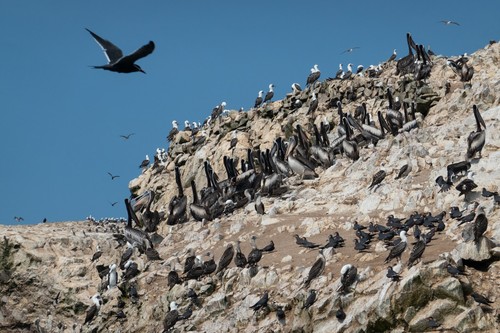
Peruvian Pelican
137-152 cm (54-60 in) long, up to 228 cm wingspan
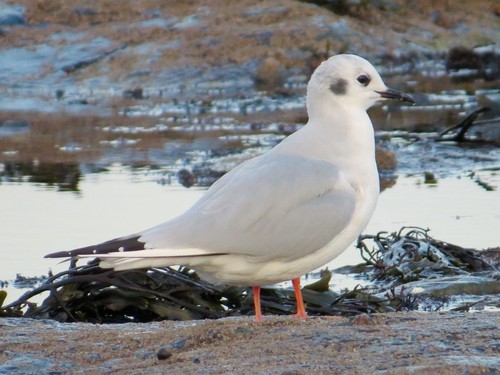
Bonaparte's Gull
28-33 cm (11-13 in) long, 76-84 cm wingspan
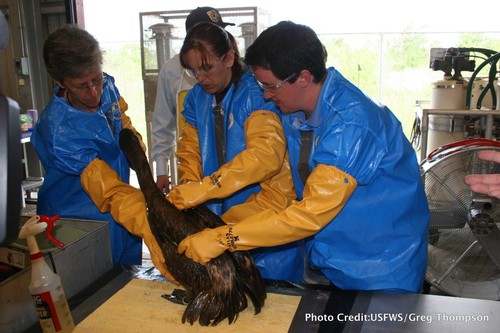
Brown Pelican
106-137 cm (42-54 in) long, 200-230 cm wingspan
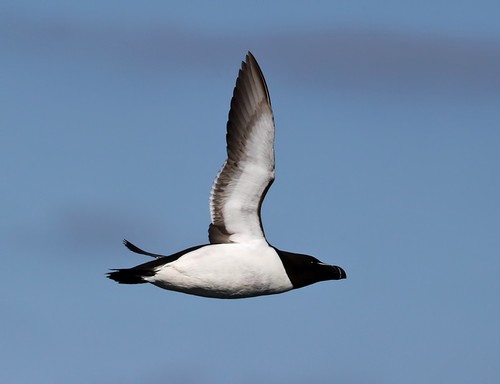
Razorbill
37-39 cm (15-15.5 in) long, 63-68 cm wingspan
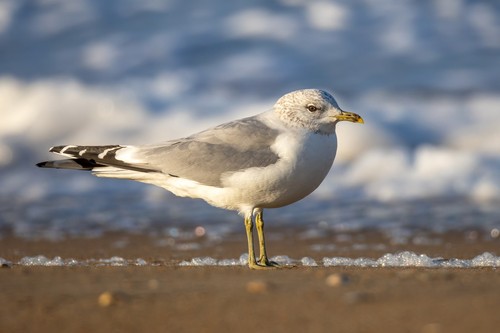
Common Gull
40-46 cm (16-18 in) long, 110-130 cm wingspan
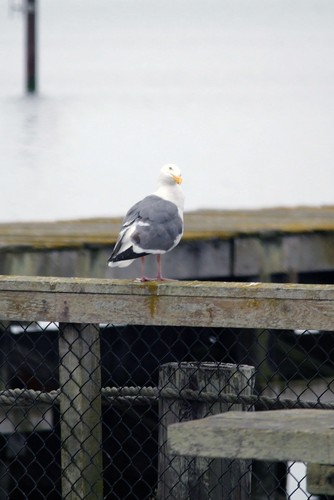
Western Gull
55-68 cm (22-27 in) long, 130-144 cm wingspan
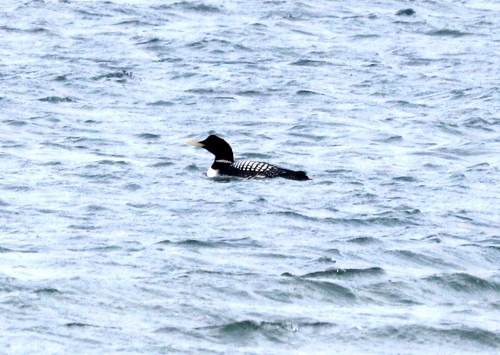
Yellow-billed Loon
76-97 cm (30-38 in) long, 135-152 cm wingspan
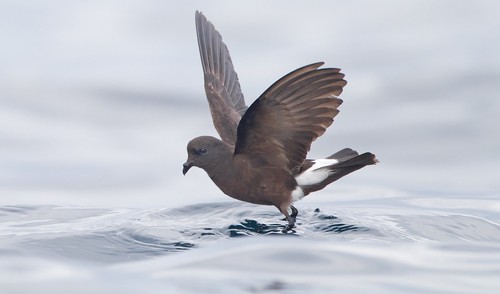
Wilson's Storm-Petrel
15-19 cm (6-7.5 in) long, wingspan 38-42 cm (15-16.5 in)
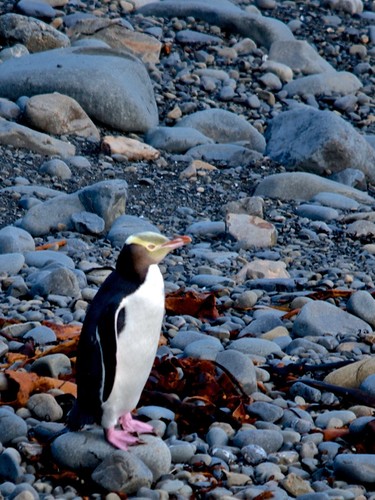
Yellow-eyed Penguin
62-79 cm (24-31 in) tall, 3-8.5 kg (6.6-18.7 lb)
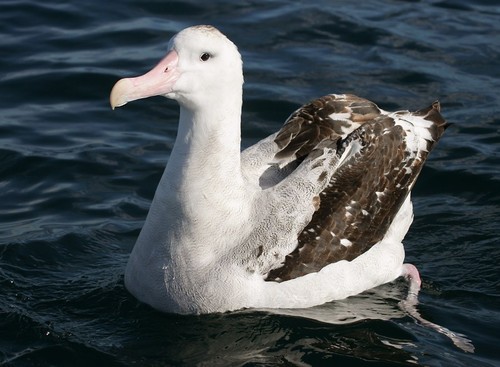
Wandering Albatross
107-135 cm (42-53 in) long, wingspan up to 3.5 m (11.5 ft)
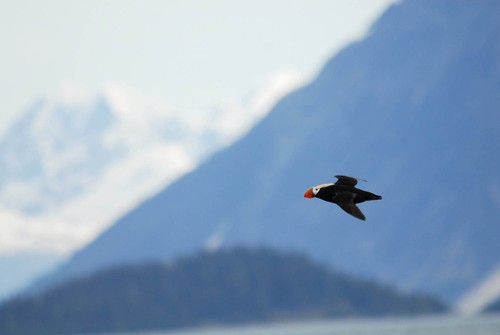
Tufted Puffin
35-41 cm (14-16 in) long, about 63-70 cm wingspan
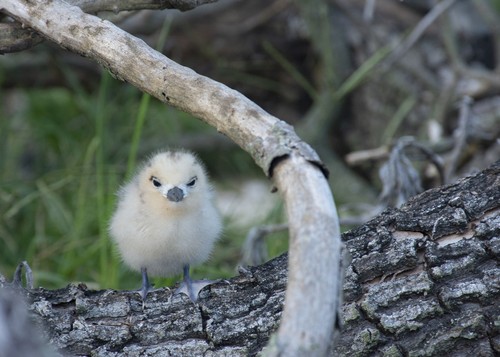
White Tern
28-33 cm (11-13 in) long, 70-87 cm wingspan