
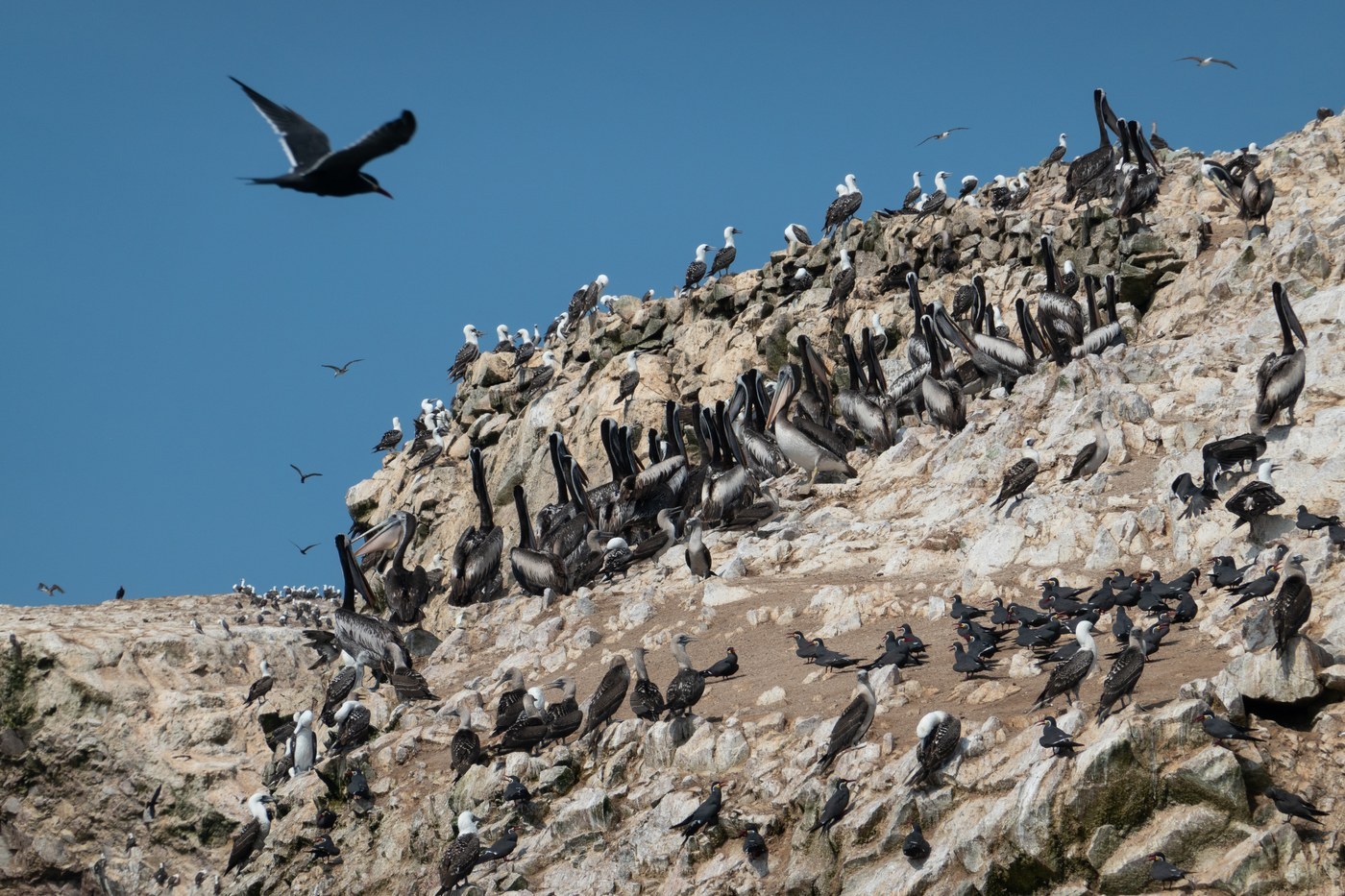
Peruvian Pelican
Pelecanus thagus
A large, dark pelican of the cold Humboldt Current, closely tied to the rich anchoveta fisheries off Peru and Chile and vulnerable to periodic El Nino-driven food shortages.
- Size
- 137-152 cm (54-60 in) long, up to 228 cm wingspan
- Habitat
- rocky coasts and cold, nutrient-rich waters of the Pacific coast of South America
- Type
- seabird
Spotted a bird like this?
Identify any bird from a photo, free.
Overview
The Peruvian Pelican is a large, dark-plumaged pelican restricted to the productive Pacific waters off Peru and Chile, closely associated with the cold, nutrient-rich Humboldt Current system. It is among the largest pelicans, though notably darker overall than its North American relatives.
Appearance
Adults are mostly blackish-brown to slate-grey, with a pale white or cream stripe running down the sides of the neck during the breeding season, along with a large yellow-orange bill and pouch.
How to identify it
Key field marks
- Large, dark blackish-brown to grey body plumage
- White or cream neck stripe visible in breeding adults
- Large yellow-orange bill and pouch
- Restricted range along the Pacific coast of South America
Similar species
The Peruvian Pelican is much darker overall than the Brown Pelican it superficially resembles, and it is notably larger; the two species' ranges overlap only marginally, with the Peruvian Pelican confined mainly to the Humboldt Current region.
Habitat & range
Habitat and range
Peruvian Pelicans are found along the Pacific coast of South America, primarily off Peru and Chile, closely tied to the cold, highly productive waters of the Humboldt Current. They roost and breed on rocky coastal islands, cliffs, and headlands.
Population numbers can fluctuate significantly with El Nino events, which disrupt the cold-water upwelling that sustains the small schooling fish the species depends on, sometimes causing widespread breeding failure or mortality.
Behavior & voice
Behavior
Peruvian Pelicans forage by plunge-diving from the air into schools of small fish, particularly anchoveta, which are extraordinarily abundant in the Humboldt Current ecosystem under normal conditions.
Voice
Adults are largely silent, with occasional low grunts given near breeding colonies.
Nesting and breeding
They nest colonially on rocky coastal islands and headlands, often alongside other seabirds such as cormorants and boobies, laying two to three eggs in simple ground scrapes or low mounds.
Frequently asked questions
Why is the Peruvian Pelican Near Threatened?
Its population depends heavily on the cold, fish-rich Humboldt Current, and periodic El Nino events can drastically reduce food availability, causing sharp population declines.
How is the Peruvian Pelican different from the Brown Pelican?
The Peruvian Pelican is larger and considerably darker overall, and is restricted to the Pacific coast of South America rather than the broader range of the Brown Pelican.
What does the Peruvian Pelican eat?
Mainly small schooling fish, especially anchoveta, caught by plunge-diving into the productive waters of the Humboldt Current.
Where does the Peruvian Pelican live?
Along the Pacific coast of South America, primarily off Peru and Chile.
Peruvian Pelican guides
In-depth guides for identifying, finding, and understanding Peruvian Pelican.
Other birds you may enjoy
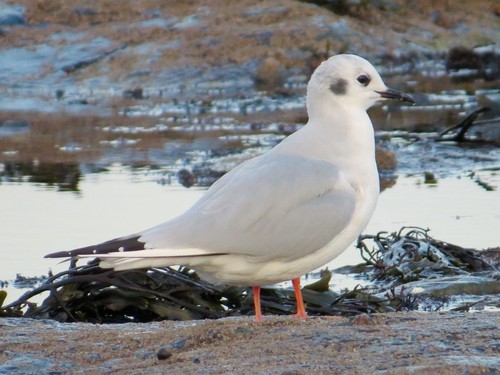
Bonaparte's Gull
28-33 cm (11-13 in) long, 76-84 cm wingspan
Brown Pelican
106-137 cm (42-54 in) long, 200-230 cm wingspan
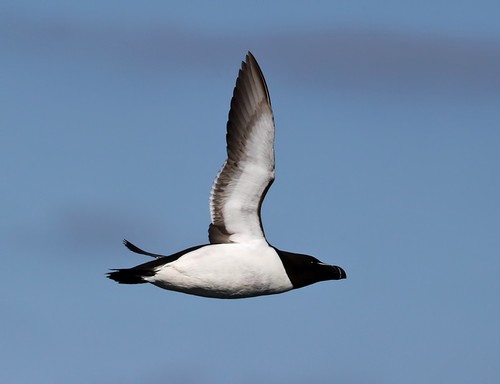
Razorbill
37-39 cm (15-15.5 in) long, 63-68 cm wingspan
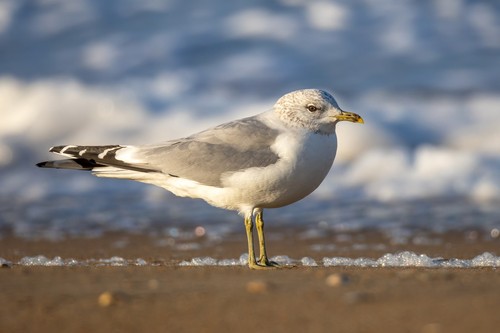
Common Gull
40-46 cm (16-18 in) long, 110-130 cm wingspan
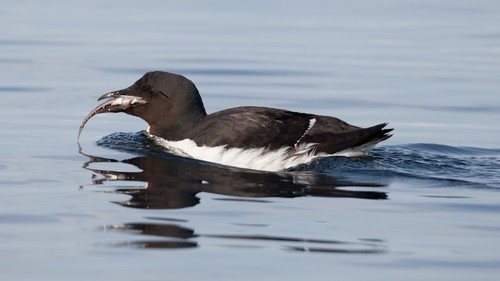
Thick-billed Murre
40-48 cm (16-19 in) long, 65-75 cm wingspan
Western Gull
55-68 cm (22-27 in) long, 130-144 cm wingspan
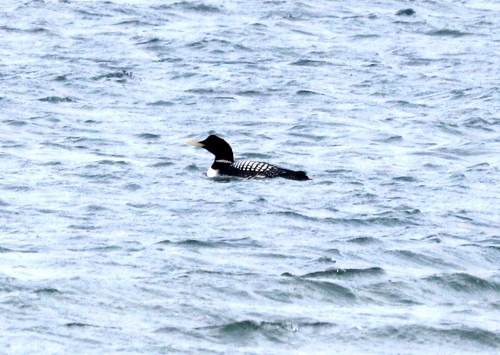
Yellow-billed Loon
76-97 cm (30-38 in) long, 135-152 cm wingspan
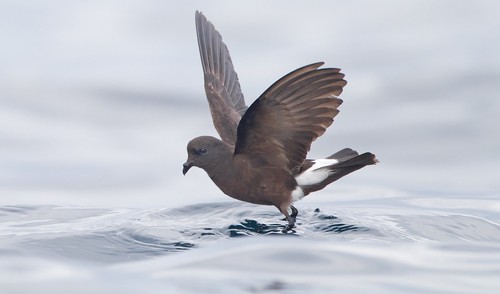
Wilson's Storm-Petrel
15-19 cm (6-7.5 in) long, wingspan 38-42 cm (15-16.5 in)
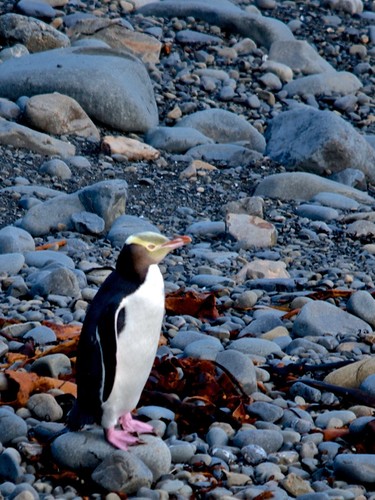
Yellow-eyed Penguin
62-79 cm (24-31 in) tall, 3-8.5 kg (6.6-18.7 lb)
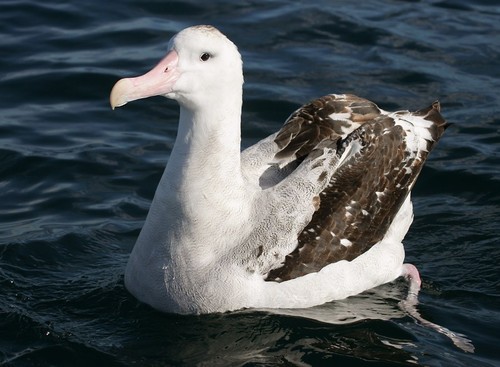
Wandering Albatross
107-135 cm (42-53 in) long, wingspan up to 3.5 m (11.5 ft)

Tufted Puffin
35-41 cm (14-16 in) long, about 63-70 cm wingspan
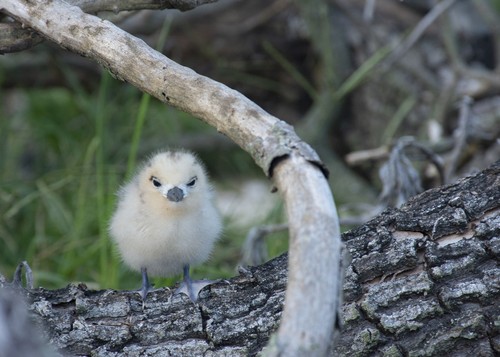
White Tern
28-33 cm (11-13 in) long, 70-87 cm wingspan