
Peruvian Pelican Identification Guide
A large, dark-bodied pelican of the cold Humboldt Current coastline, bigger and blackish compared to its close relative the Brown Pelican.
Read the full Peruvian Pelican encyclopedia entry →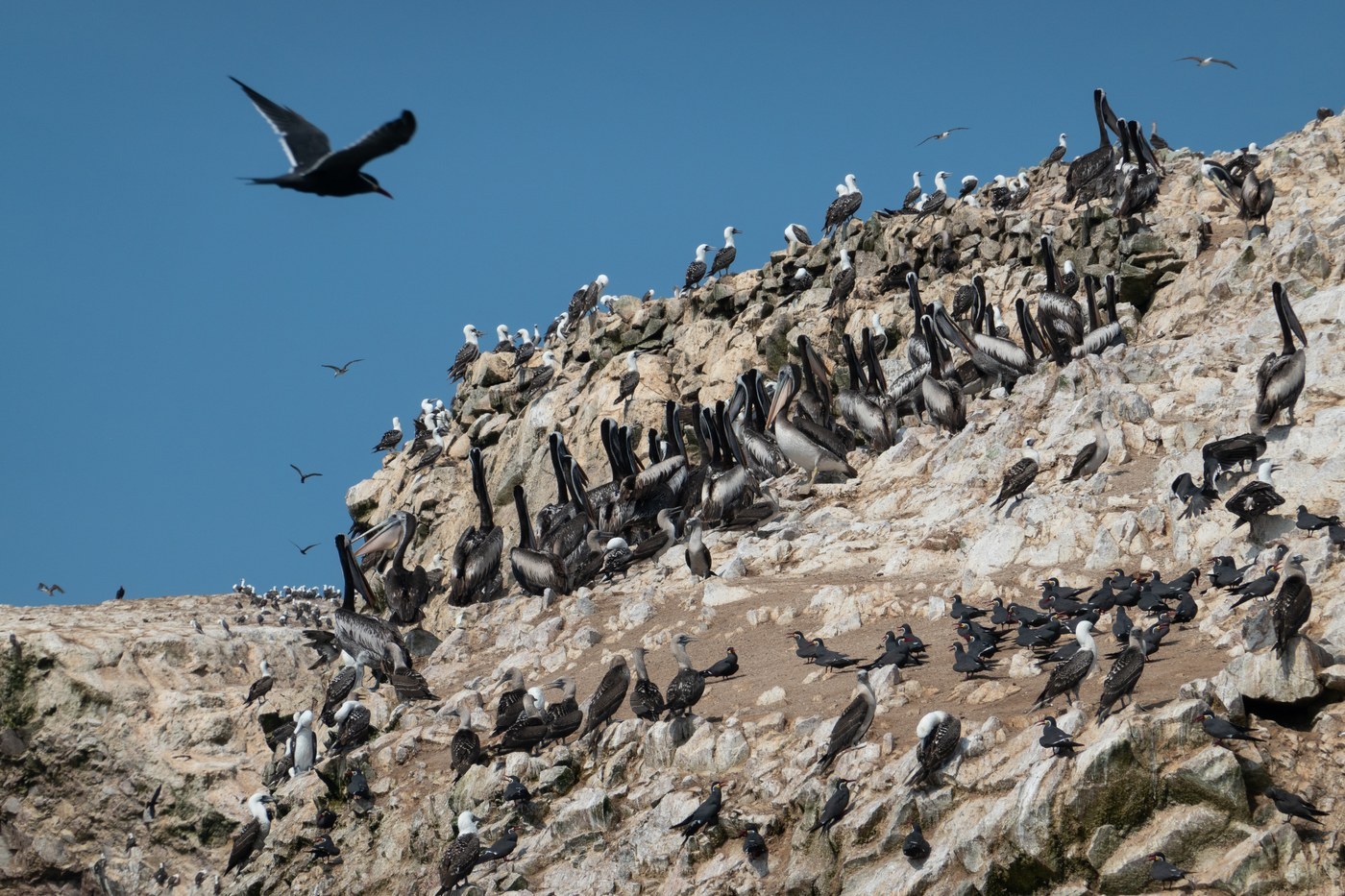
Key Field Marks
- Size and shape: A very large pelican, distinctly bigger and bulkier than the Brown Pelican, with a heavier, longer bill and pouch.
- Plumage: Overall blackish-brown body, darker than Brown Pelican, with pale streaking along the sides of the neck. Breeding adults develop a yellowish-buff patch on the crown and a white plume-like stripe down the foreneck.
- Bill and pouch: Long, heavy grayish bill with a large gular pouch, proportionally larger than that of the Brown Pelican.
Separating It From Similar Species
- Brown Pelican: Smaller and slightly paler overall with a less massive bill; ranges overlap only marginally, with Peruvian Pelican restricted mainly to the Pacific coast of Peru, Chile, and southern Ecuador while Brown Pelican is found more broadly through the Americas.
- Told from other large waterbirds simply by the unmistakable pelican shape, huge pouched bill, and habit of plunge-diving.
Where and When to See It
Found year-round along the Pacific coast of South America, closely tied to the cold, nutrient-rich waters of the Humboldt Current from Ecuador and Peru south to central Chile. Roosts and nests in dense colonies on rocky islands, cliffs, guano islands, and man-made breakwaters, rarely straying far from the immediate coastline.
Behavior
A highly gregarious species, often seen in large flocks flying in orderly lines low over the water. Feeds by plunge-diving from the air onto schooling fish, especially anchoveta, and commonly follows fishing boats to scavenge discards. Numbers can fluctuate dramatically with El Niño events, which disrupt the cold-water fish stocks it depends on.
Voice
Generally silent away from breeding colonies, where adults give low grunting and hissing calls during interactions at the nest.
Frequently asked questions
How do you tell a Peruvian Pelican from a Brown Pelican?
Peruvian Pelican is noticeably larger and darker with a heavier bill and pouch; its range is largely restricted to the Pacific coast of Peru, Chile, and southern Ecuador.
What does the Peruvian Pelican eat?
Primarily small schooling fish such as anchoveta, caught by plunge-diving from the air into the sea.
Why do Peruvian Pelican numbers sometimes crash?
El Niño events warm the Humboldt Current and disrupt the cold-water fish populations the species depends on, causing widespread breeding failure and mortality in bad years.
Where do Peruvian Pelicans nest?
In dense colonies on rocky offshore islands, sea cliffs, and guano islands along the Pacific coast of South America.