
Wilson's Storm-Petrel Identification Guide
A tiny, sooty-black seabird with a white rump, famous for pattering its yellow-webbed feet across the ocean surface while foraging far from land.
Read the full Wilson's Storm-Petrel encyclopedia entry →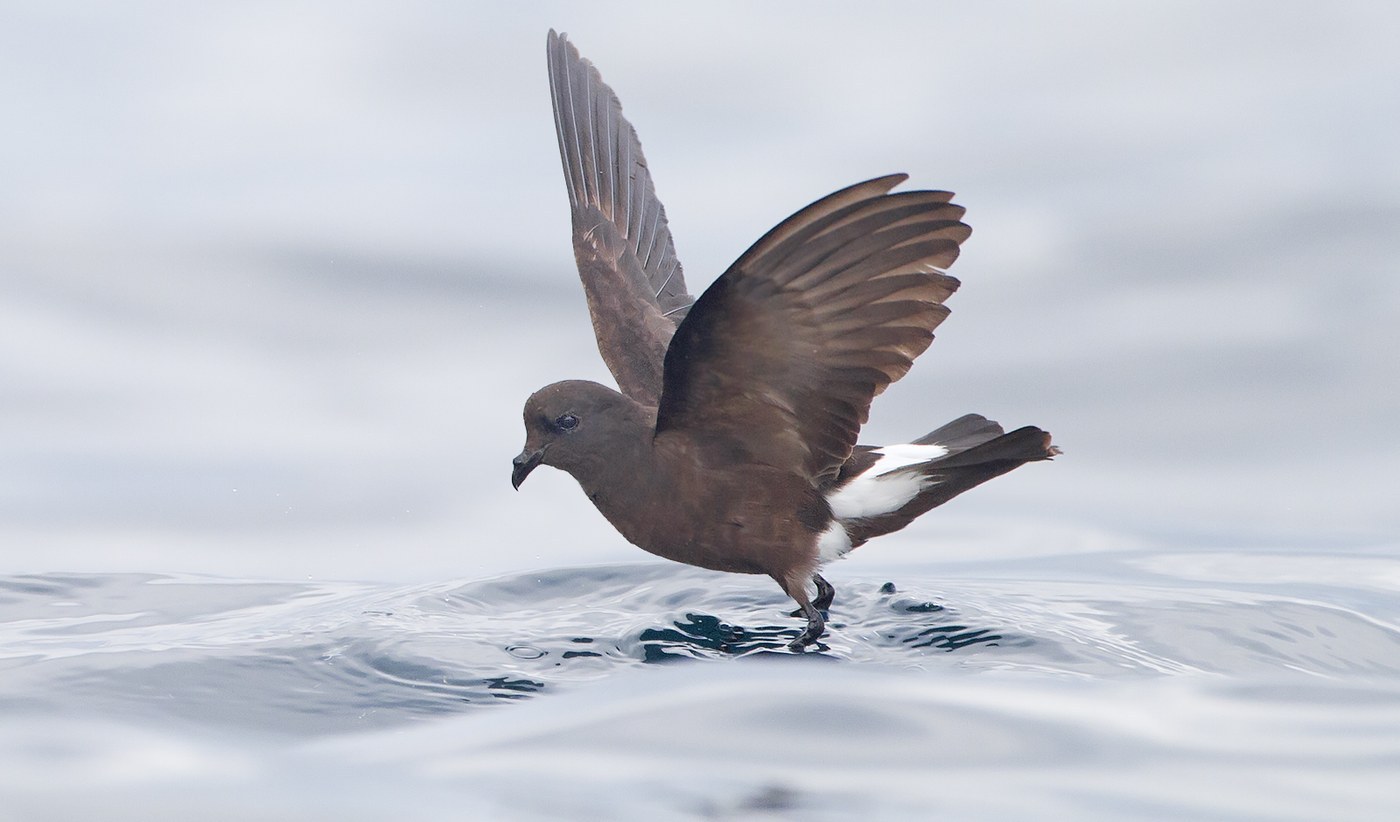
Key Field Marks
- Very small seabird (15-19 cm) with sooty-black to dark brownish-black plumage overall and a bold, crisp white patch across the rump that wraps slightly onto the flanks.
- Wings are broad and rounded (relatively short compared to some other storm-petrels) with a pale diagonal band across the upperwing coverts.
- Square or slightly rounded tail (not forked), a key structural difference from some similar storm-petrels.
- Legs project noticeably beyond the tail tip in flight, and the feet have bright yellow webbing between the toes - visible at close range or in good photos, and a diagnostic feature when seen.
- Flight is distinctive: direct, swallow-like fluttering wingbeats interspersed with short glides, often low over the water, with characteristic foot-pattering ("walking on water") while feeding.
Similar Species
- European/British Storm-Petrel is smaller and daintier with a more fluttering, bat-like flight, a rounder wing shape, and lacks the pale upperwing band; feet do not project as far beyond the tail.
- Leach's Storm-Petrel is larger, has a deeply forked tail, more erratic and bounding flight, and lacks the far-projecting feet and yellow webbing.
- White-faced Storm-Petrel has a distinctive white face and different flight style (bouncing, kangaroo-like leaps off the water) not shown by Wilson's.
- The combination of a square tail, feet extending past the tail tip, and steady pattering flight is the best overall confirmation of Wilson's Storm-Petrel.
Habitat & Range
- Breeds colonially on Antarctica, sub-Antarctic islands, and islands around the Southern Ocean during the austral summer.
- After breeding, undertakes a trans-equatorial migration and becomes one of the most numerous seabirds in the world, ranging widely across the Atlantic, Pacific, and Indian Oceans, including well up the North American Atlantic coast during the northern summer.
- Strictly pelagic outside the breeding season, usually seen well offshore or from boats rather than from land, though can occasionally be seen from shore during storms.
Voice
- Generally silent at sea; at breeding colonies gives various chattering, purring, and squeaking notes from nest burrows and during aerial courtship, mainly at night.
Behavior Notes
- Feeds by pattering its feet on the water surface while holding its wings up in a shallow V, picking small planktonic prey, fish oil, and scraps (including from fishing vessels) from the surface.
- Often follows ships and gathers around fishing boats and chum slicks, making it a frequent subject of pelagic birding trips.
Frequently asked questions
What is the best way to identify Wilson's Storm-Petrel at sea?
Look for a small, sooty-black seabird with a white rump, a square (not forked) tail, feet that project past the tail tip in flight, and a habit of pattering its feet on the water surface while foraging.
How does Wilson's Storm-Petrel differ from Leach's Storm-Petrel?
Wilson's has a square tail and steady, direct flight with foot-pattering, while Leach's has a forked tail and a more erratic, bounding flight pattern, and does not patter its feet in the same way.
Where does Wilson's Storm-Petrel breed?
It breeds colonially on Antarctica and sub-Antarctic and Southern Ocean islands during the austral summer, then migrates widely across the world's oceans in the northern summer.
Why does it patter its feet on the water?
Foot-pattering while hovering with wings raised helps the bird hold position just above the surface as it picks tiny planktonic food, fish oil, and scraps from the water.