
Yellow-billed Loon Identification Guide
The largest and rarest North American loon, an Arctic breeder identified year-round by its heavy, pale ivory bill held with an upward tilt.
Read the full Yellow-billed Loon encyclopedia entry →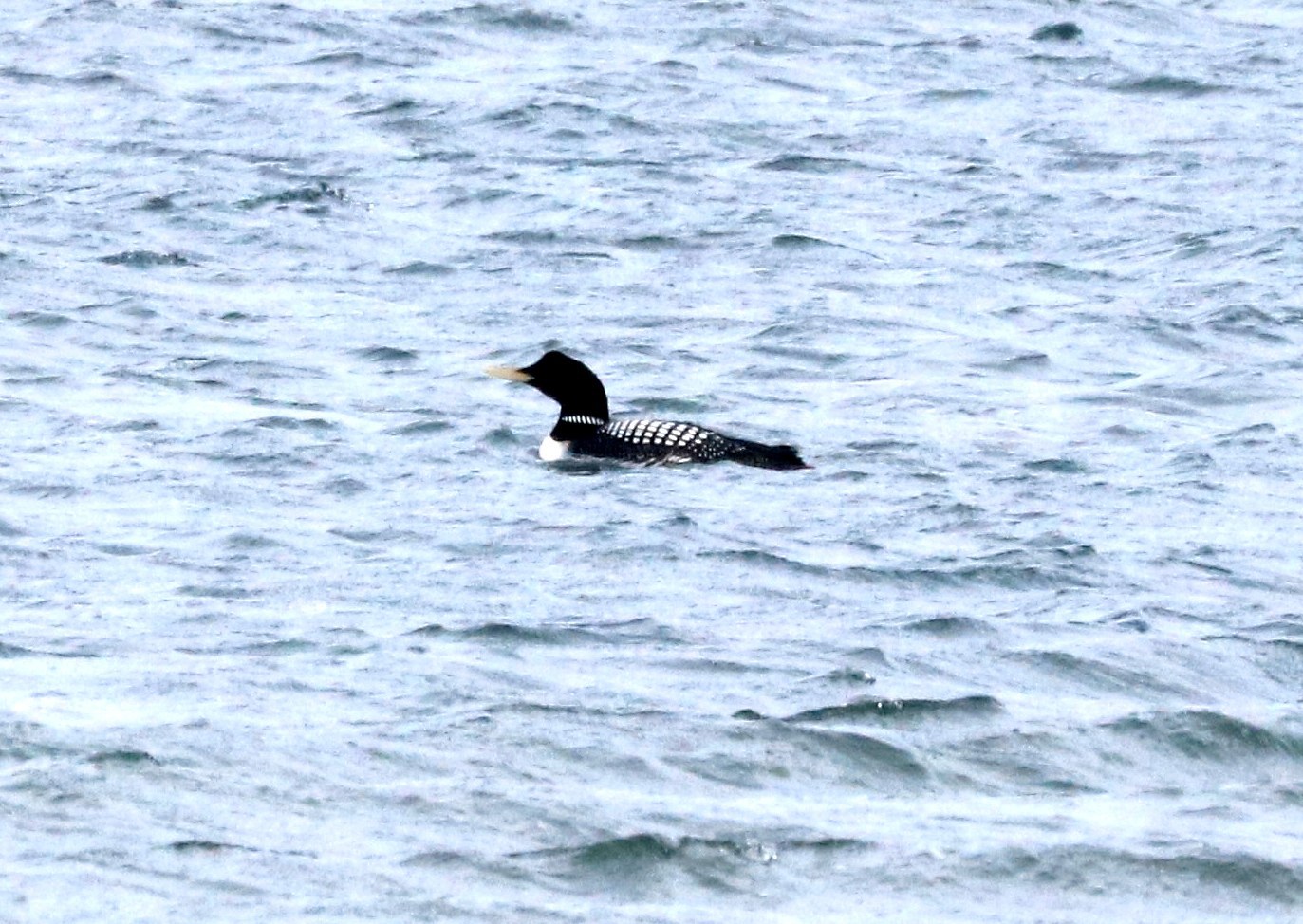
Key Field Marks
- Size & shape: The largest loon species, notably bigger and heavier-bodied than Common Loon, with a thick neck and a large, angular head.
- Bill: The defining feature in all plumages — a pale ivory-yellow bill that is heavier than Common Loon's, with a straighter culmen and an angled lower mandible that makes the bill appear tilted slightly upward, especially noticeable when the head is level.
- Breeding plumage: Black head, often with a faint purplish or greenish sheen, a black-and-white striped neck collar, and a bold black-and-white checkered back.
- Nonbreeding/winter plumage: Pale grayish-brown upperparts and a whitish face and foreneck with a contrasting darker cap and hindneck; often appears paler-faced and more sharply demarcated than a winter Common Loon.
- Behavior: Dives for fish, swims low in the water, and — like other loons — is ungainly on land, coming ashore only to nest.
Separating It From Similar Species
- Common Loon: The classic confusion species, especially in winter plumage when body pattern is similar. The most reliable differences are bill color (grayish-olive to blackish on Common Loon vs. pale ivory-yellow on Yellow-billed) and bill shape/posture (straighter, more evenly tapered, and held level on Common Loon vs. heavier with an upward-angled lower mandible on Yellow-billed).
- Size and structure (bulkier head and neck) support the bill differences but are hardest to judge without direct comparison.
Habitat, Range & Season
- Breeds on tundra lakes in the high Arctic of northern Alaska, northern Canada, and Siberia.
- Winters primarily in nearshore marine waters, especially along the Pacific coast of North America and parts of the northeast Asian coast, on large bays and open coastal waters; also occurs on some large inland lakes.
- A true rarity well south of its core range, so any claimed sighting away from the Arctic or the Pacific coast in winter should be carefully documented using bill shape and color.
Voice
- Gives wails, tremolos, and yodels broadly similar to Common Loon's repertoire, often described as slightly deeper or more nasal, but it is largely silent away from the breeding grounds.
Frequently asked questions
What is the single best way to identify a Yellow-billed Loon?
Focus on the bill — it is pale ivory-yellow (not grayish or dark), heavier than Common Loon's, and the angled lower mandible makes it look tilted slightly upward.
How do I separate winter Yellow-billed Loon from winter Common Loon?
Both look similar in gray-and-white winter plumage, so rely on bill color and shape rather than body pattern — Yellow-billed's pale, upward-angled bill is the key mark.
Where does the Yellow-billed Loon breed?
On tundra lakes in the high Arctic across northern Alaska, northern Canada, and Siberia.
Is the Yellow-billed Loon rare?
Yes — it has a small global population and a very restricted Arctic breeding range, making it the least common loon species in North America and a notable find away from its core range.