
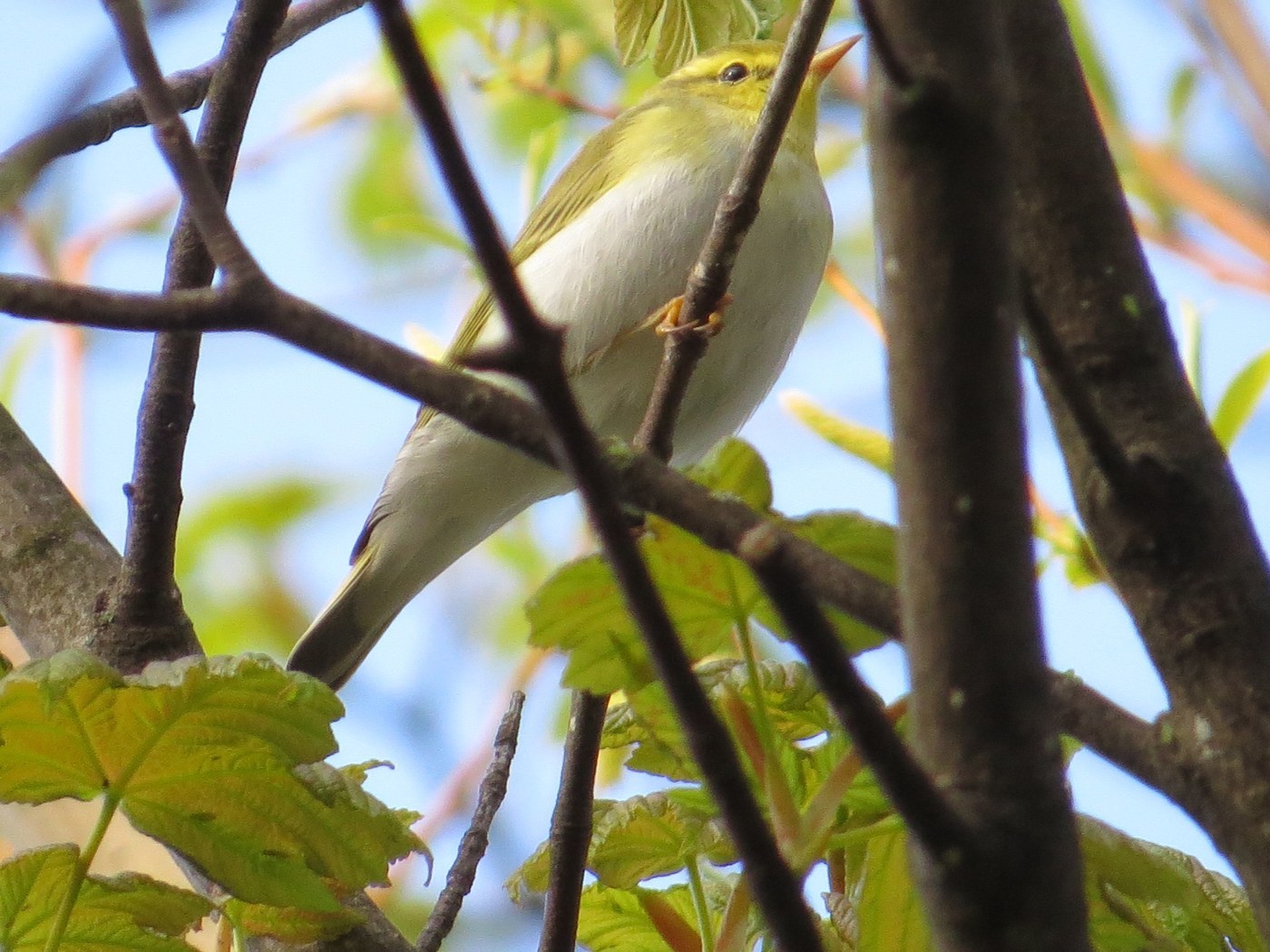
Wood Warbler
Phylloscopus sibilatrix
The brightest and most sharply patterned of the leaf warblers, with a vivid yellow throat and breast, white belly, and a distinctive accelerating trill song delivered while quivering its wings.
- Size
- 12-13 cm (4.7-5 in) long, 19-24 cm wingspan
- Habitat
- mature deciduous woodland with a closed canopy and sparse understory
- Type
- songbird
Spotted a bird like this?
Identify any bird from a photo, free.
Overview
The Wood Warbler is the most brightly coloured and boldly patterned member of the leaf warbler group found in Europe. It shows bright yellow-green upperparts, a vivid yellow throat and upper breast, and a sharply demarcated pure white belly, giving it a cleaner, more contrasty appearance than its plainer relatives, the Willow Warbler and Common Chiffchaff.
A bold yellow supercilium extends from the bill well behind the eye, framing a relatively large, dark eye, and the wings are proportionately long, an adaptation for its long-distance migration.
Wood Warblers are strongly tied to mature, closed-canopy woodland with little ground-level vegetation, where males perform a memorable display, singing an accelerating trilling song while quivering their wings on a high branch.
How to identify it
Key field marks
- Bright yellow-green crown and upperparts
- Vivid yellow throat and breast, sharply cut off from a pure white belly
- Long, bold yellow supercilium
- Long wings extending well past the tail base at rest
- Pale pinkish legs
Similar species
- Willow Warbler: much duller yellow-white underparts without the sharp yellow-to-white demarcation, and a shorter supercilium.
- Common Chiffchaff: duller and browner overall, lacking the bright yellow breast and white belly contrast.
- Icterine/melodious warblers: yellower overall but larger-billed and lacking the sharply cut white belly.
Habitat & range
Wood Warblers breed across much of Europe, favouring mature deciduous or mixed woodland — classically beech and oak — with a closed canopy that shades out dense ground vegetation, leaving relatively open, leaf-littered woodland floors.
They are long-distance migrants, wintering in the forests and woodlands of tropical Africa, and their breeding distribution can shift noticeably between years depending on habitat conditions and food availability.
The species has declined in parts of its range, likely linked to changes in woodland structure and management as well as pressures during migration.
Behavior & voice
Voice
The male gives two distinct vocalisations: an accelerating, silvery trilling song, often rendered "sip-sip-sip-sip-sirrrrrrr," delivered while quivering the wings on a high perch, and a separate, plaintive, repeated "peu-peu-peu-peu" call-song.
Feeding
Wood Warblers glean insects and spiders from the canopy and understory foliage, and also make short flycatching sallies to catch insects in flight, particularly early in the breeding season.
Nesting and breeding
The nest is a domed structure built on the ground among leaf litter or sparse vegetation, well hidden with a side entrance. Clutches typically contain six to seven eggs.
Frequently asked questions
How do you identify a Wood Warbler?
Look for a leaf warbler with bright yellow-green upperparts, a vivid yellow throat and breast sharply demarcated from a pure white belly, and a long yellow supercilium.
What does a Wood Warbler sound like?
Males give an accelerating, silvery trilling song delivered while quivering their wings, plus a separate plaintive repeated 'peu-peu-peu' call.
What habitat does the Wood Warbler need?
It requires mature deciduous or mixed woodland, classically beech or oak, with a closed canopy and relatively open, sparsely vegetated woodland floor.
How is Wood Warbler different from Willow Warbler?
Wood Warbler is brighter and more sharply patterned, with a vivid yellow breast cut off cleanly from a white belly, versus the more uniform pale yellowish underparts of Willow Warbler.
Where do Wood Warblers winter?
They migrate long distances to spend the winter in the forests and woodlands of tropical Africa.
Wood Warbler guides
In-depth guides for identifying, finding, and understanding Wood Warbler.
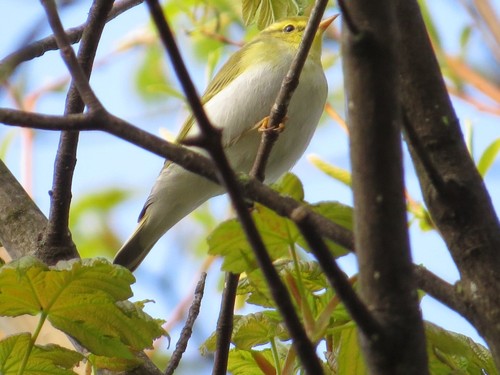
Other birds you may enjoy
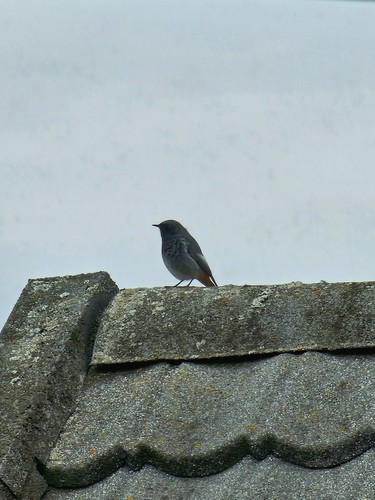
Black Redstart
13-14.5 cm (5.1-5.7 in) long, 23-26 cm wingspan
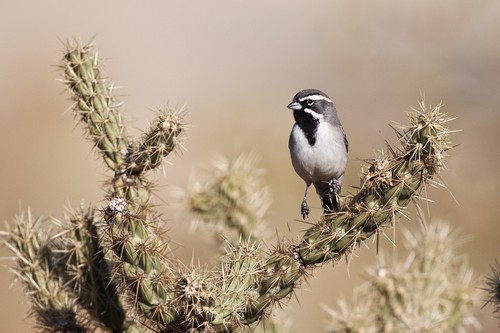
Black-throated Sparrow
12-14 cm (4.7-5.5 in) long, about 19-20 cm (7.5-8 in) wingspan
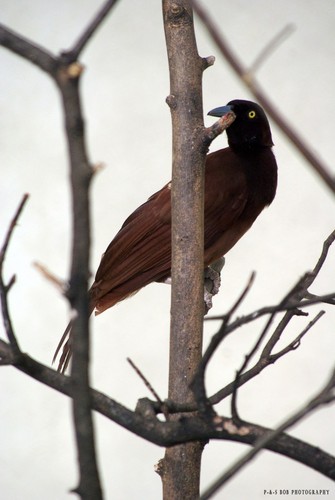
Greater Bird-of-paradise
Body about 43 cm; males with additional flank plumes up to 50 cm and long tail wires
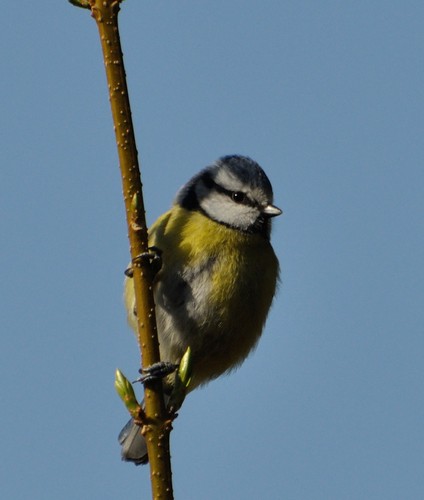
Blue Tit
11-12 cm (4.3-4.7 in) long, 17-20 cm wingspan
Red-billed Quelea
11.5–13 cm long, wingspan about 20–22 cm
White-plumed Antbird
13-14 cm (5-5.5 in) long
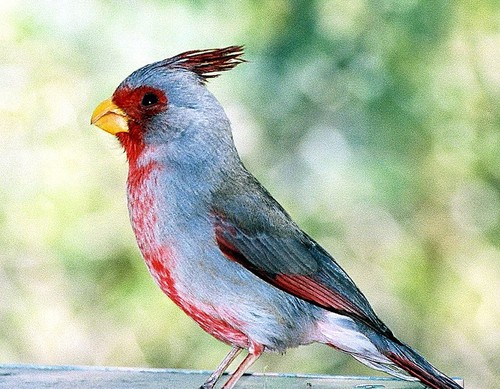
Pyrrhuloxia
19-22 cm (7.5-8.7 in) long, 30 cm wingspan
Blue-gray Tanager
16-18 cm (6-7 in) long
Blackburnian Warbler
11-13 cm (4.3-5.1 in) long, 20-22 cm wingspan
Bluethroat
13-14 cm (5.1-5.5 in) long, 20-22 cm wingspan
Eurasian Nuthatch
12-14.5 cm (4.7-5.7 in) long, 22.5-27 cm wingspan
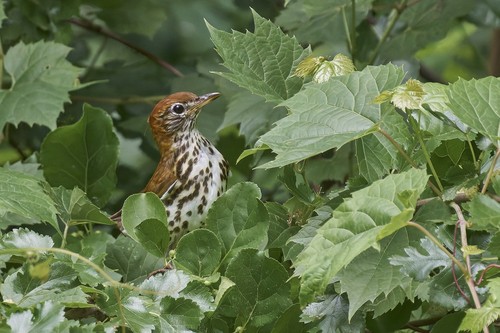
Wood Thrush
19-21 cm (7.5-8.3 in) long, about 33 cm (13 in) wingspan