
Wood Warbler Identification Guide
A bright lemon-and-white leaf warbler of mature European woodland, known for its accelerating, shivering trill delivered from high in the canopy.
Read the full Wood Warbler encyclopedia entry →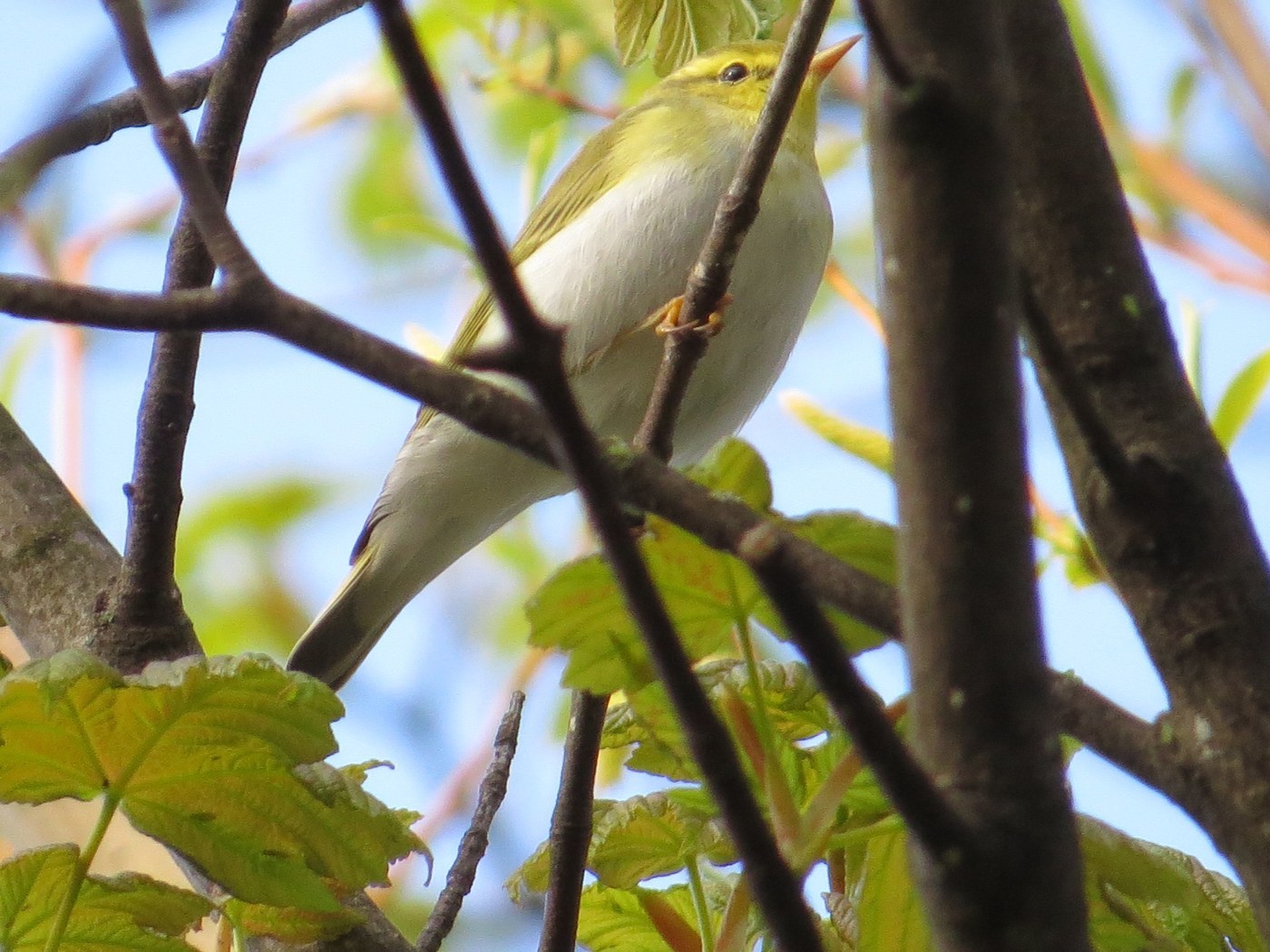
Key Field Marks
- Size & shape: A relatively large, elegant leaf warbler (about 12–13 cm) with a longer primary projection (wingtip extension) than most Phylloscopus warblers, giving it a slim, long-winged look.
- Upperparts: Bright yellow-green crown and back, clean and unstreaked.
- Underparts: Sharply demarcated — bright lemon-yellow throat and upper breast contrasting cleanly with a pure white lower breast and belly, with no gradual blending between the two zones.
- Face: Bold yellow supercilium (eyebrow stripe) standing out against a darker eye-stripe.
- Legs: Pale pinkish-flesh legs.
- Behavior: Stays mainly high in the canopy of tall trees, often performing a distinctive shivering-wing display while singing, with the body quivering visibly.
Separating It From Similar Species
- Willow Warbler is duller yellow-green overall with a gradual, unclear border between the pale yellowish throat and whitish belly (no sharp demarcation), and lacks the Wood Warbler's bold contrast.
- Common Chiffchaff is browner and duller overall, with darker legs and a less distinct supercilium.
- The Wood Warbler's brighter colors, sharply two-toned underparts, and longer-winged shape are the most reliable separators, though its unmistakable song is often the easiest clue.
Where and When to Look
- Habitat: Mature, open-canopy deciduous woodland — classically beech or oak — with relatively little shrub understorey and a shaded, open woodland floor.
- Range: Breeds across much of Europe, from Britain and Scandinavia eastward into western Russia; absent as a breeder from much of southern and northernmost Europe.
- Season: Summer visitor, typically arriving in April/May and departing by August/September; winters in humid forest zones of West and Central Africa.
- Best viewing: Look up into the high canopy of tall, open woodland during the breeding season and listen for its distinctive song, which usually reveals its presence before it is seen.
Voice
- Two distinct vocalizations: an accelerating, shivering trill often written as "sip sip sip sip-sirrrrrrrrr," delivered with a wing-quivering display, and a separate, plaintive series of piping "piu piu piu" notes.
- The trilling song is unmistakable once learned and very different from the simple descending song of the Willow Warbler or the two-note "chiff-chaff" of the Chiffchaff.
Frequently asked questions
How do you tell a Wood Warbler from a Willow Warbler?
Wood Warbler is brighter, with a lemon-yellow throat/breast that is sharply demarcated from a white belly and a bolder yellow supercilium; Willow Warbler is duller with a gradual, blended transition between throat and belly color.
What does the Wood Warbler's song sound like?
An accelerating, shivering trill often rendered "sip sip sip sirrrrrrr," delivered with a visible wing-quivering display, plus a separate plaintive "piu piu piu" call.
What kind of woodland does the Wood Warbler prefer?
Mature, open-canopy deciduous woodland such as beech or oak forest with little shrub understorey, allowing it to forage and sing high in the canopy.
Where does the Wood Warbler spend the winter?
It migrates to humid forest regions of West and Central Africa after breeding in Europe.