
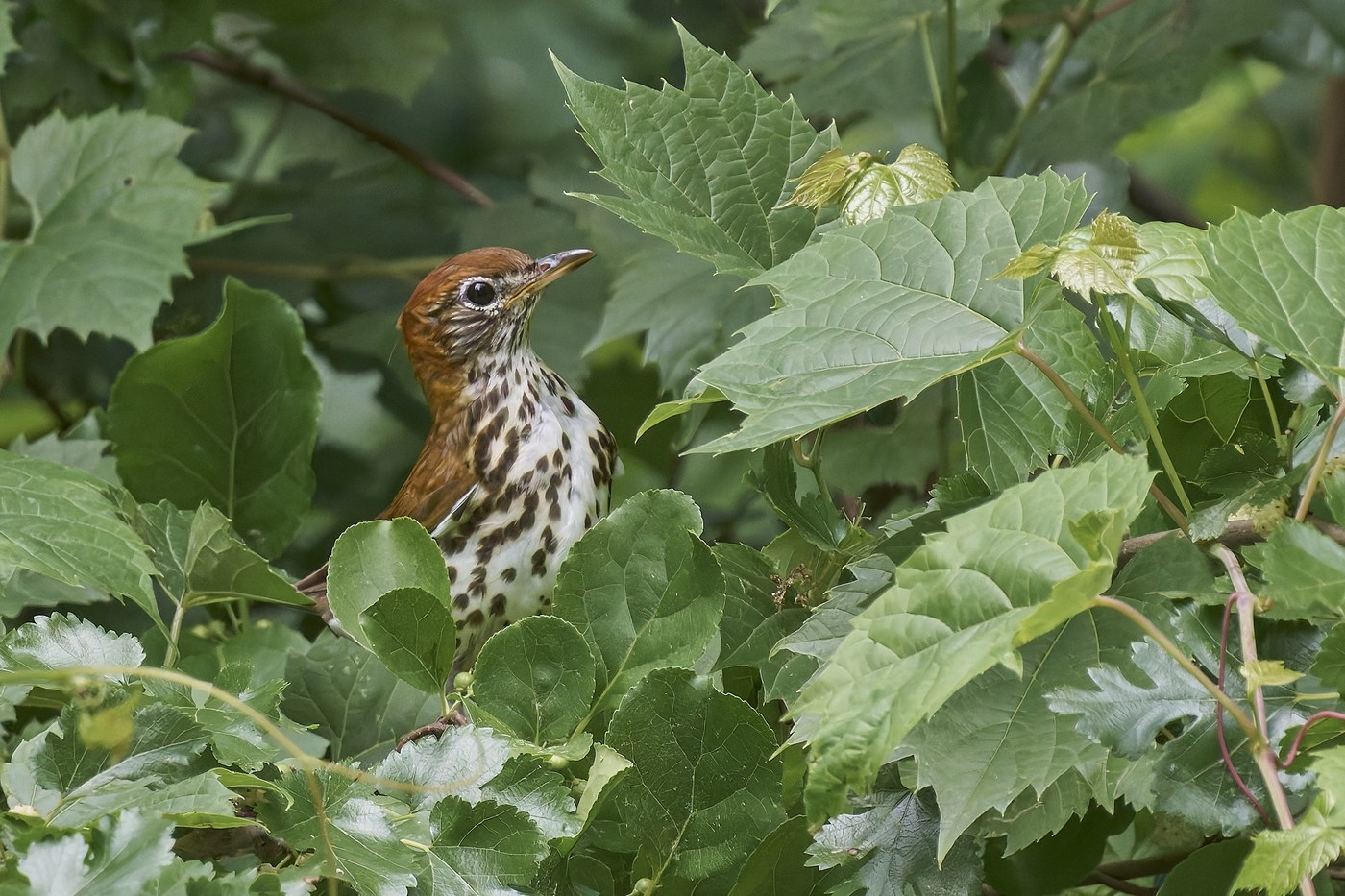
Wood Thrush
Hylocichla mustelina
A richly colored, round-spotted thrush of eastern forests famed for its beautiful, flute-like song.
- Size
- 19-21 cm (7.5-8.3 in) long, about 33 cm (13 in) wingspan
- Habitat
- mature deciduous and mixed forests
- Type
- songbird
Spotted a bird like this?
Identify any bird from a photo, free.
Overview
The Wood Thrush is widely regarded as one of the finest singers in North America, its rich, flute-like song a defining sound of eastern deciduous forests in summer. It is a plump, handsome thrush with warm reddish-brown upperparts, brightest on the head, and bold, round black spots scattered across a white breast and belly.
Despite its beauty and once-common status, the Wood Thrush has experienced significant population declines linked to forest fragmentation on its breeding grounds and habitat loss in its Central American wintering range, making it a species of conservation concern even though it remains widespread.
How to identify it
Key field marks
- Bright reddish-brown crown and nape, fading to more olive-brown on the back and rump
- Bold, large, rounded black spots covering the white breast and belly
- White eyering
- Stocky build with a relatively short tail
Similar species
- Hermit Thrush: smaller spots concentrated on the upper breast, reddish tail contrasting with olive-brown back, and habit of raising its tail.
- Veery: much less spotting, more uniformly tawny above.
- Swainson's Thrush: buffy eyering and face, finer spotting, olive-brown overall without the bright rufous head of Wood Thrush.
Habitat & range
Habitat
Wood Thrushes require mature, moist deciduous or mixed forest with a well-developed understory and canopy cover, typically avoiding heavily fragmented woodlots.
Range
The species breeds across the eastern United States and southeastern Canada, from the Great Plains east to the Atlantic coast. It winters in the lowland forests of Central America, from southern Mexico to Panama.
Migration
Wood Thrushes are long-distance nocturnal migrants, arriving on breeding grounds in April and May and departing by September and October for wintering grounds in Central America, where deforestation poses a significant conservation threat.
Behavior & voice
Behavior
Wood Thrushes forage on the forest floor, flipping leaf litter to find insects and other invertebrates, and also take fruit, especially later in the season; they are often first detected by voice rather than sight in the shaded forest understory.
Voice
The song is a series of rich, flute-like phrases, often ending in a soft trilled flourish; thanks to a specialized voice box the bird can sing two notes simultaneously, producing a haunting, harmonic quality often cited as one of the most beautiful bird songs in North America.
Nesting
Females build a sturdy cup nest of grass, leaves, and mud, often incorporating white paper or plastic scraps, typically placed in the fork of a sapling or shrub in the forest understory. Clutches usually contain 3-4 pale blue eggs, and the species is a frequent host of Brown-headed Cowbird parasitism.
Frequently asked questions
Why is the Wood Thrush's song so special?
It can sing two notes at once using its specialized voice box, producing a rich, flute-like, almost harmonic quality widely considered one of the most beautiful songs in North American birds.
How can you tell a Wood Thrush from a Hermit Thrush?
Wood Thrush has larger, bolder round spots covering the breast and belly and a bright reddish head, while Hermit Thrush has finer spotting concentrated on the upper breast and a reddish tail that contrasts with an olive-brown back.
Why are Wood Thrush populations declining?
Forest fragmentation on their breeding grounds and deforestation in their Central American wintering range have both contributed to significant population declines.
What does a Wood Thrush eat?
It eats insects and other invertebrates found by foraging in leaf litter, as well as fruit, especially in late summer and fall.
Wood Thrush guides
In-depth guides for identifying, finding, and understanding Wood Thrush.

Other birds you may enjoy

Black Redstart
13-14.5 cm (5.1-5.7 in) long, 23-26 cm wingspan

Black-throated Sparrow
12-14 cm (4.7-5.5 in) long, about 19-20 cm (7.5-8 in) wingspan

Greater Bird-of-paradise
Body about 43 cm; males with additional flank plumes up to 50 cm and long tail wires

Blue Tit
11-12 cm (4.3-4.7 in) long, 17-20 cm wingspan

Red-billed Quelea
11.5–13 cm long, wingspan about 20–22 cm
White-plumed Antbird
13-14 cm (5-5.5 in) long

Pyrrhuloxia
19-22 cm (7.5-8.7 in) long, 30 cm wingspan

Blue-gray Tanager
16-18 cm (6-7 in) long

Blackburnian Warbler
11-13 cm (4.3-5.1 in) long, 20-22 cm wingspan

Bluethroat
13-14 cm (5.1-5.5 in) long, 20-22 cm wingspan

Eurasian Nuthatch
12-14.5 cm (4.7-5.7 in) long, 22.5-27 cm wingspan
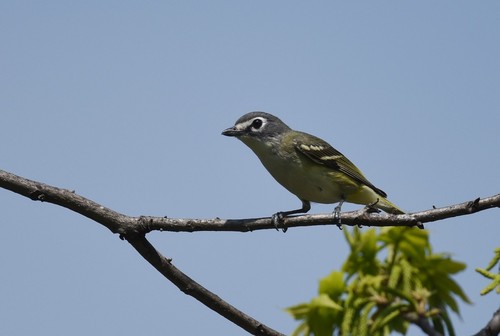
Blue-headed Vireo
12-14 cm (5-5.5 in) long, 21-25 cm wingspan