
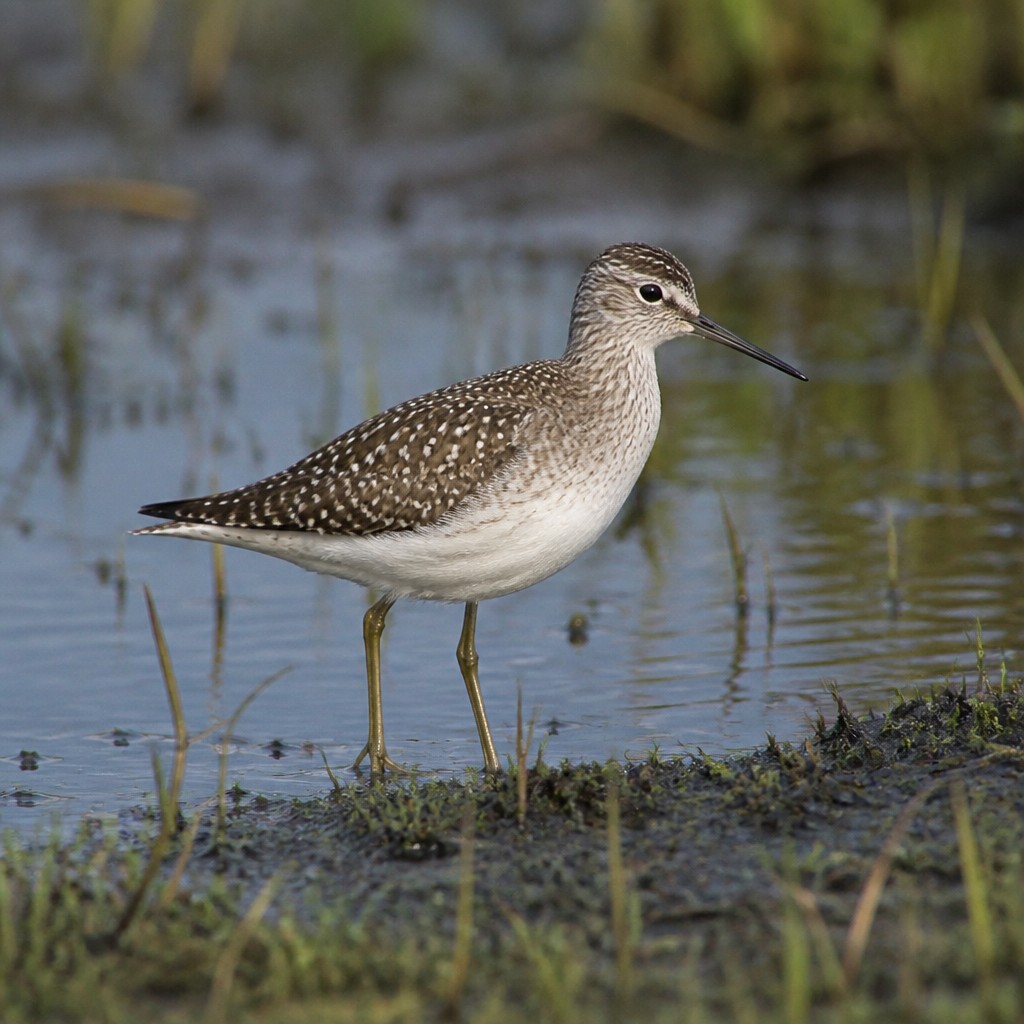
Wood Sandpiper
Tringa glareola
A slim, spotted Eurasian sandpiper with a bright pale eyebrow, often found in small groups around shallow freshwater marshes and flooded grassland.
- Size
- 19-21 cm (7.5-8.5 in) long, 55-59 cm wingspan
- Habitat
- freshwater marshes, flooded fields, and shallow pools
- Type
- shorebird
Spotted a bird like this?
Identify any bird from a photo, free.
Overview
The Wood Sandpiper is a delicately built, long-legged member of the Tringa sandpipers, widespread across the wetlands of northern Europe and Asia. It has a graceful, upright posture and a fine, straight bill.
Upperparts are grayish brown, densely marked with small pale buff-to-white spots that give a spangled appearance, especially in fresh plumage. A clear pale supercilium (eyebrow stripe) extends behind the eye, brightening the face. The underparts are white with light streaking on the breast, and the legs are a distinctive yellowish-green.
In flight it shows a square white rump patch and finely barred tail, with toes projecting noticeably beyond the tail tip.
How to identify it
Key field marks
- Grayish-brown upperparts finely spangled with pale spots
- Prominent pale eyebrow (supercilium) giving an alert, delicate expression
- Yellowish-green legs
- White rump and finely barred tail visible in flight
- Toes project beyond the tail tip in flight
- Distinctive triple-noted "chiff-iff-iff" flight call
Similar species
- Green Sandpiper: darker, more contrastingly blackish above with sparser spotting, blacker underwings, and a shorter, less obvious eyebrow; typically a more solitary, wary bird.
- Common Redshank: bright red-orange legs and bill base, heavier build, broader white wing trailing edge.
- Common/Green Sandpipers vs Wood Sandpiper in flight: Wood Sandpiper's underwings are pale and unbarred compared with the notably dark underwings of Green Sandpiper.
Habitat & range
Habitat
Wood Sandpipers favor shallow, vegetated freshwater habitats — marshes, flooded meadows, muddy pool edges, and rice paddies — rather than open tidal mudflats.
Range and migration
They breed across the subarctic bogs and taiga wetlands of northern Europe and Asia. Outside the breeding season they undertake long migrations to winter across sub-Saharan Africa, the Middle East, South and Southeast Asia, and Australia, often stopping in loose flocks at inland wetlands along the way.
Behavior & voice
Behavior
Wood Sandpipers are active, rather nervous feeders, walking briskly through shallow water while pecking and probing, and they often gather in small, loose groups at good feeding sites, unlike the more solitary Green Sandpiper.
Voice
The characteristic flight call is a bright, whistled "chiff-iff-iff," quite different from Green Sandpiper's louder, more explosive call.
Feeding
They take insects, small crustaceans, and worms from mud and shallow water, sometimes wading belly-deep and up-ending like a small duck.
Nesting and breeding
Most pairs nest on the ground in a shallow scrape among sedges or moss in bogs and wet tundra, though occasional records exist of birds using old tree nests, a trait shared with their close relative the Green Sandpiper.
Frequently asked questions
How can you tell a Wood Sandpiper from a Green Sandpiper?
Wood Sandpiper is paler and more spotted above with a bright pale eyebrow and pale underwings, while Green Sandpiper is darker, more sparsely marked, and shows blackish underwings and a more contrasting white rump.
What does a Wood Sandpiper sound like?
Its flight call is a bright, three-noted whistle often rendered as "chiff-iff-iff."
Where do Wood Sandpipers spend the winter?
They winter widely across sub-Saharan Africa, the Middle East, South and Southeast Asia, and Australia after breeding in northern Eurasia.
What habitat do Wood Sandpipers prefer?
Shallow freshwater wetlands such as marshes, flooded fields, and muddy pool margins, rather than open coastal mudflats.
Do Wood Sandpipers form flocks?
They are more social than the closely related Green Sandpiper and are often seen in small, loose groups at good feeding sites.
Wood Sandpiper guides
In-depth guides for identifying, finding, and understanding Wood Sandpiper.
Other birds you may enjoy
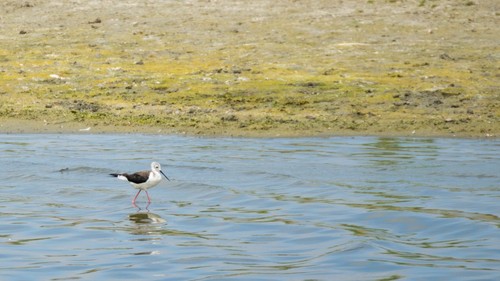
Black-winged Stilt
33-36 cm (13-14 in) long, wingspan 67-83 cm
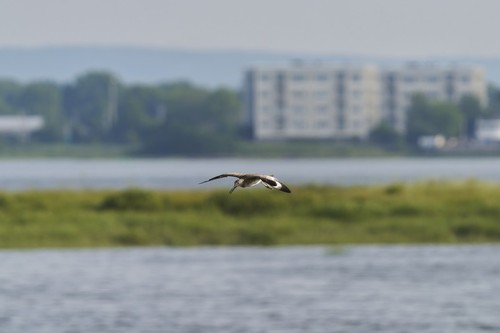
Willet
33-41 cm (13-16 in) long, 65-70 cm wingspan
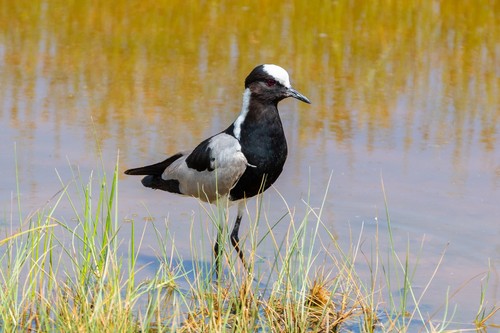
Blacksmith Lapwing
Body length about 30 cm; wingspan 55-65 cm
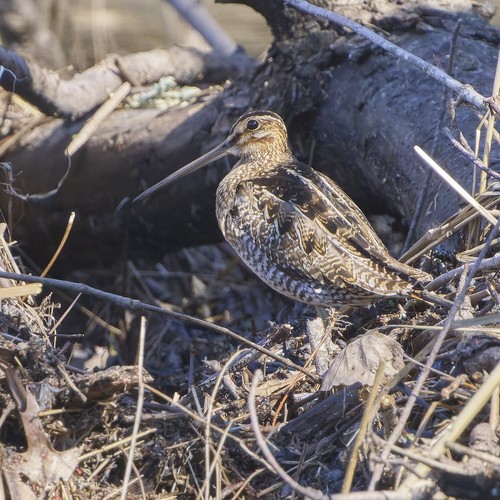
Wilson's Snipe
25-30 cm (10-12 in) long, 39-45 cm wingspan
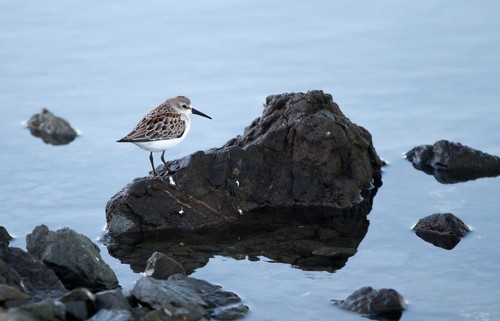
Western Sandpiper
14-17 cm (5.5-6.7 in) long, 28-37 cm wingspan
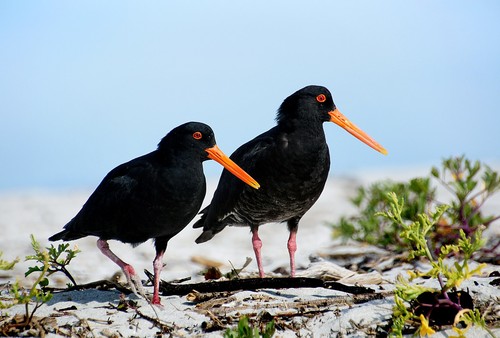
Variable Oystercatcher
46-49 cm (18-19 in) long
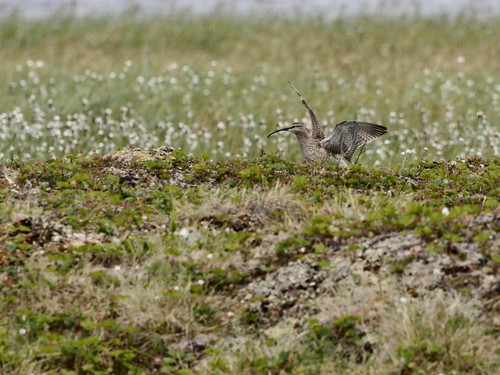
Whimbrel
40-46 cm (16-18 in) long, 76-89 cm wingspan
Wilson's Phalarope
22-24 cm (8.5-9.5 in) long, 37-43 cm wingspan
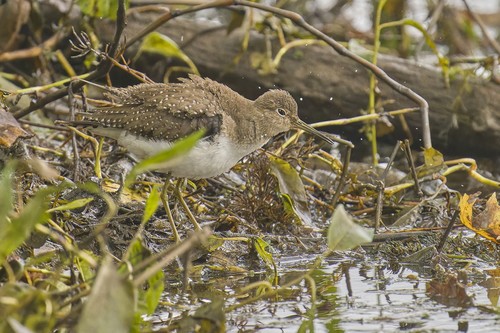
Solitary Sandpiper
19-23 cm (7.5-9 in) long, 50-56 cm wingspan
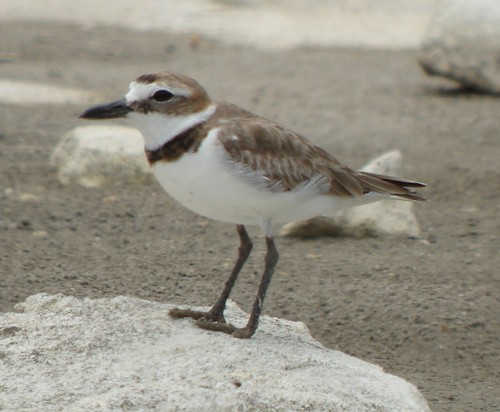
Wilson's Plover
17-19 cm (6.7-7.5 in) long, 45-50 cm wingspan
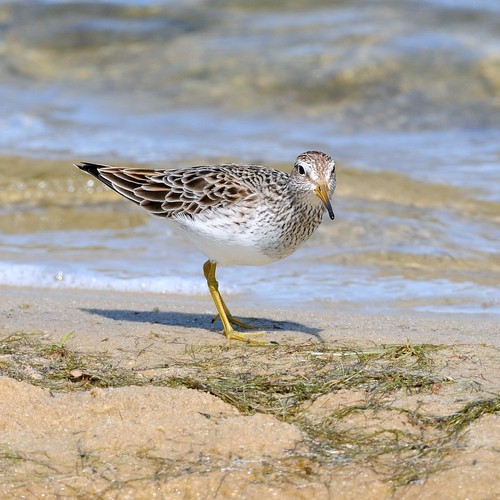
Pectoral Sandpiper
19-23 cm (7.5-9 in) long, 43-49 cm wingspan
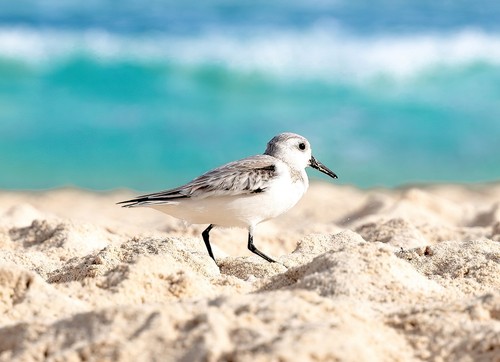
Sanderling
18-20 cm (7-8 in) long, 40-43 cm wingspan