
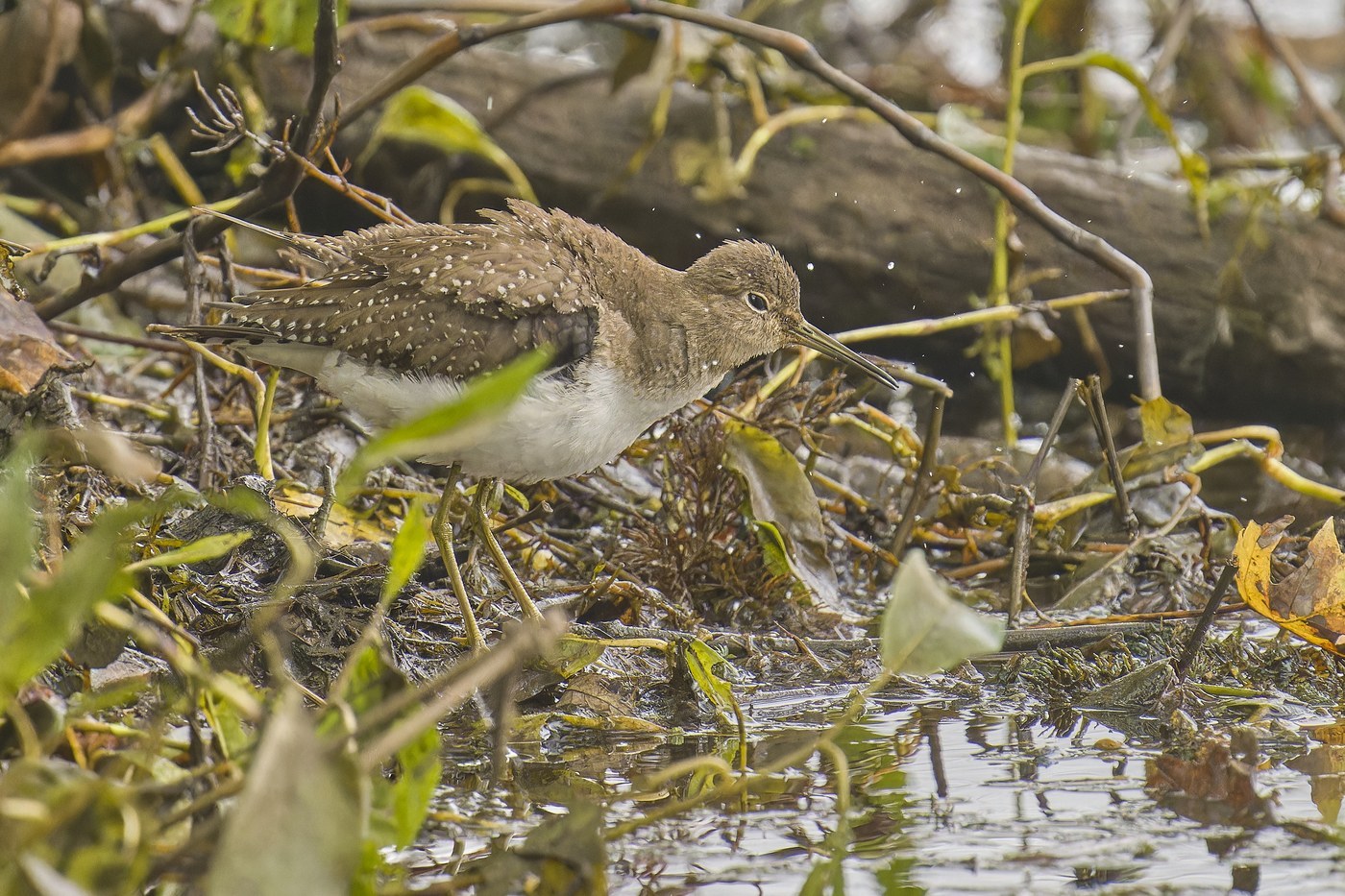
Solitary Sandpiper
Tringa solitaria
A dark, bold-eyed sandpiper of shaded pond edges that, true to its name, is almost always seen alone rather than in flocks.
- Size
- 19-23 cm (7.5-9 in) long, 50-56 cm wingspan
- Habitat
- wooded pond edges, ditches, and small freshwater wetlands
- Type
- shorebird
Spotted a bird like this?
Identify any bird from a photo, free.
Overview
The Solitary Sandpiper is a slim, medium-small member of the Tringa genus best known for its unsociable habits. Where most sandpipers gather in flocks along open shorelines, this species is typically encountered singly, picking its way along the muddy fringe of a small woodland pool or roadside ditch.
Upperparts are dark olive-brown to blackish, finely peppered with small white spots that give the plumage a subtly speckled look at close range. The underparts are white, the neck and upper breast lightly streaked with gray-brown, and a crisp white eye-ring stands out against the dark face. The legs are dull greenish-yellow to olive, and the bill is straight, thin, and blackish.
In flight the Solitary Sandpiper shows dark, unbarred underwings and a dark rump and tail with white barring on the outer tail feathers — quite different from the bold white rump patches of many of its relatives.
How to identify it
Key field marks
- Dark olive-brown upperparts finely spotted with white
- Bold white eye-ring on an otherwise plain dark face
- Dark rump and central tail (no white rump flash) with barred outer tail feathers
- Dark, unbarred underwings visible in flight — a good clincher
- Greenish-yellow legs and a thin, straight, dark bill
- Frequent gentle bobbing of the rear body, though less exaggerated than a Spotted Sandpiper
Similar species
- Spotted Sandpiper: constantly teeters its whole body, has a white wedge in front of the folded wing, and shows a bold white wingstripe in flight; breeding birds are heavily spotted below.
- Lesser Yellowlegs: notably larger, bright yellow legs, white rump, more elegant and long-necked.
- Green Sandpiper (Eurasian, its closest relative): darker overall with even bolder white rump contrast and blacker underwings; ranges do not normally overlap.
- Wood Sandpiper (Eurasian): paler, more spotted above, with a prominent pale eyebrow and a contrasting white rump, unlike the Solitary's dark rump.
Habitat & range
Habitat
True to its name, the Solitary Sandpiper favors small, often shaded freshwater sites that other shorebirds ignore: forest pools, beaver ponds, flooded ditches, sewage lagoons, and muddy stream edges, frequently under a partial canopy of trees.
Range and migration
It breeds across the boreal forest of Canada and Alaska and winters from Mexico south through Central and South America. During migration it passes through nearly all of the continental United States as a scattered, low-density traveler rather than in the large flocks typical of other sandpipers, usually appearing as a lone bird at an inconspicuous wet spot.
Behavior & voice
Behavior
Unlike almost every other sandpiper, the Solitary Sandpiper nests in trees. It lays its eggs in the abandoned nests of songbirds — American Robins, Rusty Blackbirds, and other passerines — built in conifers near water, a highly unusual strategy among shorebirds.
Voice
The flight call is a sharp, high-pitched "peet" or "peet-weet," thinner and more strident than the similar call of the Spotted Sandpiper.
Feeding
It forages by walking deliberately through shallow water and mud, sometimes vibrating a foot to stir up prey, picking and probing for aquatic insect larvae, small crustaceans, and other invertebrates.
Nesting and breeding
Because it uses old tree nests rather than building its own, the Solitary Sandpiper avoids the ground-nest predation risks faced by most shorebirds; the female lays a small clutch and both adults help tend the young after they leave the nest.
Frequently asked questions
Why is it called the Solitary Sandpiper?
It is almost always seen alone or in loose pairs rather than in the flocks typical of most sandpipers, feeding quietly at small, secluded freshwater sites.
Does the Solitary Sandpiper really nest in trees?
Yes — it is one of the only shorebirds known to nest above ground, using old abandoned nests of songbirds such as American Robins in trees near water.
How do you tell a Solitary Sandpiper from a Spotted Sandpiper?
Solitary Sandpiper has a bold white eye-ring, dark unbarred underwings, and no white wingstripe, while Spotted Sandpiper constantly teeters, shows a white wing stripe in flight, and has spotted underparts in breeding plumage.
Where does the Solitary Sandpiper breed?
It breeds in the boreal forest wetlands of Canada and Alaska, then migrates through the rest of North America to winter in Mexico, Central America, and South America.
What does a Solitary Sandpiper eat?
Mainly aquatic insects and their larvae, along with small crustaceans and other invertebrates picked from shallow mud and water.
Solitary Sandpiper guides
In-depth guides for identifying, finding, and understanding Solitary Sandpiper.
Other birds you may enjoy
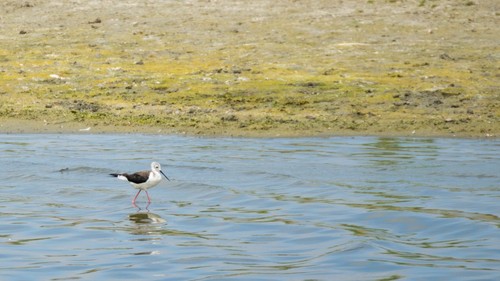
Black-winged Stilt
33-36 cm (13-14 in) long, wingspan 67-83 cm
Willet
33-41 cm (13-16 in) long, 65-70 cm wingspan
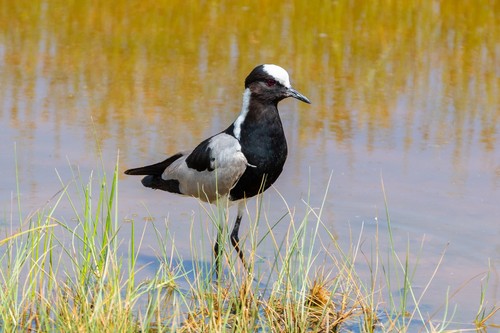
Blacksmith Lapwing
Body length about 30 cm; wingspan 55-65 cm
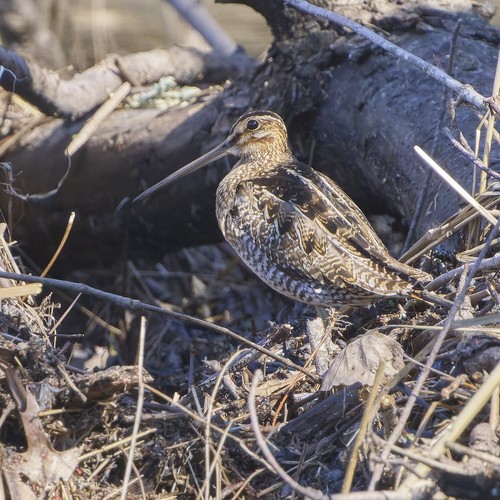
Wilson's Snipe
25-30 cm (10-12 in) long, 39-45 cm wingspan
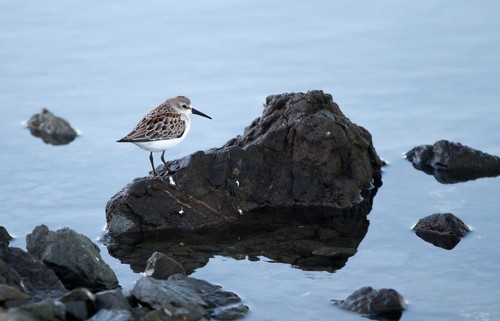
Western Sandpiper
14-17 cm (5.5-6.7 in) long, 28-37 cm wingspan
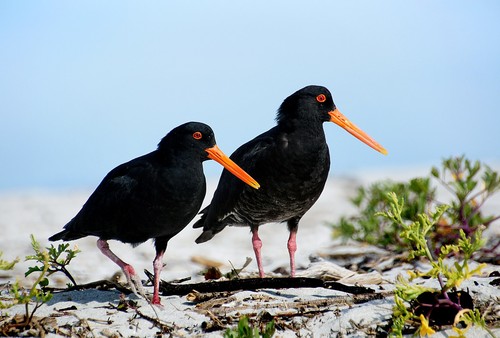
Variable Oystercatcher
46-49 cm (18-19 in) long
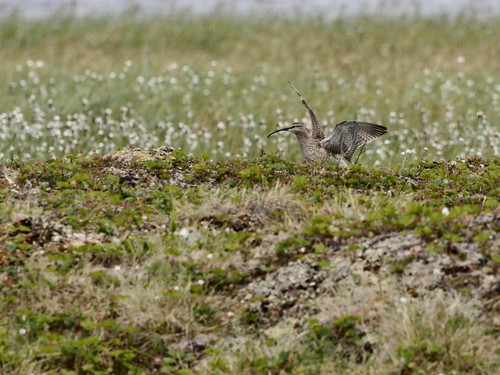
Whimbrel
40-46 cm (16-18 in) long, 76-89 cm wingspan
Wilson's Phalarope
22-24 cm (8.5-9.5 in) long, 37-43 cm wingspan
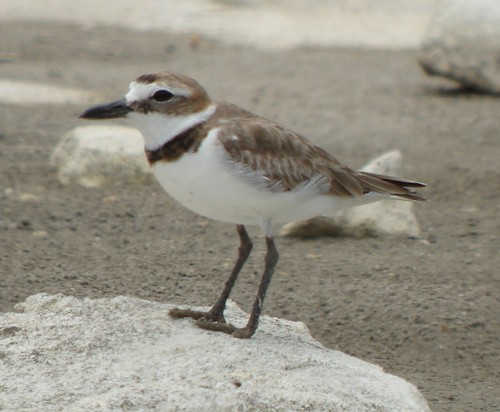
Wilson's Plover
17-19 cm (6.7-7.5 in) long, 45-50 cm wingspan
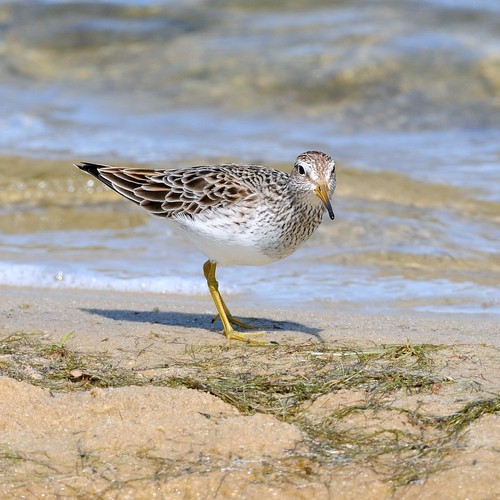
Pectoral Sandpiper
19-23 cm (7.5-9 in) long, 43-49 cm wingspan
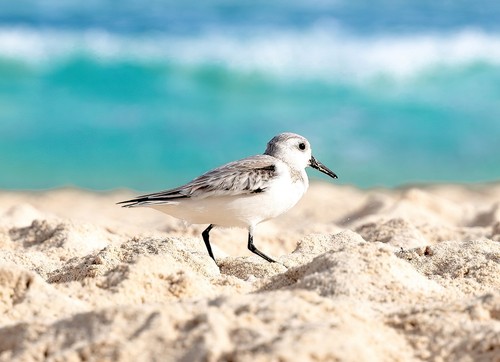
Sanderling
18-20 cm (7-8 in) long, 40-43 cm wingspan
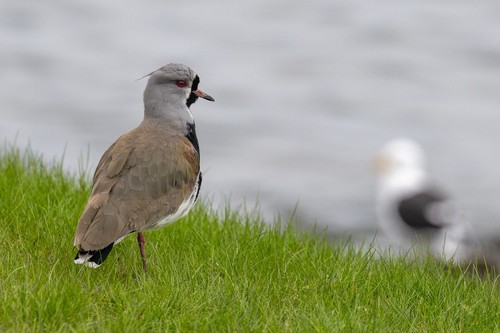
Southern Lapwing
32-38 cm (12.5-15 in) long, 70-80 cm wingspan