
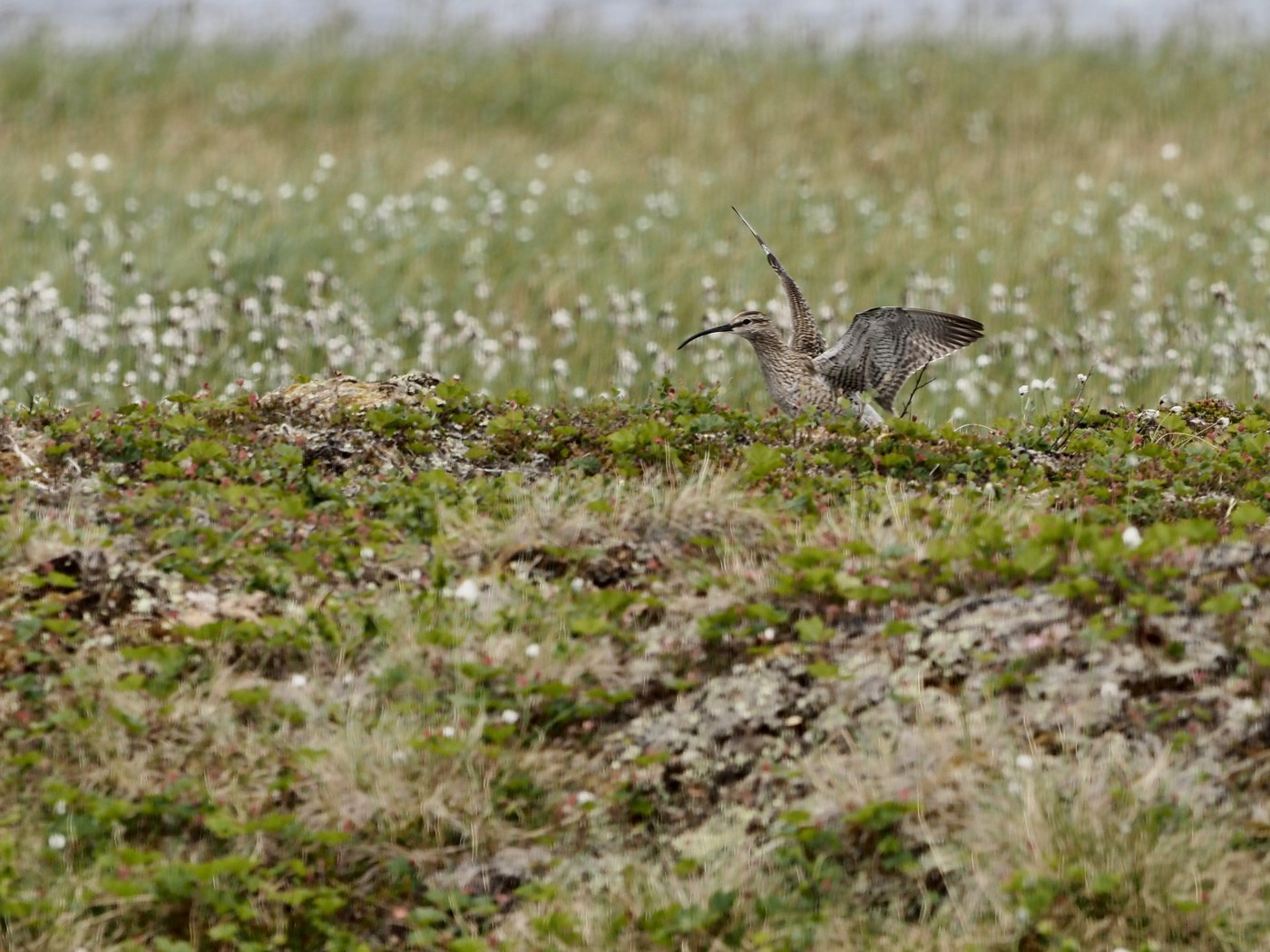
Whimbrel
Numenius phaeopus
A medium-sized curlew with a boldly striped crown and long decurved bill, found on nearly every coastline in the world outside the breeding season.
- Size
- 40-46 cm (16-18 in) long, 76-89 cm wingspan
- Habitat
- Arctic and subarctic tundra (breeding); coastal beaches, mudflats, and mangroves (non-breeding)
- Type
- shorebird
Spotted a bird like this?
Identify any bird from a photo, free.
Overview
The Whimbrel is a medium-sized member of the curlew family, streaky grayish-brown overall with a long, evenly decurved bill used for probing and picking prey from mud and sand. Its head pattern is distinctive: a broad dark stripe through the eye and bold dark lateral crown stripes bordering a pale central crown stripe.
Sexes look alike, and the species is smaller and shorter-billed than the closely related Eurasian Curlew and Long-billed Curlew, with a proportionally shorter, more evenly curved bill.
One of the most widely distributed shorebirds in the world, the Whimbrel breeds across Arctic and subarctic regions of North America and Eurasia and winters on coastlines across nearly every continent.
How to identify it
Key field marks
- Long, evenly decurved bill, shorter than in larger curlews
- Bold dark crown stripes bordering a pale central crown stripe
- Dark eye-stripe
- Grayish-brown, streaky body plumage
Similar species
- Eurasian Curlew and Long-billed Curlew are larger with longer, more strongly downcurved bills and lack the strongly striped crown pattern.
- Bristle-thighed Curlew (Pacific) is very similar but has warmer, more cinnamon-toned plumage and a different range.
Habitat & range
Whimbrels breed on open Arctic and subarctic tundra across northern North America and Eurasia. Outside the breeding season they occupy an enormous range of coastal habitats nearly worldwide, including sandy beaches, rocky shores, mudflats, and mangrove-lined coasts, from temperate to tropical latitudes across the Americas, Africa, Asia, and Australia.
Behavior & voice
Voice
A distinctive, rapid, bubbling series of whistled notes, often rendered as a rippling pip-pip-pip-pip-pip, delivered on a level pitch—one of the most recognizable shorebird calls.
Feeding
Uses its curved bill to probe burrows for crabs, especially fiddler crabs on tropical and subtropical coasts, and also picks insects and berries from tundra vegetation during the breeding season.
Nesting
Nests on the ground in a shallow scrape on open tundra, often on slightly raised, well-drained terrain. Both parents incubate and aggressively defend the nest against Arctic predators, including foxes and jaegers, sometimes striking intruders in flight.
Frequently asked questions
How do you identify a Whimbrel?
Look for its long, evenly curved bill and bold dark crown stripes bordering a pale central crown stripe, along with an overall streaky brown body.
How is the Whimbrel different from a curlew?
The Whimbrel is a smaller curlew species with a shorter, less strongly downcurved bill and a distinctly striped crown pattern, compared to larger curlews like the Eurasian and Long-billed Curlews.
What does a Whimbrel eat?
It feeds heavily on crabs, especially fiddler crabs, on coastal mudflats, and on insects and berries on its tundra breeding grounds.
Where does the Whimbrel breed?
On Arctic and subarctic tundra across northern North America and Eurasia, migrating to coastlines nearly worldwide for the winter.
Whimbrel guides
In-depth guides for identifying, finding, and understanding Whimbrel.
Other birds you may enjoy
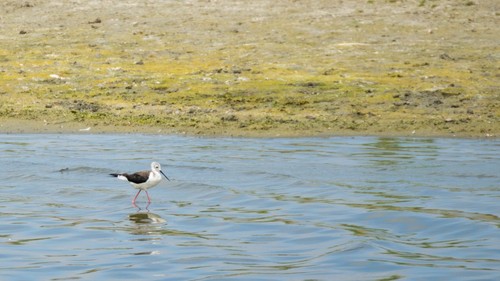
Black-winged Stilt
33-36 cm (13-14 in) long, wingspan 67-83 cm
Willet
33-41 cm (13-16 in) long, 65-70 cm wingspan
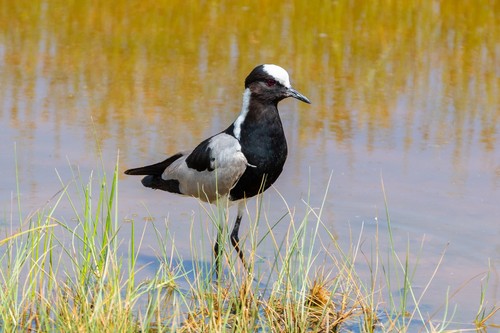
Blacksmith Lapwing
Body length about 30 cm; wingspan 55-65 cm
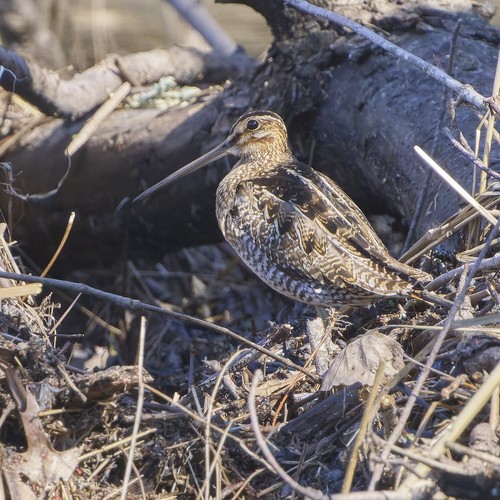
Wilson's Snipe
25-30 cm (10-12 in) long, 39-45 cm wingspan
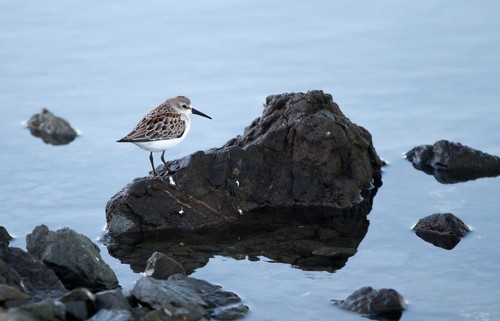
Western Sandpiper
14-17 cm (5.5-6.7 in) long, 28-37 cm wingspan
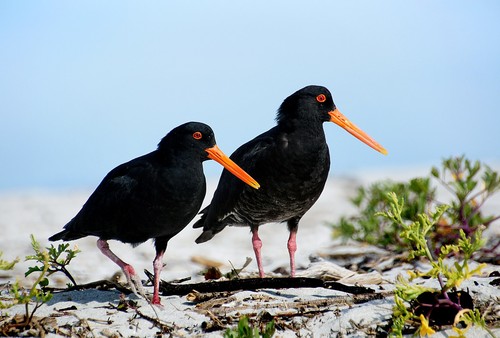
Variable Oystercatcher
46-49 cm (18-19 in) long
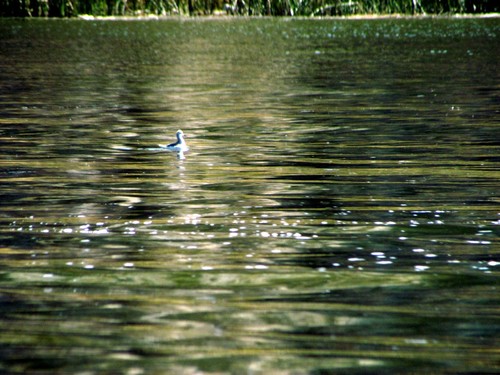
Wilson's Phalarope
22-24 cm (8.5-9.5 in) long, 37-43 cm wingspan
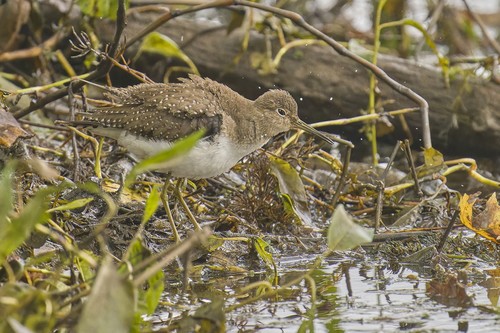
Solitary Sandpiper
19-23 cm (7.5-9 in) long, 50-56 cm wingspan
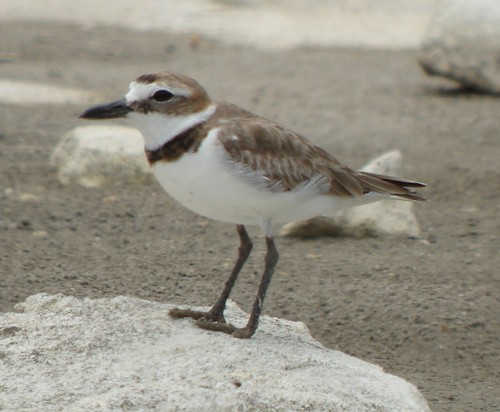
Wilson's Plover
17-19 cm (6.7-7.5 in) long, 45-50 cm wingspan
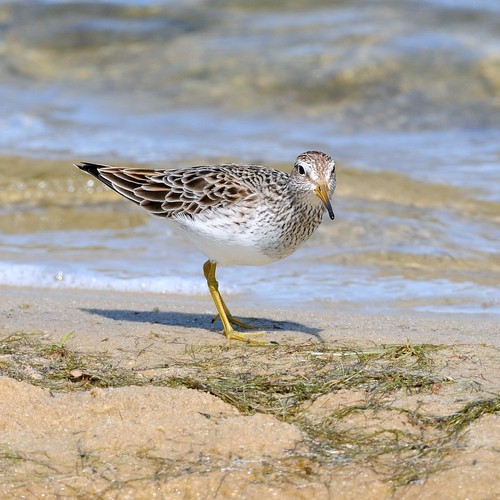
Pectoral Sandpiper
19-23 cm (7.5-9 in) long, 43-49 cm wingspan
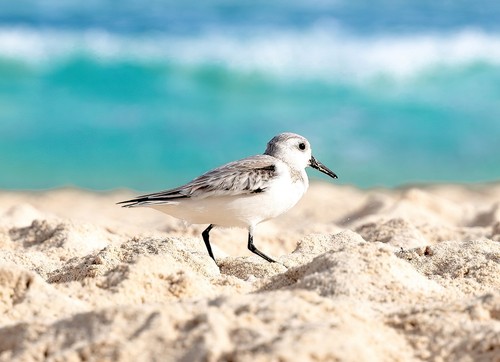
Sanderling
18-20 cm (7-8 in) long, 40-43 cm wingspan
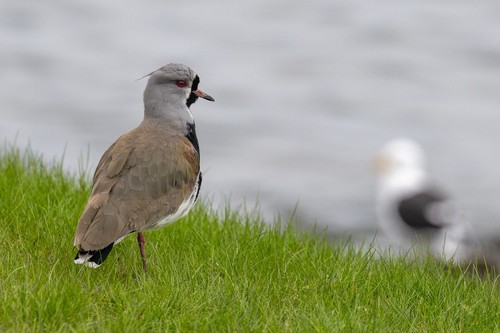
Southern Lapwing
32-38 cm (12.5-15 in) long, 70-80 cm wingspan