
Whimbrel Identification Guide
A large, boldly striped-headed shorebird with a long down-curved bill, known for its rapid, whistled flight call.
Read the full Whimbrel encyclopedia entry →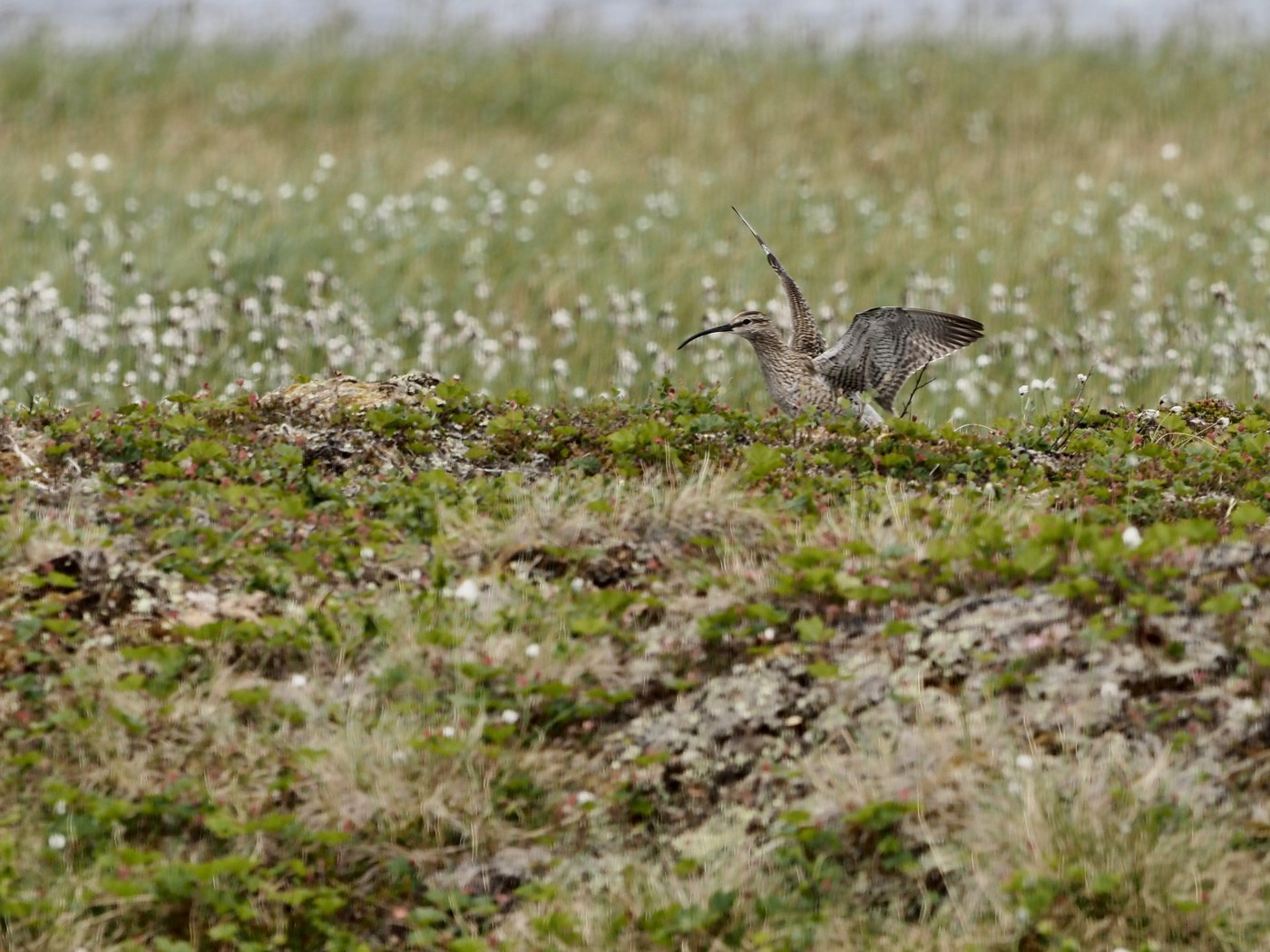
Key Field Marks
- Large shorebird, 40-46 cm (16-18 in), with a long, evenly down-curved bill.
- Mottled brown-and-buff upperparts and buffy, streaked underparts without strong barring.
- Bold head pattern: two dark lateral crown stripes separated by a pale central crown stripe, plus a dark eye-stripe - a key mark that separates it from other large curlews.
- Legs are blue-gray; in flight shows relatively plain wings without a strong wing pattern.
Separating It From Similar Species
- Long-billed Curlew: Noticeably larger with an even longer, more strongly curved bill, plain unstriped head, and warmer cinnamon-buff underparts and underwings.
- Bristle-thighed Curlew: Rare and restricted; paler and buffier overall with a paler, more contrasting rump/tail and a distinctive rolling call, unlike the Whimbrel's staccato whistle.
- Smaller curlews such as vagrant Little Curlew are much daintier with a shorter, more subtly curved bill and plainer plumage.
Habitat, Range & Season
- Breeds on open Arctic and subarctic tundra across North America, Europe, and Asia.
- On migration and in winter, found on coastal mudflats, sandy beaches, rocky shorelines, and sometimes short grasslands or agricultural fields.
- A long-distance migrant; winters along coasts from the southern U.S. through Central and South America, and similarly across Africa, southern Asia, and Australia in Old World populations.
Voice
- Distinctive flight call: a rapid, evenly pitched series of clear whistled notes, typically 5-7 in a row, often rendered as "ti-ti-ti-ti-ti-ti-ti" - frequently heard before the bird is seen.
Behavior
- Probes deeply in mud and sand for fiddler crabs and other invertebrates, often tilting its head to align the curved bill with burrows.
- On tundra breeding grounds, also eats insects and berries.
- Typically forages and roosts in loose flocks; migrating flocks often fly in a distinctive wedge or line formation.
Frequently asked questions
How can I tell a Whimbrel from a Long-billed Curlew?
Look at the head: Whimbrel has bold dark crown stripes with a pale central stripe, while Long-billed Curlew has a plain, unstriped head and an even longer bill with warmer cinnamon tones below.
What does a Whimbrel sound like?
Its signature call is a fast, evenly pitched series of clear whistles, usually 5-7 notes given rapidly in a row, often heard in flight.
Where do Whimbrels breed?
They breed on open Arctic and subarctic tundra in North America, Europe, and Asia, then migrate to coastal areas worldwide for winter.
What do Whimbrels eat?
Mainly invertebrates such as fiddler crabs probed from mud and sand on coastal flats, plus insects and berries on the tundra breeding grounds.