
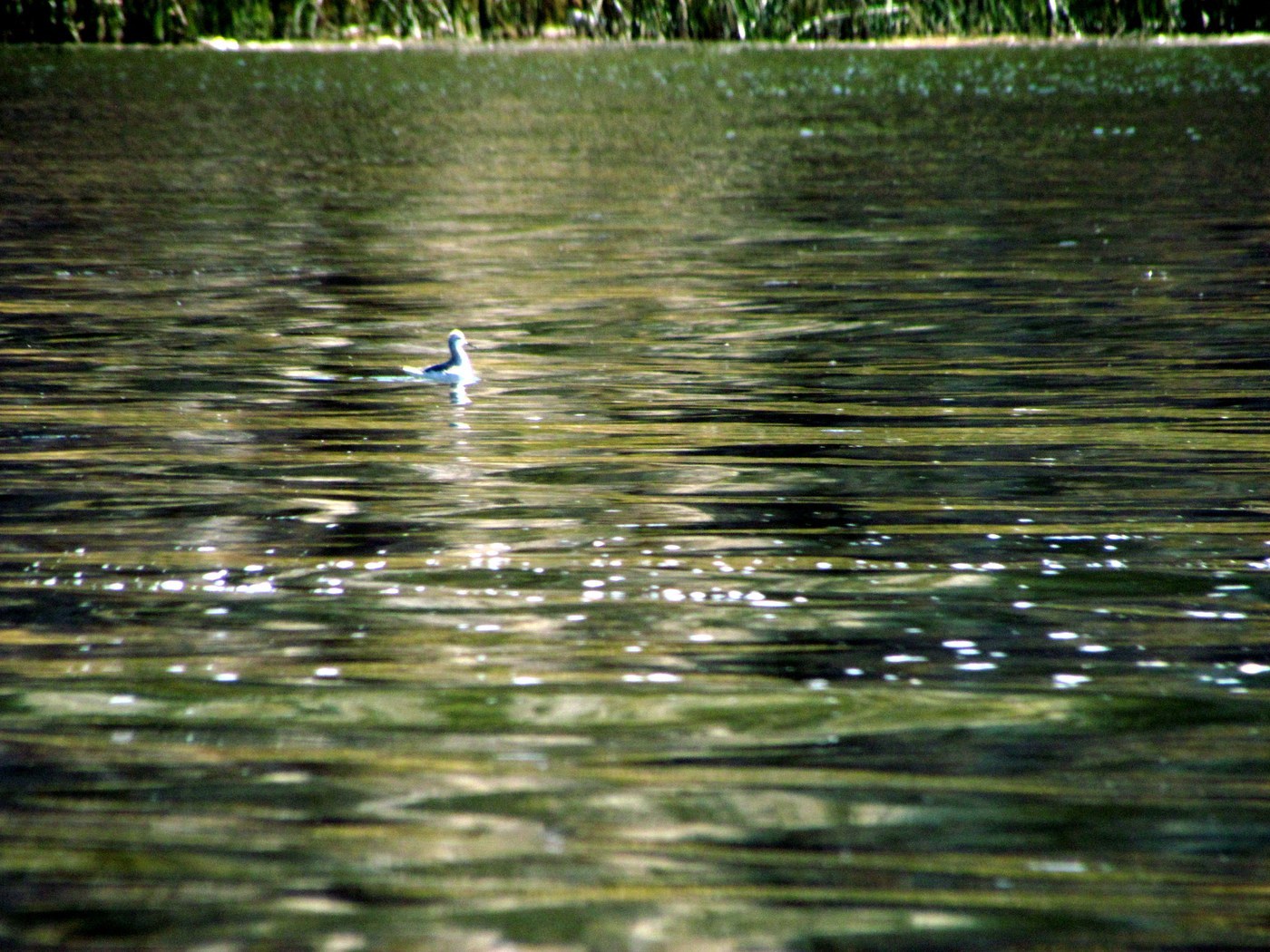
Wilson's Phalarope
Phalaropus tricolor
The largest of the three phalarope species and the only one to breed in interior wetlands rather than the Arctic, with brighter females that spin gracefully on shallow ponds.
- Size
- 22-24 cm (8.5-9.5 in) long, 37-43 cm wingspan
- Habitat
- prairie wetlands, alkaline lakes, and marshes
- Type
- shorebird
Spotted a bird like this?
Identify any bird from a photo, free.
Overview
Wilson's Phalarope is the largest and most elegant of the three phalarope species, and the only one that breeds primarily in the interior wetlands of North America rather than the Arctic tundra.
As in the other phalaropes, females are more brightly colored than males during the breeding season, showing a gray crown, a bold black stripe running from the eye down the neck that blends into rich chestnut tones along the neck and back, set off by a clean white throat and underparts. Males display a much duller version of the same pattern. The bill is long, thin, and needle-like, and the legs are proportionally longer than those of the other two phalarope species.
How to identify it
Key field marks
- Largest of the three phalaropes, with a long, thin, needle-like bill
- Females brighter than males: gray crown, black eye-stripe blending into chestnut neck/back, white throat (breeding plumage)
- Longer legs relative to body than Red-necked or Red Phalarope
- Plain pale gray above, white below in nonbreeding plumage, with less bold facial pattern than other phalaropes
Similar species
- Red-necked Phalarope: smaller, shorter-billed, breeds on Arctic tundra rather than interior wetlands, and is far more pelagic outside the breeding season.
- Lesser Yellowlegs: superficially similar leg color in some plumages, but lacks the phalarope's fine bill and swimming/spinning behavior.
Habitat & range
Habitat
Wilson's Phalarope favors shallow interior wetlands such as prairie potholes, alkaline lakes, and marshes, unlike the more Arctic and oceanic habitats used by the other two phalarope species.
Range and migration
It breeds across the northern Great Plains and prairie regions of interior North America. After breeding, it undertakes a remarkable migration, with large numbers staging at hypersaline lakes before continuing to winter primarily on high-altitude lakes in the Andes and other wetlands of South America, particularly Argentina.
Behavior & voice
Behavior
Like other phalaropes, Wilson's Phalarope swims readily and spins in tight circles on the water surface to stir up small invertebrates, though it also forages by wading and picking at the water's edge more than its Arctic-breeding relatives.
Voice
Calls include a low, nasal "wurk" or grunting notes, generally quieter and less frequent than the calls of many other shorebirds.
Feeding
It feeds on small aquatic invertebrates such as brine shrimp and insect larvae, picked from the water surface while swimming or spinning, particularly abundant at alkaline lake stopover sites.
Nesting and breeding
As in other phalaropes, sex roles are reversed: females compete for mates and depart after laying the eggs, leaving the male to incubate the clutch and care for the precocial young alone in a nest built on the ground near water.
Frequently asked questions
How is Wilson's Phalarope different from the other phalaropes?
It is the largest of the three species, has a longer, thinner bill and longer legs, and is the only one that breeds in interior prairie wetlands rather than on Arctic tundra.
Where does Wilson's Phalarope spend the winter?
Primarily on high-altitude lakes in the Andes and other wetlands of South America, especially in Argentina.
Why do female Wilson's Phalaropes look brighter than males?
As in other phalaropes, sex roles are reversed — females compete for mates and leave incubation and chick care entirely to males, so females have evolved the more colorful breeding plumage.
What do Wilson's Phalaropes eat?
Small aquatic invertebrates such as brine shrimp and insect larvae, picked from the water surface while swimming, spinning, or wading.
Where does Wilson's Phalarope breed?
In shallow interior wetlands such as prairie potholes and alkaline lakes across the northern Great Plains of North America.
Wilson's Phalarope guides
In-depth guides for identifying, finding, and understanding Wilson's Phalarope.
Other birds you may enjoy
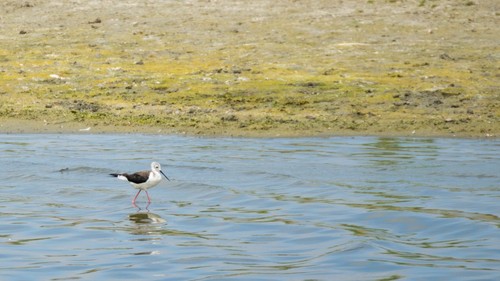
Black-winged Stilt
33-36 cm (13-14 in) long, wingspan 67-83 cm
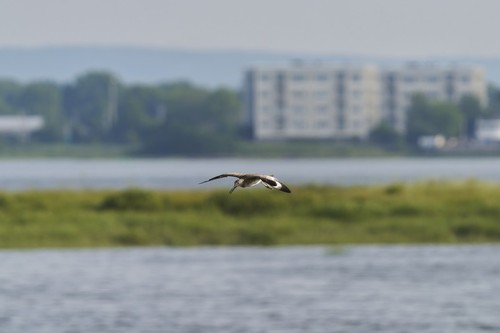
Willet
33-41 cm (13-16 in) long, 65-70 cm wingspan
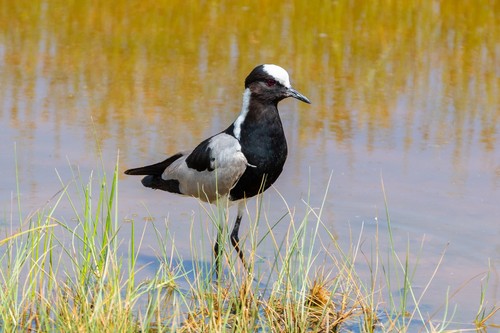
Blacksmith Lapwing
Body length about 30 cm; wingspan 55-65 cm
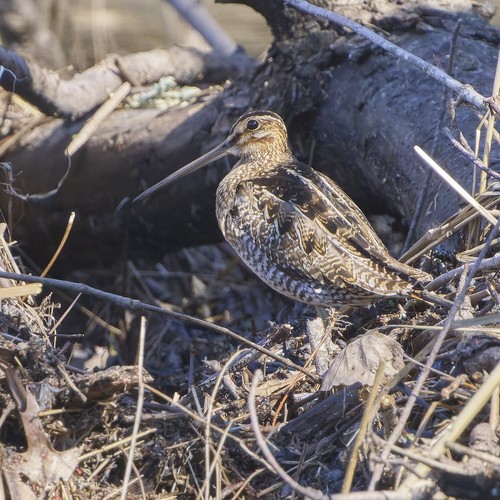
Wilson's Snipe
25-30 cm (10-12 in) long, 39-45 cm wingspan
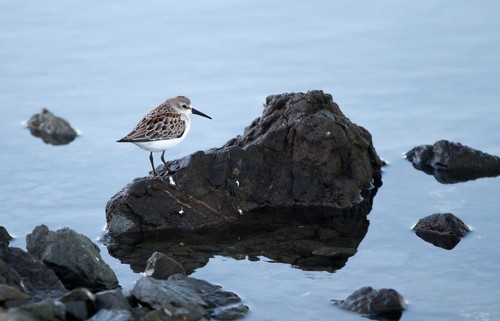
Western Sandpiper
14-17 cm (5.5-6.7 in) long, 28-37 cm wingspan
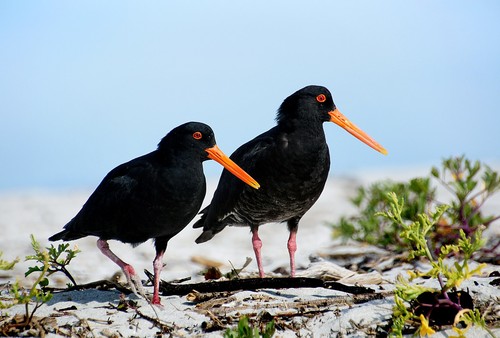
Variable Oystercatcher
46-49 cm (18-19 in) long
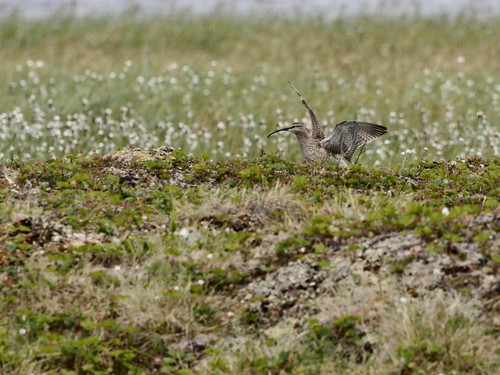
Whimbrel
40-46 cm (16-18 in) long, 76-89 cm wingspan
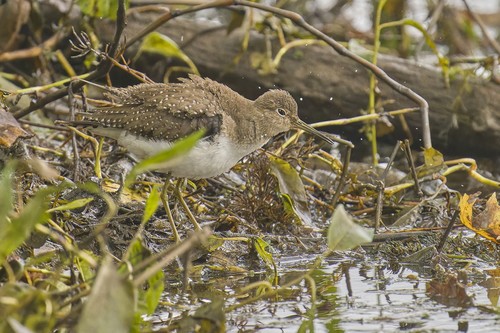
Solitary Sandpiper
19-23 cm (7.5-9 in) long, 50-56 cm wingspan
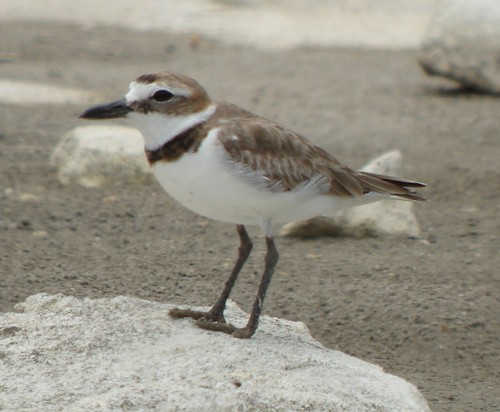
Wilson's Plover
17-19 cm (6.7-7.5 in) long, 45-50 cm wingspan
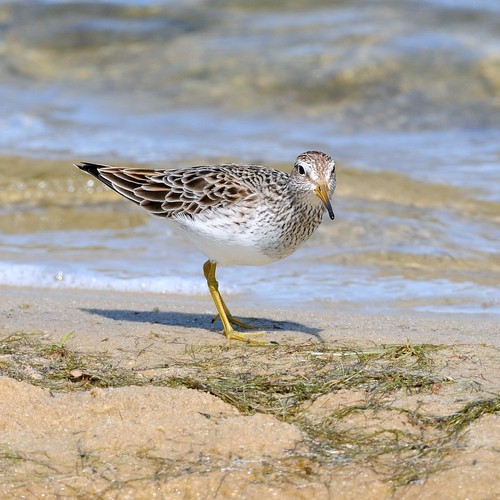
Pectoral Sandpiper
19-23 cm (7.5-9 in) long, 43-49 cm wingspan
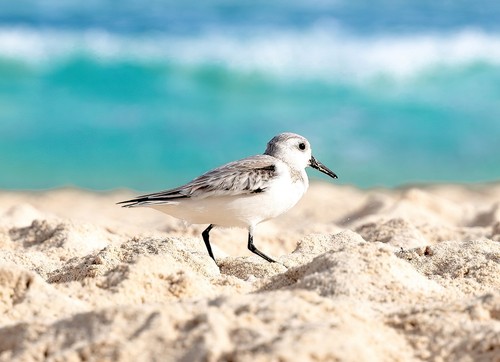
Sanderling
18-20 cm (7-8 in) long, 40-43 cm wingspan
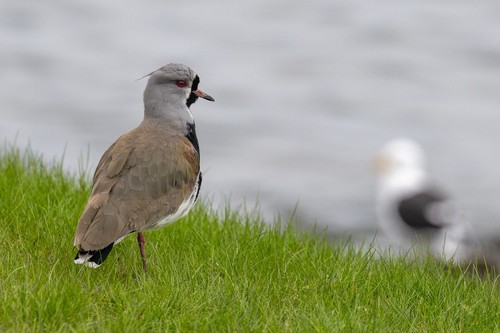
Southern Lapwing
32-38 cm (12.5-15 in) long, 70-80 cm wingspan