
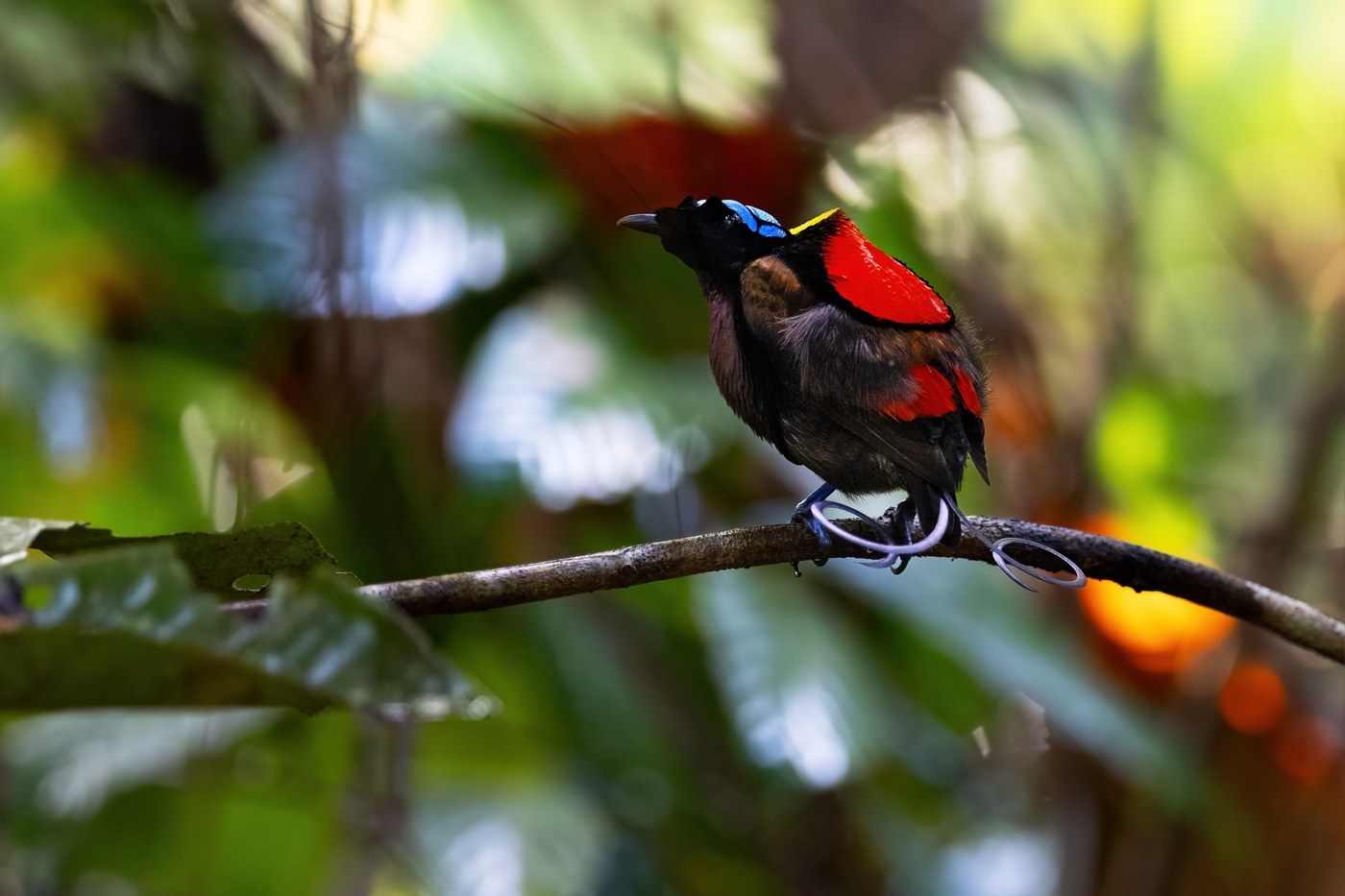
Wilson's Bird-of-paradise
Cicinnurus respublica
A small, dazzlingly colored bird-of-paradise found only on two Indonesian islands, with a bare turquoise crown and curled violet tail wires.
- Size
- Body about 16 cm (6.3 in), small and compact
- Habitat
- Lowland rainforest
- Type
- songbird
Spotted a bird like this?
Identify any bird from a photo, free.
Overview
Wilson's Bird-of-paradise is one of the most colorful birds in the world despite its small size. Males have a red back, golden-yellow nape, black underparts, and a bare, turquoise-blue crown crossed by a double black cross-shaped pattern of feather tracts.
Two curled, glossy violet-blue wire tail feathers extend beyond the short tail. Females, by contrast, are dull with a bare bluish crown but otherwise plain dark plumage, lacking the male's brilliant colors.
How to identify it
Key field marks
- Bare turquoise-blue crown with a black double-cross pattern (visible skin, not feathers)
- Red mantle, yellow nape collar, black underparts on adult males
- Two curled violet wire tail feathers
Similar species
- Most similar to the King Bird-of-paradise but distinguished by the bare turquoise crown, red-and-black body pattern, and violet (not green-disc) curled tail wires
- Extremely limited range (Waigeo and Batanta islands) rules out confusion with mainland New Guinea species
Habitat & range
Habitat
Lowland and hill rainforest, favoring areas with a clear understory used for ground-level courtship displays.
Range
Endemic to the small Indonesian islands of Waigeo and Batanta in the Raja Ampat archipelago, off the western tip of New Guinea.
Migration
Non-migratory, restricted to its native island forests year-round.
Behavior & voice
Behavior
Males clear a patch of forest floor of leaf litter to create a display court, then perform a striking dance below a low display perch, flashing the bright yellow-green mouth lining and puffing out their nape collar to attract females watching from above.
Voice
Sharp, repeated chattering and buzzy notes, along with softer calls given during courtship display.
Feeding
Feeds mainly on small fruits and berries in the forest understory and canopy, supplemented by insects and other invertebrates.
Nesting and breeding
Polygynous mating system; females alone construct the nest, incubate eggs, and raise young with no assistance from males.
Frequently asked questions
Where is Wilson's Bird-of-paradise found?
It is endemic to the islands of Waigeo and Batanta in Indonesia's Raja Ampat archipelago.
What makes the male's crown unusual?
It has bare, bright turquoise-blue skin marked with a black cross pattern instead of feathers.
Is Wilson's Bird-of-paradise endangered?
It is classified as Near Threatened due to its very small island range and habitat pressure.
How does the male display for females?
He clears a court on the forest floor and dances beneath a low perch, flashing bright colors and a yellow-green mouth.
Wilson's Bird-of-paradise guides
In-depth guides for identifying, finding, and understanding Wilson's Bird-of-paradise.
Other birds you may enjoy
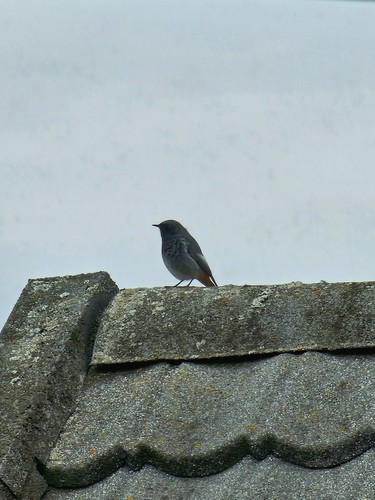
Black Redstart
13-14.5 cm (5.1-5.7 in) long, 23-26 cm wingspan
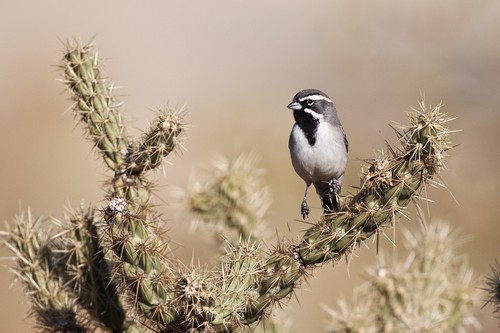
Black-throated Sparrow
12-14 cm (4.7-5.5 in) long, about 19-20 cm (7.5-8 in) wingspan
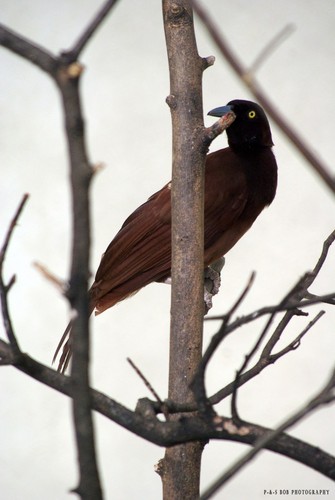
Greater Bird-of-paradise
Body about 43 cm; males with additional flank plumes up to 50 cm and long tail wires
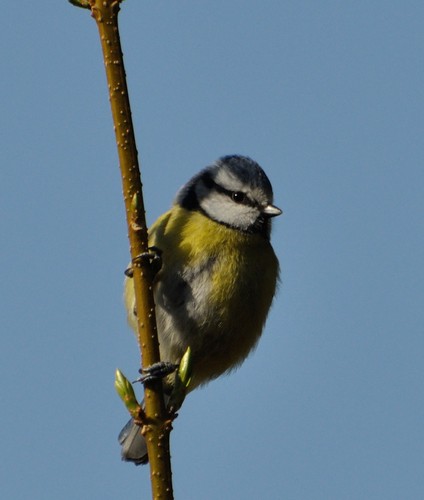
Blue Tit
11-12 cm (4.3-4.7 in) long, 17-20 cm wingspan
Red-billed Quelea
11.5–13 cm long, wingspan about 20–22 cm
White-plumed Antbird
13-14 cm (5-5.5 in) long
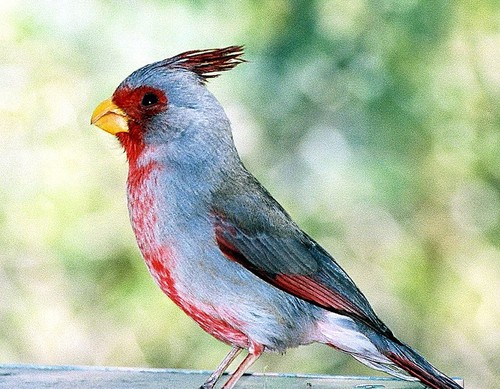
Pyrrhuloxia
19-22 cm (7.5-8.7 in) long, 30 cm wingspan
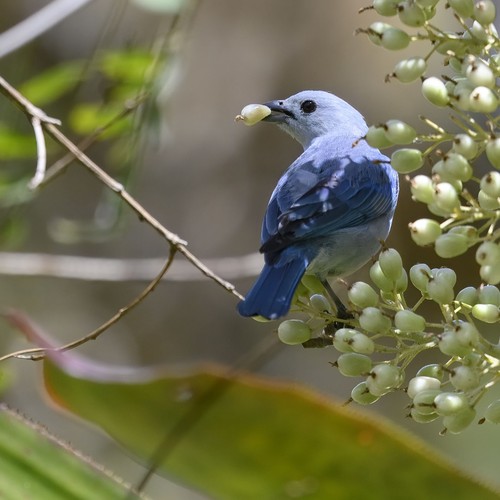
Blue-gray Tanager
16-18 cm (6-7 in) long
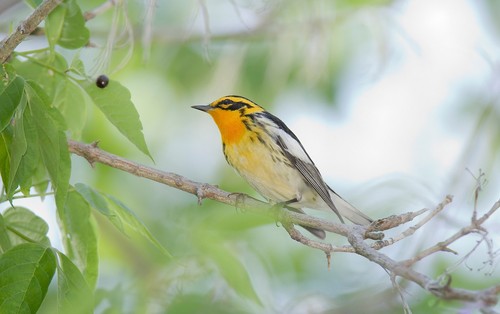
Blackburnian Warbler
11-13 cm (4.3-5.1 in) long, 20-22 cm wingspan
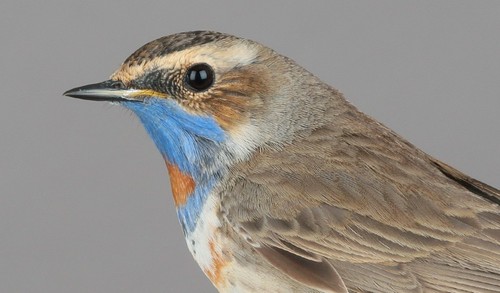
Bluethroat
13-14 cm (5.1-5.5 in) long, 20-22 cm wingspan
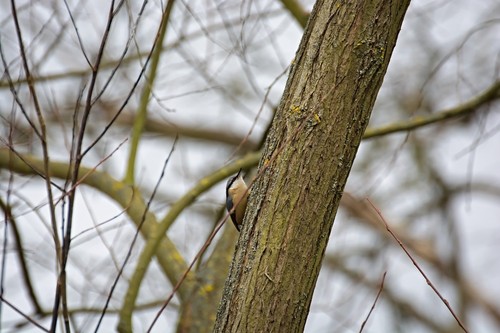
Eurasian Nuthatch
12-14.5 cm (4.7-5.7 in) long, 22.5-27 cm wingspan
Wood Thrush
19-21 cm (7.5-8.3 in) long, about 33 cm (13 in) wingspan