
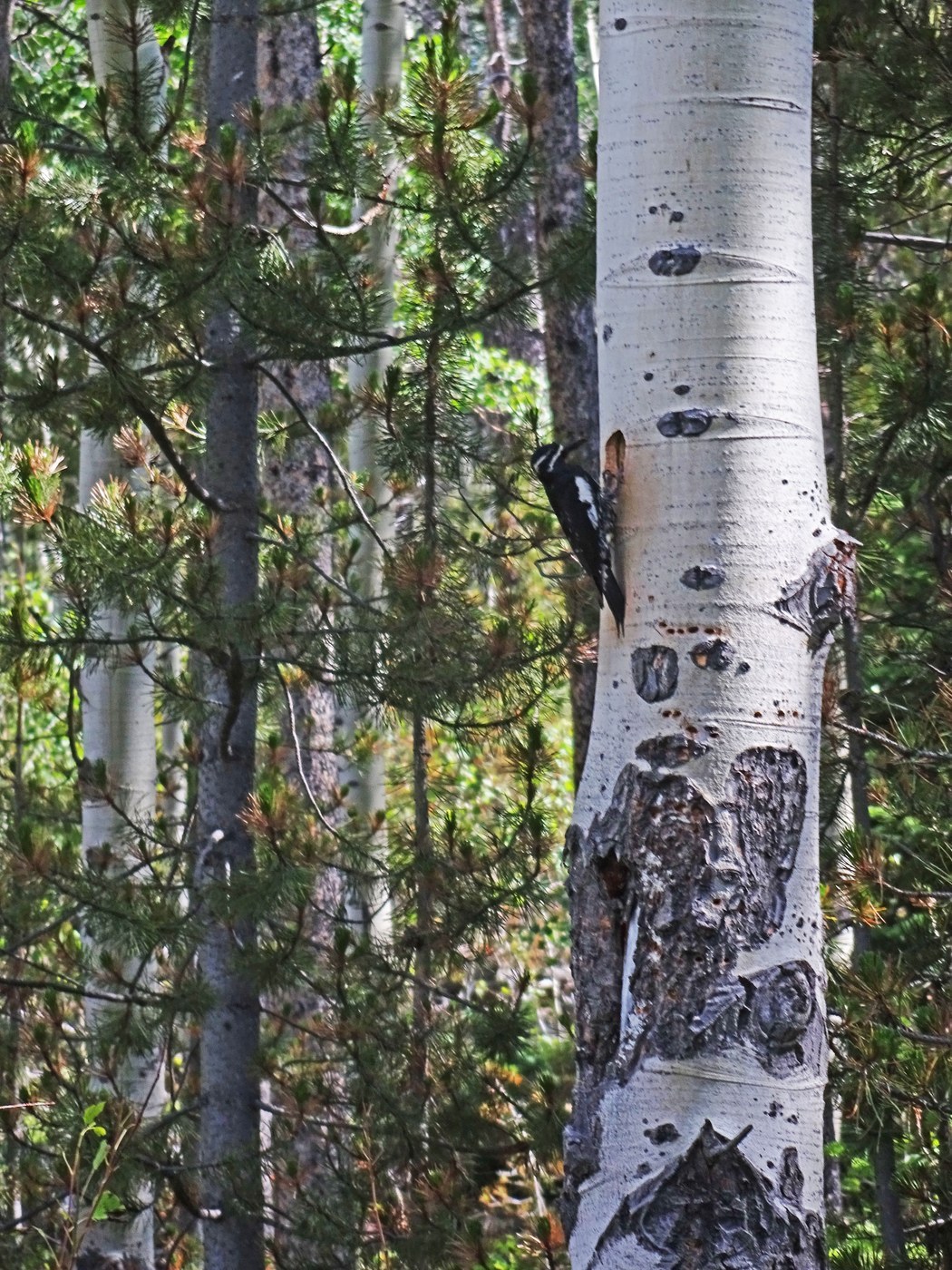
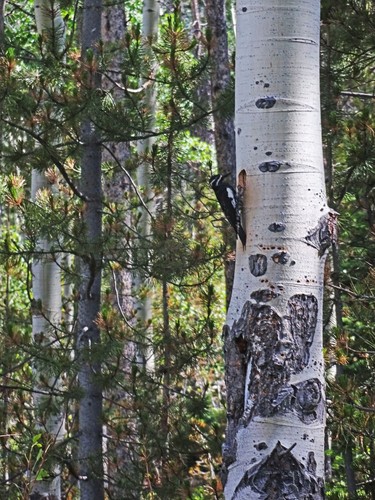
Williamson's Sapsucker
Sphyrapicus thyroideus
A striking mountain woodpecker whose male and female look so different they were once thought to be separate species.
- Size
- 21-25 cm (8-10 in) long, 40-42 cm wingspan
- Habitat
- montane coniferous forests, especially open pine and fir stands
- Type
- woodpecker
Spotted a bird like this?
Identify any bird from a photo, free.
Overview
Williamson's Sapsucker is unusual among North American woodpeckers for its extreme sexual dimorphism. The male is largely glossy black with bold white wing and rump patches, a white facial stripe, and a small crimson throat patch. The female looks completely different: finely barred brown and black overall with a plain brown head and a yellow-washed belly.
For decades in the 1800s the two sexes were classified as separate species before ornithologists realized they were mates of the same bird. This dramatic difference in plumage remains one of the more remarkable examples of sexual dimorphism in North American birds.
How to identify it
Key Field Marks
- Male: mostly black body, white face stripes, white wing patch, white rump, small red throat patch, pale yellow belly
- Female: finely barred brown, black, and white overall, plain brown head, yellow-tinged belly
- Both sexes show a black bib on the upper breast
Similar Species
- Male superficially resembles a small black-and-white woodpecker but the white rump and wing patches combined with the red throat are diagnostic.
- Female can be confused with a Northern Flicker but is smaller with a shorter bill and finer barring, and lacks the flicker's spotted underparts.
- Other sapsuckers show red on the crown or a fully red head, not just a small throat patch.
Habitat & range
Habitat
This species favors open, mature coniferous forests in mountains, especially stands of ponderosa pine, lodgepole pine, and Douglas-fir, often near aspen groves used for nesting.
Range
Williamson's Sapsucker breeds in mountain ranges of the western United States, southern British Columbia, and northern Mexico, including the Rockies, Cascades, and Sierra Nevada.
Migration
Most populations migrate short to moderate distances downslope or south for winter, moving into lower-elevation pine and oak woodlands in the southwestern United States and Mexico.
Behavior & voice
Behavior
Unlike most sapsuckers, Williamson's Sapsucker feeds heavily on ants, which it gathers from tree trunks and carries to nestlings in large numbers, supplementing this with sap from wells drilled in conifer bark.
Voice
Calls include a harsh, rolling churr and sharp chirping notes; drumming is an irregular, stuttering series similar to other sapsuckers.
Feeding
Adults maintain sap wells in conifers and glean ants and other insects from bark crevices, feeding nestlings almost exclusively ants during peak breeding season.
Nesting
Pairs excavate a cavity, often in aspen or a dead conifer, and both sexes incubate the 3-7 white eggs and share feeding duties.
Frequently asked questions
Why do male and female Williamson's Sapsuckers look so different?
They show extreme sexual dimorphism; the male is glossy black with white markings and a red throat, while the female is finely barred brown, so different that early naturalists classified them as separate species.
Where do Williamson's Sapsuckers live?
They breed in mountain conifer forests of the western United States, southern Canada, and northern Mexico.
What do Williamson's Sapsuckers eat?
They eat tree sap and cambium along with large quantities of ants and other insects, especially when feeding young.
How can I identify a female Williamson's Sapsucker?
Look for a small, finely barred brown-and-black woodpecker with a plain brown head and yellowish belly, quite different from the black-and-white male.
Williamson's Sapsucker guides
In-depth guides for identifying, finding, and understanding Williamson's Sapsucker.
Other birds you may enjoy
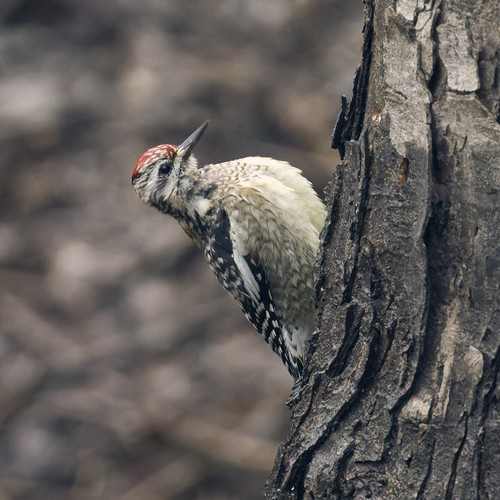
Yellow-bellied Sapsucker
18-21 cm (7-8.3 in) long, 34-40 cm wingspan
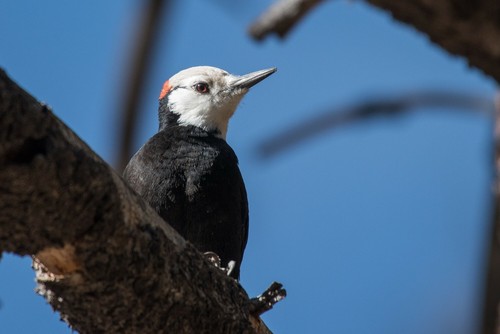
White-headed Woodpecker
20-23 cm (8-9 in) long, 38-41 cm wingspan
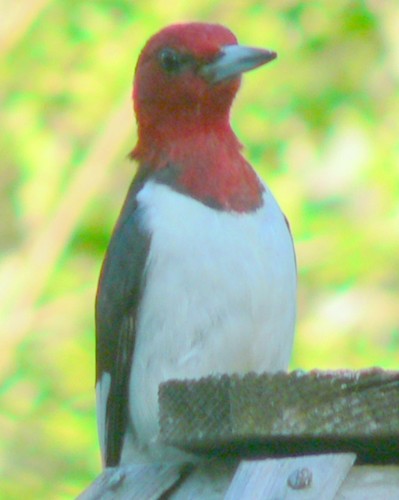
Red-headed Woodpecker
19-23 cm (7.5-9 in) long, 42-46 cm wingspan
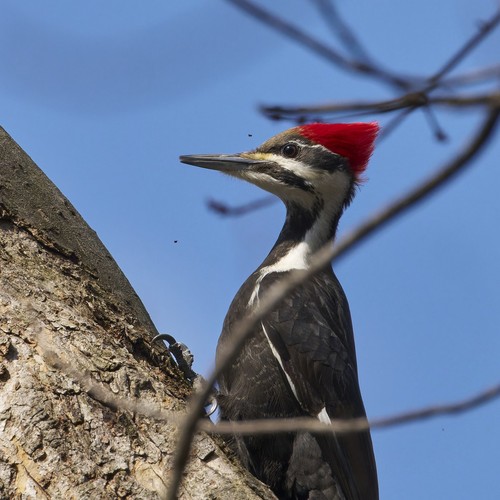
Pileated Woodpecker
40-49 cm (16-19 in) long, 66-75 cm wingspan
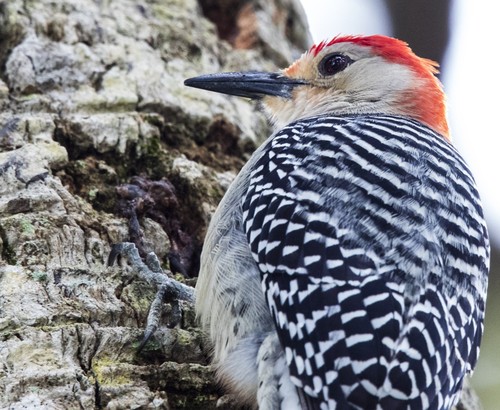
Red-bellied Woodpecker
22-27 cm (9-10.5 in) long, 38-46 cm wingspan
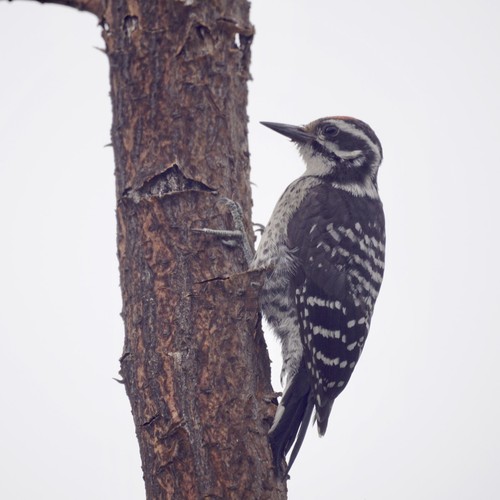
Nuttall's Woodpecker
18-20 cm (7-8 in) long, 34-38 cm wingspan
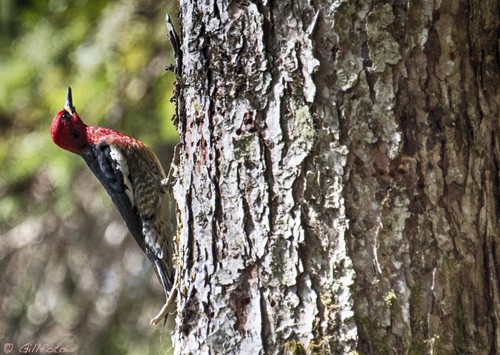
Red-breasted Sapsucker
20-23 cm (8-9 in) long, 34-40 cm wingspan
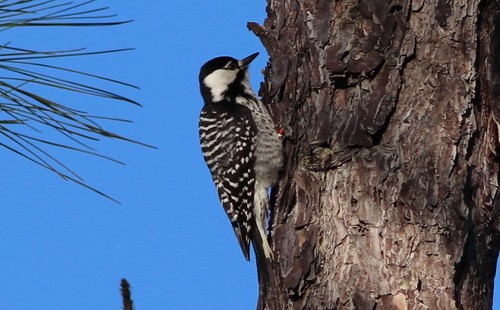
Red-cockaded Woodpecker
20-23 cm (8-9 in) long, 35-38 cm wingspan
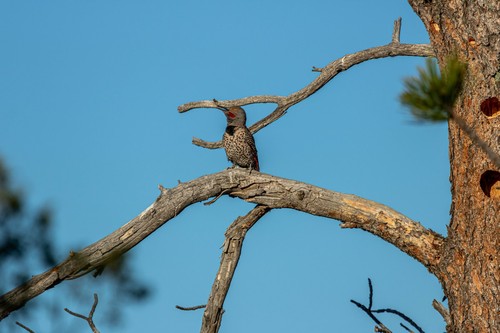
Northern Flicker
28-36 cm (11-14 in) long, 42-51 cm wingspan
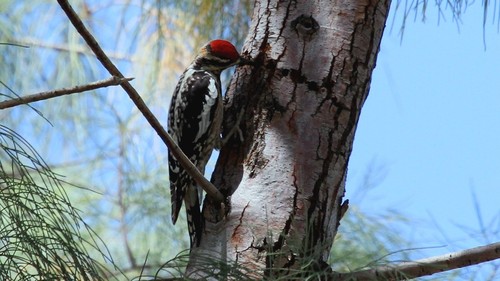
Red-naped Sapsucker
19-21 cm (7.5-8.3 in) long, 34-40 cm wingspan
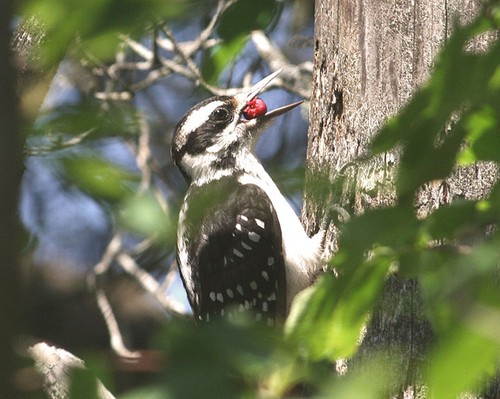
Hairy Woodpecker
23-26 cm (9-10 in) long, 33-41 cm wingspan
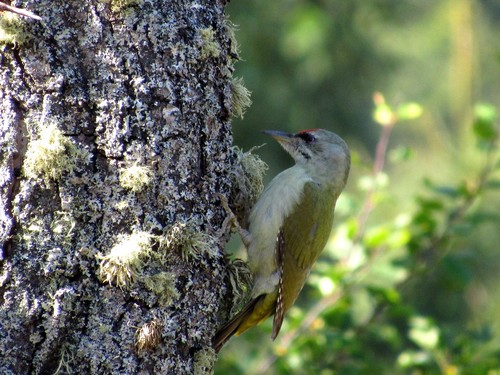
Grey-headed Woodpecker
25-33 cm (10-13 in) long, 38-40 cm wingspan