
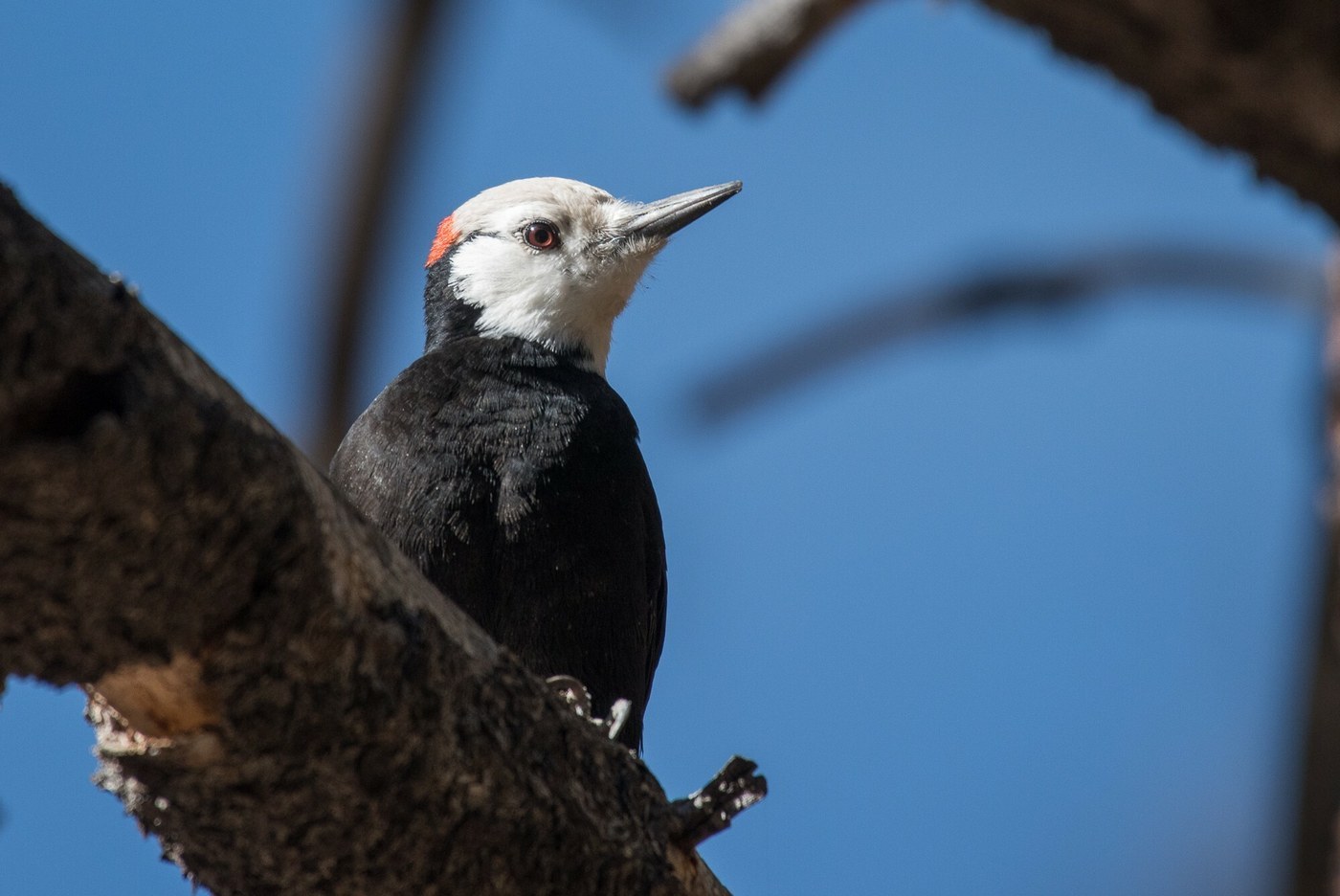
White-headed Woodpecker
Dryobates albolarvatus
An unmistakable pine-forest woodpecker with an all-white head set against a glossy black body.
- Size
- 20-23 cm (8-9 in) long, 38-41 cm wingspan
- Habitat
- open ponderosa pine and mixed-conifer forests of the western mountains
- Type
- woodpecker
Spotted a bird like this?
Identify any bird from a photo, free.
Overview
The White-headed Woodpecker is one of the most distinctive woodpeckers in North America, with an entirely white head contrasting sharply against a glossy black body. Males show a small red patch on the back of the head (the nape), which is absent in females. In flight, a white patch at the base of the primary feathers is visible on the otherwise black wings.
This species is a pine-forest specialist, closely tied to large, open stands of ponderosa and Jeffrey pine where it feeds heavily on pine seeds extracted directly from cones, an unusual foraging behavior among woodpeckers.
How to identify it
Key Field Marks
- Entirely white head, unique among North American woodpeckers
- Glossy black body and wings
- White patch at the base of the primaries, visible in flight
- Males show a small red nape patch; females lack it
Similar Species
- No other North American woodpecker shares the combination of an all-white head and black body, making this species essentially unmistakable within its range.
Habitat & range
Habitat
White-headed Woodpeckers favor open, mature ponderosa pine and mixed-conifer forest with large cone-bearing trees, and are sensitive to loss of old-growth pine stands.
Range
This species is found in mountain ranges of the interior Pacific Northwest and California, including the Cascades, Sierra Nevada, and parts of Idaho, Nevada, and Oregon's high desert ranges.
Migration
White-headed Woodpeckers are largely non-migratory, remaining resident within pine forest habitat year-round, though some altitudinal movement occurs in winter.
Behavior & voice
Behavior
Unlike most woodpeckers, which primarily excavate insects from bark and wood, White-headed Woodpeckers spend much of their time clinging to pine cones, prying out and eating seeds directly, especially in fall and winter.
Voice
Calls include a sharp, high-pitched pee-dink note and rattling calls; drumming is a fast, even roll, typically shorter than that of other woodpeckers.
Feeding
Diet shifts seasonally: pine seeds dominate in fall and winter, while insects, especially wood-boring beetle larvae and ants, are more important in spring and summer.
Nesting
Pairs excavate a cavity, often in a dead pine snag or stump, sometimes low to the ground; both parents incubate the 3-7 white eggs and feed the young.
Frequently asked questions
What makes the White-headed Woodpecker unique?
It is the only North American woodpecker with an entirely white head against a black body, and it feeds heavily on pine seeds pried from cones rather than only excavating insects.
Where do White-headed Woodpeckers live?
They live in mature ponderosa and Jeffrey pine forests of the mountains of the interior Pacific Northwest and California.
What do White-headed Woodpeckers eat?
They mainly eat pine seeds extracted from cones, along with insects such as beetle larvae and ants.
How can you tell a male from a female White-headed Woodpecker?
Males have a small red patch on the back of the head, which females lack.
White-headed Woodpecker guides
In-depth guides for identifying, finding, and understanding White-headed Woodpecker.
Other birds you may enjoy
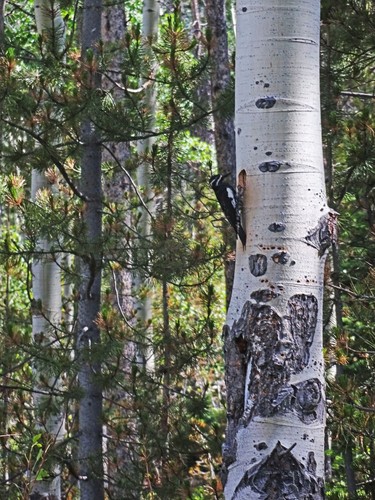
Williamson's Sapsucker
21-25 cm (8-10 in) long, 40-42 cm wingspan
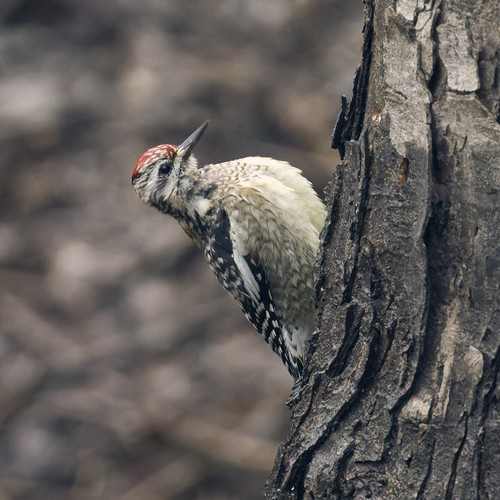
Yellow-bellied Sapsucker
18-21 cm (7-8.3 in) long, 34-40 cm wingspan
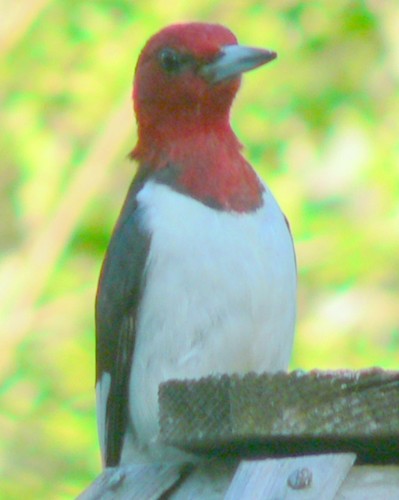
Red-headed Woodpecker
19-23 cm (7.5-9 in) long, 42-46 cm wingspan
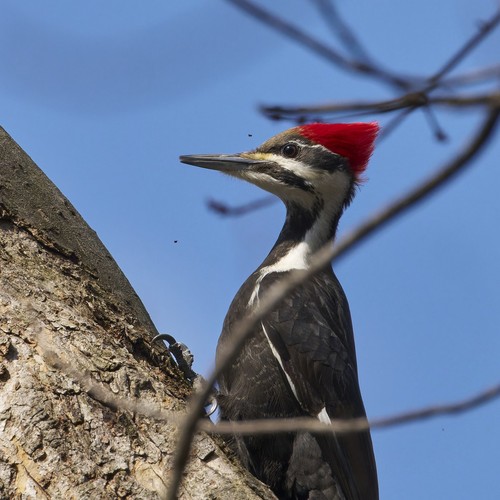
Pileated Woodpecker
40-49 cm (16-19 in) long, 66-75 cm wingspan
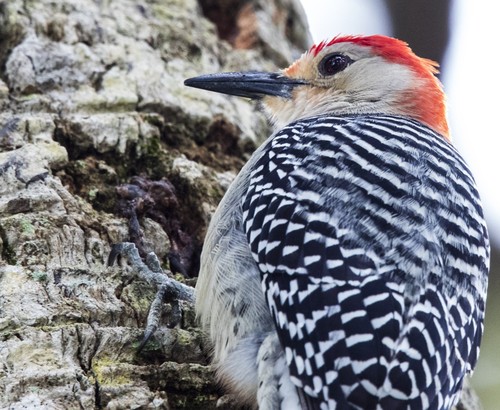
Red-bellied Woodpecker
22-27 cm (9-10.5 in) long, 38-46 cm wingspan
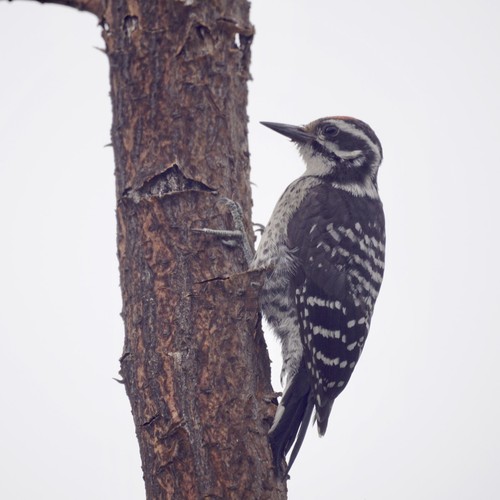
Nuttall's Woodpecker
18-20 cm (7-8 in) long, 34-38 cm wingspan
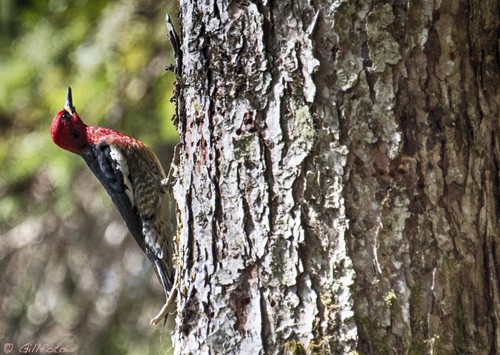
Red-breasted Sapsucker
20-23 cm (8-9 in) long, 34-40 cm wingspan
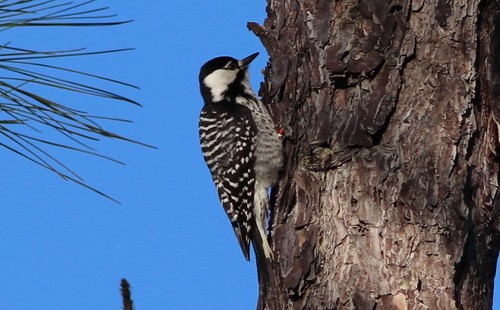
Red-cockaded Woodpecker
20-23 cm (8-9 in) long, 35-38 cm wingspan
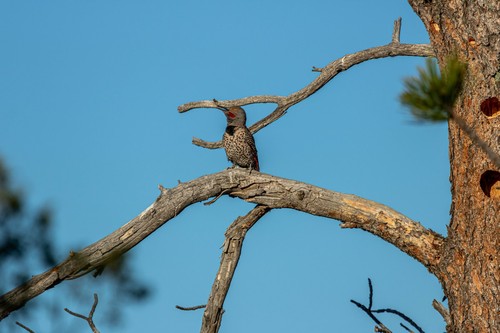
Northern Flicker
28-36 cm (11-14 in) long, 42-51 cm wingspan
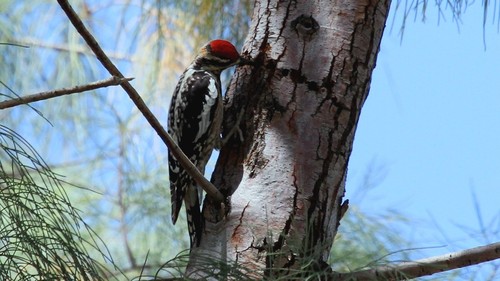
Red-naped Sapsucker
19-21 cm (7.5-8.3 in) long, 34-40 cm wingspan
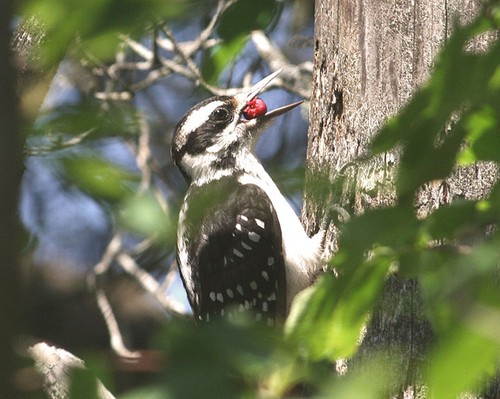
Hairy Woodpecker
23-26 cm (9-10 in) long, 33-41 cm wingspan
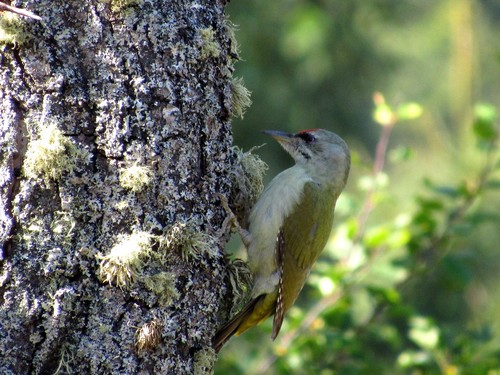
Grey-headed Woodpecker
25-33 cm (10-13 in) long, 38-40 cm wingspan