
Red-breasted Sapsucker
Sphyrapicus ruber
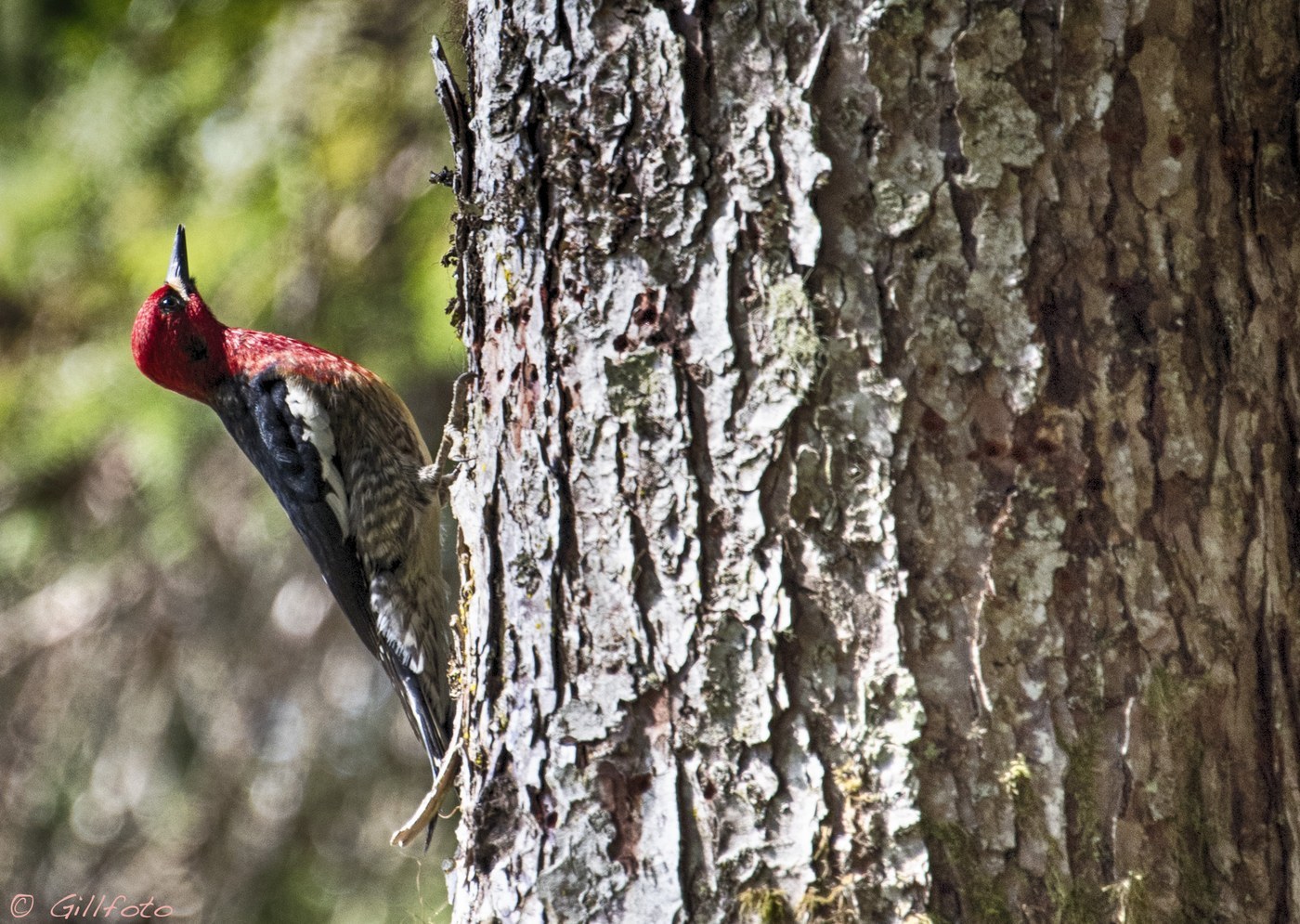
A Pacific coast woodpecker with an entirely crimson-red head and breast that drills neat rows of sap wells in tree bark.
- Size
- 20-23 cm (8-9 in) long, 34-40 cm wingspan
- Habitat
- coniferous and mixed forests along the Pacific coast, orchards, and mixed woodlands
- Type
- woodpecker
Spotted a bird like this?
Identify any bird from a photo, free.
Overview
The Red-breasted Sapsucker is a medium-sized woodpecker of the Pacific coast, instantly recognizable by its solid, bright red hood that covers the entire head and breast, with no white cheek stripes like its sapsucker relatives. The rest of the body is mottled black and white with a pale yellowish wash on the belly and a bold white wing patch visible in flight.
Once considered a subspecies of the Yellow-bellied Sapsucker, it is now recognized as its own species. Two subspecies exist along the coast, with northern birds showing slightly more white mottling than the deeper red, nearly hoodless-looking southern birds.
Like all sapsuckers, this species is best known for the neat horizontal and vertical rows of shallow holes, called sap wells, that it drills into tree bark to feed on the sugary sap and the insects it attracts.
How to identify it
Key Field Marks
- Entire head, throat, and breast are solid bright red, lacking the black-and-white face stripes of other sapsuckers
- Black back mottled with white spots and bars
- Pale yellow wash on the belly
- Bold white wing patch visible at rest and in flight
- Black bib often visible where the red breast meets the white belly
Similar Species
- Red-naped Sapsucker and Yellow-bellied Sapsucker both show distinct black-and-white facial stripes and only a red crown/throat patch, never a fully red hood.
- Williamson's Sapsucker males are largely black with a red throat patch only, not a red head.
- Hybrids between Red-breasted and Red-naped Sapsuckers occur in the Cascades and can show intermediate facial patterning.
Habitat & range
Habitat
Red-breasted Sapsuckers favor coniferous and mixed evergreen-deciduous forests, especially along stream corridors, as well as orchards, parks, and suburban woodlots within their coastal range.
Range
This species is a coastal Pacific specialist, breeding from southeastern Alaska south through coastal British Columbia, Washington, Oregon, and California, generally west of the Cascade and Sierra Nevada crests.
Migration
Northern populations are migratory, moving south into California and northern Mexico for winter, while southern coastal populations are largely resident year-round.
Behavior & voice
Behavior
Red-breasted Sapsuckers drill and maintain wells in living trees, returning repeatedly to lick sap and catch insects drawn to it with a brush-tipped tongue. They also glean insects from bark and occasionally sally out to catch flying insects.
Voice
The call is a nasal, catlike mewing note, along with an irregular, halting drumming pattern on resonant wood that is slower and more stuttering than typical woodpecker drumming.
Feeding
Sap wells are drilled in neat rows and revisited daily; hummingbirds and other birds often use these wells as a food source too.
Nesting
Pairs excavate a new cavity nest each year in a dead or dying tree, often reusing the same tree over successive seasons. Both parents incubate the 4-7 white eggs and feed the young.
Frequently asked questions
What does a Red-breasted Sapsucker look like?
It has an entirely bright red head and breast with no facial stripes, a black-and-white mottled back, and a bold white wing patch.
Where do Red-breasted Sapsuckers live?
They live along the Pacific coast from Alaska to California, mainly in coniferous and mixed forests.
Do Red-breasted Sapsuckers harm trees?
The sap wells they drill are generally shallow and rarely cause lasting damage to healthy trees.
How is it different from a Red-naped Sapsucker?
Red-naped Sapsuckers show black-and-white facial stripes and only a partial red crown and throat, while Red-breasted Sapsuckers have a fully red hood.
Red-breasted Sapsucker guides
In-depth guides for identifying, finding, and understanding Red-breasted Sapsucker.
Other birds you may enjoy
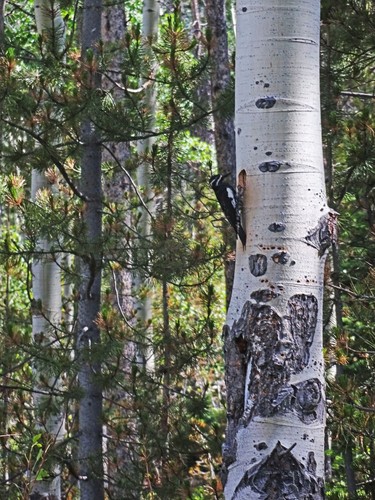
Williamson's Sapsucker
21-25 cm (8-10 in) long, 40-42 cm wingspan
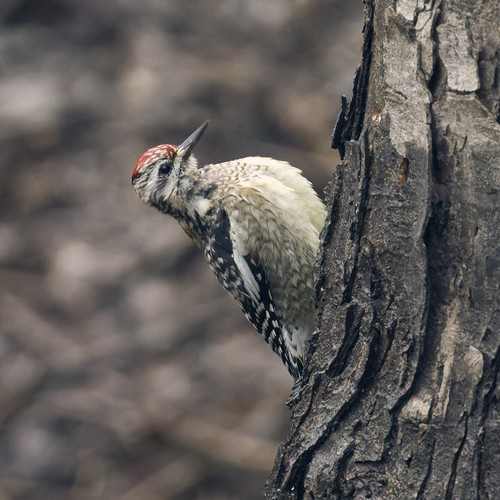
Yellow-bellied Sapsucker
18-21 cm (7-8.3 in) long, 34-40 cm wingspan
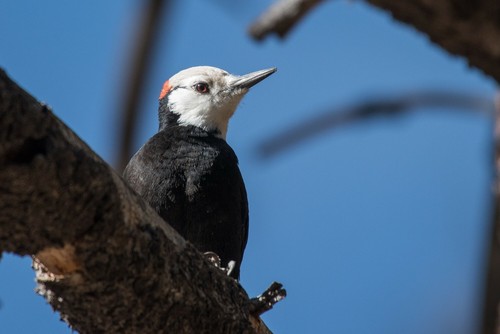
White-headed Woodpecker
20-23 cm (8-9 in) long, 38-41 cm wingspan
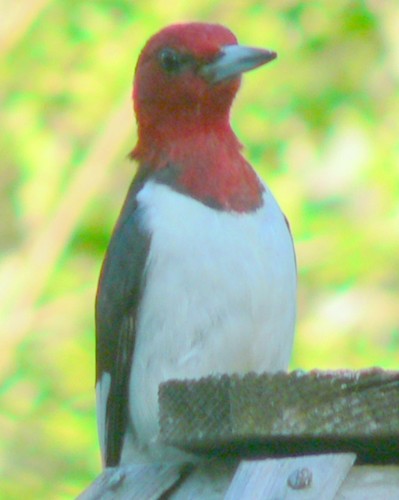
Red-headed Woodpecker
19-23 cm (7.5-9 in) long, 42-46 cm wingspan
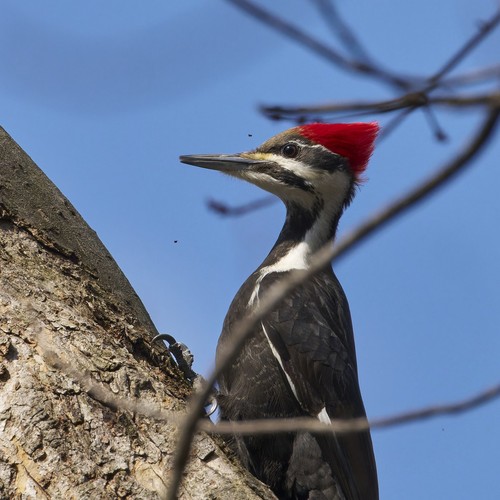
Pileated Woodpecker
40-49 cm (16-19 in) long, 66-75 cm wingspan
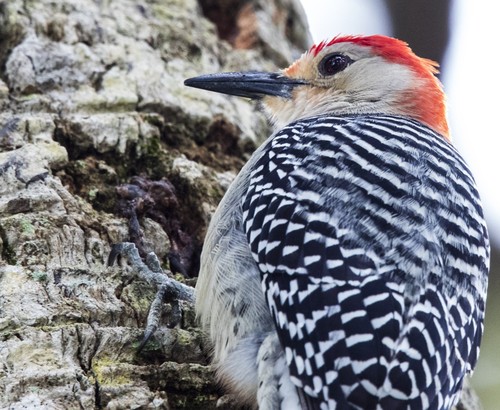
Red-bellied Woodpecker
22-27 cm (9-10.5 in) long, 38-46 cm wingspan
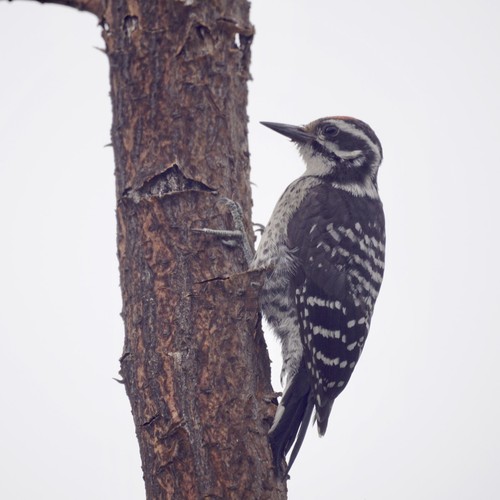
Nuttall's Woodpecker
18-20 cm (7-8 in) long, 34-38 cm wingspan
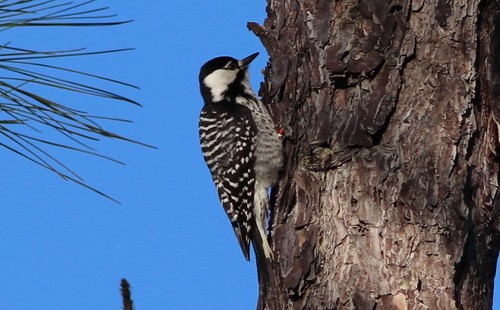
Red-cockaded Woodpecker
20-23 cm (8-9 in) long, 35-38 cm wingspan
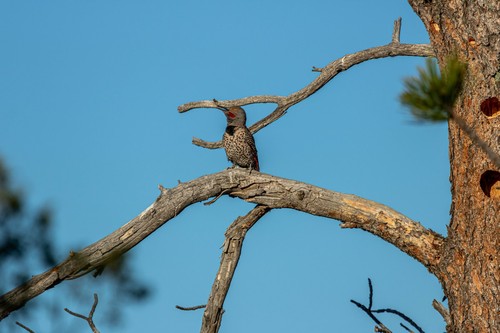
Northern Flicker
28-36 cm (11-14 in) long, 42-51 cm wingspan
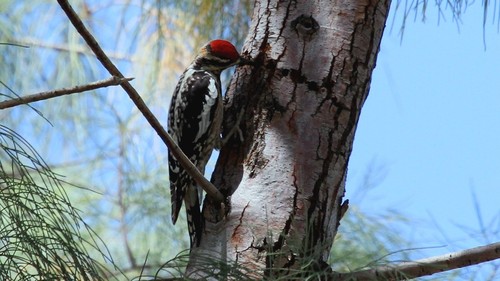
Red-naped Sapsucker
19-21 cm (7.5-8.3 in) long, 34-40 cm wingspan
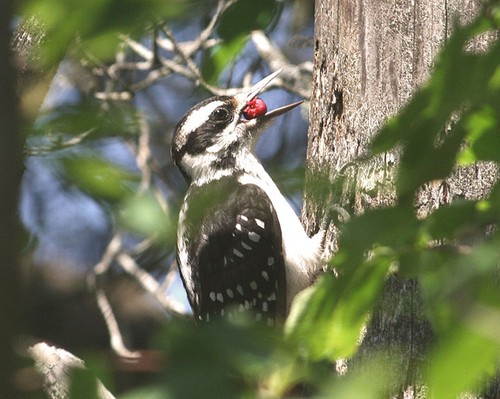
Hairy Woodpecker
23-26 cm (9-10 in) long, 33-41 cm wingspan
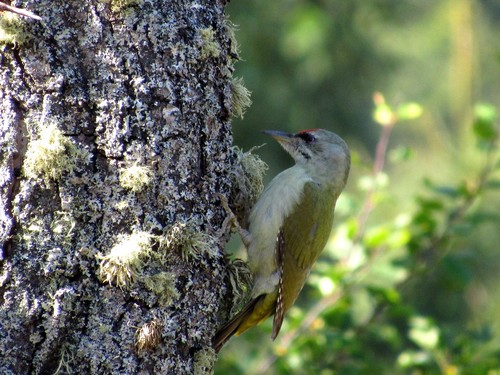
Grey-headed Woodpecker
25-33 cm (10-13 in) long, 38-40 cm wingspan