
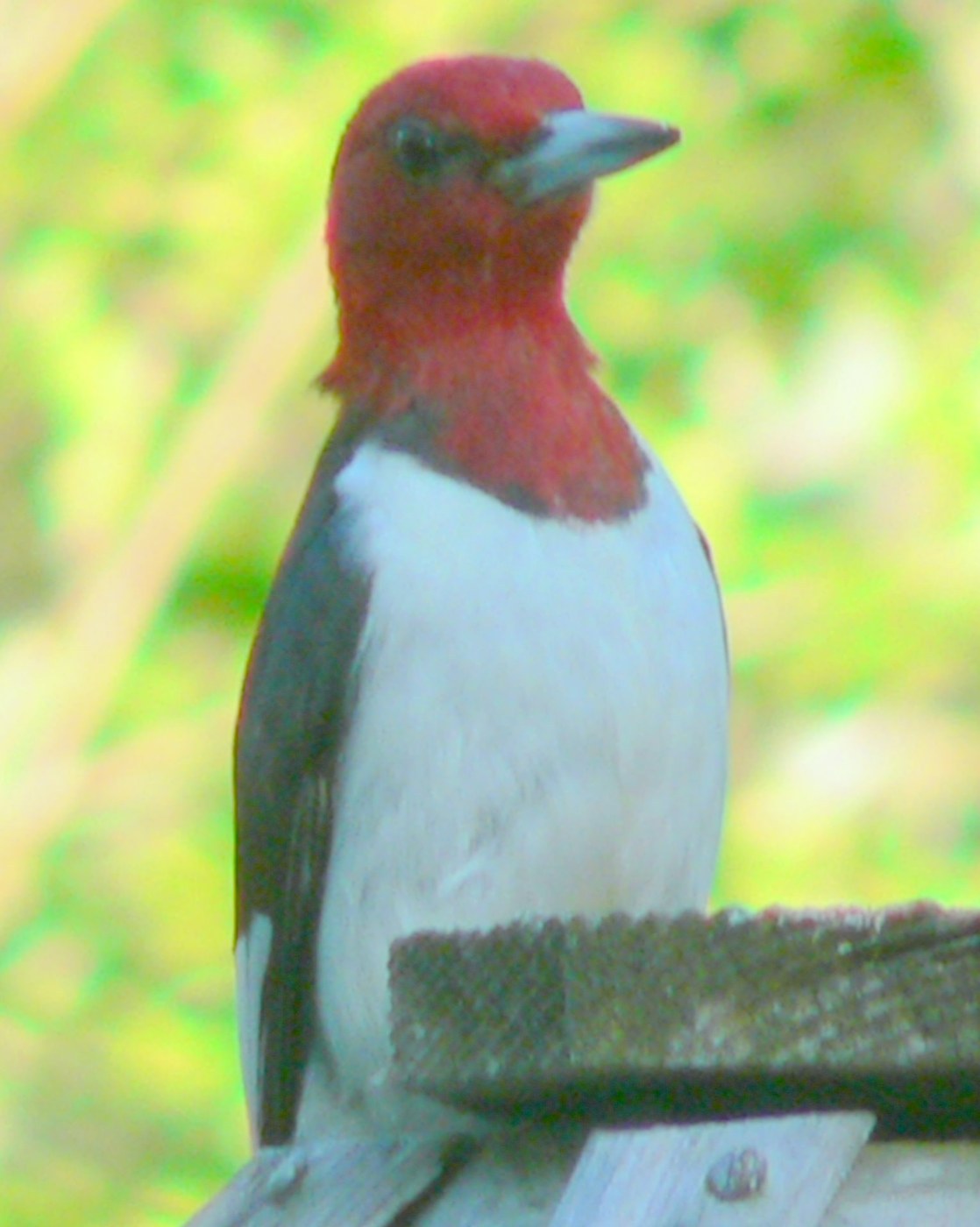
Red-headed Woodpecker
Melanerpes erythrocephalus
A striking, boldly patterned woodpecker with an entirely crimson head and a strongly contrasting black-and-white body, now declining across much of its range.
- Size
- 19-23 cm (7.5-9 in) long, 42-46 cm wingspan
- Habitat
- open woodlands, savannas, groves, and dead-timber wetlands of the eastern and central US
- Type
- woodpecker
Spotted a bird like this?
Identify any bird from a photo, free.
Overview
The Red-headed Woodpecker is one of the most visually striking woodpeckers in North America, instantly recognizable by its entirely solid crimson-red head and neck contrasting sharply with a jet-black back and pure white body and wing patches. Unlike many other North American woodpeckers, males and females look identical.
Juveniles lack the red head, instead showing a brownish-gray head and streaked underparts, gradually molting into adult plumage over their first year. In flight, large white wing patches flash conspicuously against the black flight feathers.
Once common and widespread, this species has experienced significant population declines over recent decades linked to loss of dead standing timber, competition for nest cavities, and changes in agricultural land use, making it a species of increasing conservation concern.
How to identify it
Key Field Marks
- Entirely solid crimson-red head and neck, sharply demarcated from the body
- Jet-black back and wings with a large, bold white patch on the secondaries
- Pure white underparts and rump
- Sexes look alike; juveniles show a brownish-gray head instead of red
Similar Species
- Red-bellied Woodpecker has only a red cap or nape (not the whole head) and a finely barred black-and-white back rather than solid black, easily separated by pattern.
- Red-breasted Sapsucker (western, non-overlapping in most of range) shows red confined more to the head/breast with barred wings, distinct from the Red-headed's bold, solid pattern.
Habitat & range
Red-headed Woodpeckers occur across the eastern and central United States, favoring open woodlands, oak savannas, groves of dead or dying trees, orchards, and wetland edges with standing dead timber. They are notably patchy and local in distribution, often tied closely to specific stands of suitable dead wood.
Northern populations are partially migratory, moving south in years of poor mast (acorn/nut) crops, while southern populations tend to be more resident.
Behavior & voice
Behavior
Red-headed Woodpeckers are active, acrobatic foragers, catching flying insects in midair as well as foraging on trunks and the ground, and are notably territorial and aggressive toward other cavity-nesting birds.
Voice
The call is a harsh, loud "queeah" or "tchur-tchur," and both sexes drum on resonant wood to signal territory.
Feeding
Diet includes insects caught both on the wing and gleaned from bark, along with nuts, seeds, and fruit; this species is notable for caching acorns and other food items in bark crevices and knotholes for later retrieval, sometimes covering the stored food with bark.
Nesting & Breeding
Both parents excavate a nest cavity in a dead tree or dead limb, laying 4-7 eggs. The species faces intense competition for nest cavities from European Starlings and other cavity nesters, a factor contributing to its population decline.
Frequently asked questions
Why are Red-headed Woodpecker populations declining?
Loss of standing dead timber, changes in agricultural and forestry practices, and competition for nest cavities with introduced species like European Starlings have all contributed to significant population declines in recent decades.
How do you tell a Red-headed Woodpecker from a Red-bellied Woodpecker?
The Red-headed Woodpecker has an entirely solid crimson head with a jet-black (unbarred) back and bold white wing patches, while the Red-bellied Woodpecker has only a red cap or nape and a finely barred black-and-white back.
Do Red-headed Woodpeckers store food?
Yes, they are known for caching acorns, nuts, and insects in bark crevices and knotholes, sometimes covering the stored food with pieces of bark or wood.
Do juvenile Red-headed Woodpeckers have red heads?
No, juveniles have a brownish-gray head and streaked underparts, gradually acquiring the solid red head of adults as they molt over their first year.
Red-headed Woodpecker guides
In-depth guides for identifying, finding, and understanding Red-headed Woodpecker.
Other birds you may enjoy
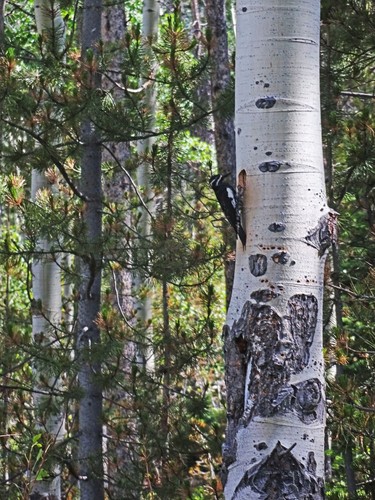
Williamson's Sapsucker
21-25 cm (8-10 in) long, 40-42 cm wingspan
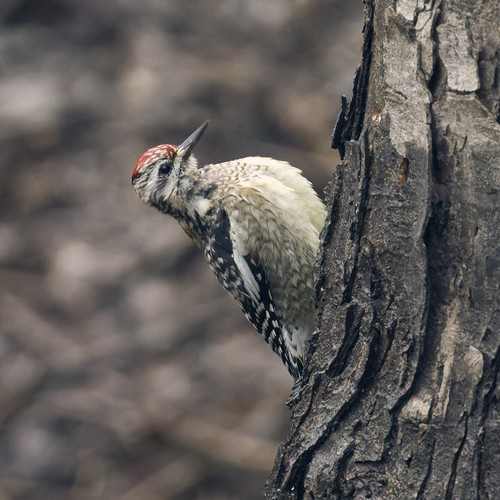
Yellow-bellied Sapsucker
18-21 cm (7-8.3 in) long, 34-40 cm wingspan
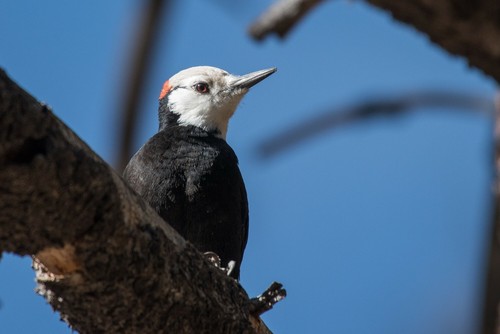
White-headed Woodpecker
20-23 cm (8-9 in) long, 38-41 cm wingspan
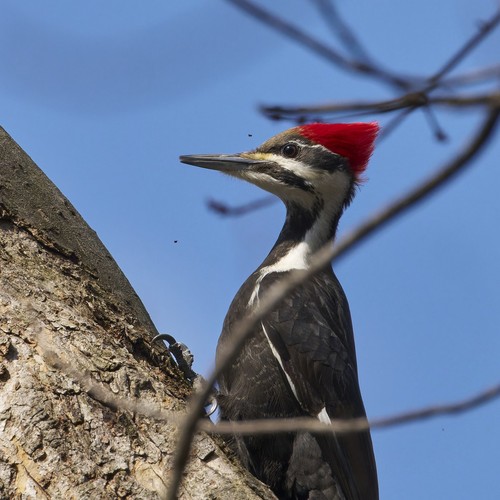
Pileated Woodpecker
40-49 cm (16-19 in) long, 66-75 cm wingspan
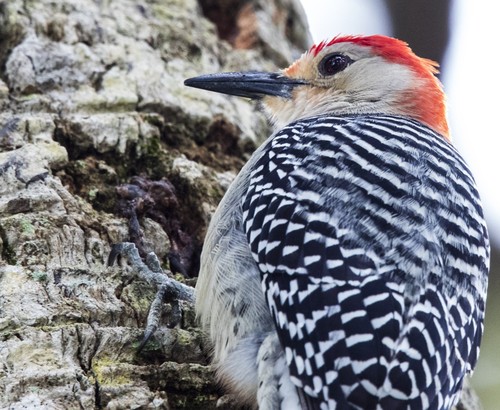
Red-bellied Woodpecker
22-27 cm (9-10.5 in) long, 38-46 cm wingspan
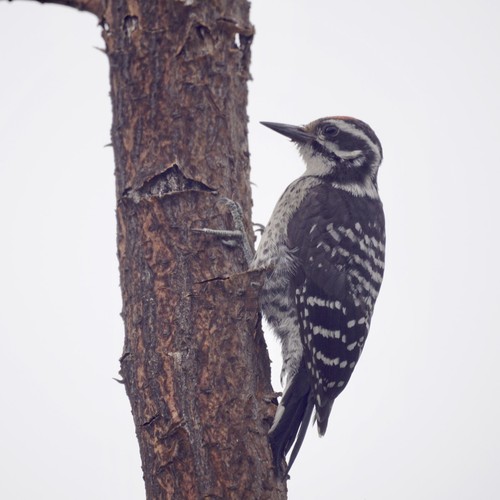
Nuttall's Woodpecker
18-20 cm (7-8 in) long, 34-38 cm wingspan
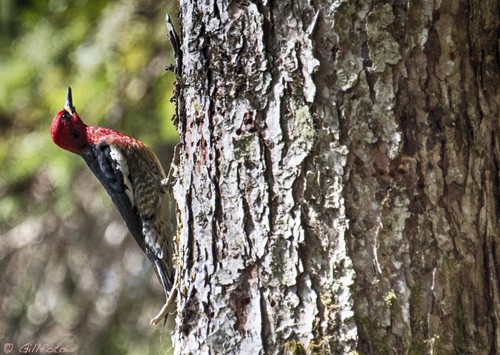
Red-breasted Sapsucker
20-23 cm (8-9 in) long, 34-40 cm wingspan
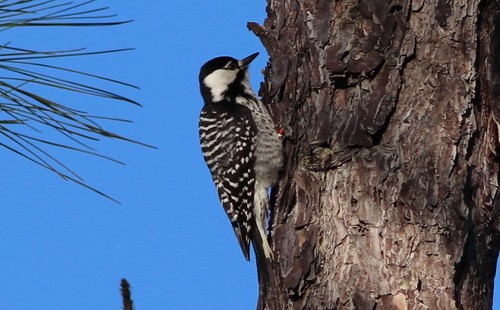
Red-cockaded Woodpecker
20-23 cm (8-9 in) long, 35-38 cm wingspan
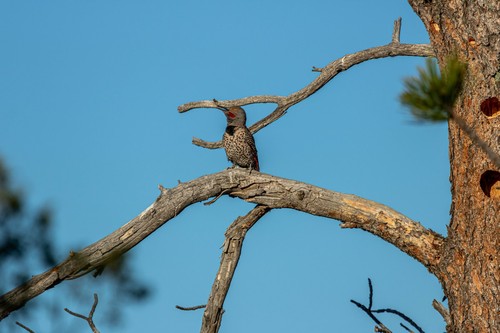
Northern Flicker
28-36 cm (11-14 in) long, 42-51 cm wingspan
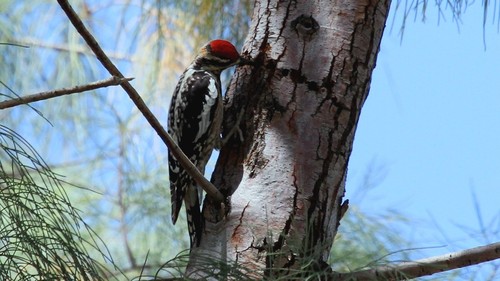
Red-naped Sapsucker
19-21 cm (7.5-8.3 in) long, 34-40 cm wingspan
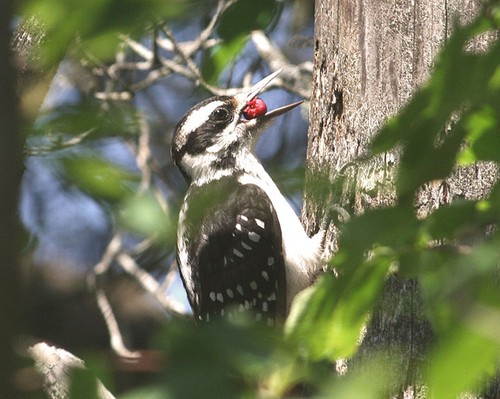
Hairy Woodpecker
23-26 cm (9-10 in) long, 33-41 cm wingspan
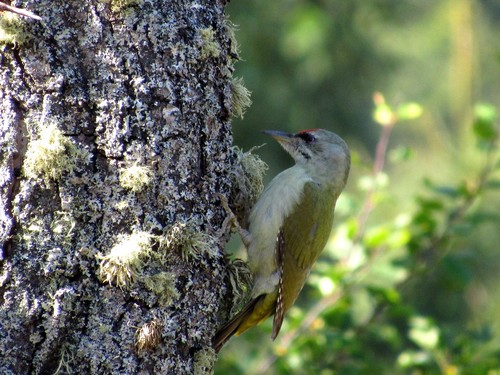
Grey-headed Woodpecker
25-33 cm (10-13 in) long, 38-40 cm wingspan