
Red-headed Woodpecker Identification Guide
A striking eastern North American woodpecker with an entirely crimson head, solid black back, and bold white wing patches visible in flight.
Read the full Red-headed Woodpecker encyclopedia entry →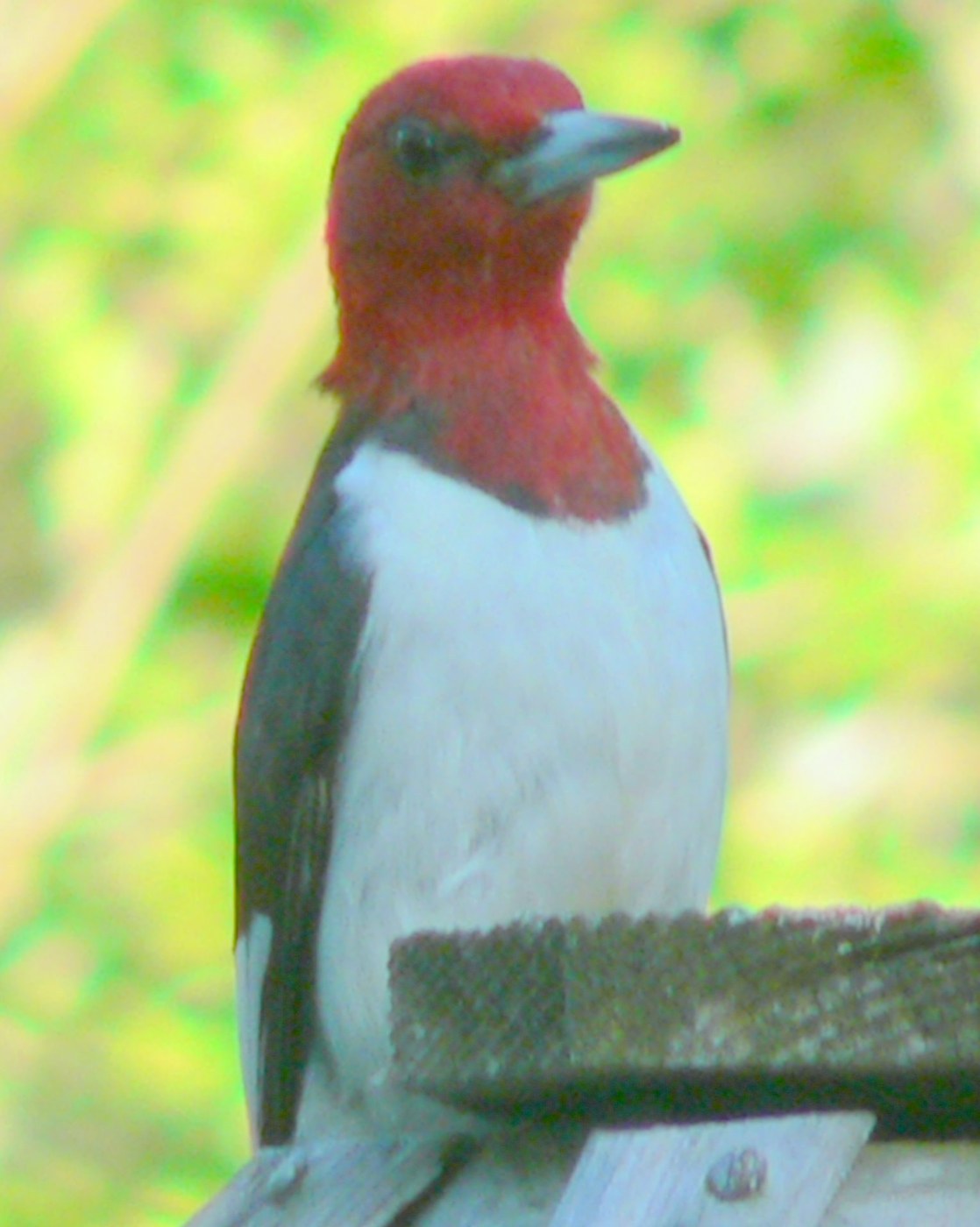
Key Field Marks
- Adult: entire head, neck, and throat are solid crimson-red, sharply set off from a jet-black back and tail and clean white underparts
- Large square white patch on the secondaries is very conspicuous in flight, unlike the smaller, more mottled wing patterns of other woodpeckers
- Sexes look alike — both males and females show the full red head
- Juveniles have a brownish-gray head instead of red, with barred grayish-brown wing patches, and molt into the adult pattern by about one year of age
- Straight, chisel-like bill and an upright, often conspicuous perching posture on dead snags, fence posts, and utility poles
Similar Species
- Red-bellied Woodpecker: shows red only on the crown and nape (not the whole head and throat), has a black-and-white barred back rather than solid black, and a pale belly with just a faint reddish wash.
- Red-breasted Sapsucker: found in the Pacific states, has red extending over the head and breast but retains a barred/mottled back and different range, with no overlap with Red-headed Woodpecker.
- No other eastern woodpecker shows a completely solid red head combined with a solid black back and bold white wing patch.
Habitat, Range & Season
- Open woodlands, groves, orchards, parks, and farmland with scattered dead trees or snags across the central and eastern United States
- Prefers more open habitat than most woodpeckers, avoiding dense unbroken forest
- Partially migratory: northern populations move south for winter while southern populations are largely resident; numbers and distribution can shift year to year depending on food (especially acorn and beechnut) availability
Voice
- Gives a harsh, rolling "queeah" or "tchur-tchur" call
- Also produces a fairly slow, evenly spaced drum
- Frequently sallies out from a perch to catch flying insects like a flycatcher, and caches nuts and insects in bark crevices and knotholes — a habit not typical of most other woodpeckers
Frequently asked questions
How do I tell Red-headed Woodpecker from Red-bellied Woodpecker?
Red-headed Woodpecker has an entirely solid crimson head and a solid black back, while Red-bellied Woodpecker has red only on the crown/nape and a black-and-white barred back.
Do young Red-headed Woodpeckers have red heads?
No, juveniles have brownish-gray heads and barred wing patches, gaining the full red head at about one year old.
What habitat does Red-headed Woodpecker prefer?
Open woodlands, groves, orchards, and farmland with dead snags, rather than dense unbroken forest.
Is Red-headed Woodpecker migratory?
Partially — northern birds often move south in winter while southern populations tend to stay resident, with movements influenced by acorn and nut crops.