
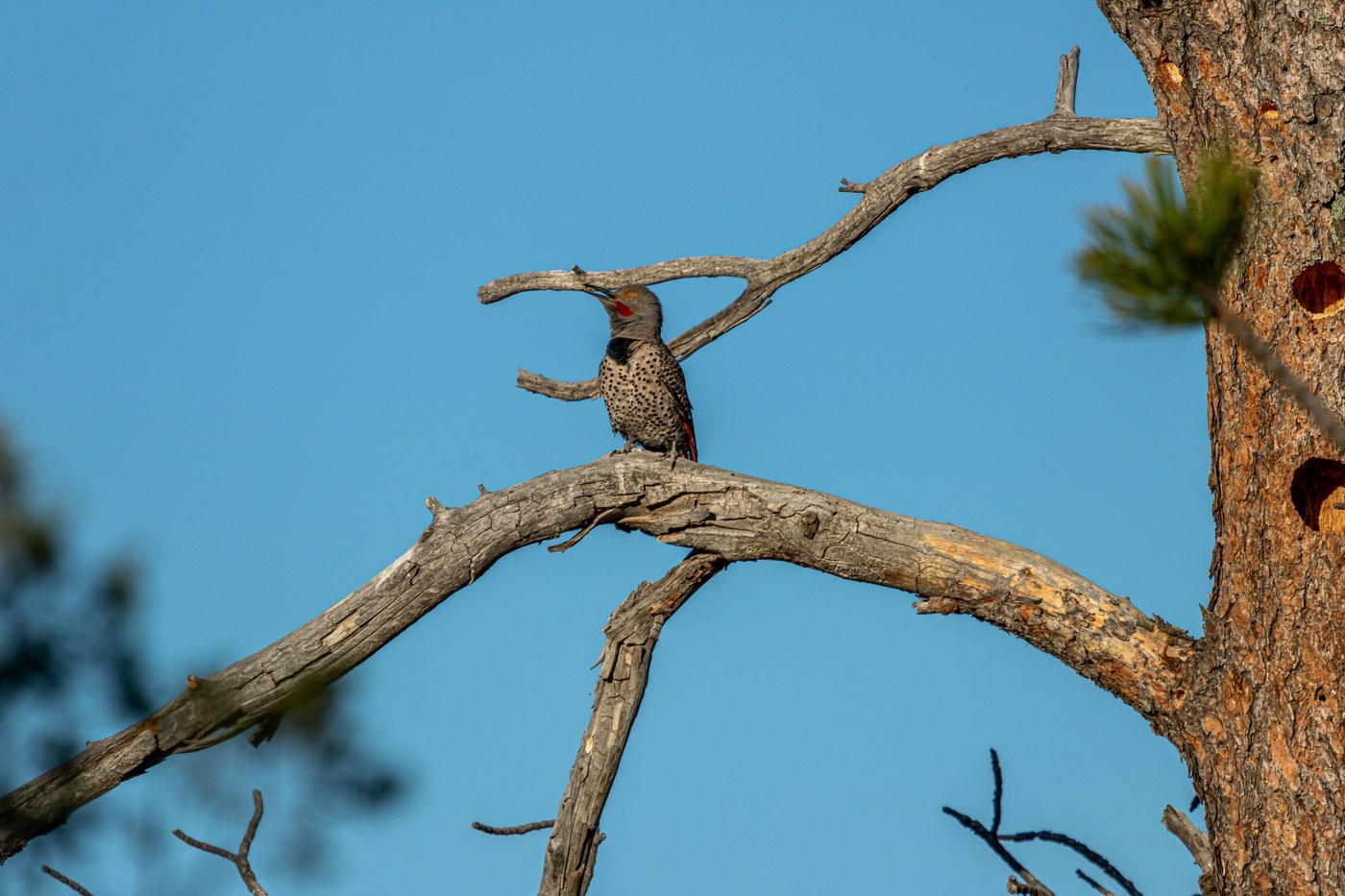
Northern Flicker
Colaptes auratus
A large, brown, ground-foraging woodpecker with a bold black crescent bib and a flashing white rump patch visible when it flies.
- Size
- 28-36 cm (11-14 in) long, 42-51 cm wingspan
- Habitat
- open woodlands, forest edges, parks, and suburban yards
- Type
- woodpecker
Spotted a bird like this?
Identify any bird from a photo, free.
Overview
The Northern Flicker is a large, distinctively patterned woodpecker that spends much of its time foraging on the ground rather than clinging to tree trunks like most of its relatives. It has a brown, black-barred back, a spotted buffy-white breast, and a bold black crescent-shaped bib across the upper chest.
Two well-known color forms occur across North America: the "Yellow-shafted" form of the east, with yellow underwings and tail linings and a red crescent on the nape, and the "Red-shafted" form of the west, with salmon-pink underwings and tail linings and no nape crescent; males of both forms show a colored mustache stripe (black in Yellow-shafted, red in Red-shafted) absent in females. In flight, a conspicuous white rump patch flashes clearly.
Once considered separate species, the two forms interbreed extensively where their ranges meet on the Great Plains, producing a range of intermediate types, and are now classified together as a single species.
How to identify it
Key Field Marks
- Brown, black-barred back; spotted buffy underparts with a bold black chest crescent
- Bright white rump patch, conspicuous in flight
- Yellow (eastern) or salmon-pink (western) flight-feather shafts and underwing color
- Males show a mustache stripe (black or red depending on form); females lack it
- Frequently forages on the ground, hopping and probing for ants
Similar Species
- Pileated Woodpecker is much larger with a solid black body and a prominent red crest, unlike the flicker's brown, barred plumage.
- Red-headed Woodpecker has a solid crimson head and bold black-and-white body pattern very different from the flicker's cryptic brown plumage.
- The flicker's ground-foraging habit and flashing white rump in flight are distinctive among North American woodpeckers.
Habitat & range
Northern Flickers are found across nearly all of North America, from Alaska and Canada south through the United States into Mexico and parts of Central America, favoring open woodlands, forest edges, parks, farmland, and suburban yards with scattered trees and open ground for foraging.
Northern and eastern populations are migratory, moving south for winter, while many western and southern populations are largely resident.
Behavior & voice
Behavior
Unlike most woodpeckers, flickers spend considerable time foraging on the ground, hopping across lawns and open areas probing for ants. They also forage on trunks and branches like typical woodpeckers and undertake diurnal migratory flights in loose flocks.
Voice
The song is a long, loud, rolling "wick-wick-wick-wick," and the call is a single sharp "klee-yer." Like other woodpeckers, both sexes drum on resonant surfaces, including metal objects around houses, to proclaim territory.
Feeding
Ants are the primary food, often gathered by probing anthills and lapping up ants with a long, sticky tongue; beetles and other insects, along with berries and seeds, particularly in winter, round out the diet.
Nesting & Breeding
Both parents excavate a nest cavity in a dead tree, utility pole, or occasionally a nest box, laying 5-8 eggs. Both sexes share incubation and feeding duties, and flickers will readily use appropriately sized nest boxes where natural cavities are scarce.
Frequently asked questions
What is the difference between Yellow-shafted and Red-shafted Flickers?
They are regional color forms of the same species: the eastern Yellow-shafted form has yellow wing and tail linings with a black mustache and red nape crescent, while the western Red-shafted form has salmon-pink linings, a red mustache, and no nape crescent; the two interbreed where ranges overlap.
Why does the Northern Flicker forage on the ground?
It specializes heavily on ants, which it finds by hopping and probing on lawns and open ground, a habit unusual among woodpeckers that mostly forage on tree trunks.
What does the white rump patch mean for identification?
The bright white rump is a conspicuous, reliable field mark visible as the bird flies away, distinguishing it at a glance from other brown woodpeckers.
Do Northern Flickers migrate?
Northern and eastern populations are migratory, moving south in winter, while many western populations remain resident year-round.
Northern Flicker guides
In-depth guides for identifying, finding, and understanding Northern Flicker.
Other birds you may enjoy
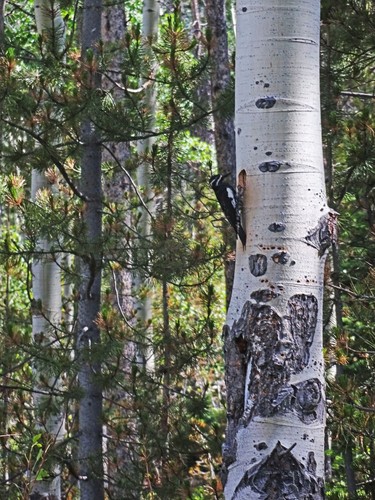
Williamson's Sapsucker
21-25 cm (8-10 in) long, 40-42 cm wingspan
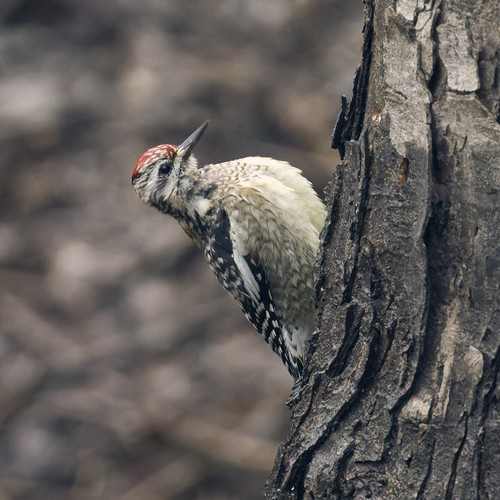
Yellow-bellied Sapsucker
18-21 cm (7-8.3 in) long, 34-40 cm wingspan
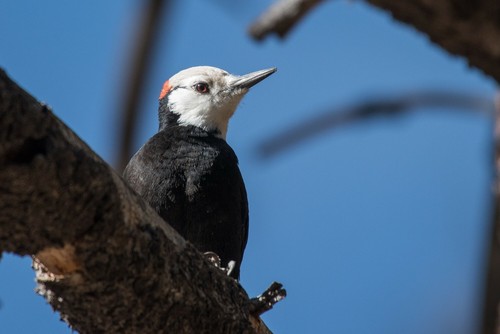
White-headed Woodpecker
20-23 cm (8-9 in) long, 38-41 cm wingspan
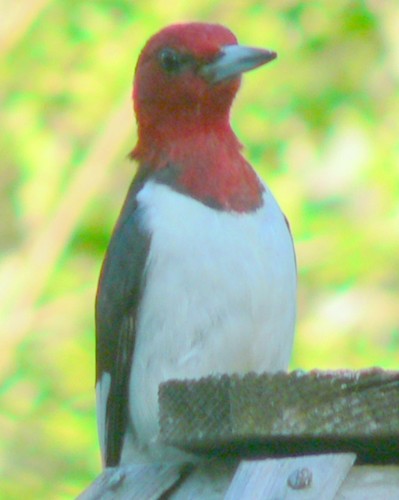
Red-headed Woodpecker
19-23 cm (7.5-9 in) long, 42-46 cm wingspan
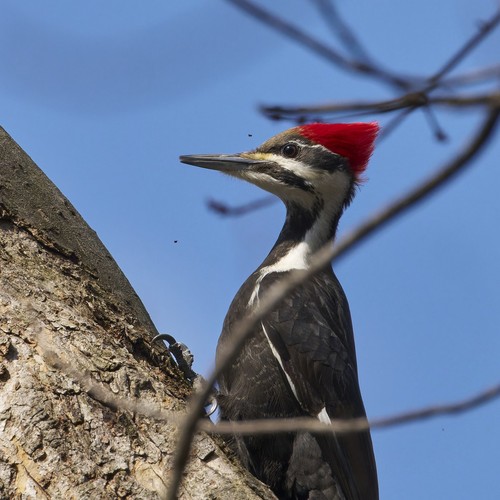
Pileated Woodpecker
40-49 cm (16-19 in) long, 66-75 cm wingspan
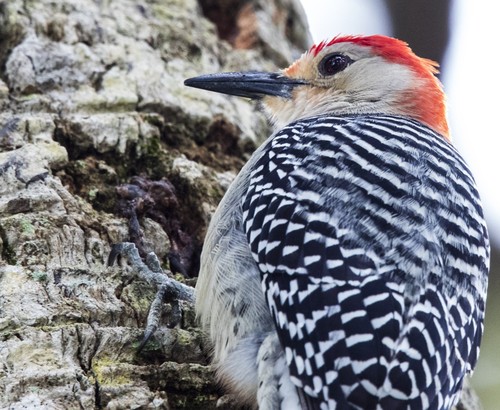
Red-bellied Woodpecker
22-27 cm (9-10.5 in) long, 38-46 cm wingspan
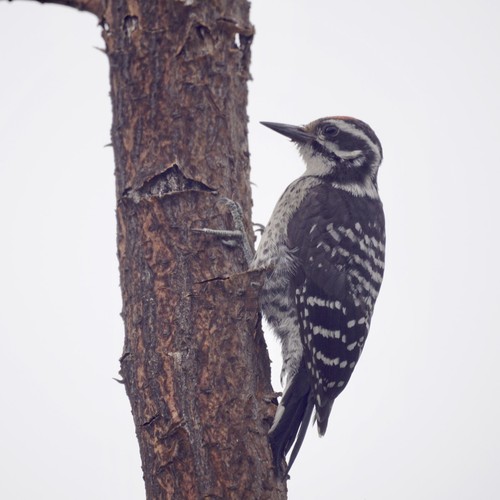
Nuttall's Woodpecker
18-20 cm (7-8 in) long, 34-38 cm wingspan
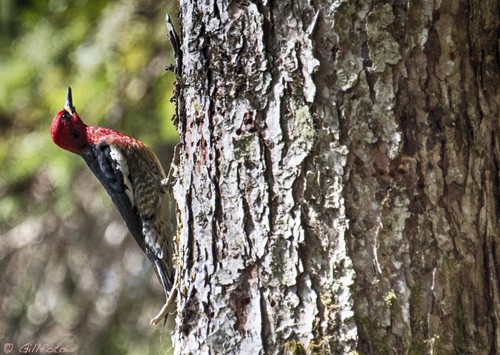
Red-breasted Sapsucker
20-23 cm (8-9 in) long, 34-40 cm wingspan
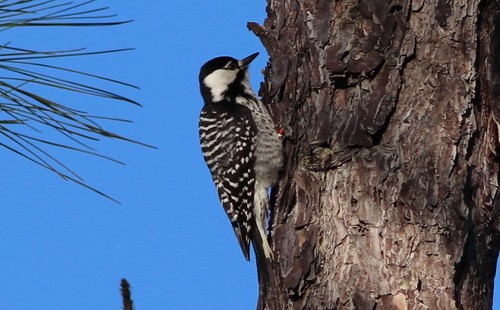
Red-cockaded Woodpecker
20-23 cm (8-9 in) long, 35-38 cm wingspan
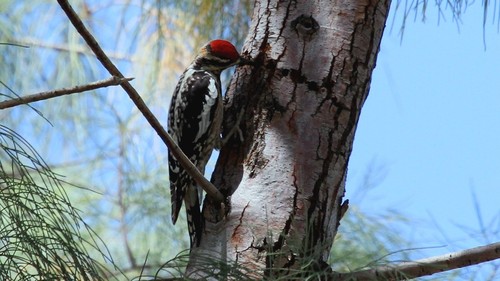
Red-naped Sapsucker
19-21 cm (7.5-8.3 in) long, 34-40 cm wingspan
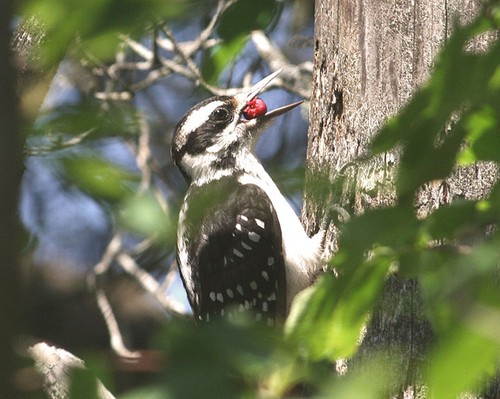
Hairy Woodpecker
23-26 cm (9-10 in) long, 33-41 cm wingspan
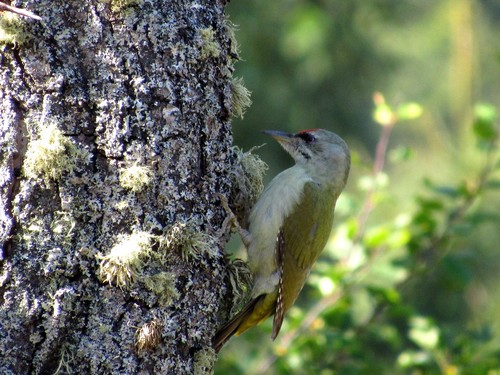
Grey-headed Woodpecker
25-33 cm (10-13 in) long, 38-40 cm wingspan