
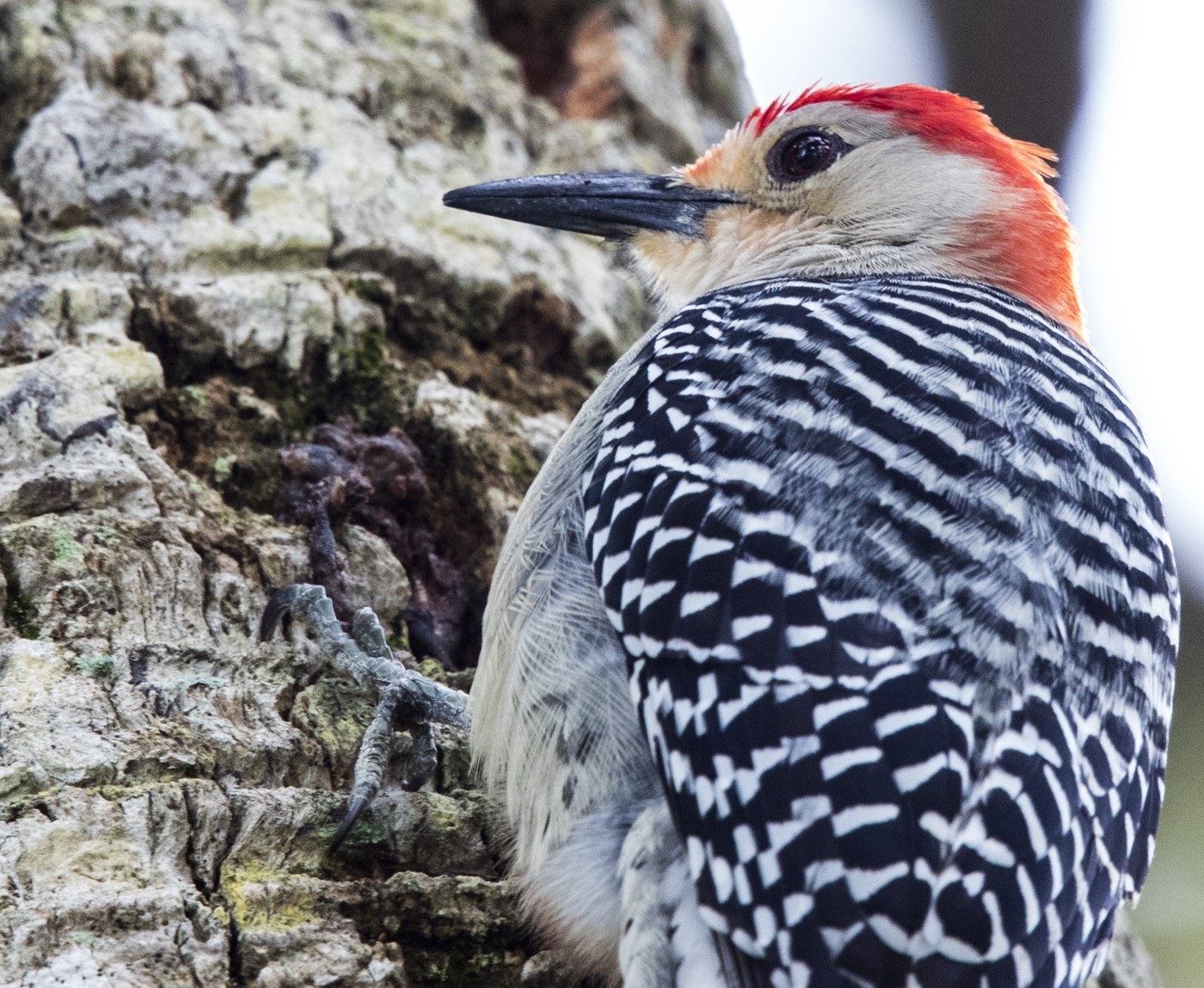
Red-bellied Woodpecker
Melanerpes carolinus
A medium-sized eastern woodpecker with a black-and-white barred back and a red-capped head, whose faint pinkish belly wash is rarely visible in the field.
- Size
- 22-27 cm (9-10.5 in) long, 38-46 cm wingspan
- Habitat
- deciduous and mixed woodlands, parks, and suburban yards of the eastern US
- Type
- woodpecker
Spotted a bird like this?
Identify any bird from a photo, free.
Overview
The Red-bellied Woodpecker is a common, medium-sized woodpecker of eastern North America, easily recognized by its finely barred black-and-white "zebra" back and pale grayish-tan face and underparts. Despite its name, the wash of red on the belly that gives the species its name is faint and often difficult to see in the field, making the head pattern a far more reliable identification feature.
Males show a bright red cap extending from the bill over the crown to the nape, while females have red restricted to the nape only, with a gray crown. Both sexes share the same barred back pattern and pale underparts.
This adaptable, vocal woodpecker has expanded its range northward in recent decades and is now a familiar and frequent visitor to backyard feeders across much of the eastern and central United States.
How to identify it
Key Field Marks
- Finely barred black-and-white "zebra" pattern on the back and wings
- Pale grayish-tan face and underparts with a faint pinkish wash on the belly (often hard to see)
- Males: red from bill to nape; females: red on nape only, gray crown
- White rump patch visible in flight
Similar Species
- Red-headed Woodpecker has an entirely solid crimson head (not just a cap or nape patch) and bold black-and-white body pattern without the fine barring, easily distinguished at a glance.
- Northern Flicker is brown and barred rather than black-and-white, with a very different overall plumage pattern.
Habitat & range
Red-bellied Woodpeckers are widespread across the eastern and central United States, from the Great Lakes and New England south to Florida and west to the Great Plains, inhabiting deciduous and mixed woodlands, riparian corridors, parks, and suburban yards with mature trees. The species has been steadily expanding its range northward in recent decades.
This species is largely non-migratory, remaining resident on territory throughout the year.
Behavior & voice
Behavior
Red-bellied Woodpeckers forage actively on trunks and branches and are also comfortable visiting feeders, sometimes wedging nuts into bark crevices to cache for later use, a behavior shared with other Melanerpes woodpeckers.
Voice
The call is a rolling, churring "chrrr" or "kwirr," often given repeatedly and quite vocal for a woodpecker; both sexes also drum on resonant wood.
Feeding
The diet includes insects, spiders, nuts, seeds, and fruit, and the species readily visits feeders for suet, sunflower seeds, and peanuts; it also caches food in bark crevices for later retrieval.
Nesting & Breeding
Both parents excavate a nest cavity in a dead tree or limb, laying 4-5 eggs, with both sexes sharing incubation and feeding duties. Pairs often remain together on the same territory across years.
Frequently asked questions
Why doesn't the Red-bellied Woodpecker have a visibly red belly?
The reddish wash on the belly that gives the species its name is faint and often obscured by the bird's posture against bark, so the red cap or nape and barred back are far more reliable field marks.
How do you tell a male from a female Red-bellied Woodpecker?
Males show red extending from the bill all the way over the crown to the nape, while females have a gray crown with red restricted to the nape only.
How is the Red-bellied Woodpecker different from the Red-headed Woodpecker?
The Red-headed Woodpecker has an entirely solid crimson head and a bold, unbarred black-and-white body, while the Red-bellied Woodpecker has only a red cap or nape patch and a finely barred black-and-white back.
Do Red-bellied Woodpeckers visit backyard feeders?
Yes, they are frequent and adaptable feeder visitors, readily taking suet, sunflower seeds, and peanuts across their eastern range.
Red-bellied Woodpecker guides
In-depth guides for identifying, finding, and understanding Red-bellied Woodpecker.
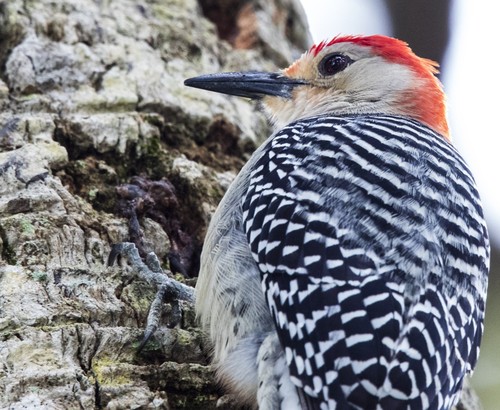
Red-bellied Woodpecker identified by the community
Real birds identified with Bird Identifier.
Other birds you may enjoy
Williamson's Sapsucker
21-25 cm (8-10 in) long, 40-42 cm wingspan
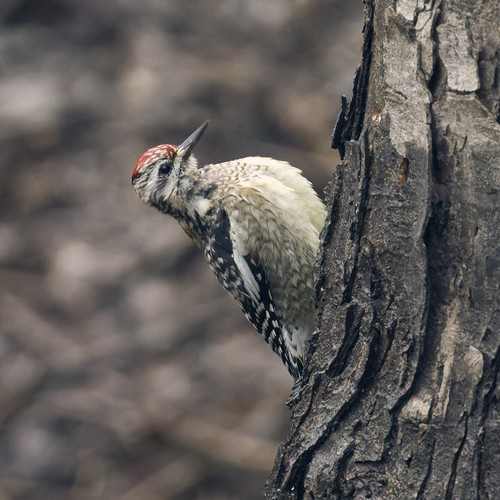
Yellow-bellied Sapsucker
18-21 cm (7-8.3 in) long, 34-40 cm wingspan
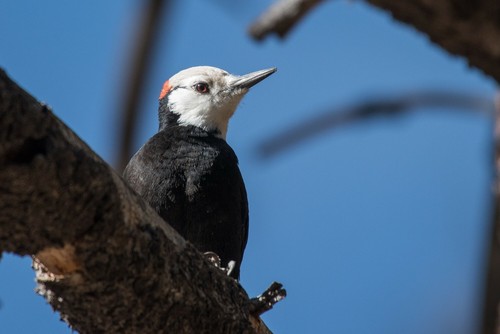
White-headed Woodpecker
20-23 cm (8-9 in) long, 38-41 cm wingspan
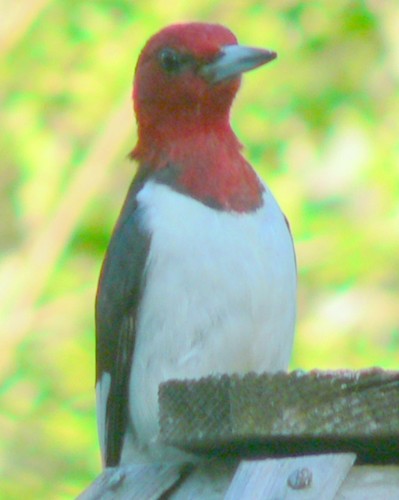
Red-headed Woodpecker
19-23 cm (7.5-9 in) long, 42-46 cm wingspan
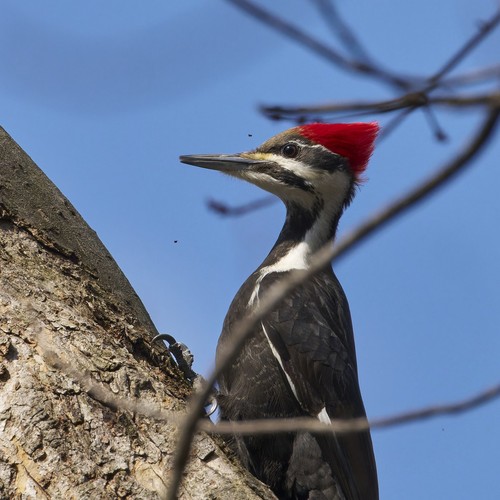
Pileated Woodpecker
40-49 cm (16-19 in) long, 66-75 cm wingspan
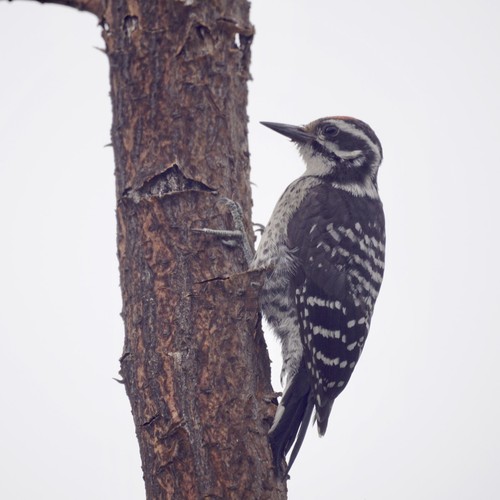
Nuttall's Woodpecker
18-20 cm (7-8 in) long, 34-38 cm wingspan
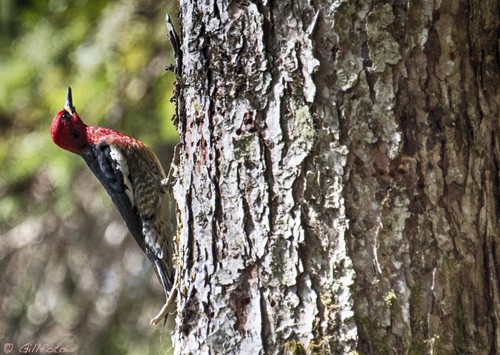
Red-breasted Sapsucker
20-23 cm (8-9 in) long, 34-40 cm wingspan
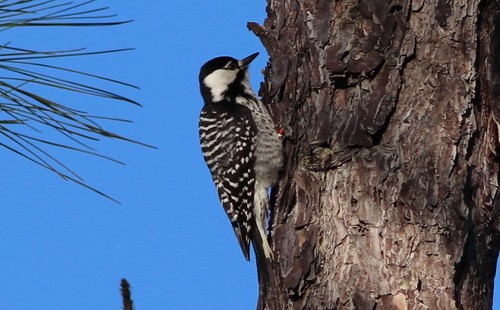
Red-cockaded Woodpecker
20-23 cm (8-9 in) long, 35-38 cm wingspan
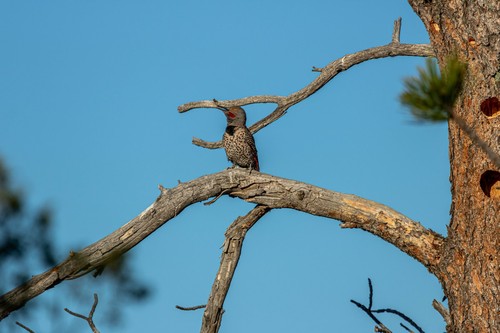
Northern Flicker
28-36 cm (11-14 in) long, 42-51 cm wingspan
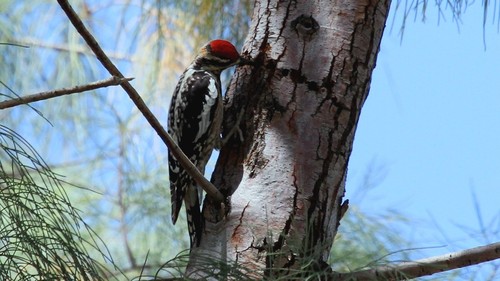
Red-naped Sapsucker
19-21 cm (7.5-8.3 in) long, 34-40 cm wingspan
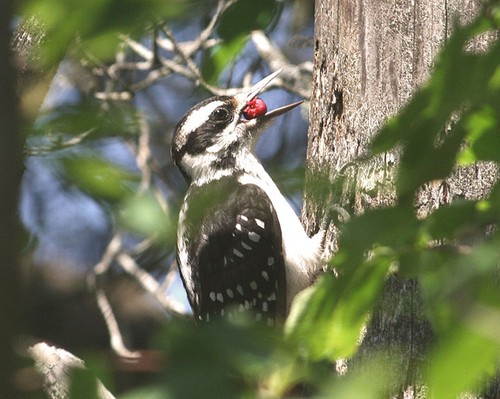
Hairy Woodpecker
23-26 cm (9-10 in) long, 33-41 cm wingspan
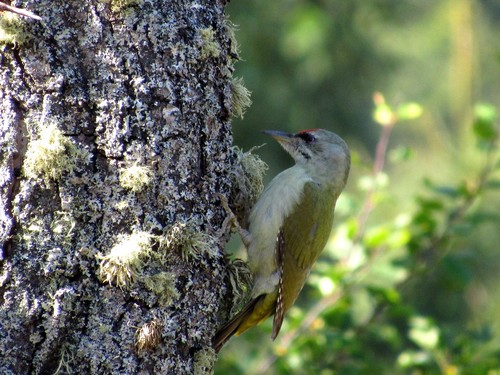
Grey-headed Woodpecker
25-33 cm (10-13 in) long, 38-40 cm wingspan