
Williamson's Sapsucker Identification Guide
A striking western woodpecker with extreme sexual dimorphism, the black-and-white male with a red throat looking almost nothing like the brown, barred female, both sharing a yellow belly.
Read the full Williamson's Sapsucker encyclopedia entry →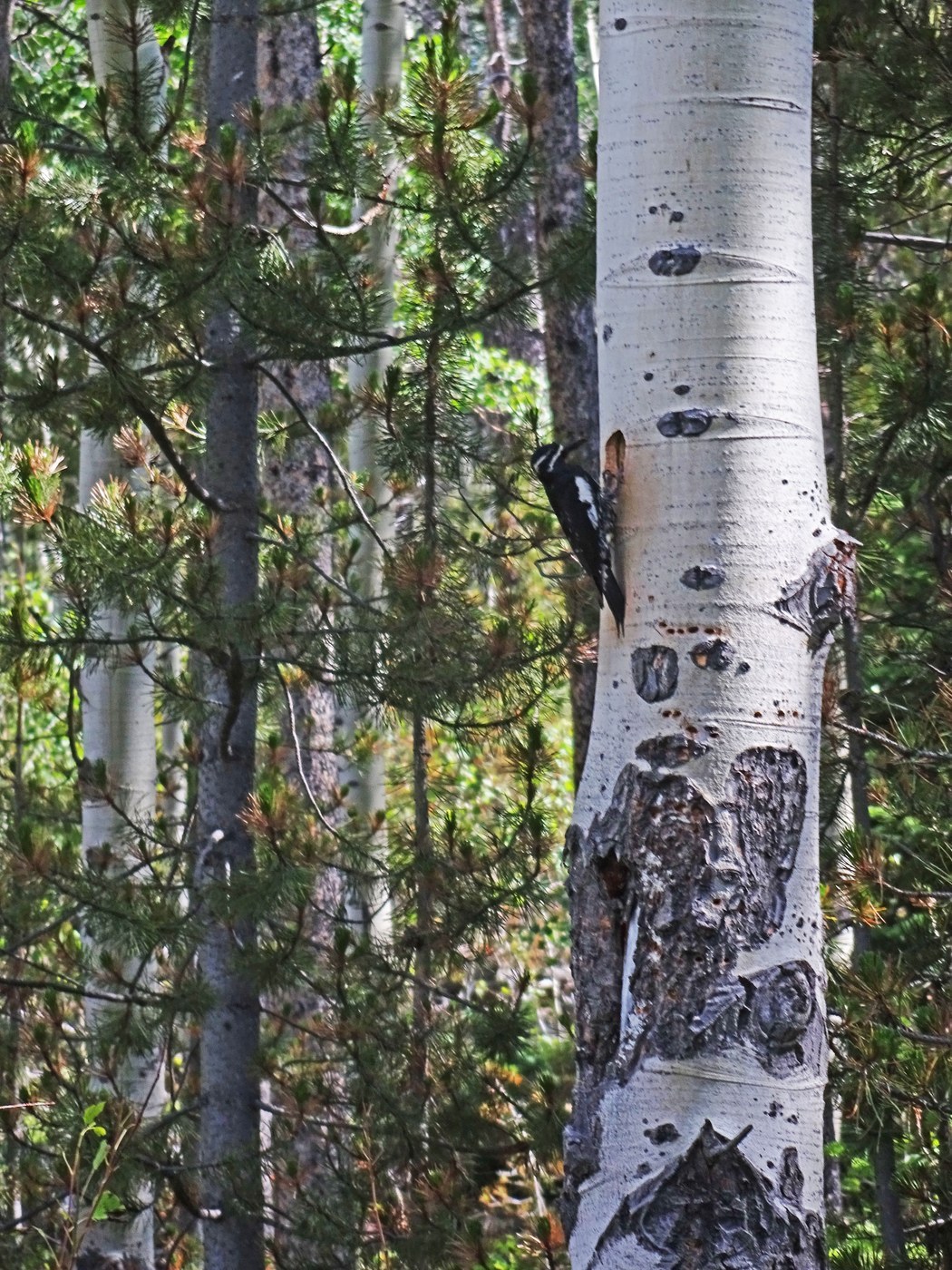
Overview
Williamson's Sapsucker (Sphyrapicus thyroideus) is a montane conifer-forest woodpecker of the western United States and Canada, notable for having the most dramatic difference in appearance between male and female of any North American woodpecker — so striking that the two sexes were originally described as separate species.
Key Field Marks
- Male plumage: Mostly glossy black with a bold white facial stripe pattern, a large white wing patch, a white rump, a red throat patch, and a pale yellow belly.
- Female plumage: Entirely different — brown overall with fine dark barring on the back and flanks, a plain brownish head (no white facial stripes or red throat), a black breast patch, and the same yellow belly wash as the male.
- Size & shape: Medium-sized woodpecker with the straight, chisel-like bill typical of sapsuckers, and the stiff, propped tail used for bracing against tree trunks.
- Behavior: Like other sapsuckers, drills neat horizontal rows of sap wells in tree bark, particularly favoring conifers such as pines and firs, and feeds on sap, cambium, and insects attracted to the sap.
- Habitat cues: Found high in mature, open coniferous forest, often at higher elevations than other sapsucker species.
Separating It From Similar Species
- Male vs. Red-naped/Red-breasted Sapsucker: Male Williamson's lacks the extensive red head/breast pattern of those species, showing instead mostly black plumage with a small red throat patch and bold white markings — a very different overall look.
- Female vs. male Williamson's: The female is so different from the male that separating the sexes, not species, is the real identification challenge; her brown, barred appearance can suggest a different species entirely until the yellow belly and structural sapsucker shape are noted.
- Female vs. Northern Flicker: Female Williamson's can superficially suggest a small flicker due to brown, barred plumage, but is smaller, has a shorter, straighter bill, and shows the diagnostic yellow belly wash and black breast patch.
- Habitat/elevation: Williamson's Sapsucker tends to occupy higher-elevation, more open conifer forest than Red-naped Sapsucker, which favors aspen and mixed woodlands at lower elevations, aiding identification by location.
Where and When to Find One
Williamson's Sapsucker breeds in mountainous coniferous forests of the western United States and southwestern Canada, from the Rockies west to the Sierra Nevada and Cascades, typically in mature stands of pine, fir, or larch at mid to high elevations. Most populations are migratory, moving to lower elevations or south into Mexico for winter, though some remain resident where winters are mild enough. Spring through summer on breeding territories is the best time to find displaying and drumming birds; listen and watch near old-growth conifers with characteristic sap-well drill rows on the bark.
Voice
Gives a nasal, mewing call and a distinctive irregular drumming pattern — an initial burst followed by a few slower, scattered taps — that differs from the more even drumming rhythm of other woodpeckers, useful for locating birds by sound in dense forest.
Frequently asked questions
Why do male and female Williamson's Sapsuckers look so different?
The species shows extreme sexual dimorphism: males are black-and-white with a red throat, while females are brown and barred with a black breast patch; both share a yellow belly, which is the best clue linking the two sexes to the same species.
How do I tell a female Williamson's Sapsucker from a flicker?
The female sapsucker is smaller with a shorter, straighter bill and shows a distinct yellow belly wash and black breast patch that flickers lack.
What habitat does Williamson's Sapsucker prefer?
It favors mature, relatively open coniferous forest, especially pine, fir, and larch stands at middle to high elevations in western mountains.
Does Williamson's Sapsucker migrate?
Most populations migrate to lower elevations or south into Mexico for winter, though a few remain resident in areas with milder winters.