
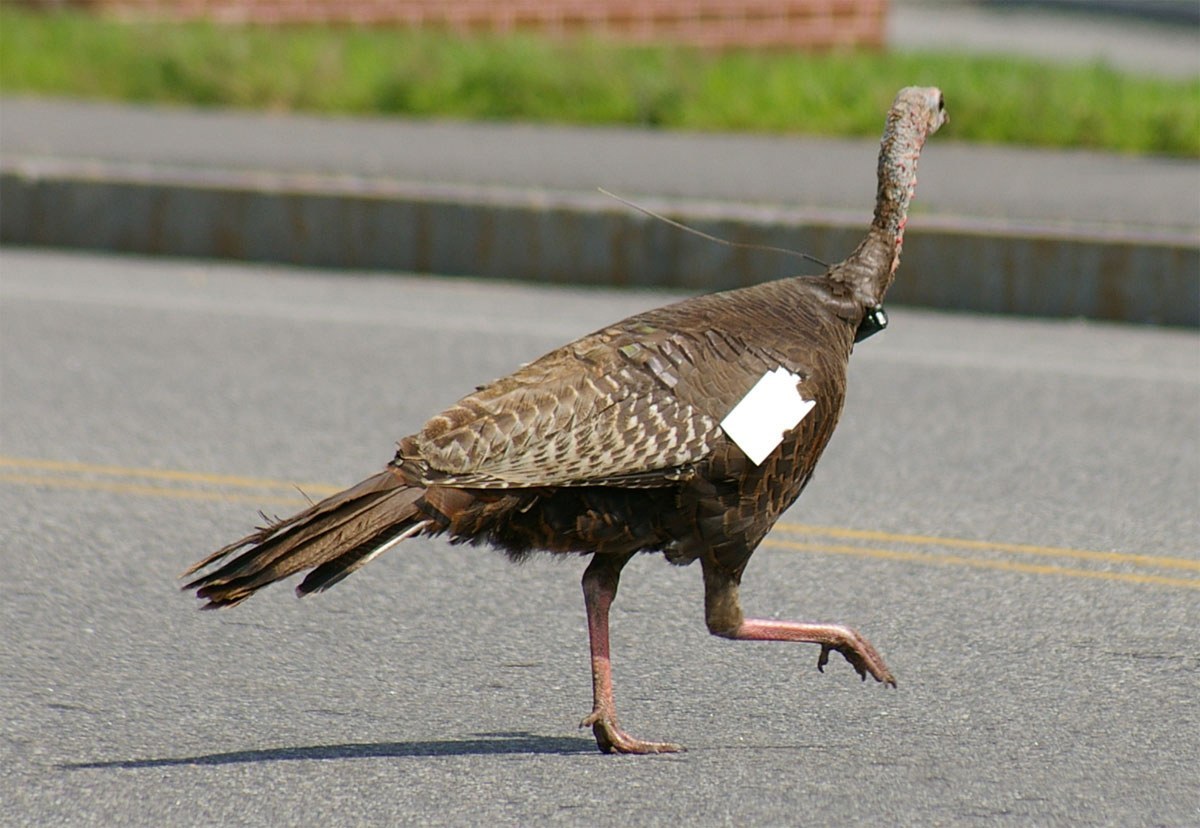
Wild Turkey
Meleagris gallopavo
North America's largest gamebird, a bronze-iridescent forest turkey famous for the male's fanned tail and booming spring gobble.
- Size
- males 100-125 cm (39-49 in) long; females smaller, around 76-95 cm (30-37 in)
- Habitat
- mixed hardwood and pine forests, woodland edges, and open fields
- Type
- gamebird
Spotted a bird like this?
Identify any bird from a photo, free.
Overview
The Wild Turkey is the largest gamebird in North America and the wild ancestor of the domestic turkey. Adults are covered in richly iridescent bronze, copper, and green body plumage that can look almost metallic in good light. Males (toms or gobblers) are considerably larger than females (hens) and sport a bare, wattled, blue-and-red head, a beard of coarse, hair-like feathers on the chest, and spurs on the legs.
Once nearly eliminated from much of its range by overhunting and deforestation, the Wild Turkey has made one of the great conservation comebacks in North American wildlife history and is now common and widespread, even in suburban areas.
How to identify it
Key field marks
- Large, dark, iridescent bronze body with a naked, colorful blue-and-red head
- Long, broad, fan-shaped tail, dramatically displayed by strutting males
- Male has a chest beard and leg spurs; females are smaller, duller, and usually lack a beard
- Distinctive white-tipped tail feathers (in the eastern subspecies) versus buffy tips in some western subspecies
Similar species
No other North American bird is confused with an adult Wild Turkey; its huge size and naked head are unmistakable at close range, though a distant silhouette can occasionally suggest a large vulture when perched.
Habitat & range
Habitat and Range
Wild Turkeys favor mature deciduous and mixed forests with open understory, especially oak and hickory stands that provide mast (acorns), interspersed with fields and clearings for feeding and displaying.
Range
They are found throughout most of the continental United States, southern Canada, and into Mexico, having been widely reintroduced and now occupying nearly all of their historical range and beyond, including many suburban and even urban areas.
Migration
Wild Turkeys are non-migratory, though flocks may shift their range seasonally in response to food availability and snow depth.
Behavior & voice
Behavior
Wild Turkeys roost in trees at night and forage on the ground in flocks by day, walking rather than flying for most travel, though they are strong, fast fliers over short distances when flushed.
Voice
The male's loud, resonant "gobble" carries for long distances in spring and is used to attract hens and announce territory; both sexes also give a range of clucks, yelps, and purrs.
Feeding
They feed opportunistically on the ground, scratching through leaf litter for acorns and other mast, seeds, berries, and insects, and will also eat small amphibians or reptiles when encountered.
Nesting and breeding
Males display by strutting, fanning the tail, and gobbling to attract multiple hens (a polygynous mating system) and take no part in nesting. The hen builds a simple ground scrape hidden in vegetation and lays 10-14 eggs, which she incubates alone.
Frequently asked questions
How big does a Wild Turkey get?
Males can measure up to about 125 cm (49 in) long and weigh over 8 kg (18 lb), making it the largest gamebird in North America; females are notably smaller.
Can Wild Turkeys fly?
Yes, despite their size Wild Turkeys are strong fliers over short distances and roost in trees at night, though they spend most of their time walking on the ground.
What is the difference between a Wild Turkey and a domestic turkey?
Domestic turkeys were bred from Wild Turkeys but have been selected for larger breast muscle and white plumage; wild birds are leaner, faster, and retain iridescent bronze feathering.
What does a male Wild Turkey's gobble sound like?
It is a loud, rolling, resonant call given mainly in spring, audible over long distances and used to attract hens and assert territory.
Wild Turkey guides
In-depth guides for identifying, finding, and understanding Wild Turkey.
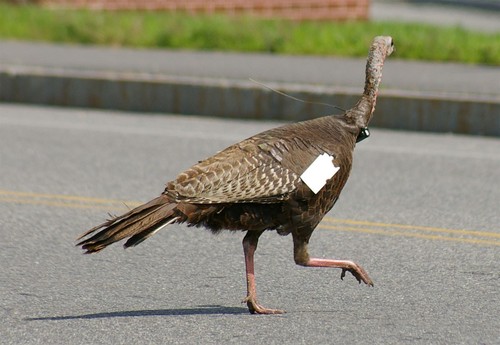
Wild Turkey identified by the community
Real birds identified with Bird Identifier.
Other birds you may enjoy
Rock Ptarmigan
34-36 cm (13-14 in) long
Congo Peafowl
Males about 64-70 cm long; females slightly smaller; no elaborate train
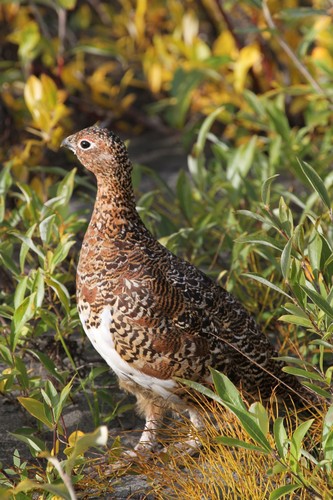
Willow Ptarmigan
37-42 cm (15-16.5 in) long
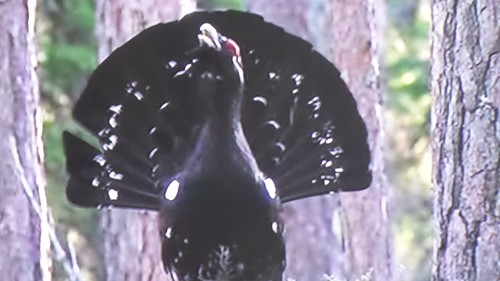
Western Capercaillie
male 74-90 cm (29-35 in), female 54-64 cm; male wingspan up to 125-130 cm
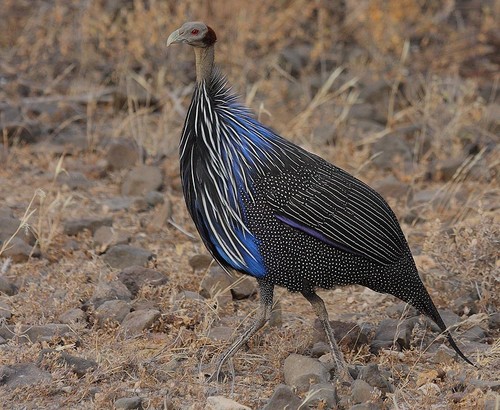
Vulturine Guineafowl
Length 61-71 cm, the largest guineafowl species, with a notably long neck and tail
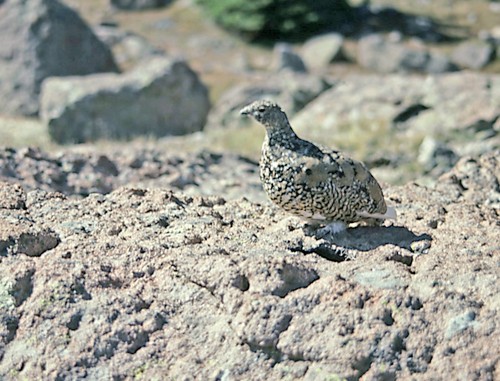
White-tailed Ptarmigan
30-33 cm (12-13 in) long; the smallest ptarmigan species
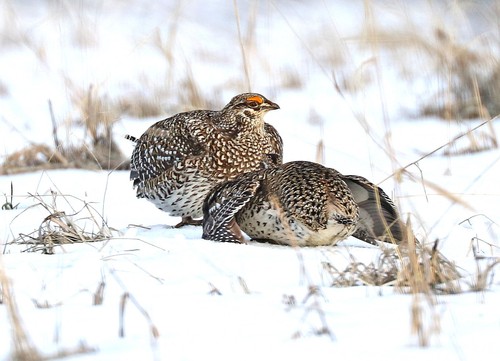
Sharp-tailed Grouse
38-48 cm (15-19 in) long
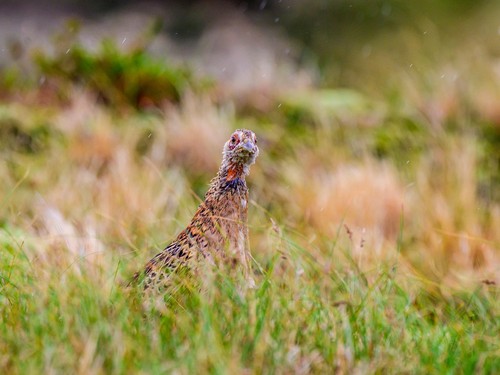
Ring-necked Pheasant
males 76-90 cm (30-35 in) long including a long tail; females smaller, 55-65 cm (22-26 in)
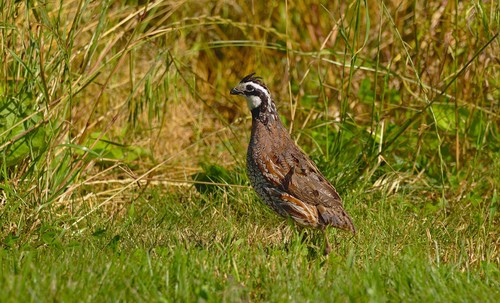
Northern Bobwhite
24-28 cm (9.5-11 in) long, 33-38 cm wingspan
Red-legged Partridge
32-34 cm (13 in) long, 47-50 cm wingspan
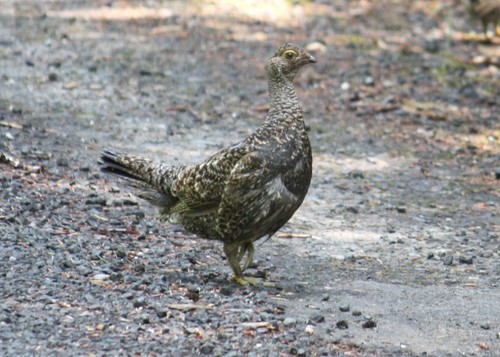
Sooty Grouse
43-48 cm (17-19 in) long; males larger than females
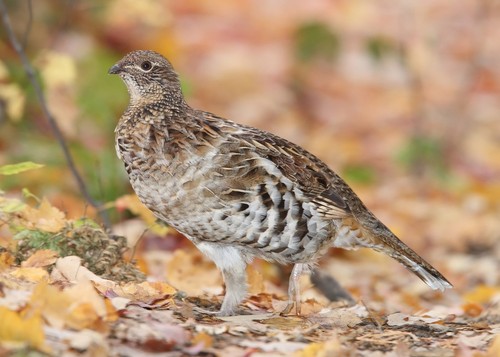
Ruffed Grouse
40-48 cm (16-19 in) long, 50-64 cm (20-25 in) wingspan