
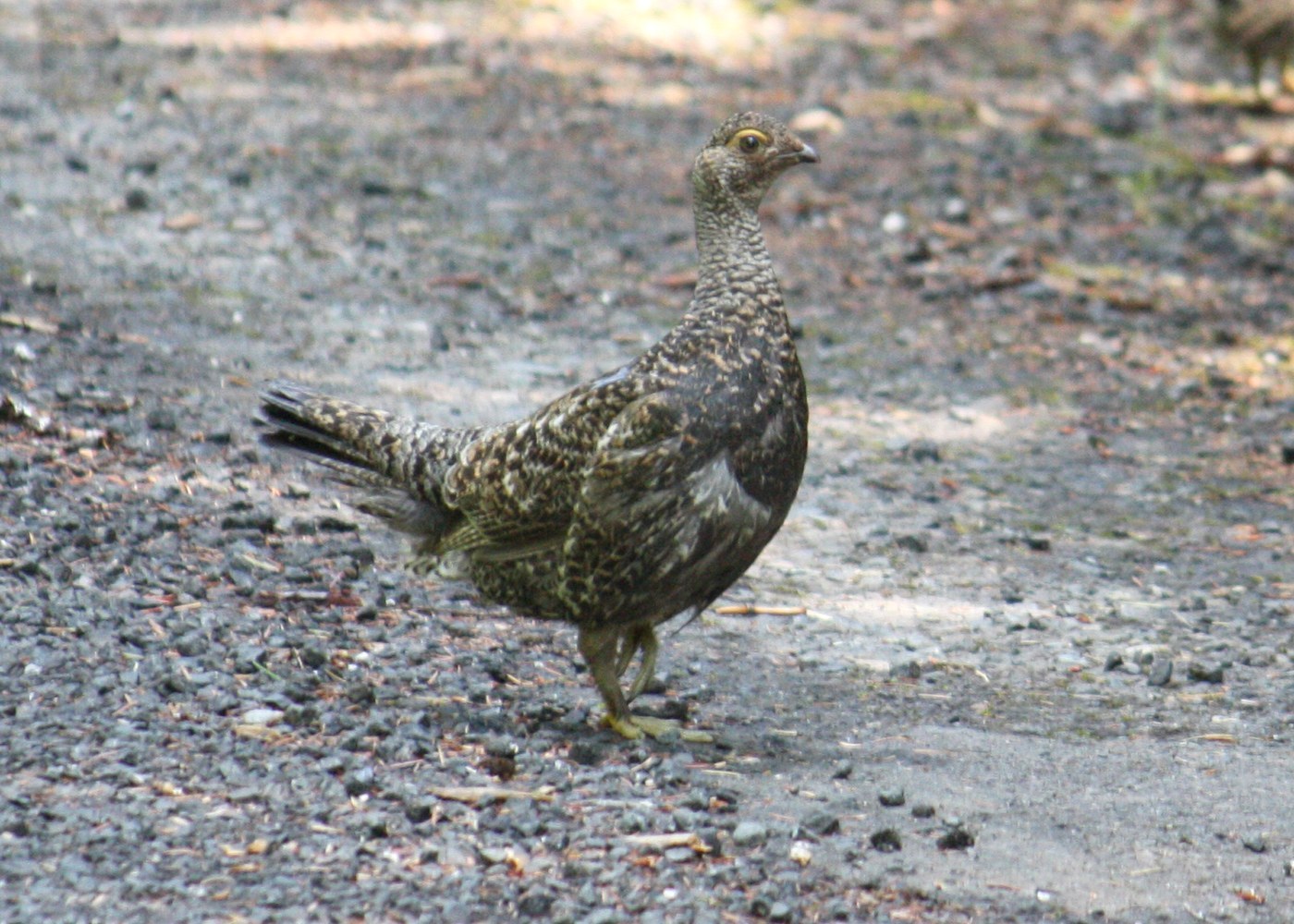
Sooty Grouse
Dendragapus fuliginosus
A large, dark Pacific-coast mountain grouse, the coastal counterpart of the Dusky Grouse, known for the male's deep hooting display from tall conifers.
- Size
- 43-48 cm (17-19 in) long; males larger than females
- Habitat
- coniferous forests of the Pacific coastal mountain ranges
- Type
- gamebird
Spotted a bird like this?
Identify any bird from a photo, free.
Overview
The Sooty Grouse is a large, dark gray-brown grouse of Pacific coastal mountain forests, split from the interior Dusky Grouse in 2006 (both were formerly known jointly as "Blue Grouse"). Males are sooty gray overall with a plain tail showing a broad, pale grayish terminal band, and display by inflating yellow-to-purplish neck air sacs bordered by whitish feather bases, often calling from high in a conifer rather than from the ground. Females are mottled brown-gray, well camouflaged for ground nesting.
How to identify it
Key field marks
- Dark sooty-gray plumage in males with a broad, pale grayish terminal tail band (wider than in Dusky Grouse)
- Yellow to purplish inflatable neck air sacs during display
- Often displays and calls from higher perches in tall conifers compared to the more ground-based Dusky Grouse
Similar species
Dusky Grouse is essentially identical in plumage but occurs in interior mountain ranges rather than along the Pacific coast, has a narrower tail band, and a slightly different hoot pattern; the two species overlap little in range.
Habitat & range
Habitat and Range
Sooty Grouse inhabit coniferous forests, especially Douglas-fir, hemlock, and true fir stands, in coastal and coast-adjacent mountain ranges, often using more open subalpine or logged habitat in summer.
Range
The species occurs along the Pacific coast mountain ranges from southeastern Alaska south through British Columbia, Washington, Oregon, and California, including the Cascade and Sierra Nevada ranges.
Migration
Like its interior relative, Sooty Grouse make a modest elevational migration, moving into dense, tall conifer stands at higher elevation in winter and descending to more open habitat with berries and forbs in summer.
Behavior & voice
Behavior
Displaying males often perch high in a conifer tree, inflating their neck air sacs and giving a series of deep hoots that can carry a considerable distance through forested terrain.
Voice
The advertising call is a series of low hoots, generally described as deeper or more resonant than the Dusky Grouse's call and often given from an elevated tree perch.
Feeding
Conifer needles dominate the winter diet, while berries, leaves, flowers, and insects become more important during the snow-free season.
Nesting and breeding
Females nest on the ground under shrub or tree cover and raise the brood alone; chicks are precocial and follow the hen shortly after hatching.
Frequently asked questions
How do you tell Sooty Grouse from Dusky Grouse?
Sooty Grouse lives along the Pacific coast mountain ranges and has a broader, paler gray terminal tail band, while Dusky Grouse occupies interior ranges like the Rockies and has a narrower tail band; the two were split as separate species in 2006.
Where does the Sooty Grouse display from?
Males often call and display from a high perch in a tall conifer, unlike the more ground-based display typical of Dusky Grouse.
What habitat does Sooty Grouse prefer?
It favors coniferous forest -- especially Douglas-fir, hemlock, and true fir -- in Pacific coastal mountain ranges from Alaska to California.
Were Sooty Grouse and Dusky Grouse once considered the same species?
Yes, both were formerly lumped together as 'Blue Grouse' until genetic and behavioral differences led to their split into two species in 2006.
Sooty Grouse guides
In-depth guides for identifying, finding, and understanding Sooty Grouse.
Other birds you may enjoy
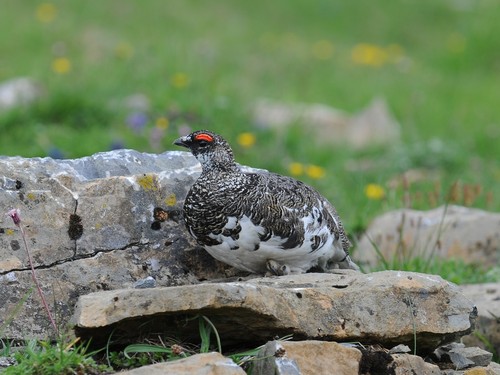
Rock Ptarmigan
34-36 cm (13-14 in) long
Congo Peafowl
Males about 64-70 cm long; females slightly smaller; no elaborate train
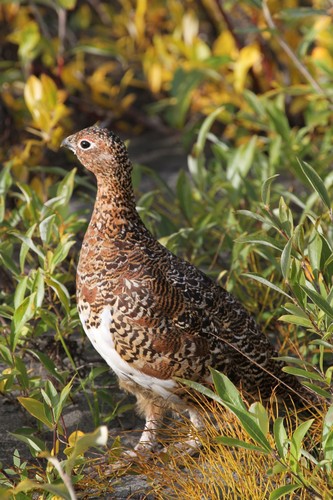
Willow Ptarmigan
37-42 cm (15-16.5 in) long
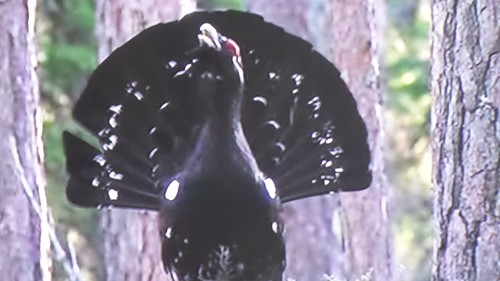
Western Capercaillie
male 74-90 cm (29-35 in), female 54-64 cm; male wingspan up to 125-130 cm
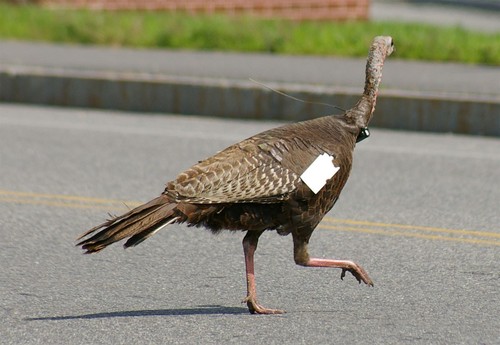
Wild Turkey
males 100-125 cm (39-49 in) long; females smaller, around 76-95 cm (30-37 in)
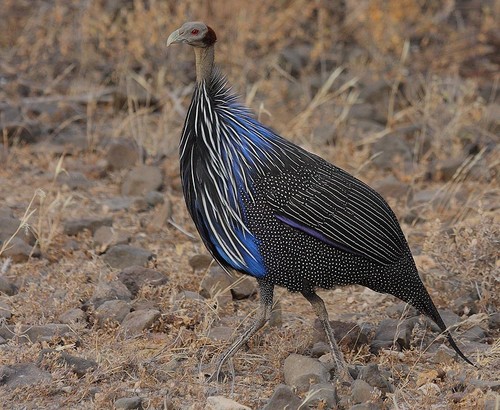
Vulturine Guineafowl
Length 61-71 cm, the largest guineafowl species, with a notably long neck and tail
White-tailed Ptarmigan
30-33 cm (12-13 in) long; the smallest ptarmigan species
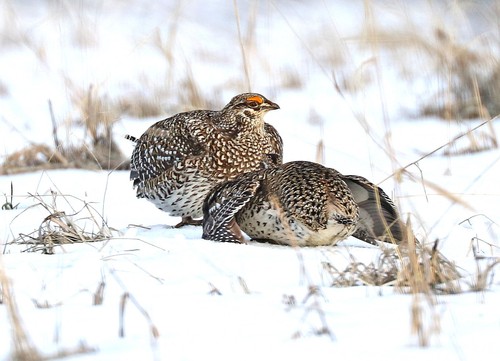
Sharp-tailed Grouse
38-48 cm (15-19 in) long
Ring-necked Pheasant
males 76-90 cm (30-35 in) long including a long tail; females smaller, 55-65 cm (22-26 in)
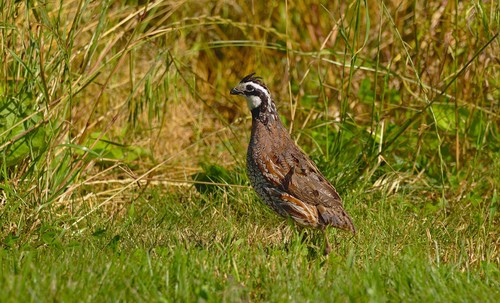
Northern Bobwhite
24-28 cm (9.5-11 in) long, 33-38 cm wingspan
Red-legged Partridge
32-34 cm (13 in) long, 47-50 cm wingspan
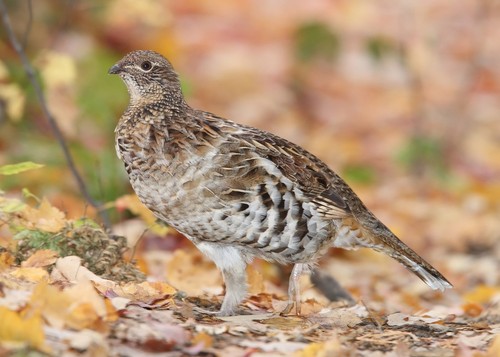
Ruffed Grouse
40-48 cm (16-19 in) long, 50-64 cm (20-25 in) wingspan