
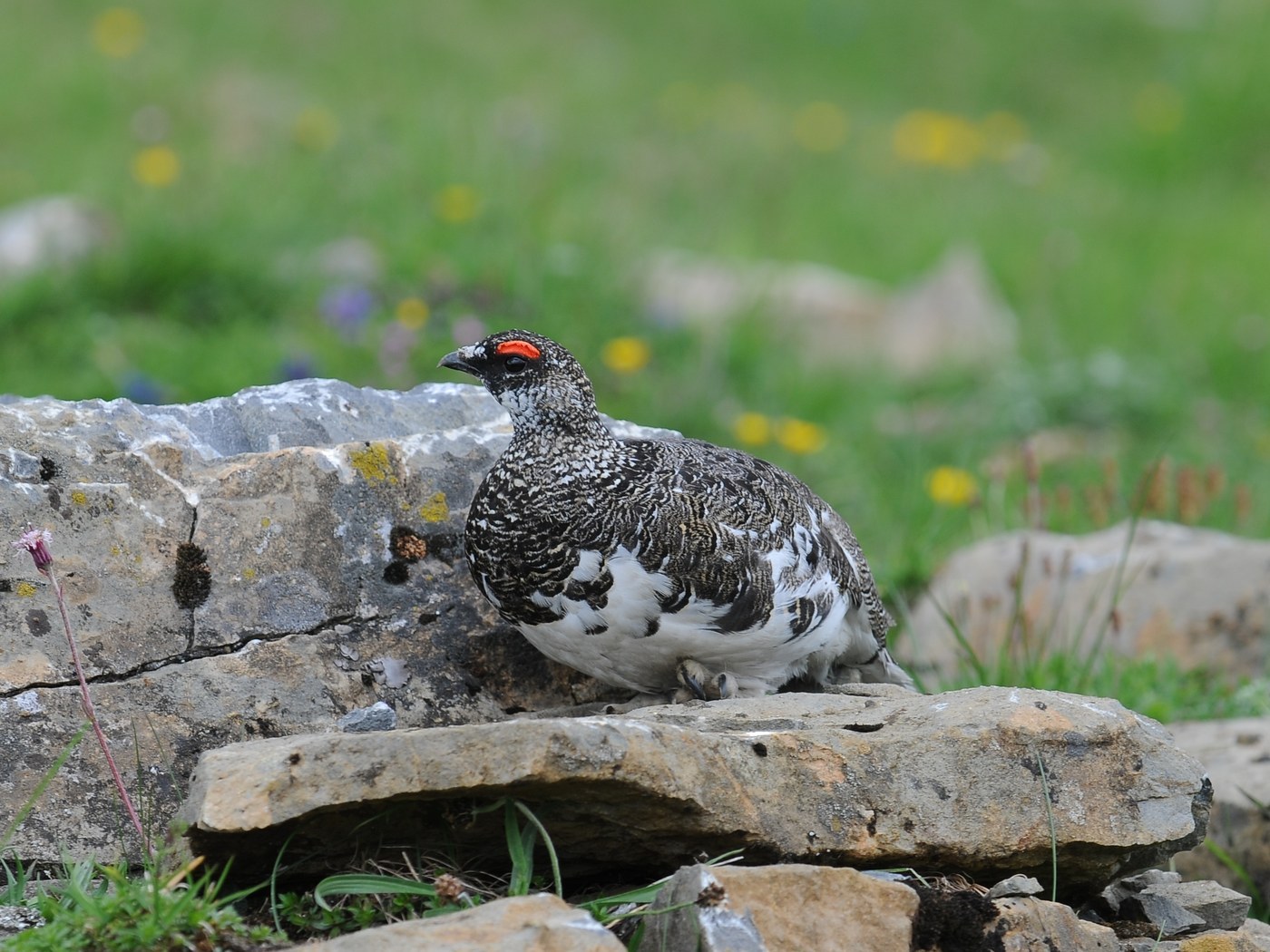
Rock Ptarmigan
Lagopus muta
A circumpolar tundra grouse of barren, rocky terrain that turns snow-white in winter, with breeding males showing a distinctive black eye-line in spring.
- Size
- 34-36 cm (13-14 in) long
- Habitat
- high, barren, rocky arctic and alpine tundra
- Type
- gamebird
Spotted a bird like this?
Identify any bird from a photo, free.
Overview
The Rock Ptarmigan is a circumpolar grouse closely related to the Willow Ptarmigan but generally found on higher, more barren, rocky ground with sparser vegetation. Like its relative, it undergoes a dramatic seasonal plumage change from pure white in winter to mottled gray-brown in summer, but is overall grayer and finer-patterned than the more rufous Willow Ptarmigan. In spring, males develop a distinctive black line through the eye that is a useful field mark not shown by Willow Ptarmigan.
How to identify it
Key field marks
- White plumage in winter (with black tail); grayer, finely mottled gray-brown plumage in summer (less rufous than Willow Ptarmigan)
- Breeding male shows a black eye-line/mask in spring
- Slightly smaller and more slender-billed than Willow Ptarmigan
- Feathered legs and feet year-round
Similar species
Willow Ptarmigan is larger, more rufous overall in summer, favors lower shrubby willow habitat, and males lack the black eye-line. White-tailed Ptarmigan is smaller, found farther south in alpine habitat, and has an all-white tail in every plumage.
Habitat & range
Habitat and Range
Rock Ptarmigan favor high, barren, rocky tundra and alpine slopes with sparse vegetation, typically at higher elevations or more exposed sites than the shrubbier habitat used by Willow Ptarmigan.
Range
The species has a circumpolar arctic and alpine distribution across northern Canada, Alaska, Greenland, Scandinavia, and Russia, generally overlapping with Willow Ptarmigan but occupying more barren terrain within the same regions.
Migration
Most populations are resident or make only short local movements to lower, more sheltered slopes in severe winter weather.
Behavior & voice
Behavior
Rock Ptarmigan rely heavily on camouflage and stillness in the sparse, exposed terrain they inhabit, forming small flocks outside the breeding season.
Voice
Males give a harsh, croaking, belching-like call during display flights, distinct from the laughing call of the Willow Ptarmigan.
Feeding
Diet consists of buds, leaves, seeds, and berries of tundra plants, shifting seasonally as different foods become available.
Nesting and breeding
Pairs are generally monogamous for the season; the female nests on the ground in a shallow scrape among rocks or low vegetation, and males may help guard the nest area during incubation.
Frequently asked questions
How do you tell Rock Ptarmigan from Willow Ptarmigan?
Rock Ptarmigan is smaller, grayer overall in summer, prefers higher and more barren rocky terrain, and breeding males show a black eye-line that Willow Ptarmigan lacks.
Why does the Rock Ptarmigan turn white in winter?
Its plumage molts to pure white for camouflage against snow, aside from black tail feathers, then changes to mottled gray-brown in summer to match rocky tundra.
What sound does a Rock Ptarmigan make?
Males give a harsh, croaking call, often described as belching or grating, during their display flights, quite different from the laughing call of Willow Ptarmigan.
Where does the Rock Ptarmigan live?
It occupies barren, rocky arctic and alpine tundra across a circumpolar range including Alaska, northern Canada, Greenland, Scandinavia, and Russia.
Rock Ptarmigan guides
In-depth guides for identifying, finding, and understanding Rock Ptarmigan.
Other birds you may enjoy
Congo Peafowl
Males about 64-70 cm long; females slightly smaller; no elaborate train
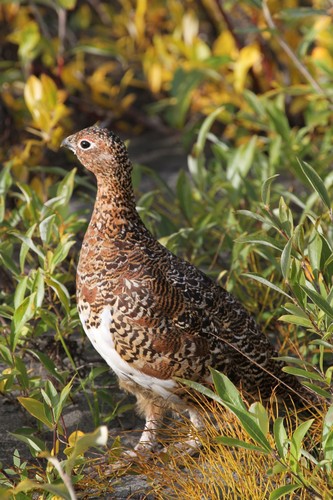
Willow Ptarmigan
37-42 cm (15-16.5 in) long
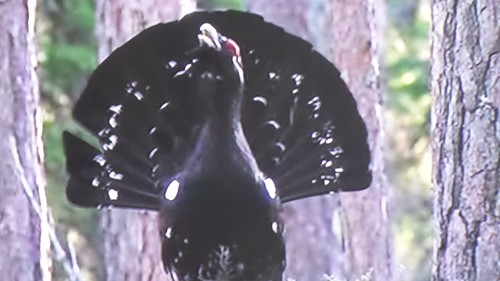
Western Capercaillie
male 74-90 cm (29-35 in), female 54-64 cm; male wingspan up to 125-130 cm
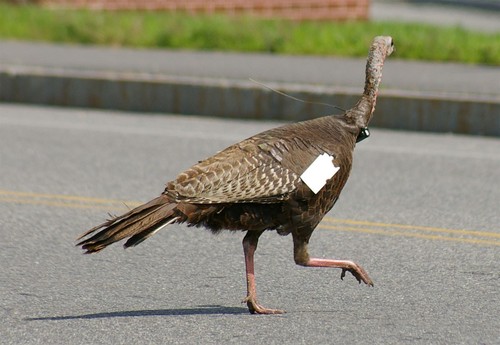
Wild Turkey
males 100-125 cm (39-49 in) long; females smaller, around 76-95 cm (30-37 in)
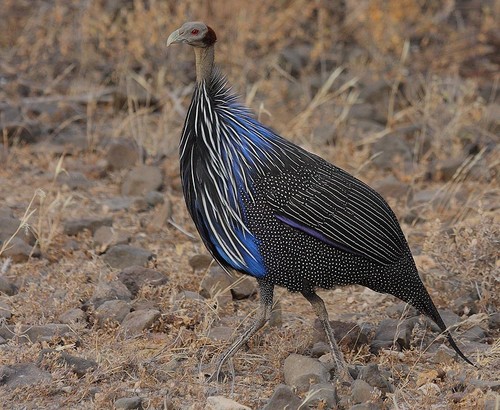
Vulturine Guineafowl
Length 61-71 cm, the largest guineafowl species, with a notably long neck and tail
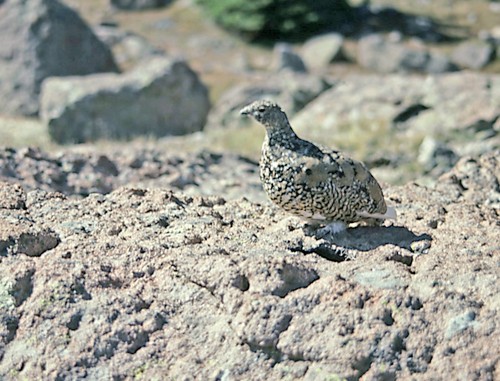
White-tailed Ptarmigan
30-33 cm (12-13 in) long; the smallest ptarmigan species
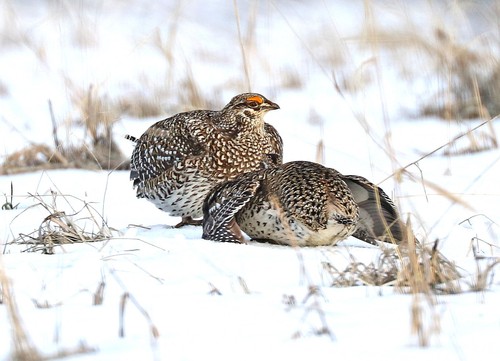
Sharp-tailed Grouse
38-48 cm (15-19 in) long
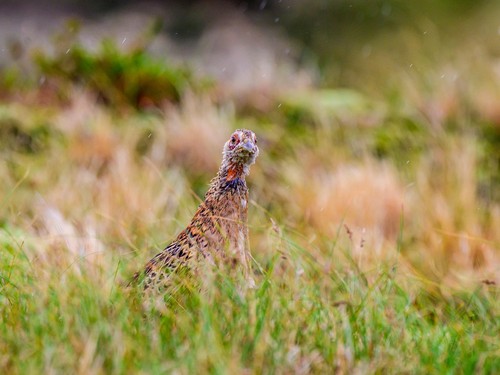
Ring-necked Pheasant
males 76-90 cm (30-35 in) long including a long tail; females smaller, 55-65 cm (22-26 in)
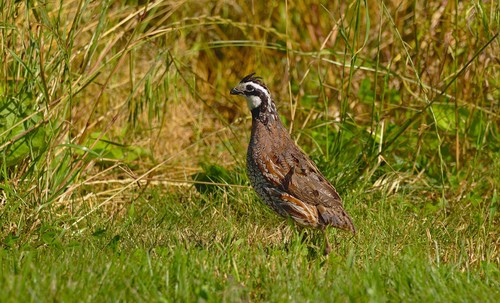
Northern Bobwhite
24-28 cm (9.5-11 in) long, 33-38 cm wingspan
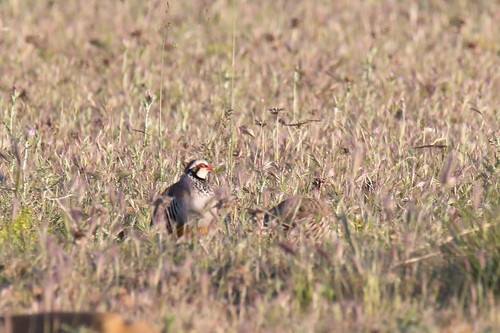
Red-legged Partridge
32-34 cm (13 in) long, 47-50 cm wingspan
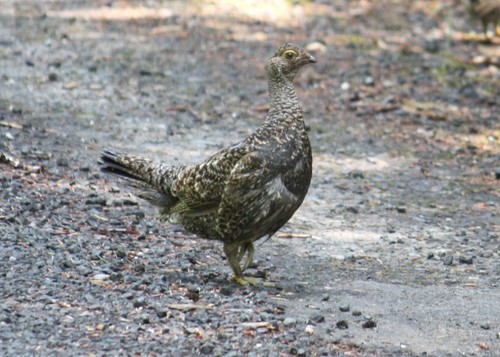
Sooty Grouse
43-48 cm (17-19 in) long; males larger than females
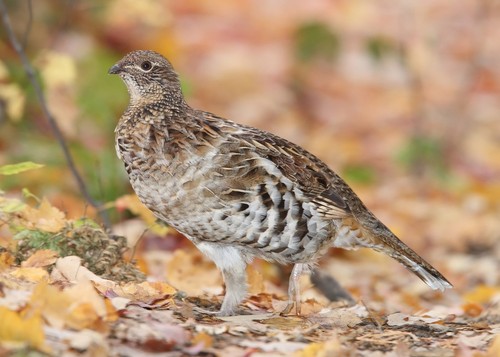
Ruffed Grouse
40-48 cm (16-19 in) long, 50-64 cm (20-25 in) wingspan