
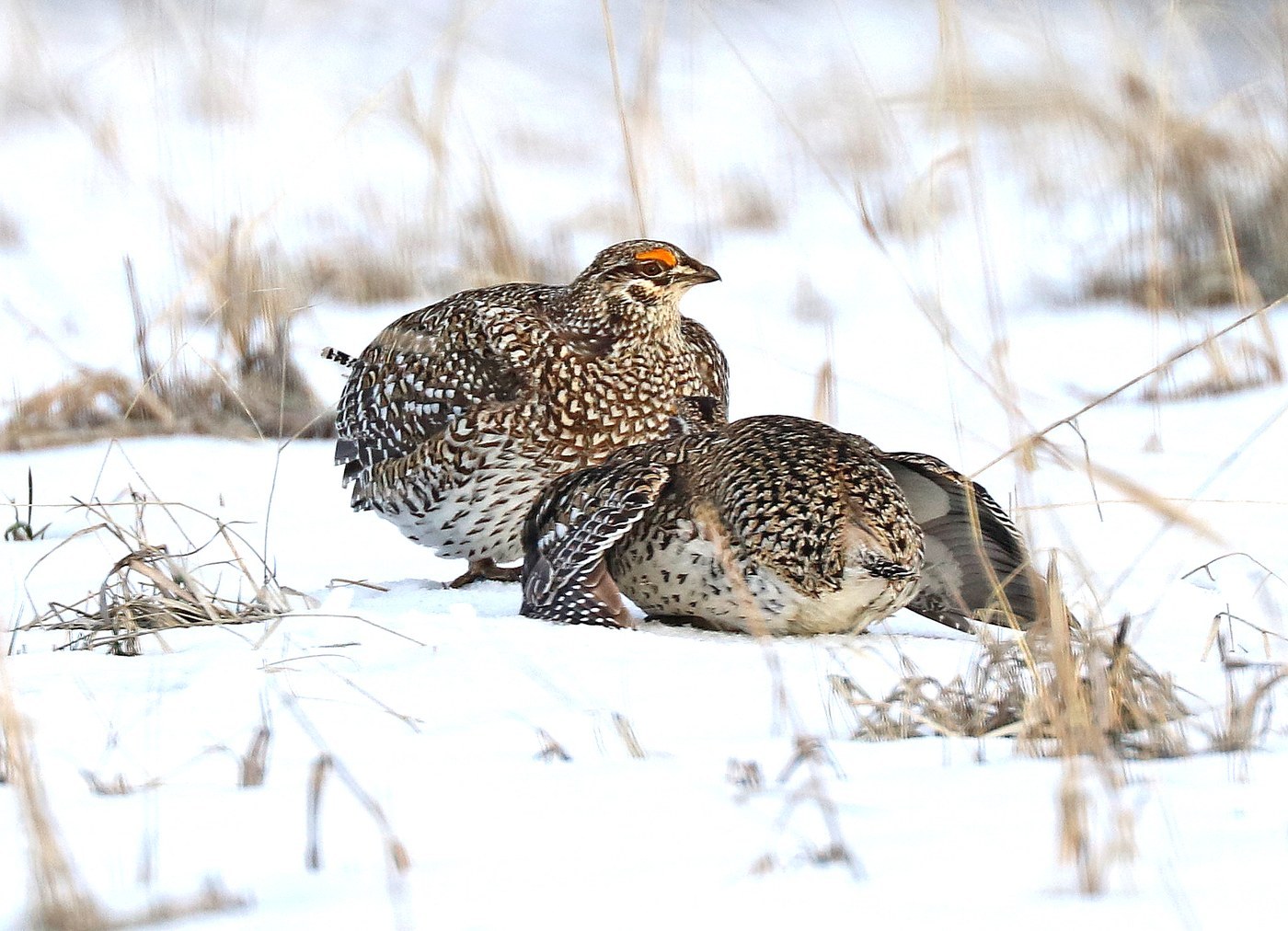
Sharp-tailed Grouse
Tympanuchus phasianellus
A pale, prairie-and-brushland grouse with a short pointed tail, best known for the male's foot-stamping dance and popping purple neck sacs on the lek.
- Size
- 38-48 cm (15-19 in) long
- Habitat
- native prairie, brushy grassland, and open woodland edges
- Type
- gamebird
Spotted a bird like this?
Identify any bird from a photo, free.
Overview
The Sharp-tailed Grouse is a medium-sized grouse of open grassland and brushy prairie across much of northern North America. It is paler and more finely marked than other prairie grouse, with mottled buff, brown, and white upperparts and a whitish belly marked with dark V-shaped chevrons. Its name refers to the short, pointed central tail feathers that project beyond the rest of the tail, visible both in flight and during display.
How to identify it
Key field marks
- Pale, finely mottled brown-and-buff plumage with a whitish, V-marked belly
- Short, pointed central tail feathers forming a distinctive point
- Small purple air sacs on the neck and a short crest visible in displaying males
- White outer tail feathers flash in flight
Similar species
Greater and Lesser Prairie-Chicken lack the pointed tail and are barred rather than V-marked on the underparts, with orange rather than purple neck sacs. Sage Grouse is much larger with a black belly patch and lacks the short pointed tail shape.
Habitat & range
Habitat and Range
Sharp-tailed Grouse inhabit native grassland, brushy prairie, aspen parkland, and open woodland edges, often near a mix of grass for nesting and shrubs or scattered trees for winter food and cover.
Range
The species is found across much of the northern Great Plains and prairie provinces of Canada, extending north into boreal forest openings in Alaska and the Yukon and locally in parts of the Rocky Mountain foothills and Great Lakes region.
Migration
Sharp-tailed Grouse are largely non-migratory, though they may move short distances seasonally to reach winter food sources such as tree buds and catkins.
Behavior & voice
Behavior
Males gather on traditional leks each spring, performing a distinctive foot-stamping "dance" with rapidly drumming feet, spread wings, and inflated purple neck sacs, often facing off against rivals with quivering tails.
Voice
Display sounds include soft cooing, cackling, and popping notes from the neck sacs, along with the rhythmic drumming of feet against the ground.
Feeding
Diet shifts seasonally from insects, seeds, and berries in summer to tree and shrub buds and catkins in winter, when birds may perch in trees to feed.
Nesting and breeding
Females nest on the ground in grass or brush, generally within a couple of miles of the lek, laying about 10-12 eggs and raising the brood alone.
Frequently asked questions
What makes the Sharp-tailed Grouse's tail distinctive?
Its short, pointed central tail feathers project beyond the rest of the tail, giving it a sharply pointed shape unlike the fanned or spiky tails of other prairie grouse.
How do Sharp-tailed Grouse court mates?
Males gather on communal leks and perform a foot-stamping dance with drumming feet, spread wings, quivering tail, and inflated purple neck sacs to attract females.
Where do Sharp-tailed Grouse live?
They occupy native prairie, brushy grassland, and aspen parkland across the northern Great Plains, prairie Canada, and boreal forest openings in Alaska and the Yukon.
What do Sharp-tailed Grouse eat in winter?
They shift to eating buds and catkins from trees and shrubs such as aspen and birch, sometimes perching in the branches to feed.
Sharp-tailed Grouse guides
In-depth guides for identifying, finding, and understanding Sharp-tailed Grouse.
Other birds you may enjoy
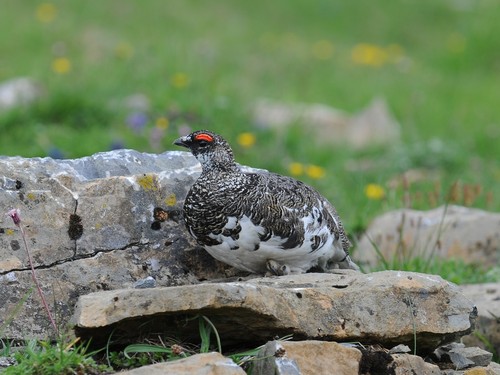
Rock Ptarmigan
34-36 cm (13-14 in) long
Congo Peafowl
Males about 64-70 cm long; females slightly smaller; no elaborate train
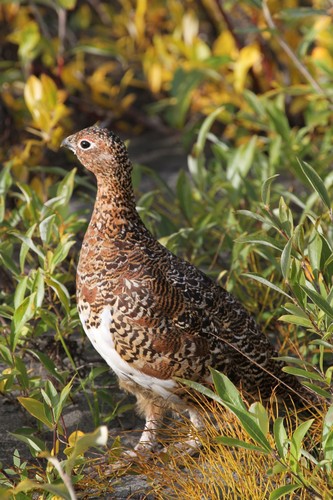
Willow Ptarmigan
37-42 cm (15-16.5 in) long
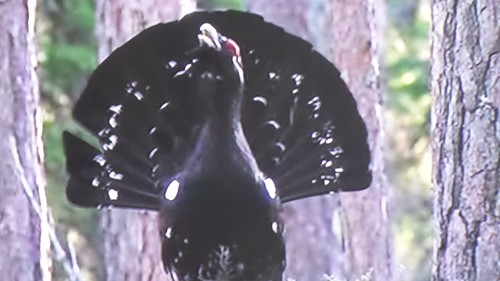
Western Capercaillie
male 74-90 cm (29-35 in), female 54-64 cm; male wingspan up to 125-130 cm
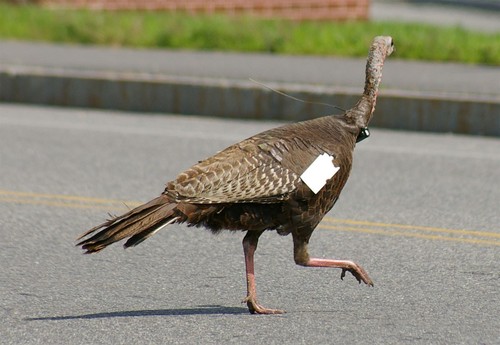
Wild Turkey
males 100-125 cm (39-49 in) long; females smaller, around 76-95 cm (30-37 in)
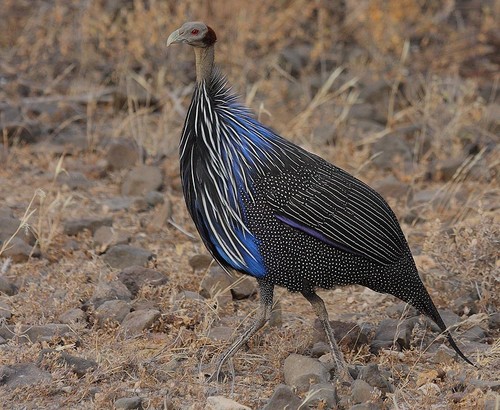
Vulturine Guineafowl
Length 61-71 cm, the largest guineafowl species, with a notably long neck and tail
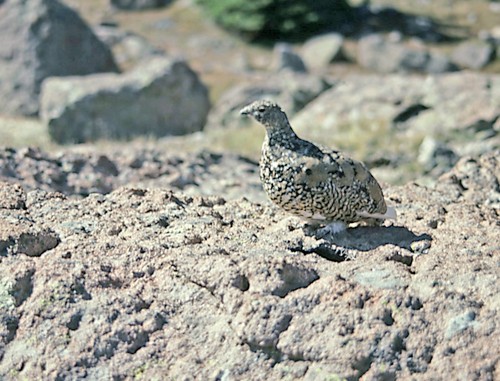
White-tailed Ptarmigan
30-33 cm (12-13 in) long; the smallest ptarmigan species
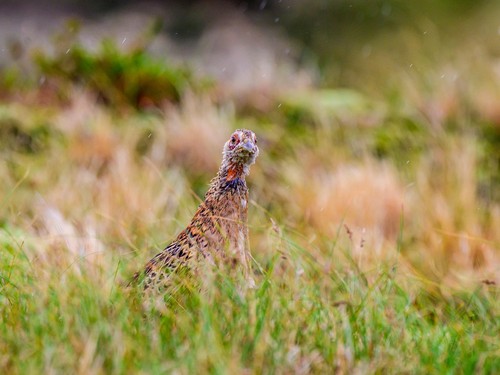
Ring-necked Pheasant
males 76-90 cm (30-35 in) long including a long tail; females smaller, 55-65 cm (22-26 in)
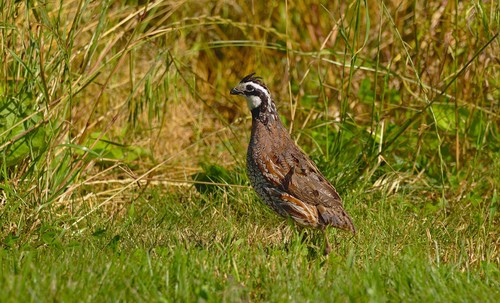
Northern Bobwhite
24-28 cm (9.5-11 in) long, 33-38 cm wingspan
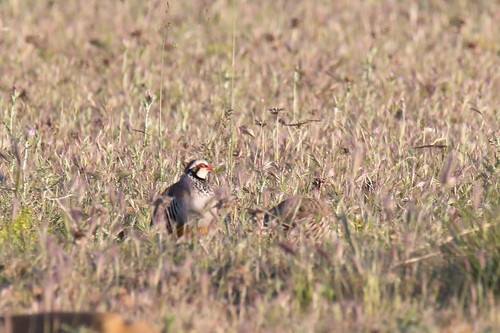
Red-legged Partridge
32-34 cm (13 in) long, 47-50 cm wingspan
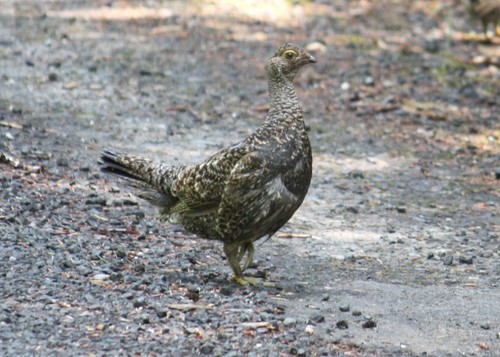
Sooty Grouse
43-48 cm (17-19 in) long; males larger than females
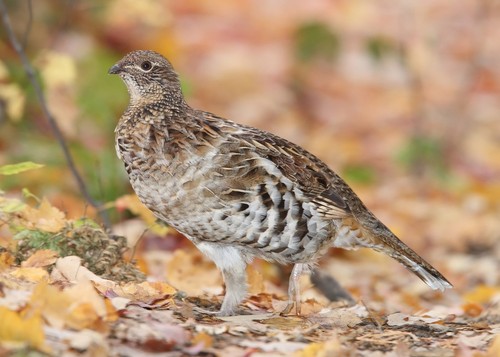
Ruffed Grouse
40-48 cm (16-19 in) long, 50-64 cm (20-25 in) wingspan