
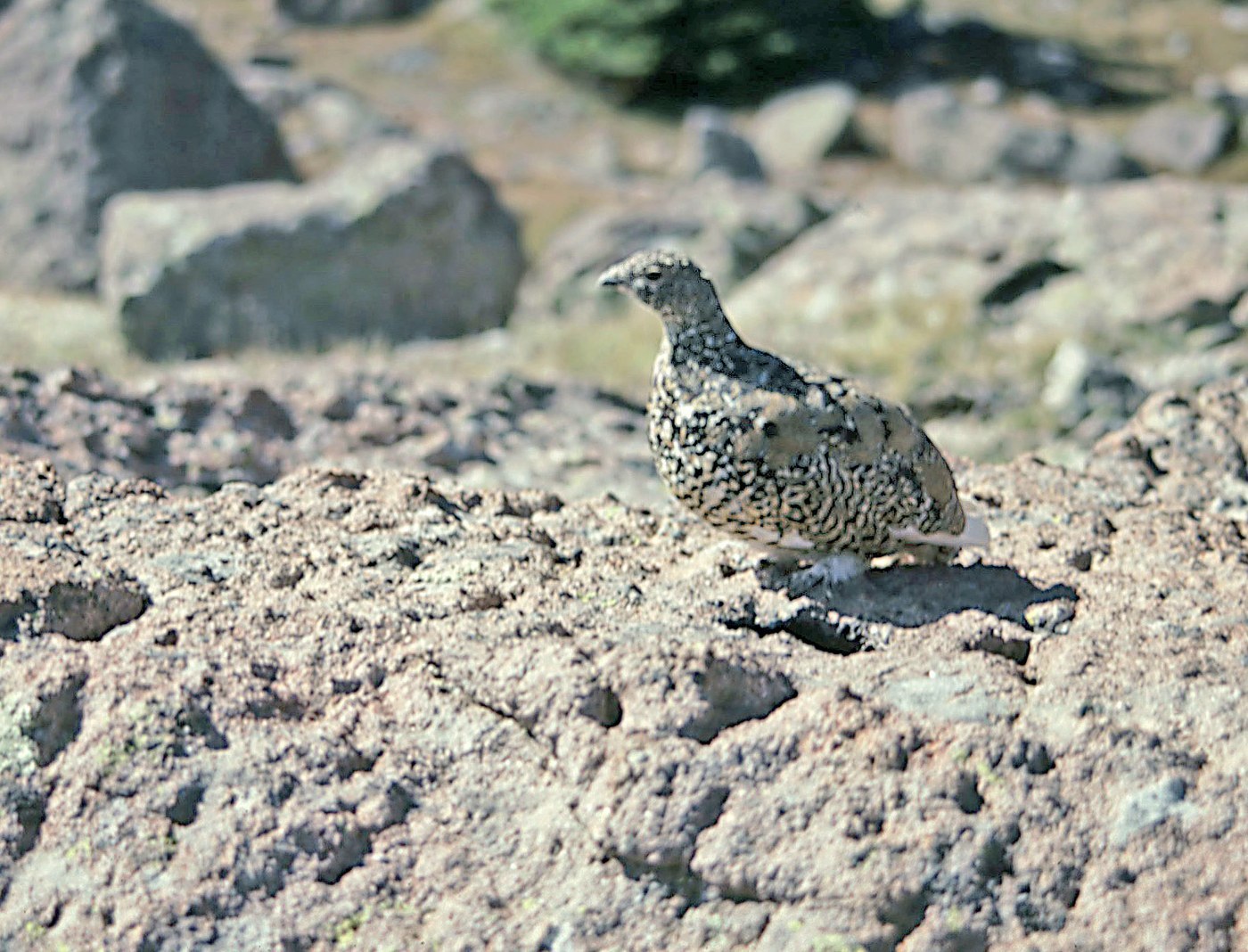
White-tailed Ptarmigan
Lagopus leucura
The smallest North American ptarmigan and the only one found in the contiguous United States, an alpine specialist with an all-white tail in every season.
- Size
- 30-33 cm (12-13 in) long; the smallest ptarmigan species
- Habitat
- alpine tundra above treeline
- Type
- gamebird
Spotted a bird like this?
Identify any bird from a photo, free.
Overview
The White-tailed Ptarmigan is the smallest of the three North American ptarmigan species and the only one whose range extends into the mountains of the contiguous United States, occurring in true alpine tundra above treeline in the Rocky Mountains, Cascades, and (via introduction) the Sierra Nevada. Like its relatives, it molts seasonally from pure white in winter to a mottled brown-and-gray summer plumage that closely matches lichen-covered rock and tundra vegetation, but it is unique among ptarmigan in retaining an entirely white tail year-round.
How to identify it
Key field marks
- Smallest and most compact of the ptarmigan species
- Entirely white tail in all seasons (Willow and Rock Ptarmigan have black tail feathers)
- White wings and belly year-round; mottled gray-brown body in summer, pure white in winter
- Found only in true alpine tundra habitat, generally above treeline
Similar species
Willow and Rock Ptarmigan are both larger and show black tail feathers in every plumage, and neither occurs in the same restricted high-alpine habitat within the lower 48 states used by White-tailed Ptarmigan.
Habitat & range
Habitat and Range
White-tailed Ptarmigan are alpine specialists, living year-round above treeline among rocky slopes, talus, and low tundra vegetation, rarely descending far below the alpine zone.
Range
The species occurs in the Rocky Mountains from Alaska and the Yukon south through British Columbia and Alberta to Colorado and New Mexico, and in the Cascade Range of Washington; an introduced population also exists in the Sierra Nevada of California.
Migration
White-tailed Ptarmigan generally make only short elevational movements, shifting to slightly lower, more sheltered alpine slopes or krummholz (stunted tree) zones in the harshest winter conditions.
Behavior & voice
Behavior
Well camouflaged and tame, White-tailed Ptarmigan often allow close approach in their remote alpine habitat, relying on stillness among rocks and snow to avoid detection.
Voice
Calls include soft clucks and a series of low hoots and cackles, generally quieter than the loud laughing calls of Willow Ptarmigan.
Feeding
Diet includes willow and other alpine shrub buds and leaves, flowers, seeds, and insects in summer, with winter diet shifting heavily to available buds and twigs above the snowpack.
Nesting and breeding
Females nest on the ground in a shallow scrape among rocks or low tundra vegetation, laying 4-8 eggs; pairs are generally monogamous for the breeding season.
Frequently asked questions
What makes the White-tailed Ptarmigan unique among ptarmigan?
It is the smallest ptarmigan species, the only one found in the contiguous United States, and the only one with an entirely white tail in every season -- Willow and Rock Ptarmigan both retain black tail feathers year-round.
Where do White-tailed Ptarmigan live?
They live year-round in true alpine tundra above treeline in the Rocky Mountains from Alaska to New Mexico and in the Cascades, with an introduced population in California's Sierra Nevada.
How do White-tailed Ptarmigan survive alpine winters?
They molt to pure white plumage for camouflage, grow dense feathering on their legs and feet, and shift their diet to available shrub buds and twigs above the snowpack.
Are White-tailed Ptarmigan easy to see?
They can be quite tame and allow close approach, but their remote high-alpine habitat and excellent camouflage make them easy to overlook.
White-tailed Ptarmigan guides
In-depth guides for identifying, finding, and understanding White-tailed Ptarmigan.
Other birds you may enjoy
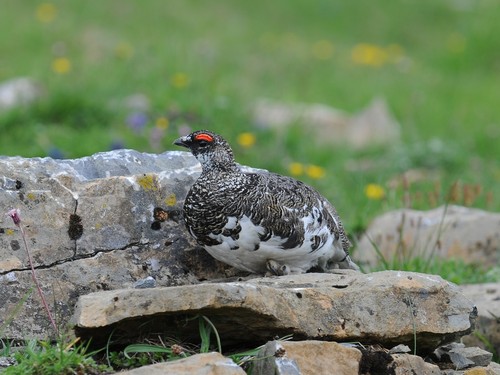
Rock Ptarmigan
34-36 cm (13-14 in) long
Congo Peafowl
Males about 64-70 cm long; females slightly smaller; no elaborate train
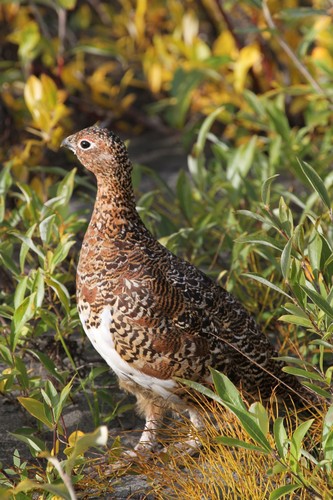
Willow Ptarmigan
37-42 cm (15-16.5 in) long
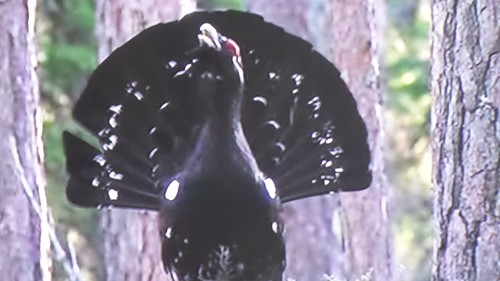
Western Capercaillie
male 74-90 cm (29-35 in), female 54-64 cm; male wingspan up to 125-130 cm
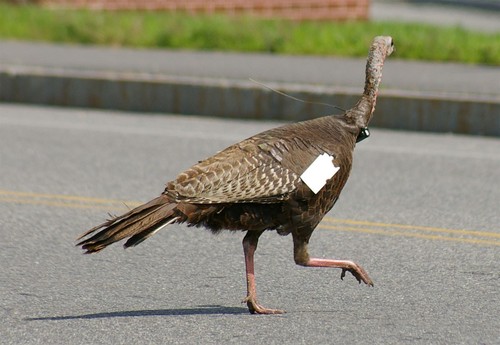
Wild Turkey
males 100-125 cm (39-49 in) long; females smaller, around 76-95 cm (30-37 in)
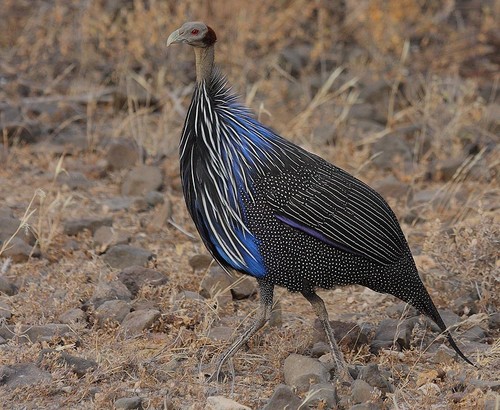
Vulturine Guineafowl
Length 61-71 cm, the largest guineafowl species, with a notably long neck and tail
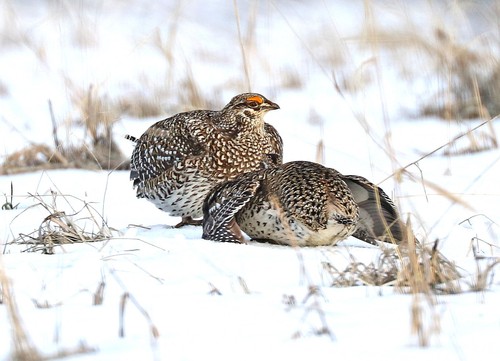
Sharp-tailed Grouse
38-48 cm (15-19 in) long
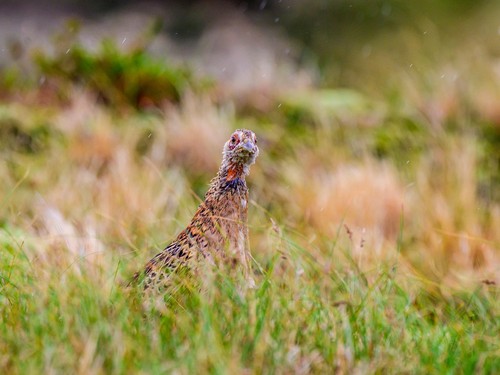
Ring-necked Pheasant
males 76-90 cm (30-35 in) long including a long tail; females smaller, 55-65 cm (22-26 in)
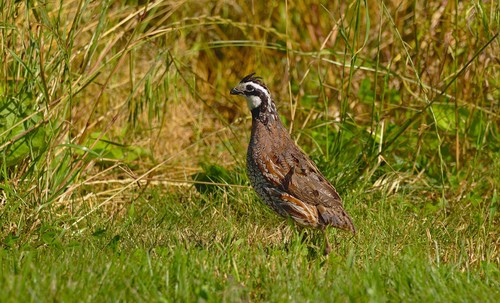
Northern Bobwhite
24-28 cm (9.5-11 in) long, 33-38 cm wingspan
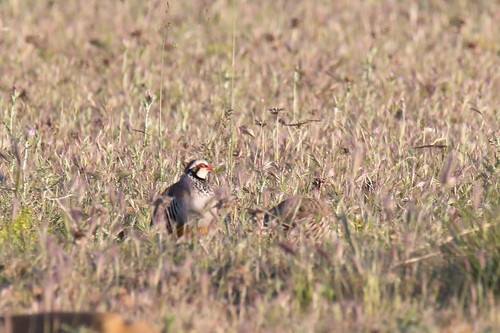
Red-legged Partridge
32-34 cm (13 in) long, 47-50 cm wingspan
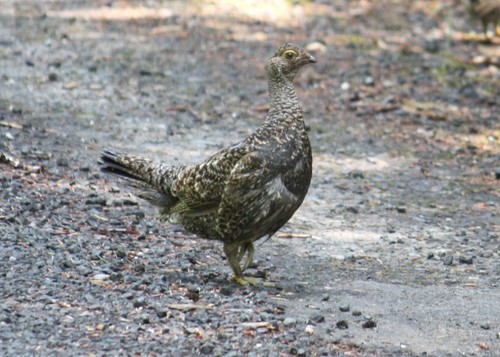
Sooty Grouse
43-48 cm (17-19 in) long; males larger than females
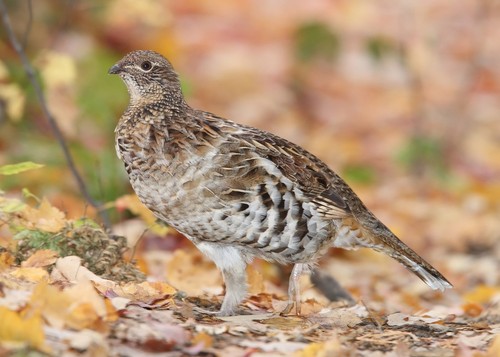
Ruffed Grouse
40-48 cm (16-19 in) long, 50-64 cm (20-25 in) wingspan