
White-tailed Ptarmigan Identification Guide
North America's smallest ptarmigan, a high-alpine grouse whose all-white tail in every season is the key mark separating it from its Arctic relatives.
Read the full White-tailed Ptarmigan encyclopedia entry →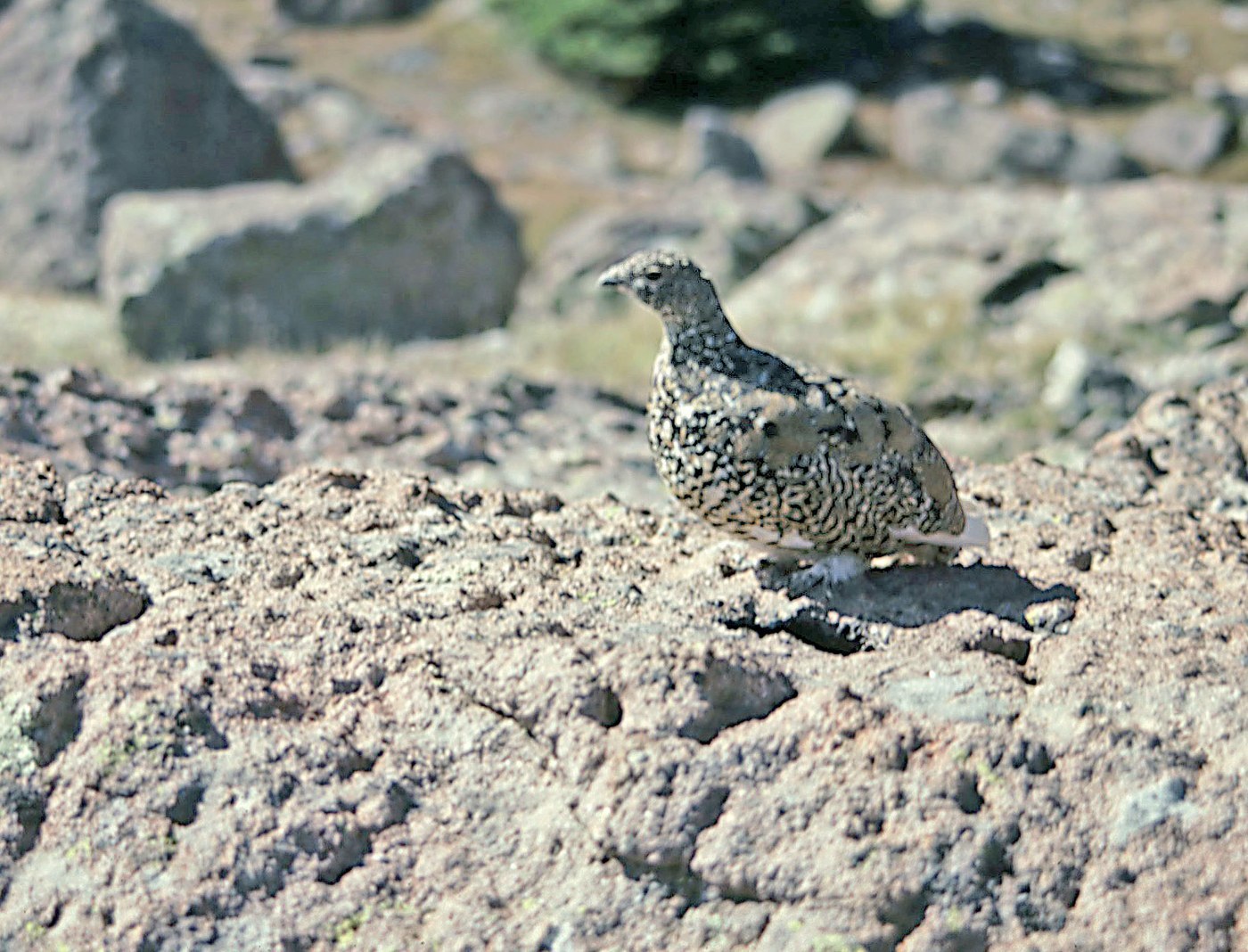
Key Field Marks
- Smallest of the three North American ptarmigan species (about 30-33 cm)
- Plumage changes seasonally for camouflage: mottled brown, gray, and black in summer; pure white in winter; patchy transitional plumage in spring and fall
- All-white tail in every season and plumage — this is the single most reliable field mark, since Willow and Rock Ptarmigan both retain black tail feathers even in full winter white plumage
- Small, dark bill and feathered legs and feet, an adaptation for insulation and walking on snow
- In summer, extremely well camouflaged against lichen-covered rock and tundra vegetation, often located only when it moves
Similar Species
- Rock Ptarmigan and Willow Ptarmigan: both show black outer tail feathers year-round, including in winter white plumage, unlike White-tailed Ptarmigan's fully white tail; range also helps, as these two species occur farther north and at lower elevations than White-tailed Ptarmigan in most of the Lower 48
- Within its high-elevation range in the western U.S. and Canadian Rockies, no other grouse-like bird shares its all-white winter tail combined with such small size
Behavior & Habitat
A true alpine specialist, living year-round above treeline in rocky tundra, talus slopes, and willow-lined basins. It feeds on willow buds, leaves, seeds, and insects, and tends to move only short distances seasonally within the alpine zone (down to willow thickets in winter for shelter and food) rather than migrating to lower forested elevations like some other grouse.
Where & When to See It
Resident in alpine tundra of the Rocky Mountains from Alaska and Canada south through Montana, Wyoming, and Colorado, with additional populations in the Cascades and an introduced population in the Sierra Nevada of California. Best looked for in summer above treeline near rocky outcrops and willow patches, though winter birds can sometimes be found lower in willow-choked drainages just below the alpine zone.
Voice
Soft clucking and cackling notes, along with low hoots given by males during courtship displays; generally quieter than other grouse.
Frequently asked questions
What is the definitive field mark for White-tailed Ptarmigan?
An all-white tail in every plumage and season — Rock and Willow Ptarmigan both keep black tail feathers even in winter white plumage.
Where do I need to go to find White-tailed Ptarmigan?
High alpine tundra above treeline in the Rocky Mountains, Cascades, or Sierra Nevada (introduced), typically requiring a hike to elevations above 11,000 feet in the southern part of its range.
Does White-tailed Ptarmigan migrate?
No, it is essentially non-migratory, staying within the alpine zone year-round and shifting only locally between exposed ridges and sheltered willow thickets.
How does its plumage change through the year?
It molts from mottled brown-and-black summer plumage into pure white winter plumage, with mottled transitional plumages in spring and fall that help it match patchy snow cover.