
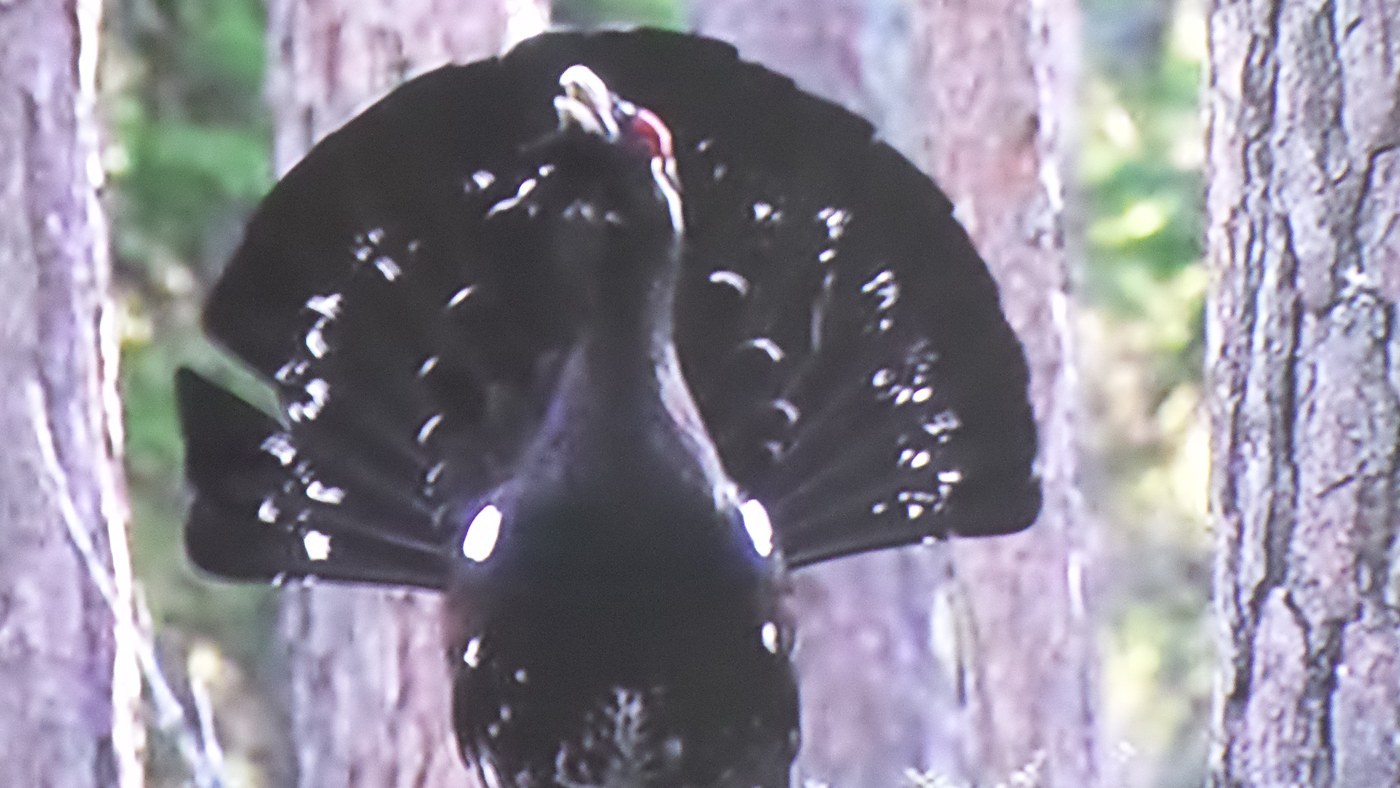
Western Capercaillie
Tetrao urogallus
The world's largest grouse, a massive, turkey-sized bird of old pine forest famed for its bizarre, gurgling courtship display.
- Size
- male 74-90 cm (29-35 in), female 54-64 cm; male wingspan up to 125-130 cm
- Habitat
- mature coniferous, especially pine, forest with an open, berry-rich understory
- Type
- gamebird
Spotted a bird like this?
Identify any bird from a photo, free.
Overview
The Western Capercaillie is an enormous grouse, the largest in the world, with males dwarfing females dramatically. Males are turkey-sized, with glossy blackish plumage tinged with dark green on the breast, a fan-shaped tail often raised and spread in display, and a heavy pale bill. Females are far smaller, mottled brown, buff, and chestnut, with a rounded rusty-orange breast patch, providing effective camouflage on the forest floor.
It is a bird of old, structurally rich coniferous forest, and is best known for its dramatic and unusual dawn courtship display, in which males produce a bizarre sequence of clicking, gurgling, and popping sounds unlike almost any other bird.
How to identify it
Key field marks
- Male: huge size, blackish body with green-glossed breast, fan-shaped tail, pale bill
- Female: much smaller, mottled brown and chestnut with a rusty breast patch
- Loud wing-clapping in flight due to sheer size and weight
- Bizarre, mechanical-sounding courtship song: clicks building to a pop and a grinding finish
Similar species
- Black Grouse male is smaller with a lyre-shaped tail and lacks the Capercaillie's fan tail and bulk.
- Female Capercaillie can resemble female Black Grouse but is notably larger, with a more contrasting rusty breast patch.
Sheer size distinguishes the Western Capercaillie from all other European grouse.
Habitat & range
Habitat
Requires extensive, mature coniferous forest, particularly Scots pine, with an open canopy structure and a rich understory of bilberry and other berry-bearing shrubs.
Range
Found patchily across Scandinavia, the Alps, Pyrenees, Carpathians, and the boreal forest belt of Russia; a relict, vulnerable population survives in the Scottish Highlands.
Migration
Resident and sedentary, with limited dispersal from natal forest.
Behavior & voice
Behavior
Males gather at traditional lek sites in the pre-dawn darkness in spring, performing an elaborate display combining fanned tails, raised head plumes, and a remarkable vocal sequence to attract and compete for females, often becoming highly aggressive toward rivals and even, occasionally, toward humans.
Voice
The male's display song is a strange, mechanical series of double-clicks accelerating into a "pop" like a cork, followed by a wheezing, grinding sound, quite unlike typical bird song.
Feeding
Feeds heavily on pine needles and shoots, especially in winter, along with berries such as bilberry and seeds; chicks depend more on insects in early weeks.
Nesting and breeding
Females nest alone on the ground, often at the base of a tree, laying 5-8 eggs incubated for about 24-26 days, and raise the brood without help from the male.
Frequently asked questions
How big is the Western Capercaillie?
It is the largest grouse species in the world; males can weigh over 4 kg and are far larger than females.
What does the Capercaillie's courtship display sound like?
A strange, mechanical sequence of accelerating clicks, a popping sound, and a grinding finish, unlike typical bird song.
Where does the Western Capercaillie live?
Mature coniferous, especially pine, forest with a rich berry understory, across Scandinavia, the Alps, and parts of eastern Europe, with a small relict population in Scotland.
Is the Capercaillie endangered?
Globally it is Least Concern, but some regional populations, including in Scotland, are small and considered highly vulnerable to local extinction.
Western Capercaillie guides
In-depth guides for identifying, finding, and understanding Western Capercaillie.
Other birds you may enjoy
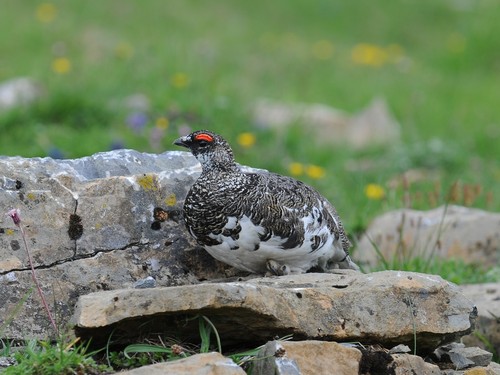
Rock Ptarmigan
34-36 cm (13-14 in) long
Congo Peafowl
Males about 64-70 cm long; females slightly smaller; no elaborate train
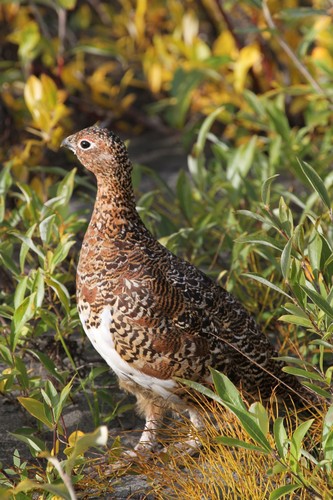
Willow Ptarmigan
37-42 cm (15-16.5 in) long
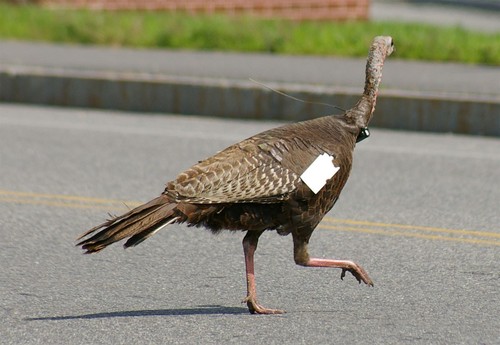
Wild Turkey
males 100-125 cm (39-49 in) long; females smaller, around 76-95 cm (30-37 in)
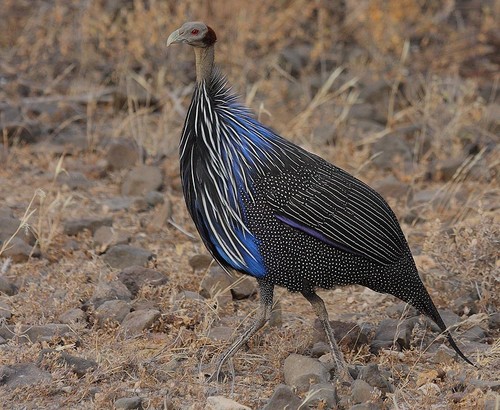
Vulturine Guineafowl
Length 61-71 cm, the largest guineafowl species, with a notably long neck and tail
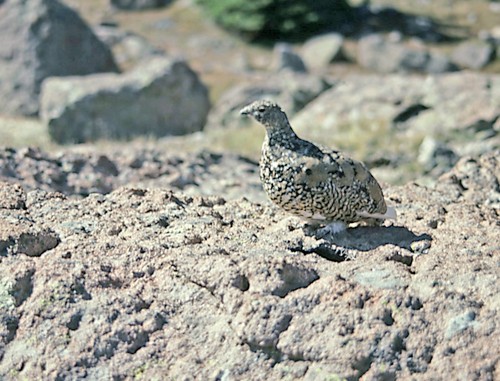
White-tailed Ptarmigan
30-33 cm (12-13 in) long; the smallest ptarmigan species
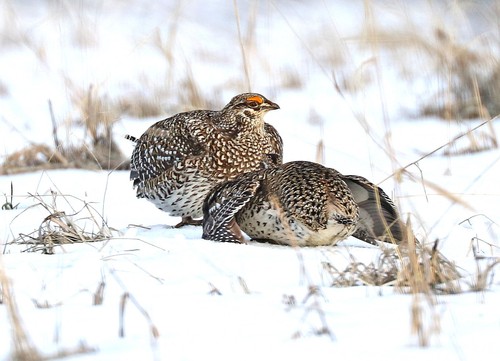
Sharp-tailed Grouse
38-48 cm (15-19 in) long
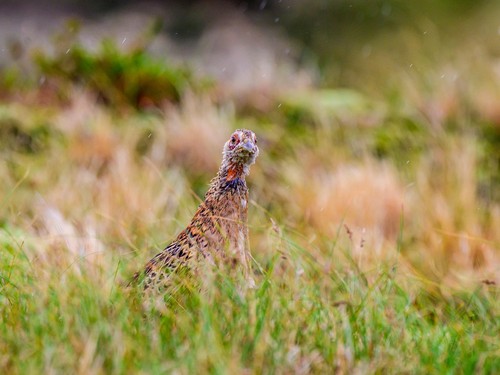
Ring-necked Pheasant
males 76-90 cm (30-35 in) long including a long tail; females smaller, 55-65 cm (22-26 in)
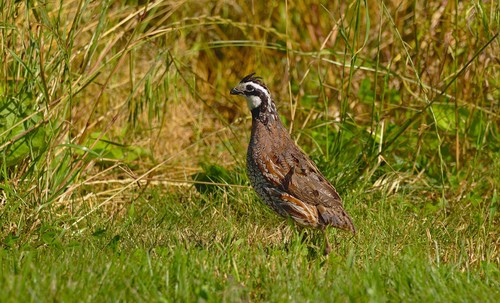
Northern Bobwhite
24-28 cm (9.5-11 in) long, 33-38 cm wingspan
Red-legged Partridge
32-34 cm (13 in) long, 47-50 cm wingspan
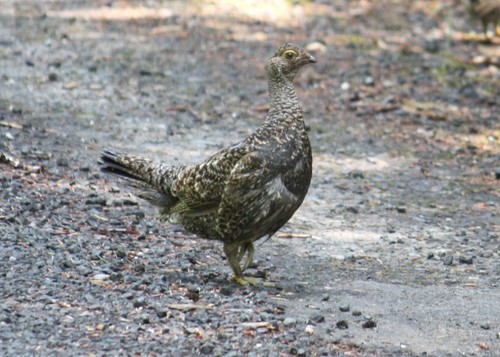
Sooty Grouse
43-48 cm (17-19 in) long; males larger than females
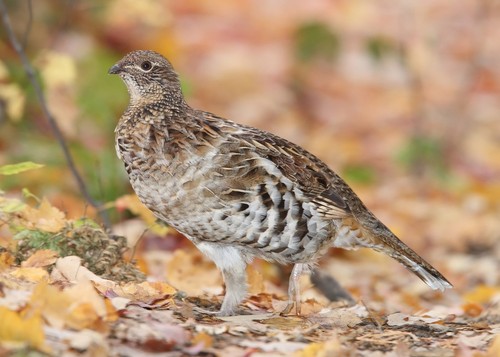
Ruffed Grouse
40-48 cm (16-19 in) long, 50-64 cm (20-25 in) wingspan