
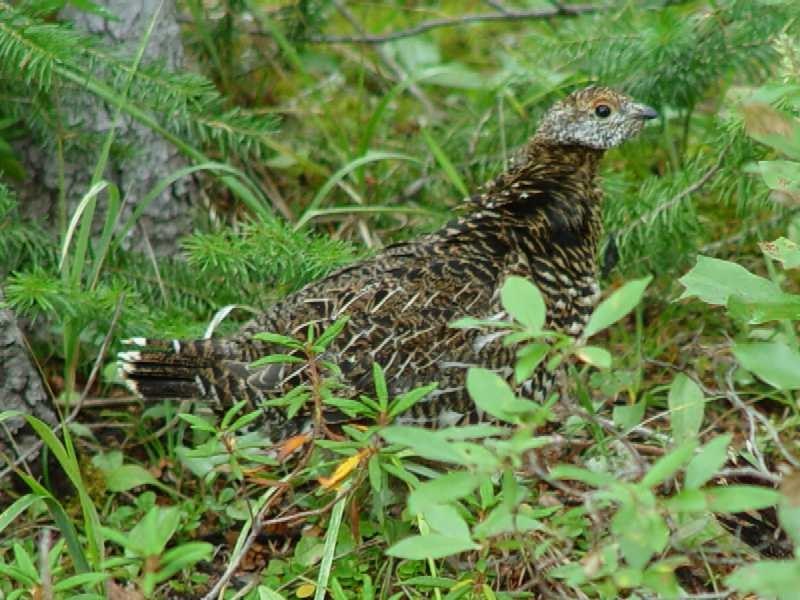
Spruce Grouse
Falcipennis canadensis
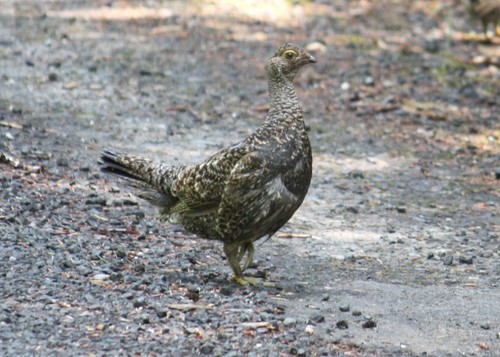
A tame, dark forest grouse of the northern boreal woods that relies so heavily on camouflage it often allows extremely close approach, earning it the nickname "fool hen."
- Size
- 38-43 cm (15-17 in) long
- Habitat
- boreal coniferous forest, especially spruce and pine stands
- Type
- gamebird
Spotted a bird like this?
Identify any bird from a photo, free.
Overview
The Spruce Grouse is a compact, dark grouse of the boreal coniferous forest, closely tied to spruce, fir, and pine stands across the far north of the continent. Males are dark gray-brown overall with a black throat and breast bordered by white spots, and a fleshy red comb above the eye that becomes especially prominent during display; females occur in both a gray-brown and a reddish-brown morph, heavily barred for camouflage.
The species is renowned for its tameness around humans, a trait shaped by an evolutionary history with few mammalian predators in its remote habitat, which has earned it the folk name "fool hen."
How to identify it
Key field marks
- Dark, sooty-brown to blackish overall plumage
- Male has a black throat/breast bordered with white spots and a red comb over the eye
- Female is heavily barred brown or rufous, cryptically patterned
- Chestnut-tipped tail band (in most populations)
Similar species
Ruffed Grouse is paler, more finely mottled, and has a strongly banded fan tail rather than the Spruce Grouse's darker, more uniform plumage. Dusky and Sooty Grouse are larger and occur in different, more open coniferous habitat further south and west, with grayer overall tone.
Habitat & range
Habitat and Range
Spruce Grouse are closely associated with boreal coniferous forest, particularly stands of black and white spruce, jack pine, and balsam fir, often in relatively young, dense stands.
Range
The species is found across the boreal forest belt of Canada and Alaska, extending south into the northern Rocky Mountains, Great Lakes region, and northern New England and New York.
Migration
Spruce Grouse are non-migratory and typically remain within a small home range year-round, though they may shift habitat use seasonally between deciduous understory in summer and denser conifer cover in winter.
Behavior & voice
Behavior
Spruce Grouse are famously tame and reluctant to flush, often relying on stillness and camouflage even when approached closely, which makes them easy to overlook until nearly stepped upon.
Voice
Vocalizations are relatively quiet, including soft clucks and low hoots; males also perform a low-intensity wing-clapping flight display during courtship.
Feeding
In winter, Spruce Grouse subsist almost entirely on conifer needles, a low-nutrition food that requires a specially adapted digestive system; in summer they eat a more varied diet of berries, leaves, fungi, and insects.
Nesting and breeding
Females nest on the ground, often at the base of a tree or under low conifer branches, laying about 4-10 eggs and raising the brood alone.
Frequently asked questions
Why is the Spruce Grouse called a 'fool hen'?
It is unusually tame and reluctant to flush when approached by people, often allowing very close approach because it relies on camouflage rather than flight to avoid the few predators in its remote boreal habitat.
What do Spruce Grouse eat in winter?
They feed almost exclusively on conifer needles, a tough, low-nutrition food source that few other birds can digest efficiently.
Where do Spruce Grouse live?
They inhabit boreal coniferous forest across Canada and Alaska, extending south into the northern Rockies, Great Lakes region, and northern New England.
How can you tell a male Spruce Grouse from a female?
Males are dark sooty-gray to blackish with a black throat and breast bordered by white spots and a red comb over the eye, while females are heavily barred brown or rufous for camouflage.
Spruce Grouse guides
In-depth guides for identifying, finding, and understanding Spruce Grouse.
Other birds you may enjoy
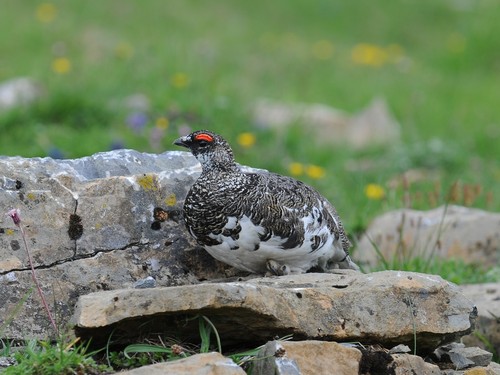
Rock Ptarmigan
34-36 cm (13-14 in) long
Congo Peafowl
Males about 64-70 cm long; females slightly smaller; no elaborate train
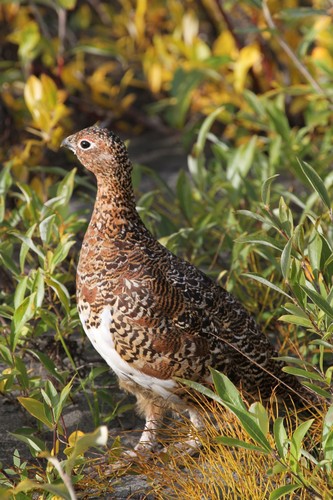
Willow Ptarmigan
37-42 cm (15-16.5 in) long
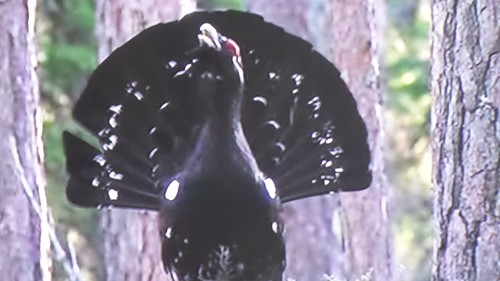
Western Capercaillie
male 74-90 cm (29-35 in), female 54-64 cm; male wingspan up to 125-130 cm
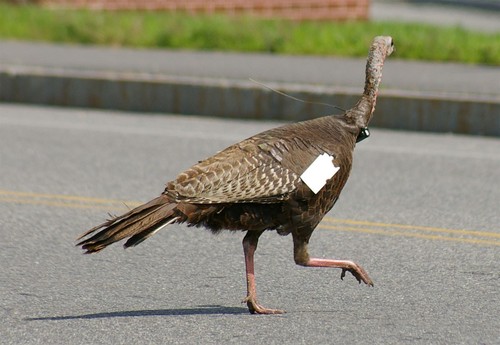
Wild Turkey
males 100-125 cm (39-49 in) long; females smaller, around 76-95 cm (30-37 in)
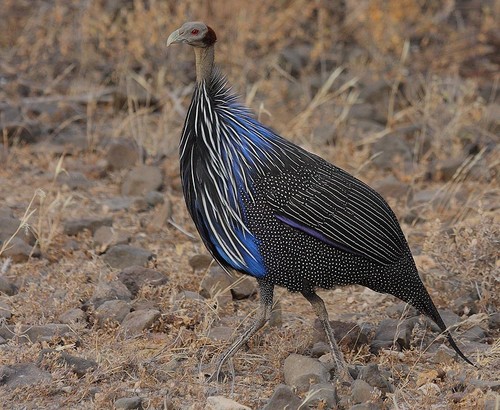
Vulturine Guineafowl
Length 61-71 cm, the largest guineafowl species, with a notably long neck and tail
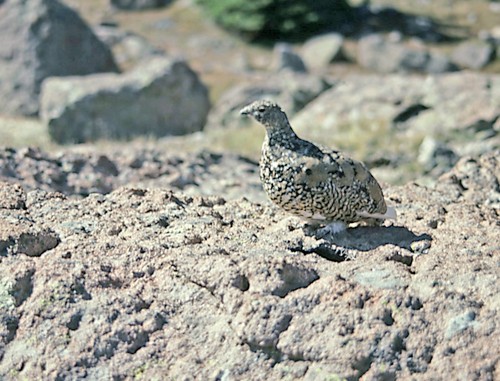
White-tailed Ptarmigan
30-33 cm (12-13 in) long; the smallest ptarmigan species
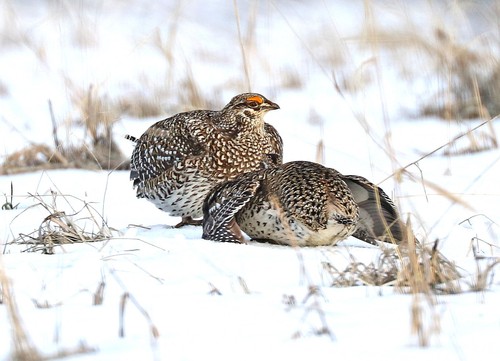
Sharp-tailed Grouse
38-48 cm (15-19 in) long
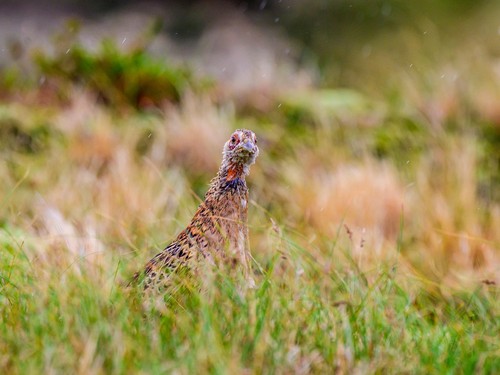
Ring-necked Pheasant
males 76-90 cm (30-35 in) long including a long tail; females smaller, 55-65 cm (22-26 in)
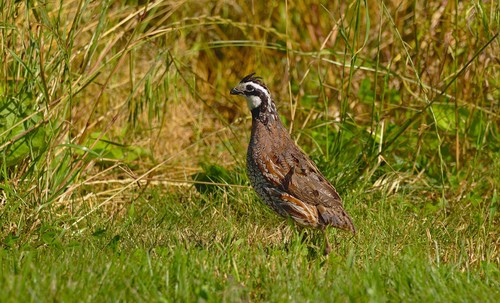
Northern Bobwhite
24-28 cm (9.5-11 in) long, 33-38 cm wingspan
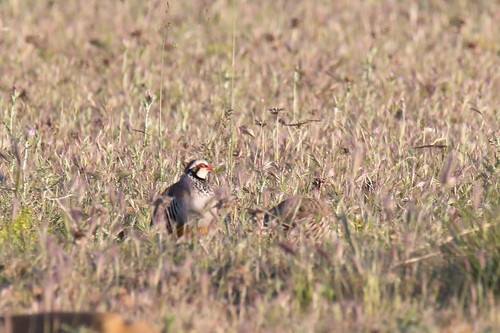
Red-legged Partridge
32-34 cm (13 in) long, 47-50 cm wingspan
Sooty Grouse
43-48 cm (17-19 in) long; males larger than females