
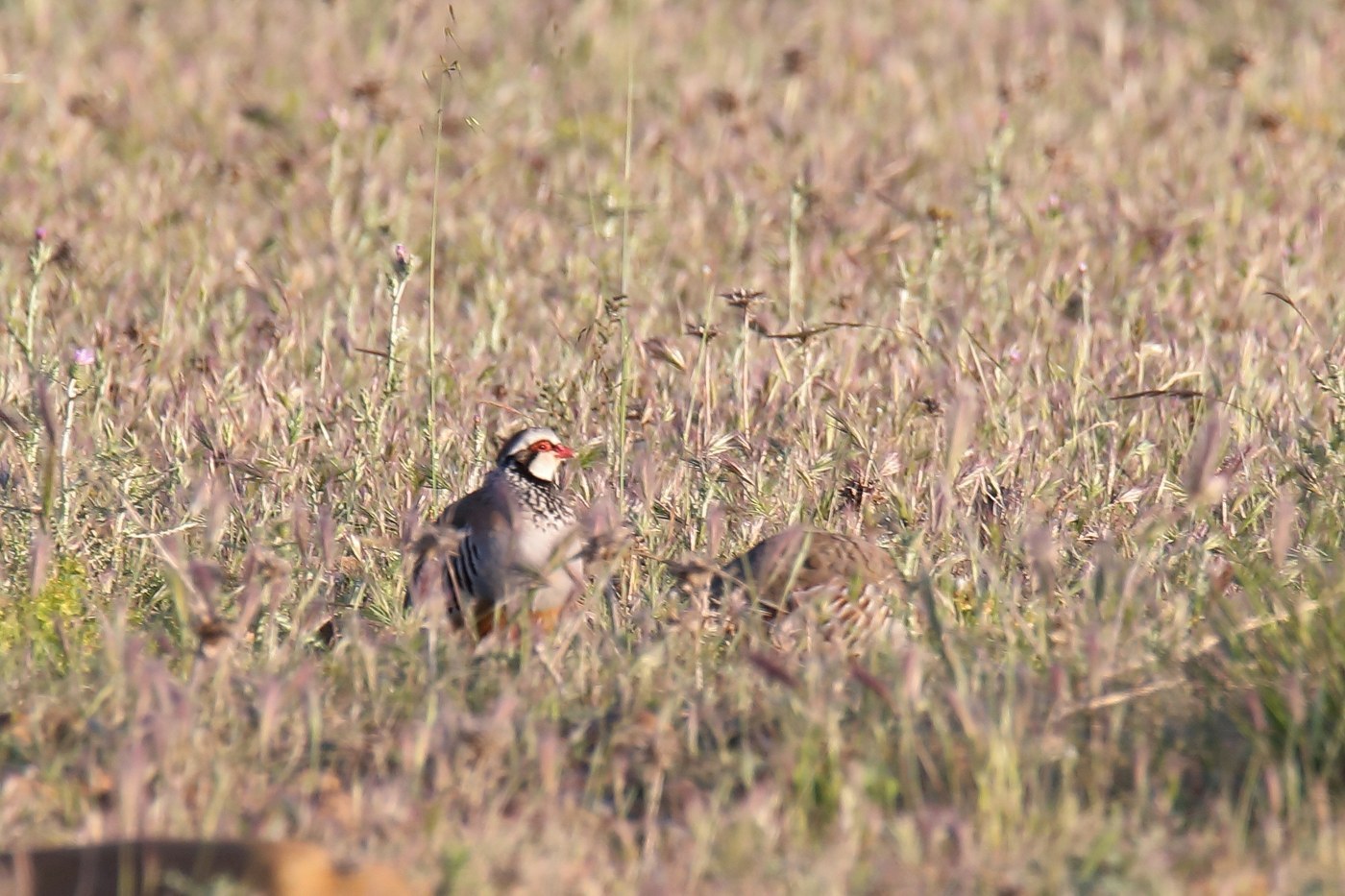
Red-legged Partridge
Alectoris rufa
A boldly patterned partridge with a striped black-and-white throat patch, a red bill, and red legs, native to southwestern Europe.
- Size
- 32-34 cm (13 in) long, 47-50 cm wingspan
- Habitat
- open farmland, dry grassland, vineyards, and scrubby open country
- Type
- gamebird
Spotted a bird like this?
Identify any bird from a photo, free.
Overview
The Red-legged Partridge is a striking gamebird with a grey-brown crown and back, warm buff underparts, and a bold black border enclosing a white throat and face, finely streaked below with black bars extending onto strongly barred chestnut, black, and white flanks. The bright red bill and legs are diagnostic at close range.
Native to southwestern Europe, it has been introduced widely elsewhere, including Britain, where large numbers are also reared and released, supplementing wild populations.
How to identify it
Key field marks
- Bold black border framing a whitish throat and face
- Bright red bill and legs
- Strongly barred chestnut, black, and white flank pattern
- Grey-brown crown and back with buff underparts
- Harsh, rhythmic "chuk-chuk-arr" call
Similar species
- Grey Partridge lacks the black-and-white striped face pattern, showing instead a plain orange face and a dark belly horseshoe.
- Chukar Partridge (where introduced, mainly outside Europe) is very similar but has a duller, less contrasting head pattern and different range.
The boldly striped face and red bill and legs make Red-legged Partridge readily distinguishable from Grey Partridge.
Habitat & range
Habitat
Prefers dry, open country including arable farmland, vineyards, olive groves, heathland, and scrubby grassland, tolerating drier conditions than Grey Partridge.
Range
Native to southwestern Europe (Iberia, France, and parts of Italy); introduced and now well established in Britain and locally elsewhere.
Migration
Resident and sedentary, remaining in coveys near breeding areas throughout the year.
Behavior & voice
Behavior
Forms coveys outside the breeding season, running rapidly through open ground and flushing with a low, whirring flight when disturbed, often preferring to run rather than fly.
Voice
Gives a loud, rhythmic, chuckling "chuk-chuk-arr" or "kaa-kaa-kaa" call, often repeated persistently.
Feeding
Feeds mainly on seeds, leaves, and shoots, with insects an important addition to the diet of growing chicks.
Nesting and breeding
Nests in a shallow ground scrape among vegetation. Unusually, females sometimes lay two clutches, one incubated by each parent, with clutches of 10-16 eggs incubated for about 23-24 days.
Frequently asked questions
How can you tell a Red-legged Partridge from a Grey Partridge?
The Red-legged Partridge has a bold black-and-white striped throat and face patch with a red bill and legs, while the Grey Partridge has a plain orange face and dark belly patch.
Is the Red-legged Partridge native to Britain?
No, it is native to southwestern Europe and was introduced to Britain, where it is now well established.
What is unusual about Red-legged Partridge breeding?
Females sometimes lay two separate clutches, with each parent incubating one, an unusual strategy among gamebirds.
What do Red-legged Partridges eat?
Mainly seeds, leaves, and shoots, with chicks relying more heavily on insects.
Red-legged Partridge guides
In-depth guides for identifying, finding, and understanding Red-legged Partridge.
Other birds you may enjoy
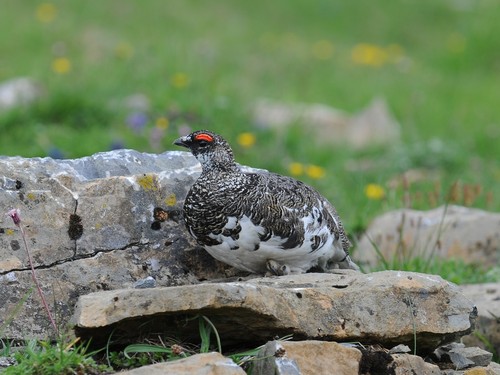
Rock Ptarmigan
34-36 cm (13-14 in) long
Congo Peafowl
Males about 64-70 cm long; females slightly smaller; no elaborate train
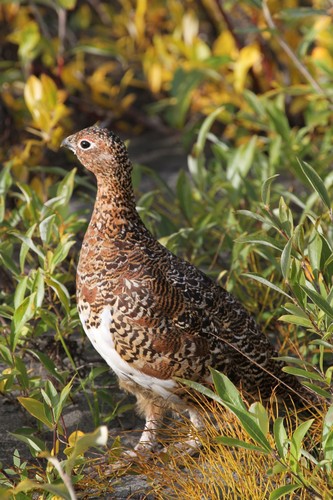
Willow Ptarmigan
37-42 cm (15-16.5 in) long
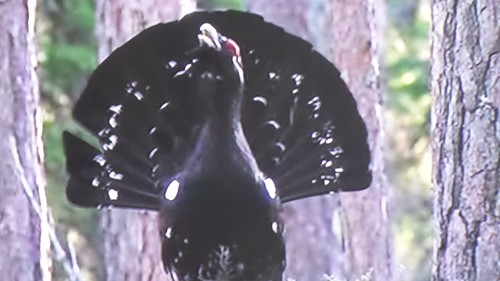
Western Capercaillie
male 74-90 cm (29-35 in), female 54-64 cm; male wingspan up to 125-130 cm
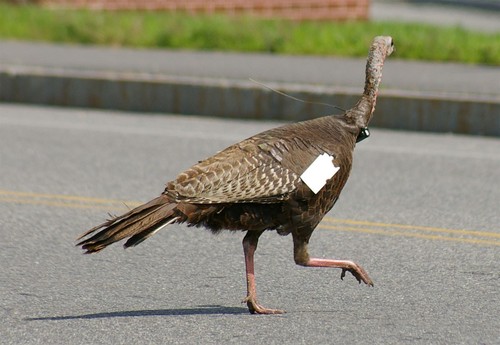
Wild Turkey
males 100-125 cm (39-49 in) long; females smaller, around 76-95 cm (30-37 in)
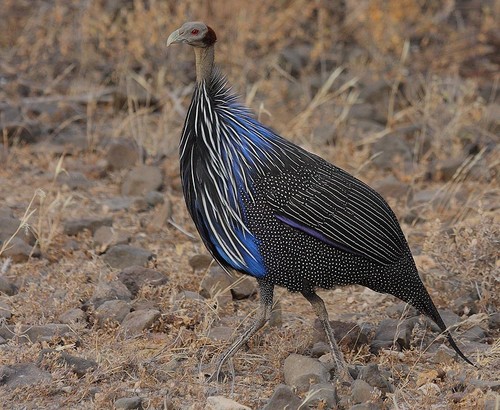
Vulturine Guineafowl
Length 61-71 cm, the largest guineafowl species, with a notably long neck and tail
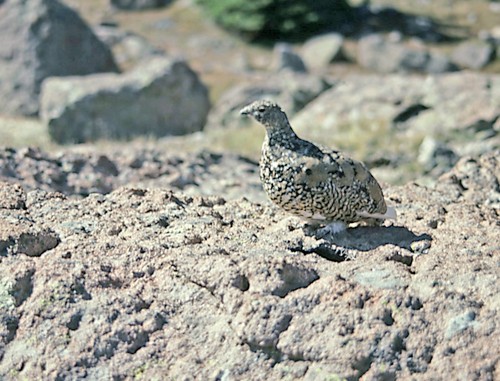
White-tailed Ptarmigan
30-33 cm (12-13 in) long; the smallest ptarmigan species
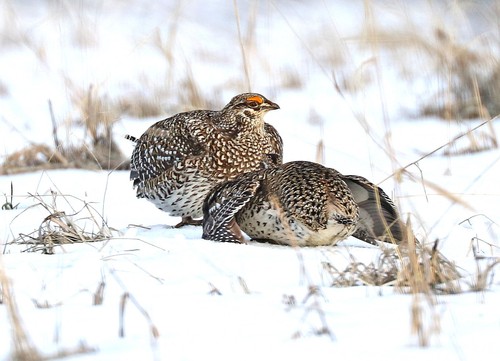
Sharp-tailed Grouse
38-48 cm (15-19 in) long
Ring-necked Pheasant
males 76-90 cm (30-35 in) long including a long tail; females smaller, 55-65 cm (22-26 in)
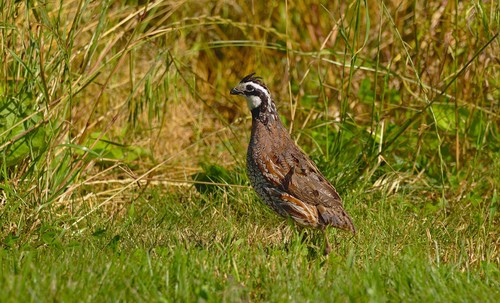
Northern Bobwhite
24-28 cm (9.5-11 in) long, 33-38 cm wingspan
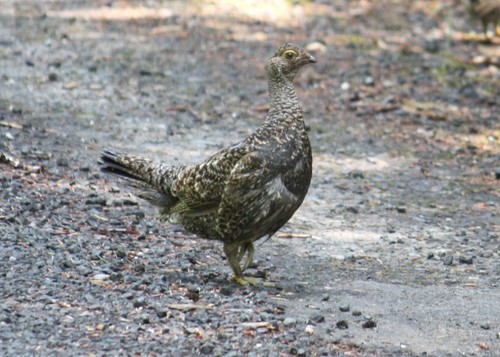
Sooty Grouse
43-48 cm (17-19 in) long; males larger than females
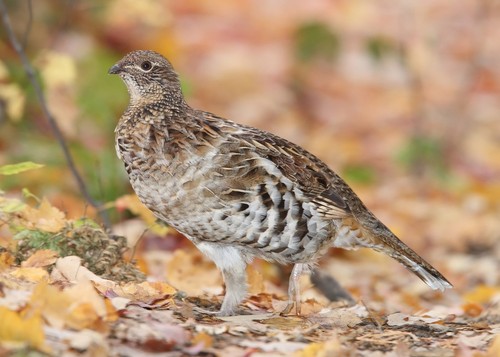
Ruffed Grouse
40-48 cm (16-19 in) long, 50-64 cm (20-25 in) wingspan