
Rock Ptarmigan Identification Guide
A high-Arctic and alpine grouse that molts through three camouflaged plumages a year, turning pure white in winter except for its black tail.
Read the full Rock Ptarmigan encyclopedia entry →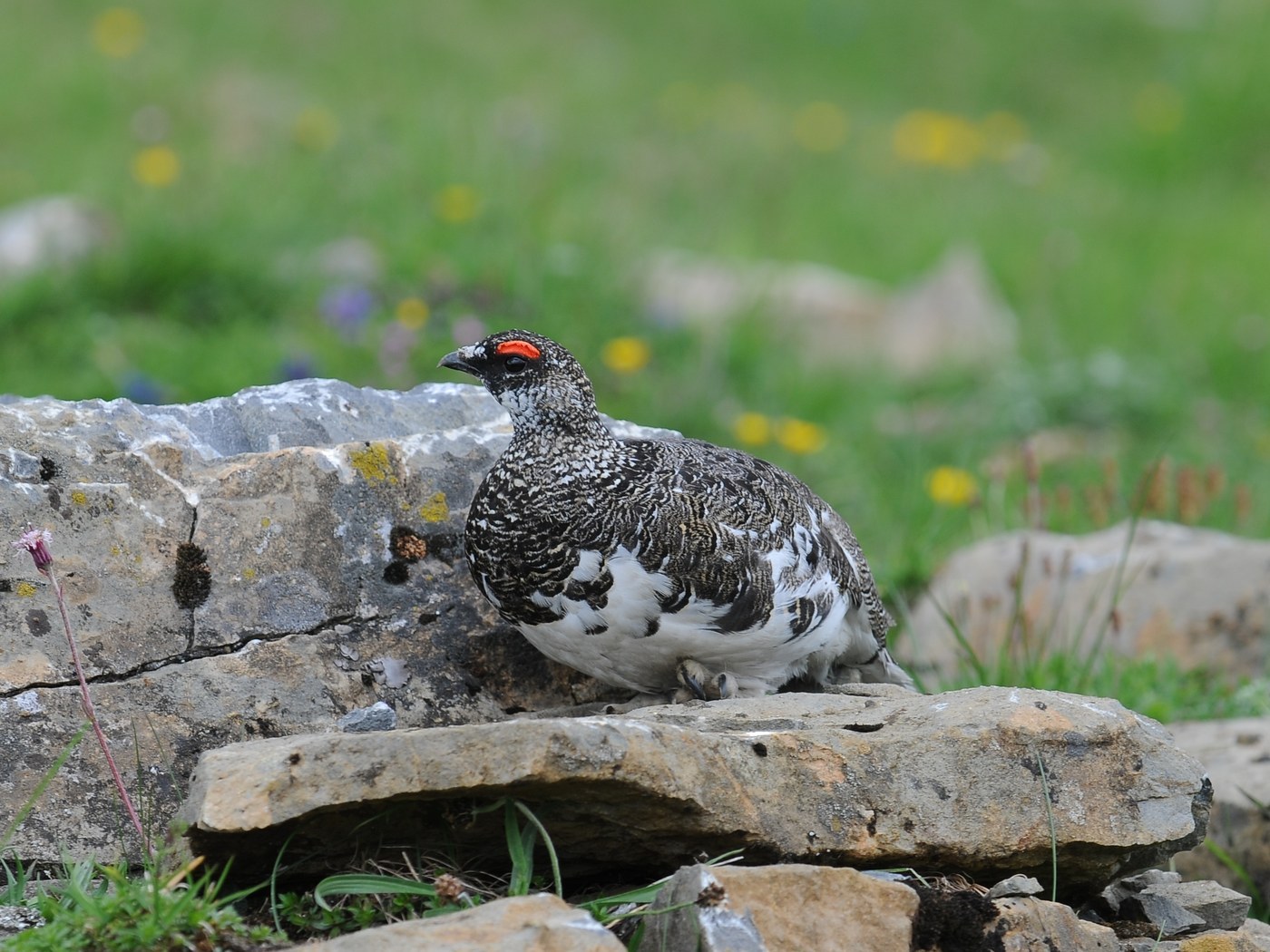
Key Field Marks
- Size & shape: A compact, chunky grouse about 34–36 cm, with a small head, short bill, and feathered legs and feet (an adaptation for walking on snow).
- Winter plumage: Almost entirely white, with a black tail (usually hidden by white upper tail coverts at rest) and, in males, a black line through the eye (the "loral stripe") plus a bright red comb over the eye that is especially prominent during spring display.
- Summer plumage: Finely vermiculated gray-brown, giving a grayer, more finely patterned look than the coarser rufous-brown summer plumage of Willow Ptarmigan; belly and wings remain white year-round.
- Transitional plumages: In spring and autumn, birds show a patchwork of white and gray/brown feathers as the molt progresses, making them look mottled and piebald.
- Behavior: Extremely well camouflaged and often sits tight until nearly stepped on before flushing explosively; males give croaking display calls and chase rivals on breeding territories in spring.
Separating It From Similar Species
- Willow Ptarmigan: Larger and heavier-billed, with warmer, more rufous-chestnut tones in summer plumage, and males lack the black eye-line shown by male Rock Ptarmigan; Willow Ptarmigan also favors slightly lower, shrubbier terrain than Rock Ptarmigan's more barren, rocky habitat.
- White-tailed Ptarmigan: Smaller, found further south in the alpine zones of the Rocky Mountains and Cascades, and retains an all-white tail in every plumage (Rock and Willow Ptarmigans both show a black tail visible in flight or when the tail is raised).
Habitat, Range & Season
Rock Ptarmigan is a circumpolar species of the high Arctic tundra and alpine zones above the tree line, found across northern Canada, Alaska, Greenland, Scandinavia, Russia, and mountain ranges of Scotland and the Alps. It favors barren, rocky ridges, scree slopes, and sparse tundra with low vegetation — generally higher and stonier terrain than Willow Ptarmigan prefers. It is a permanent resident, remaining on or near its breeding grounds through the winter, sheltering in snow burrows during severe weather.
Voice
A distinctive low, croaking, belch-like call, along with harsh grunts and cackles given during territorial displays and when flushed.
Frequently asked questions
How can I tell Rock Ptarmigan from Willow Ptarmigan in summer?
Rock Ptarmigan shows finer, grayer vermiculated plumage and males have a black stripe through the eye, while Willow Ptarmigan is larger, more rufous-brown, and lacks that black eye stripe.
Does the Rock Ptarmigan stay white all year?
No — it is white only in winter; it molts into a finely patterned gray-brown plumage in summer and shows a mottled, transitional plumage in spring and autumn.
What habitat is most likely to hold Rock Ptarmigan versus White-tailed Ptarmigan?
Rock Ptarmigan occupies high Arctic tundra and alpine zones across the Northern Hemisphere, while White-tailed Ptarmigan is restricted to alpine areas of the Rocky Mountains, Cascades, and a few other western North American ranges, and always shows an all-white tail.
Why do male Rock Ptarmigans have a red patch over the eye?
It is a fleshy comb used in territorial and courtship displays during the breeding season, most vivid and prominent on males in spring.